
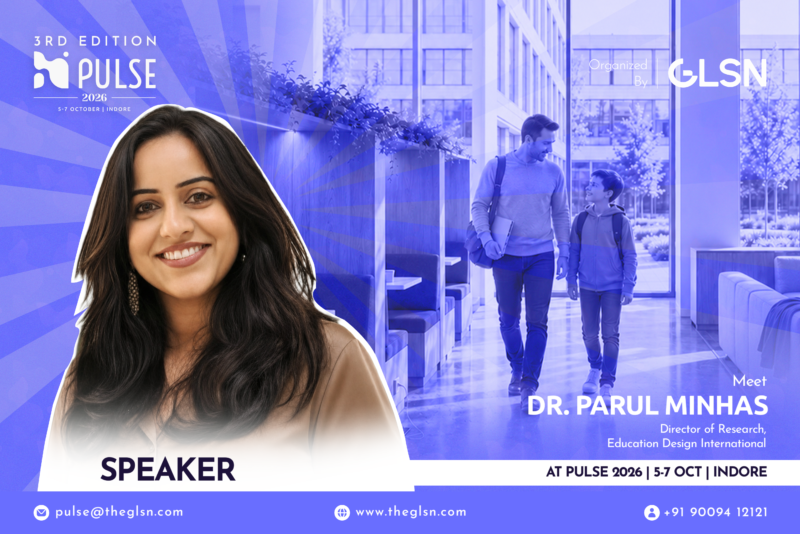
MEET THE SPEAKER
What If a School Shapes More Than Learning?
We spend years thinking about what children should learn at school.
But perhaps there is another question worth asking:
What are they becoming while they are there?
Every corridor they move through. Every place they gather, retreat, collaborate or feel seen. Every choice a learning environment gives them- or takes away- may be doing more than supporting a lesson.
It may be shaping how they experience themselves, others and the world around them
This is the territory Dr. Parul Minhas brings to PULSE 2026.
Meet Dr. Parul Minhas
Dr. Parul Minhas, Director of Research at Education Design International (EDI), works at the intersection of research, architecture and human development.
Her work explores salutogenic design, neuroarchitecture and the relationship between learning environments and human development across the lifespan– looking beyond what a space does functionally to ask what it might be doing to the people within it.
That shift is important.
Because if school environments influence wellbeing, agency, belonging and behaviour, then school design is not simply about creating places for learning. It is also about creating conditions for becoming.
And that opens up a much bigger conversation.
The Architecture of Identity
At PULSE 2026, Dr. Parul’s session will mark the release of the EDI–DSP white paper, The Architecture of Identity: How Learning Environments Shape the Adults We Become.
The idea behind the white paper is both simple and profound:
Learning environments may leave a deeper imprint on us than we realise.
We often evaluate schools through questions of functionality, flexibility, pedagogy, aesthetics or performance.
But what happens when we look at them through another lens?
How might the environments children inhabit influence their sense of agency?
And could the design decisions we make today have implications far beyond the years a child spends in school?
The white paper brings these questions into focus.
And Dr. Parul will take the conversation further at PULSE.
Why This Matters for School Design
For architects and designers, this offers a reason to look again at the brief- not just asking whether a space works, but what kind of experience and behaviour it makes possible.
For educators and school leaders, it opens up a different way of thinking about the environments where relationships, confidence, independence and belonging develop every day.
For school founders, trustees and campus planners, it raises questions worth asking before the next campus takes shape:
What should this school enable?
What should it communicate?
And ultimately, what kind of person might it help nurture?
For anyone working at the intersection of education, architecture and human development, the white paper offers something even more valuable: a new lens through which to question familiar assumptions about school environments.
What Might You Take Away?
A new lens on school design, identity and human development.
Expect to explore:
- Agency, belonging and wellbeing in space.
- What environments communicate and shape.
- How today’s learning spaces may influence who we become.
The research will be revealed at PULSE 2026.
Where This Conversation Belongs
At PULSE 2026: Where Culture Meets Learning, we look beyond what schools teach to what learning environments make possible.
Dr. Parul Minhas brings that conversation to a deeper question:
If spaces shape how we learn and experience the world, could they also shape who we become?
Come explore the question- and the research behind it- with the people shaping the future of learning spaces.
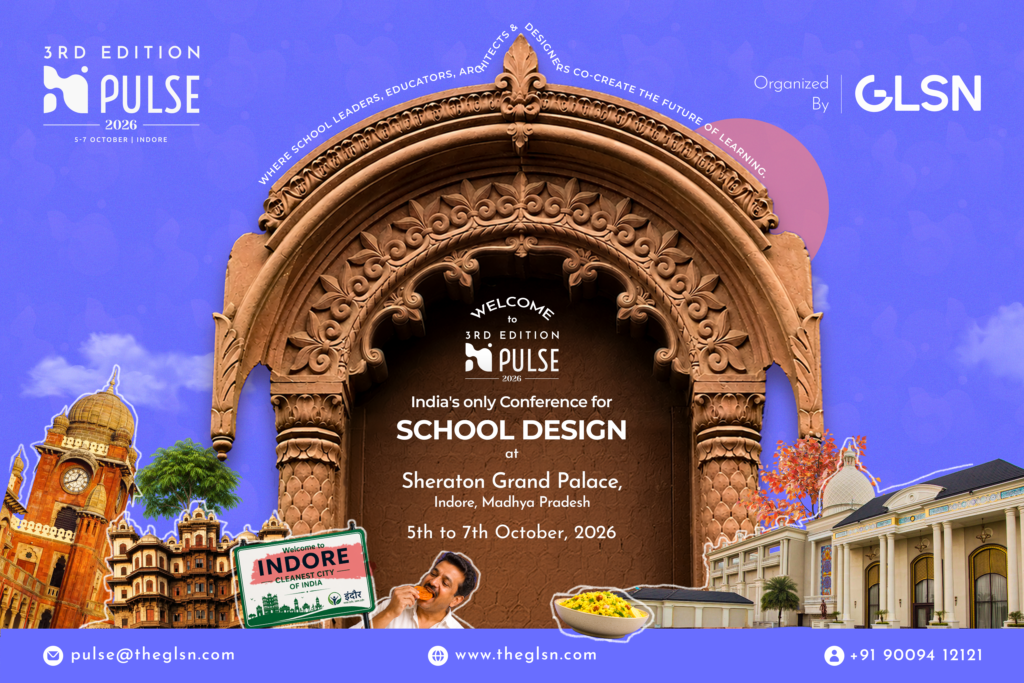
PULSE 2026 | Where Culture Meets Learning
5–7 October 2026 | Sheraton Grand Palace, Indore
Be in the room. Join PULSE 2026.