
MEET THE SPEAKER
We keep asking how to make schools smarter, greener and more future-ready.
But are we questioning the assumptions that shape what we teach, how we learn, and who our learning environments are really designed for?
Dr. Benjamin Freud asks us to look beyond conventional school design- and towards 3.8 billion years of intelligence in the living world.
At PULSE 2026 | Where Culture Meets Learning, he brings regenerative education, biomimicry and critical thinking into a conversation every architect, educator and school leader should be part of:
What if designing the future of learning starts with redesigning how we think about school?
This is where Dr. Benjamin Freud brings an especially intriguing perspective.
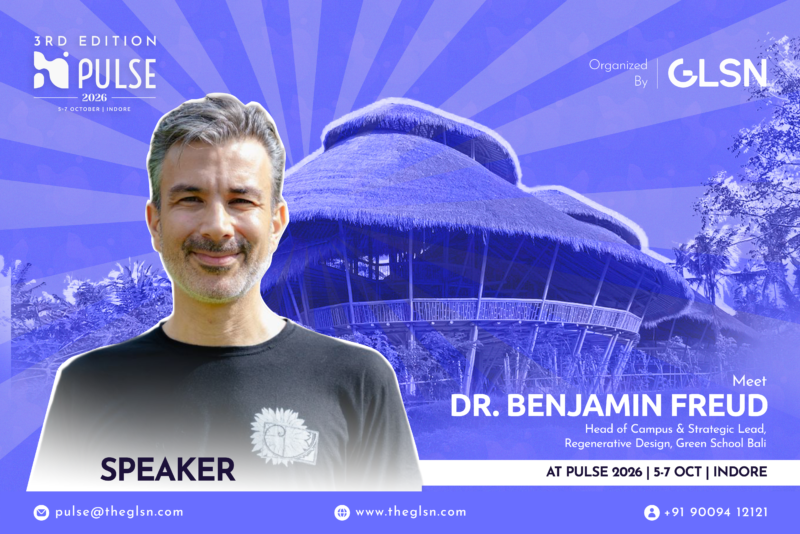
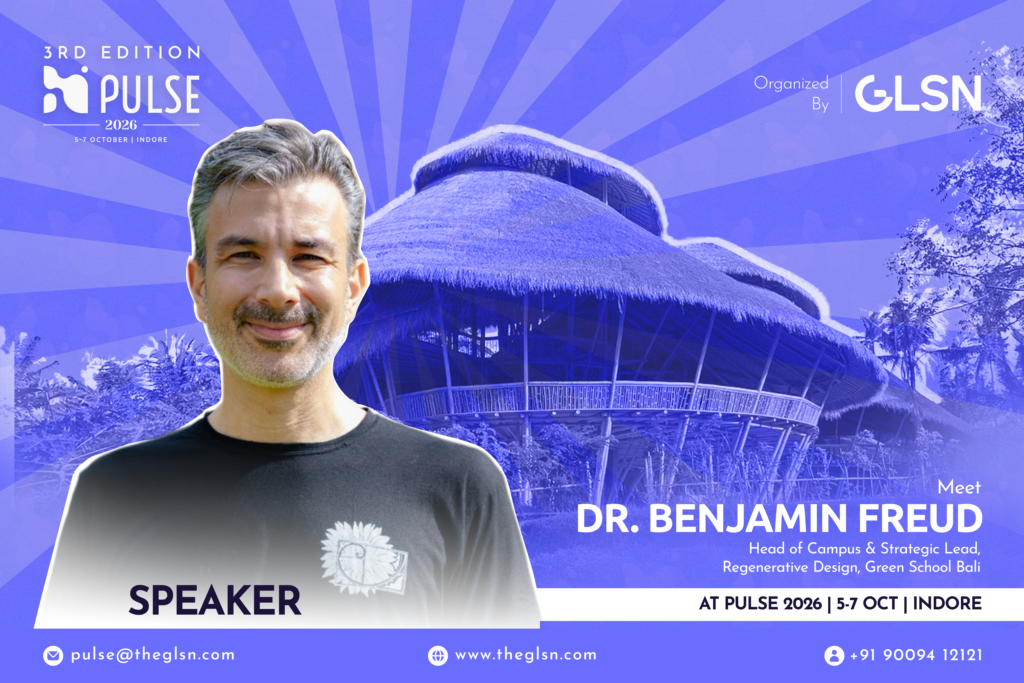
Dr. Benjamin Freud
Head of Campus & Strategic Lead, Regenerative Design · Green School Bali
Co-Founder · Coconut Thinking
Founder · Biomimicry for Regenerative Design (BiRD) Lab
Benjamin’s work sits at the intersection of education, regenerative design, biomimicry, philosophy and critical theory.
At Green School Bali, he founded the BiRD Lab, a pioneering K–12 programme that takes its cues from 3.8 billion years of life’s intelligence– inviting students to look at the living world not simply as something to protect, but as something to learn from.
But Benjamin’s questions go further.
He challenges the inherited grammar of schooling and the assumptions embedded within it:
How do we define knowledge?
Who gets to shape learning?
What are schools really designed to serve?
And perhaps most importantly—
What kind of relationships should a learning environment create?
Why Benjamin at PULSE 2026?
The theme of PULSE 2026—Where Culture Meets Learning asks us to look beyond the physical form of a school.
Benjamin takes that invitation somewhere deeper.
If culture shapes how we understand the world, and education shapes how we participate in it, then perhaps our learning spaces should do more than accommodate learning.
They should help shape the relationships through which learning becomes meaningful.
This is where regenerative education meets learning-space design.
And where the conversation gets interesting.
A Few Questions to Bring With You
Can a school be regenerative—not simply sustainable?
What can 3.8 billion years of life teach us about designing for learning?
Can a learning environment change our relationship with a place?
And what happens when we question the assumptions behind the school before redesigning the school itself?
We won’t attempt to answer them here.
That’s a conversation better had in the room.
Why You Should Hear Him at PULSE?
For architects, educators, school leaders, designers and education thinkers, Benjamin’s perspective offers an opportunity to step outside conventional conversations around K–12 education and learning environments.
Not to abandon what we know.
But to question whether what we know is enough.
That is what makes his session at PULSE 2026 worth paying attention to.
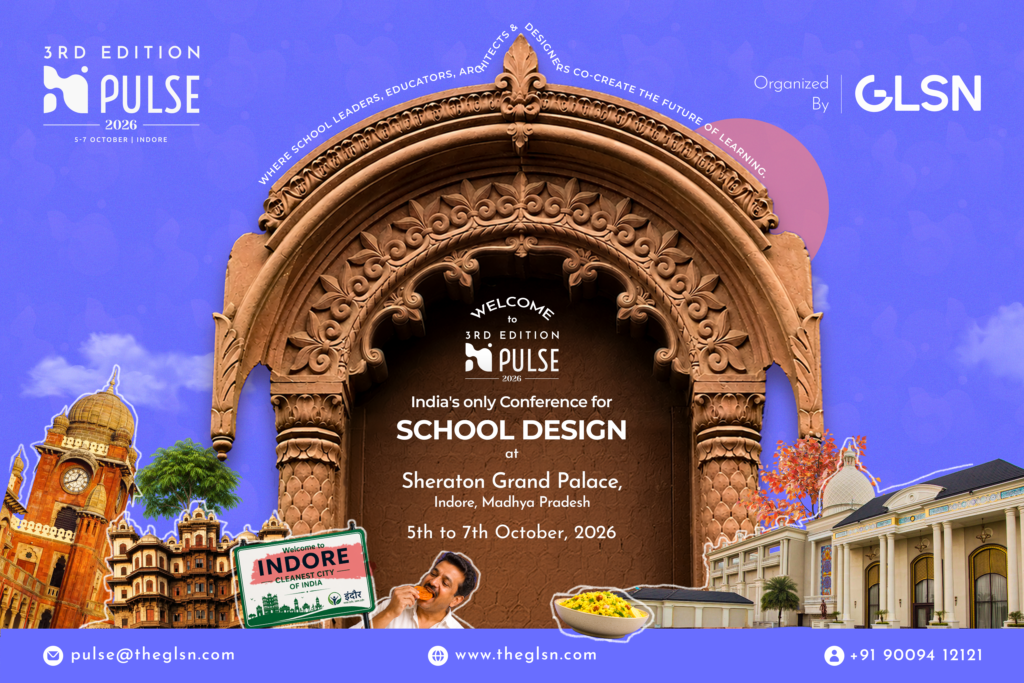
PULSE 2026 | Where Culture Meets Learning
5–7 October 2026 | Sheraton Grand Palace, Indore
Come with your ideas. Come with your assumptions. Most importantly, come with your questions.
Because sometimes, the most valuable thing a speaker can change is not your answer—but the question you thought you were asking.