
Meet the Speaker
What happens when a learning environment is designed not only for today’s needs, but with tomorrow already in mind?
At a time when schools are rethinking how students learn, connect and experience their surroundings, the design of the learning environment becomes an important part of that conversation. It raises questions about how space is planned, what materials are chosen, how technology is integrated and how sustainability can become part of the design itself.
This is where Akanksha Gupta’s perspective becomes particularly relevant to the conversation at PULSE 2026 | Where Culture Meets Learning.
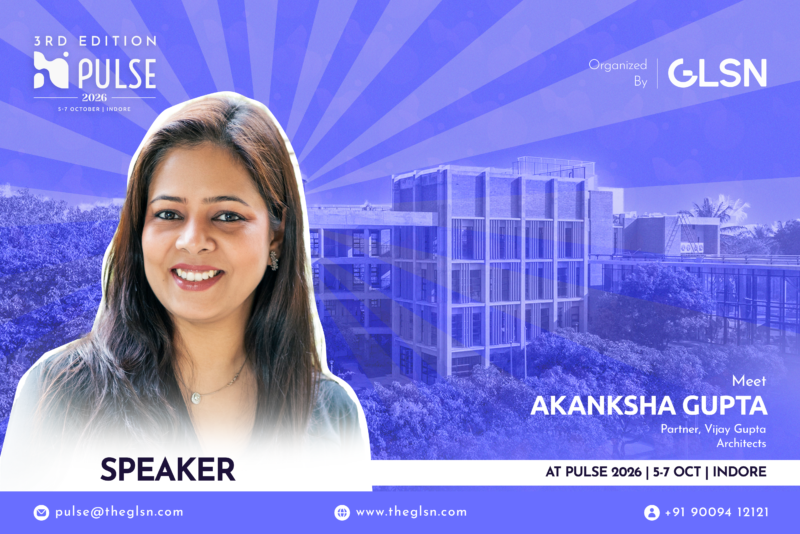
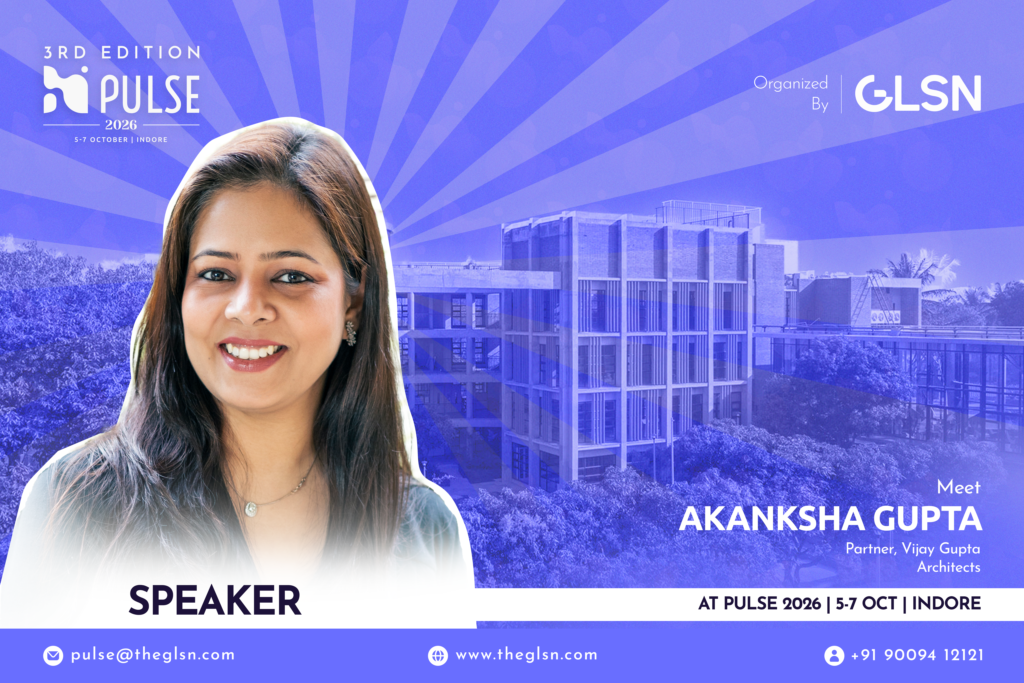
Akanksha Gupta
Partner, Vijay Gupta Architects
Akanksha Gupta is a Partner at Vijay Gupta Architects (VGA), a New Delhi-based multidisciplinary design practice. Her work contributes to the practice’s exploration of new techniques and processes, with a particular interest in material and technological innovation.
Her approach to design brings together spatial planning, material choices and construction techniques, with sustainability forming an intrinsic part of how she thinks about the built environment.
With an M.Sc. in Emergent Technologies and Design from the AA School of Architecture, London, Akanksha brings an understanding of emerging possibilities into her architectural practice—while remaining attentive to the realities of the spaces being designed today.
Learning Spaces Through a Different Lens
Akanksha’s work in educational architecture offers an opportunity to look more closely at the relationship between design and learning.
Her projects include Euro School, Bannerghatta, Bengaluru, and Mother’s Pet Kindergarten, Nagpur– educational environments where questions of spatial planning, materiality, technology and environmental responsiveness become part of the architectural response.
Her work invites a closer look at something often taken for granted:
How do the physical decisions made in designing a school influence the environment in which learning takes place?
The question extends beyond the appearance of a classroom.
It reaches into the materials students encounter, the way spaces are organised, the relationship between built and natural environments, and how a learning environment can remain responsive to changing needs.
Why Her Perspective Matters at PULSE
For architects and designers, Akanksha’s work brings together the practical and emerging dimensions of educational architecture.
For school leaders and education communities, it opens up questions around the environments students experience every day.
And for anyone involved in shaping learning spaces, her perspective offers an opportunity to examine how technology, material innovation, sustainability and spatial thinking can contribute to more considered educational environments.
At PULSE 2026, these ideas connect directly with the larger conversation around Where Culture Meets Learning—a conversation that looks beyond the school building itself to understand how people, place, design and learning come together.
A Conversation Worth Bringing to PULSE
What should a learning environment respond to?
How can material and technological choices influence the experience of a space?
And how might educational architecture evolve as the needs of learners and schools continue to change?
These are the kinds of questions Akanksha Gupta brings into the PULSE conversation.
We’re delighted to welcome Akanksha Gupta to PULSE 2026 and look forward to the perspective she will bring to the ongoing conversation around learning spaces and the environments in which learning unfolds.
PULSE 2026 | Where Culture Meets Learning
5–7 October 2026 | Sheraton Grand Palace, Indore
For architects, designers, school leaders, educators and everyone shaping learning environments.