
MEET THE SPEAKER
What if the spaces where students learn didn’t have to look like classrooms?
A corridor can become a place to pause.
A wall can invite interaction.
A material can change the way a space is experienced.
And a classroom can become much more than four walls, desks and a timetable.
The spaces around us quietly shape how we move, connect, explore and participate. Yet learning environments are often still designed around familiar formats and predictable boundaries.
So what happens when those boundaries are questioned?
That is where Jwalant Mahadevwala’s work becomes particularly interesting — exploring how technology, material, movement and imagination can open up new possibilities for the spaces in which learning happens.
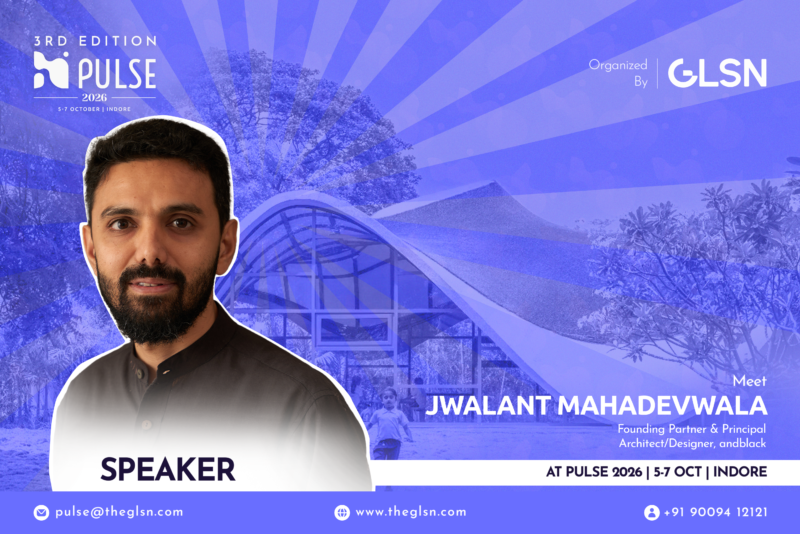
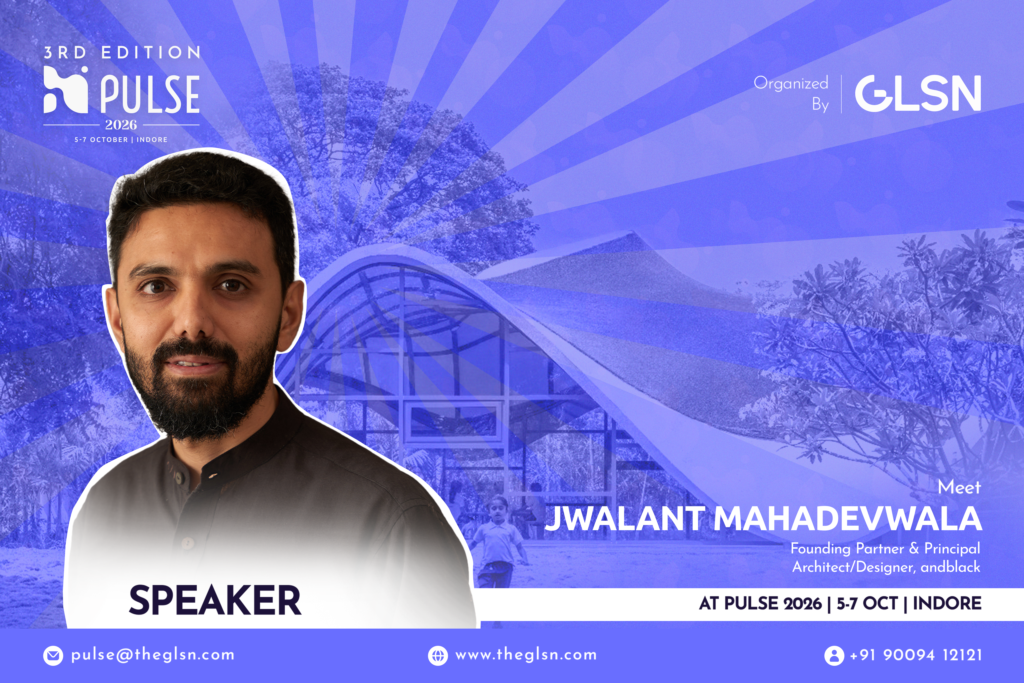
Mr. Jwalant Mahadevwala
Founding Partner & Principal Architect/Designer, andblack design studio
With a Master’s in Architecture and Urbanism from the Architectural Association School of Architecture, London, followed by four years at Zaha Hadid Architects, Jwalant brings an international design perspective to his practice.
In 2012, he co-founded andblack design studio with Kanika Agarwal in Ahmedabad. Today, the interdisciplinary studio works across architecture, interiors, furniture and art installations, with experimentation at the heart of its process.
Its approach brings together parametric tools, physical modelling and material exploration to investigate new possibilities in design.
A Practice Built Around Experimentation
Jwalant’s work demonstrates how a rigorous design process can produce spaces that respond to the way people move, interact and experience their surroundings.
One of the clearest examples is Cocoon at Bloomingdale International School, Vijayawada.
The educational extension creates a more fluid relationship between learning, movement and play, moving beyond the conventional idea of a classroom as an enclosed room.
The project received international recognition as Education Project of the Year at the 2024 Dezeen Awards and won the Small Architecture Prize at the 2024 Architecture Hunter Awards.
His experimental work also extends beyond buildings.
Paper Cocoon Pavilion in New Delhi explores paper as a spatial material, while Vayu in Ahmedabad investigates structure, air and movement through a parametric installation.
Across these works, one idea continues to emerge:
Design does not simply shape the space around us. It shapes how we experience it.
Why His Perspective Matters to Learning Spaces
For architects and interior designers, Jwalant’s work offers a closer look at how parametric thinking, modelling and material experimentation can challenge familiar design approaches.
For school leaders and educators, it raises a different set of possibilities: how might spaces encourage greater movement, interaction, curiosity and adaptability?
And for anyone involved in shaping learning environments, his perspective offers a chance to look beyond how a space looks and ask what it actually enables.
Where Culture Meets Learning
At PULSE 2026, architects, interior designers, educators, school leaders and thinkers come together to look at learning spaces from different perspectives — not only as physical settings, but as environments shaped by culture, people, behaviour and possibility.
Jwalant Mahadevwala brings a practice rooted in experimentation, technology, material and making, offering an opportunity to rethink what learning environments can become when design is allowed to move beyond convention.
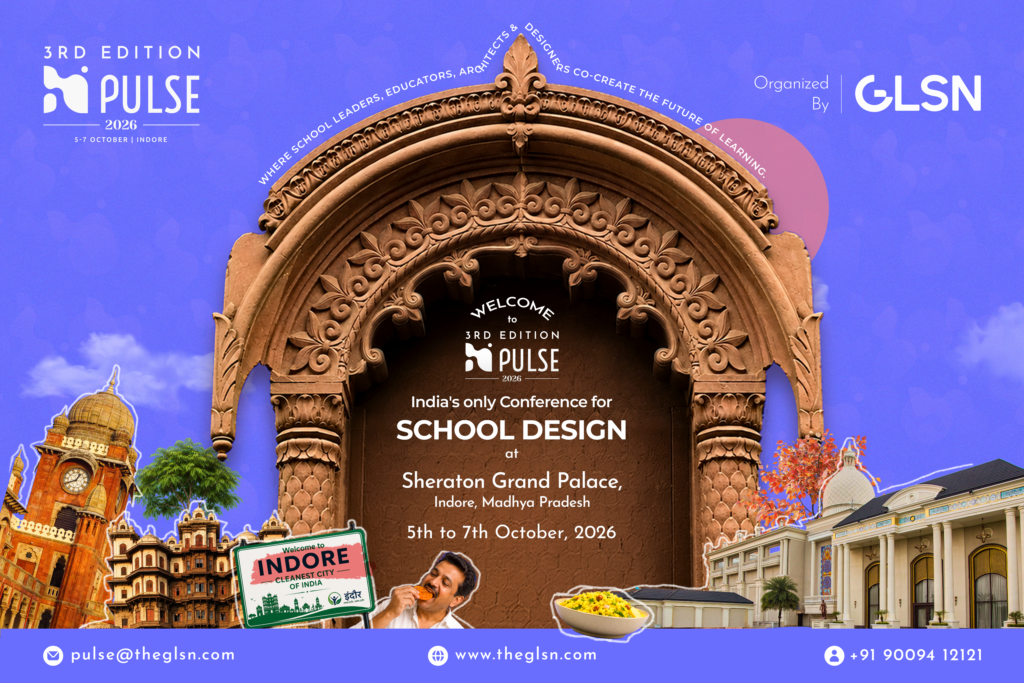
PULSE 2026 | Where Culture Meets Learning
5–7 October 2026 | Sheraton Grand Palace, Indore
Come curious. Leave seeing learning spaces differently.