


MEET THE SPEAKER
What makes a space feel like it belongs?
A building can have beautiful architecture.
An interior can be meticulously detailed.
Furniture can be perfectly chosen.
But when all three come together, what turns a designed environment into a place with character?
This is the territory that Pravir Sethi has been exploring through studio HINGE.
Mr. Pravir Sethi
Pravir Sethi founded studio HINGE in 2014 with an interesting proposition: architecture, interior and furniture design do not have to exist as separate disciplines.
They can work together to create something more complete—a space with a strong sense of place that connects with the people who occupy it.
Having worked with leading practices in India and the UK, Pravir brings a broad architectural perspective to HINGE, approaching projects through multiple scales and layers of experience.
From the Forest of Knowledge at the Cricket Club of India, Mumbai, where a library becomes more than a repository of books, to 219 Boat Club, Pune, CCI Yoga Studio, Mumbai, and Merint Group HQ, Dubai, his work demonstrates an interest in how architecture, interiors, furniture and context can come together as one experience.
But perhaps the more interesting story is what happens between these elements.
When Design Works Together
A building is never experienced through architecture alone.
We encounter it through its materials, furniture, proportions, light, movement and details. When these elements work together, they can create something beyond a functional environment: a distinctive sense of place.
For learning spaces, this matters deeply.
Schools are not simply buildings where learning happens. They are environments that become part of everyday life, identity and community.
What Pravir Brings to PULSE
At PULSE 2026 | Where Culture Meets Learning, Pravir brings a perspective grounded in multidisciplinary design and a deep attention to place.
His session will prompt architects, educators and school leaders to consider:
- How can different design disciplines work together more meaningfully?
- What gives a learning environment its sense of identity?
- How can context shape design rather than simply decorate it?
- What makes people feel connected to the spaces they inhabit?
Why This Conversation Matters
Because creating a learning space is not only about getting the architecture right.
It is about creating an environment that feels right for its people, its purpose and its place.
For anyone shaping the next generation of schools and learning environments, Pravir’s perspective offers an opportunity to look at familiar design questions from a wider lens.
And perhaps ask a better one:
What makes a place feel like it belongs to the people who use it?
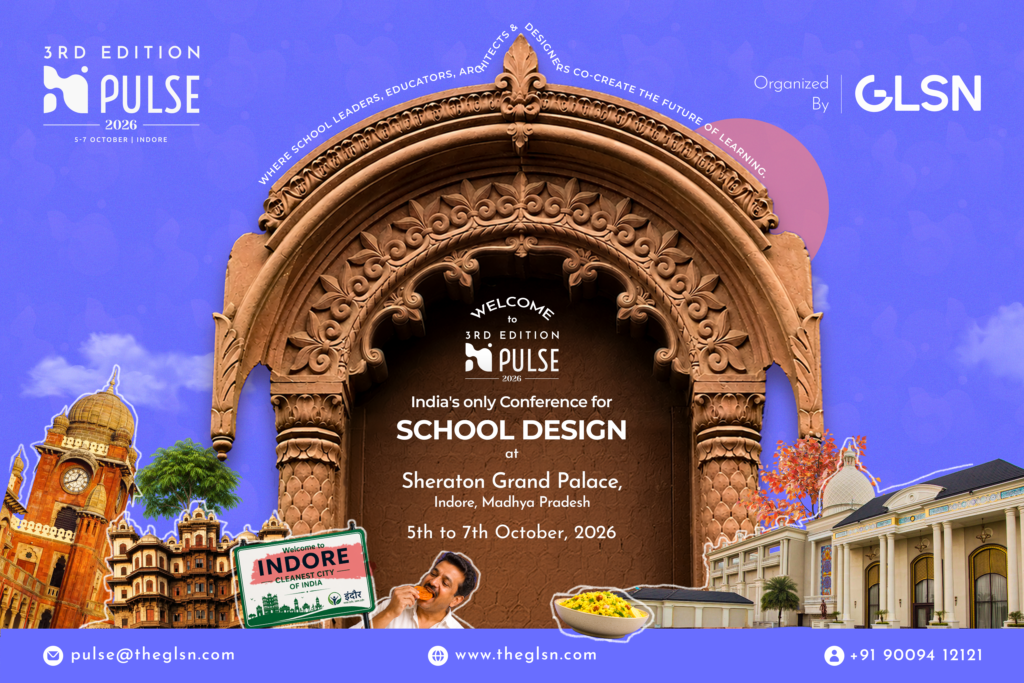
PULSE 2026 | Where Culture Meets Learning
5–7 October 2026 | Sheraton Grand Palace, Indore
Pravir Sethi, we warmly welcome you to PULSE 2026.