
Shared by the architects upon our invitation.
Located within the residential fabric of Matunga, Mumbai, Ikigai Global Prep School reimagines the preschool environment as an immersive learning landscape where architecture actively participates in a child’s development. Spread across 1,200 sq.ft., the project challenges conventional classroom planning by transforming space itself into a learning tool. Conceived around the principles of experiential education, the design places curiosity, movement, interaction, and discovery at the centre of the learning experience, allowing children to engage with their surroundings through exploration rather than instruction alone.
Inspired by the Japanese philosophy of Ikigai, finding purpose and joy in everyday experiences, the school embraces simplicity, clarity, and child-centric design. Instead of relying on excessive furniture or visual stimulation, the interiors are intentionally open and adaptable, creating environments that encourage independent exploration, sensory engagement, and imaginative play. Every design decision was guided by an understanding that a child’s earliest experiences outside the home have a lasting impact on emotional, social, and cognitive development.
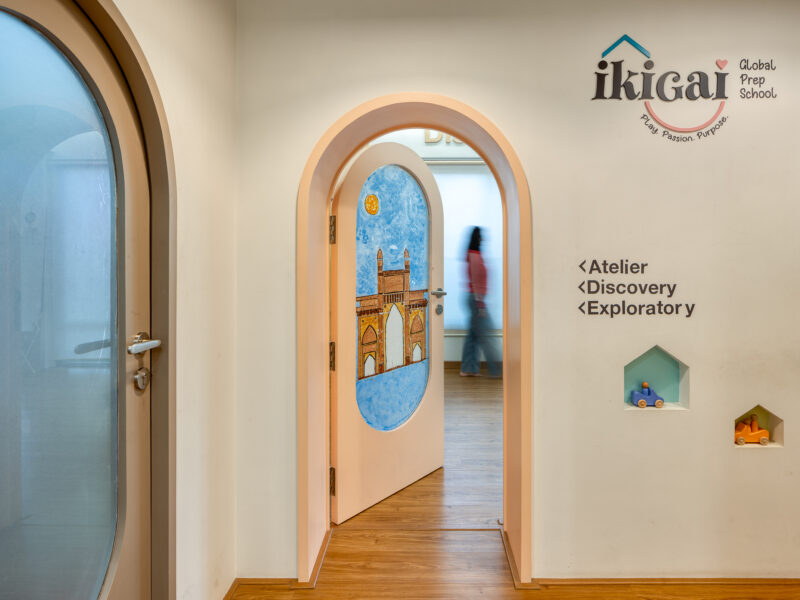
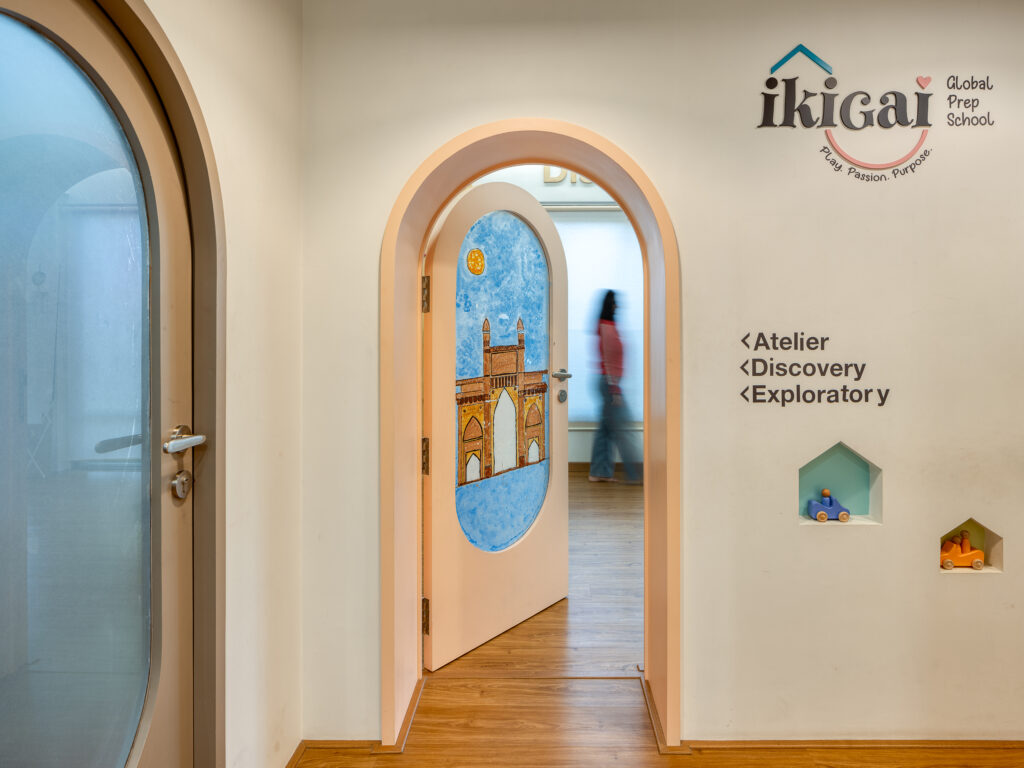
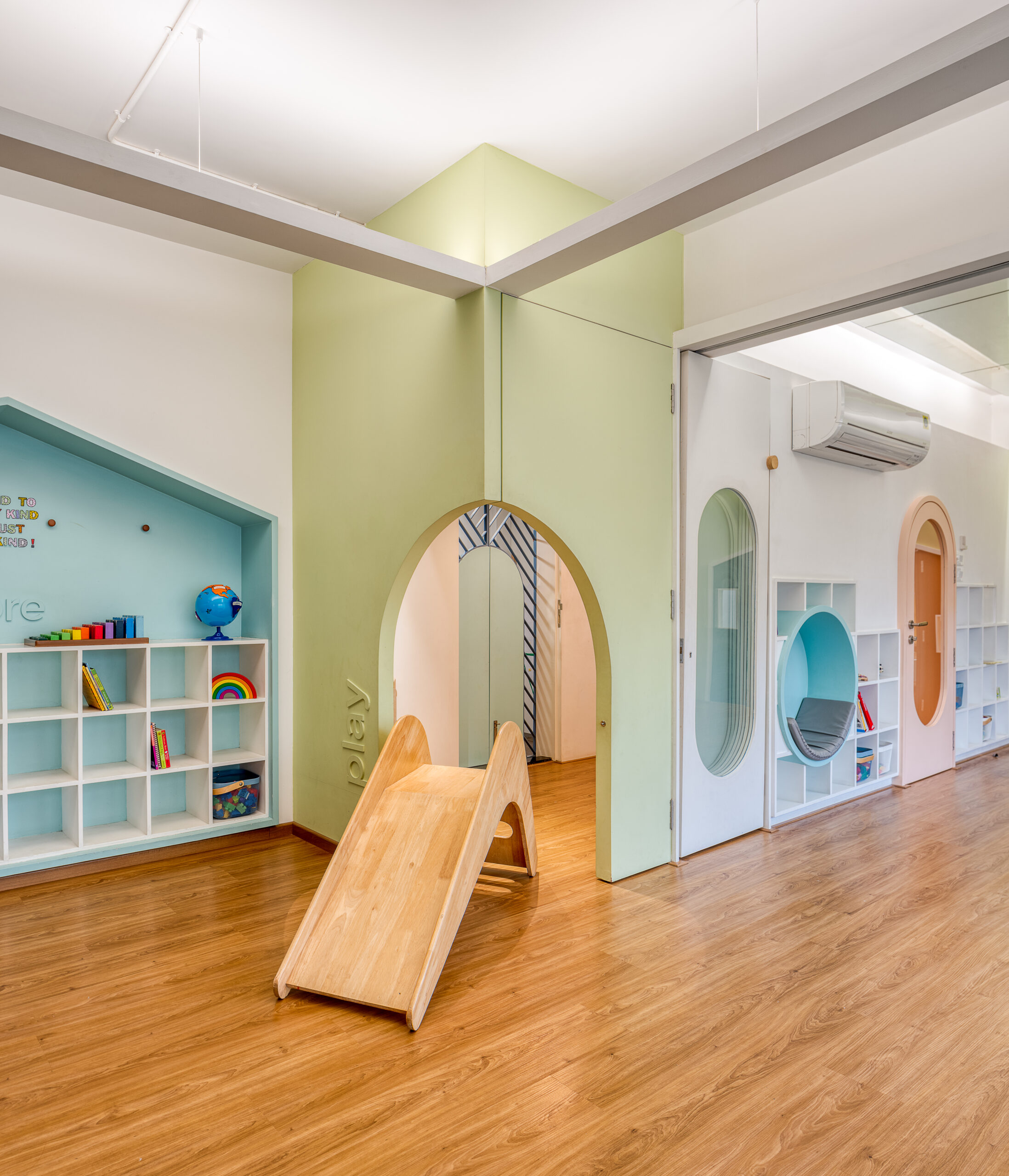
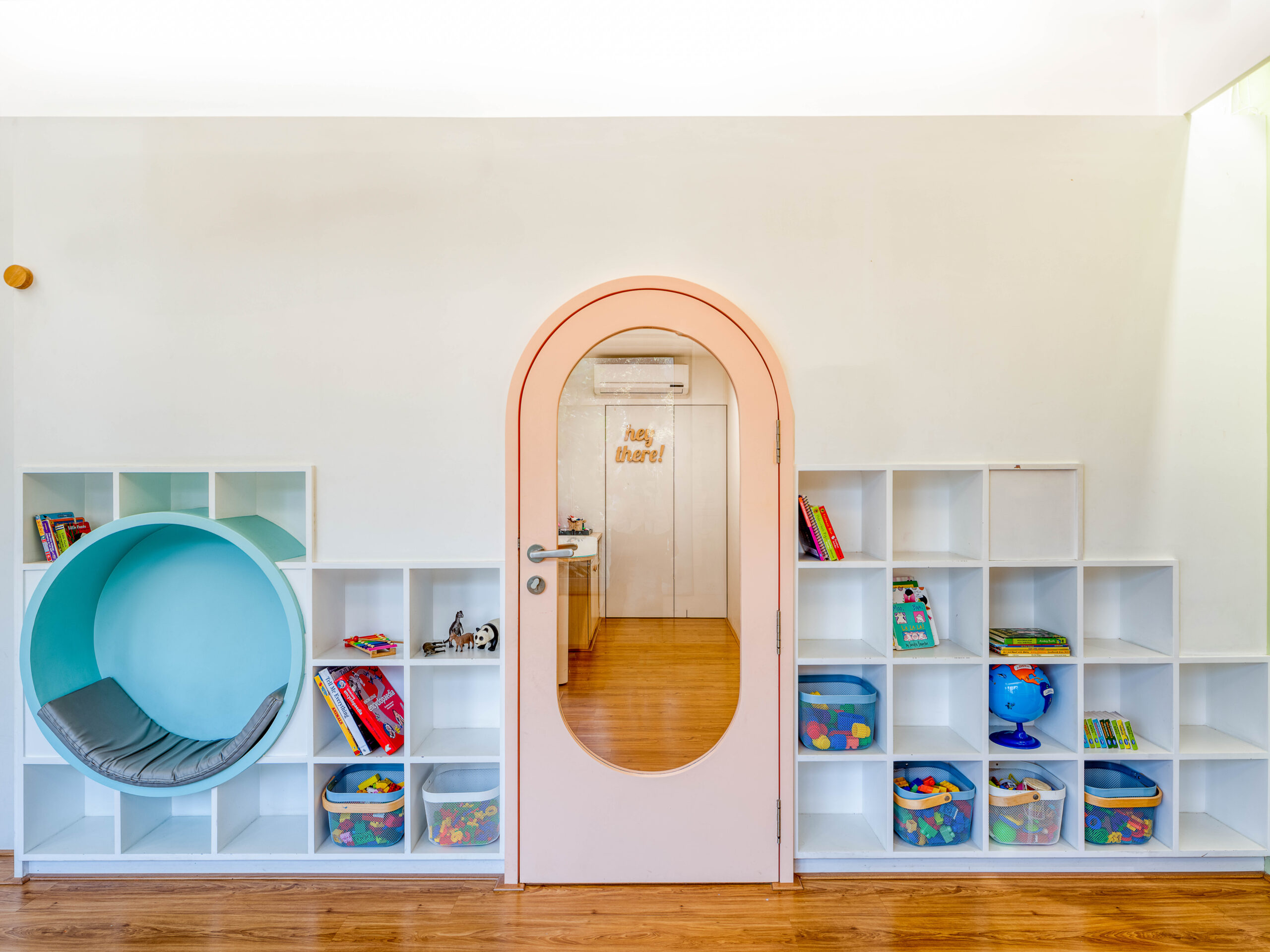
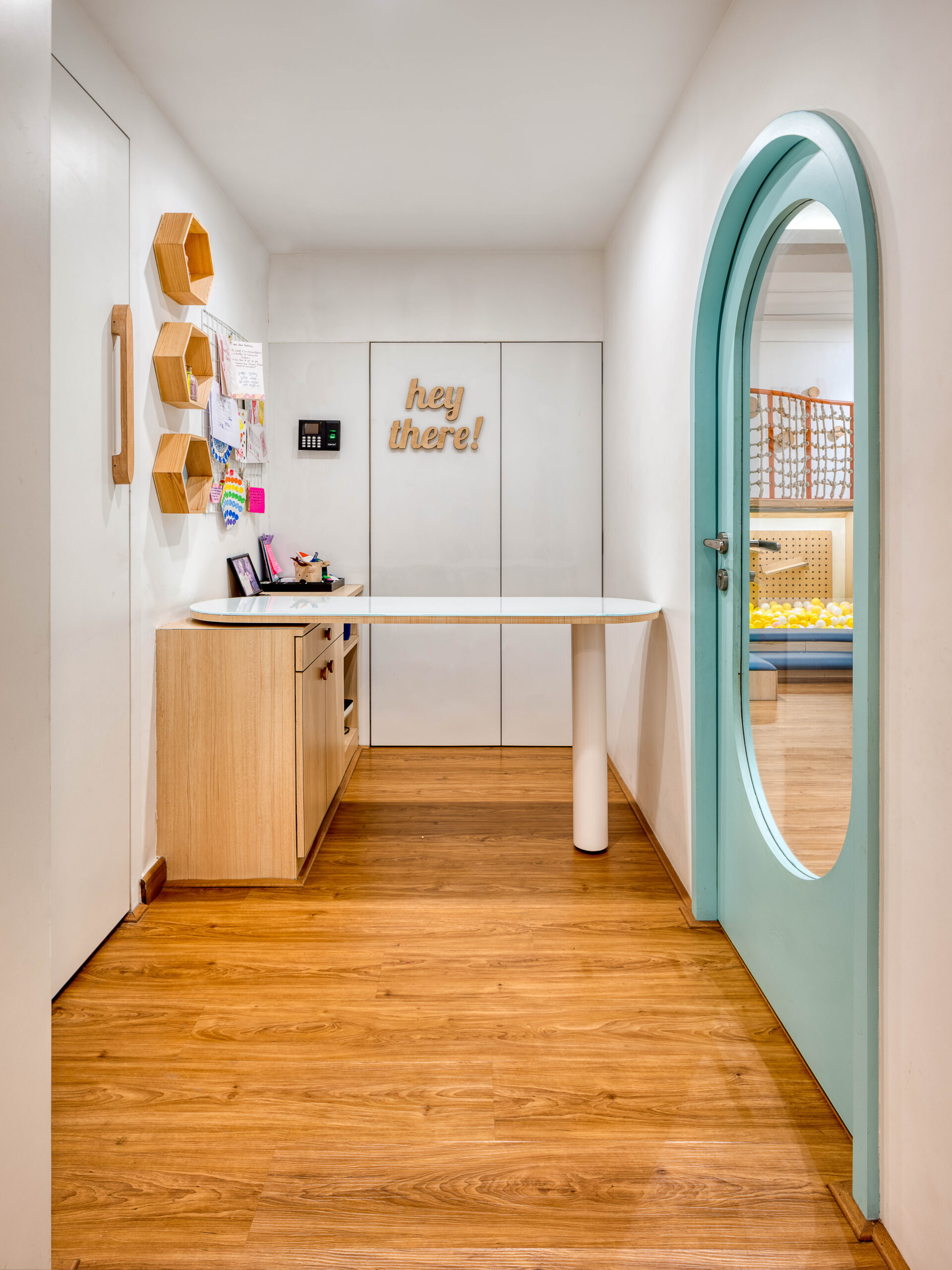
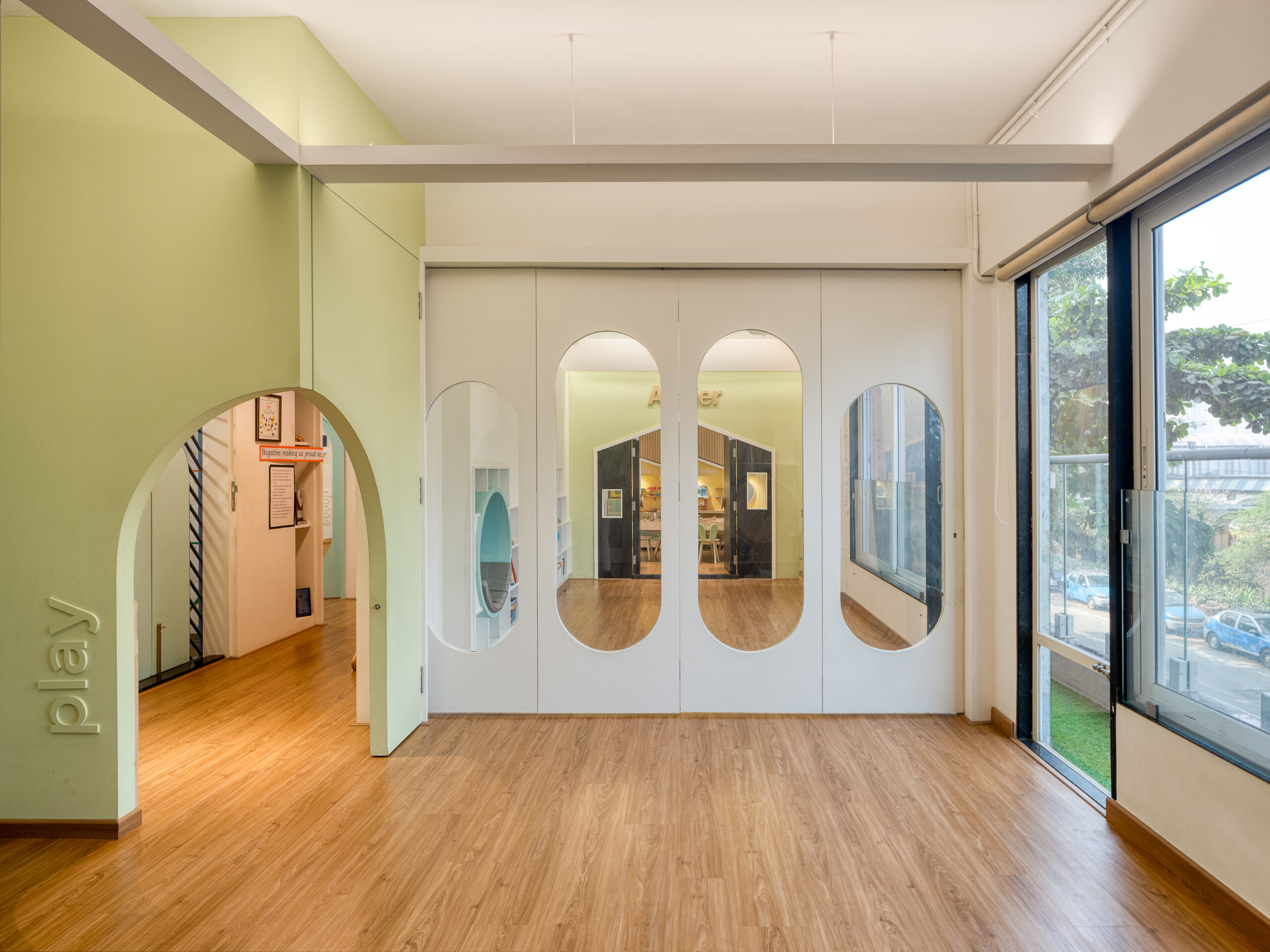
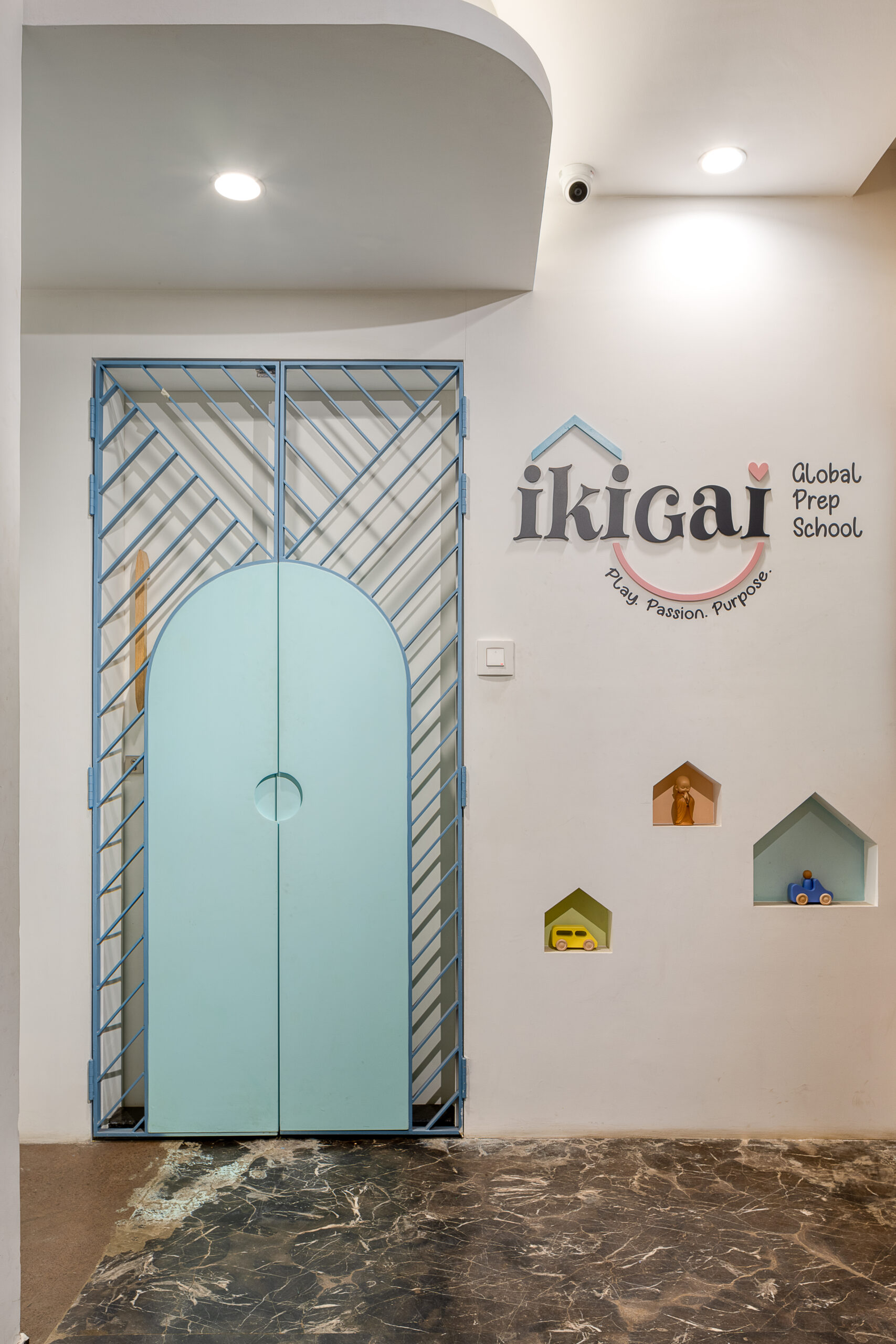
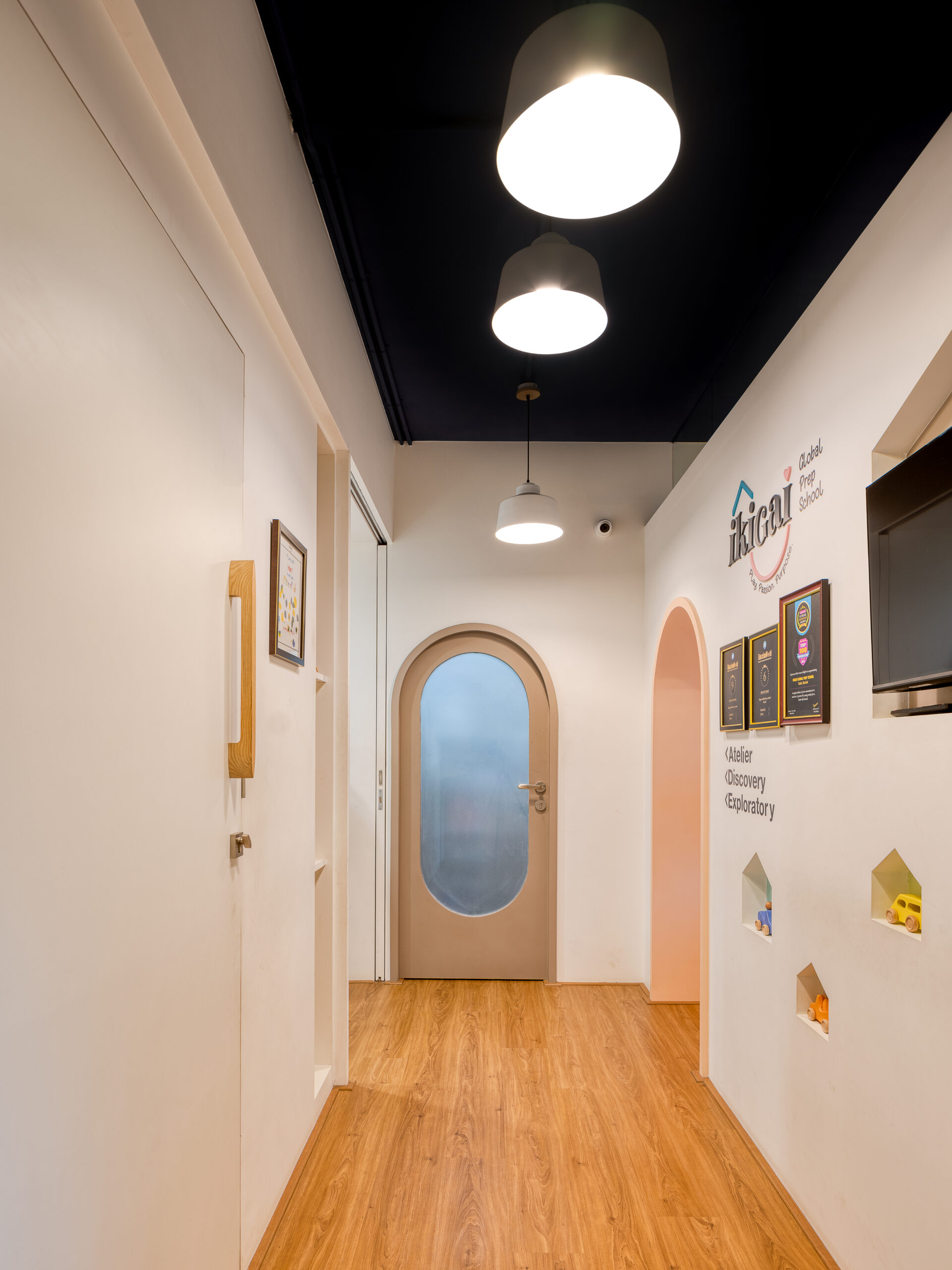
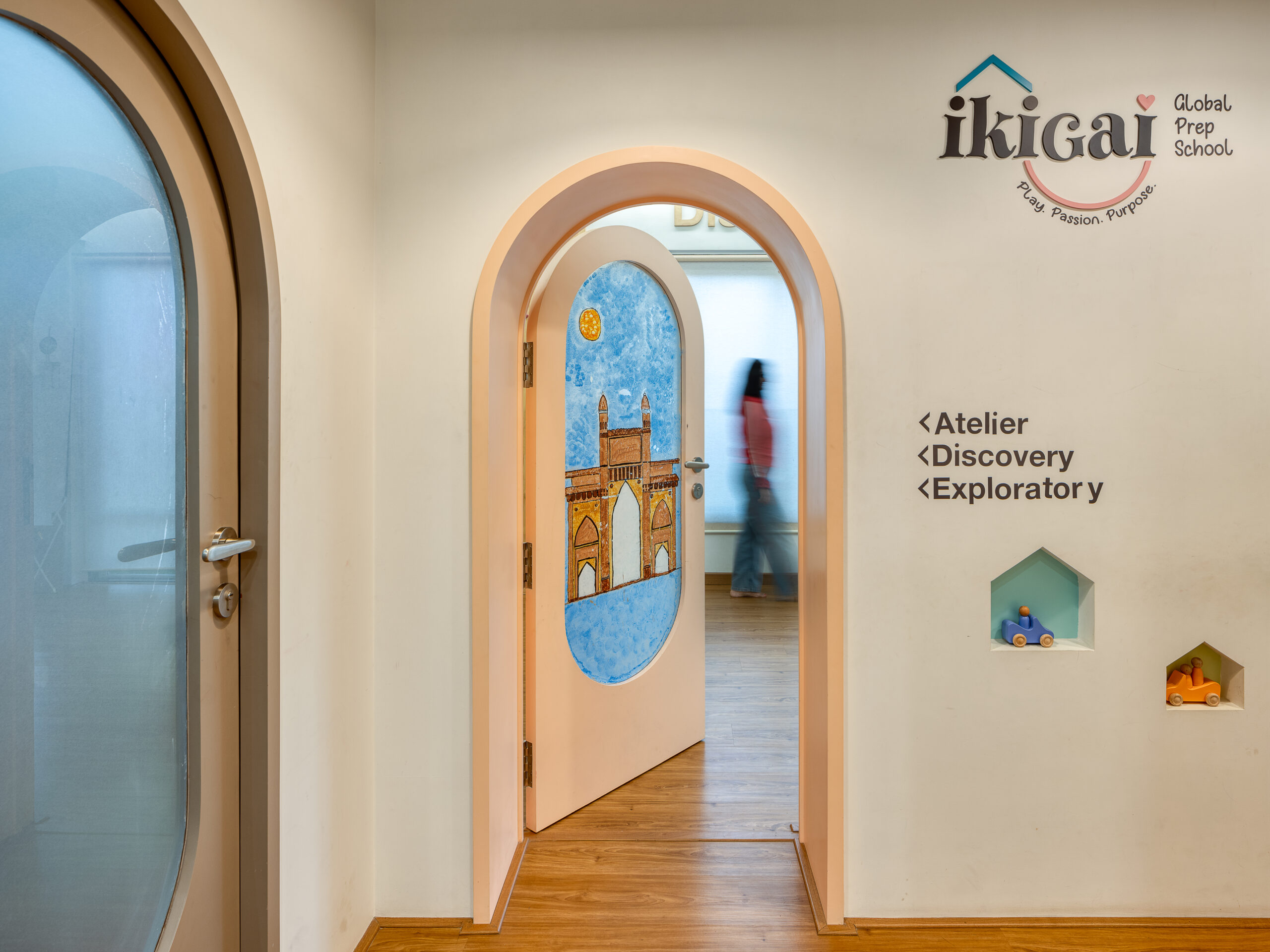
The planning carefully responds to the needs of both children and educators. Dedicated entry and exit points create separate circulation routes for parents and students, ensuring smoother movement during arrival and dispersal hours. These pathways connect through a central corridor lined with playful visual cues, soft-edged glass doors, and intuitive wayfinding elements that help children navigate the school independently while fostering a sense of confidence and belonging.
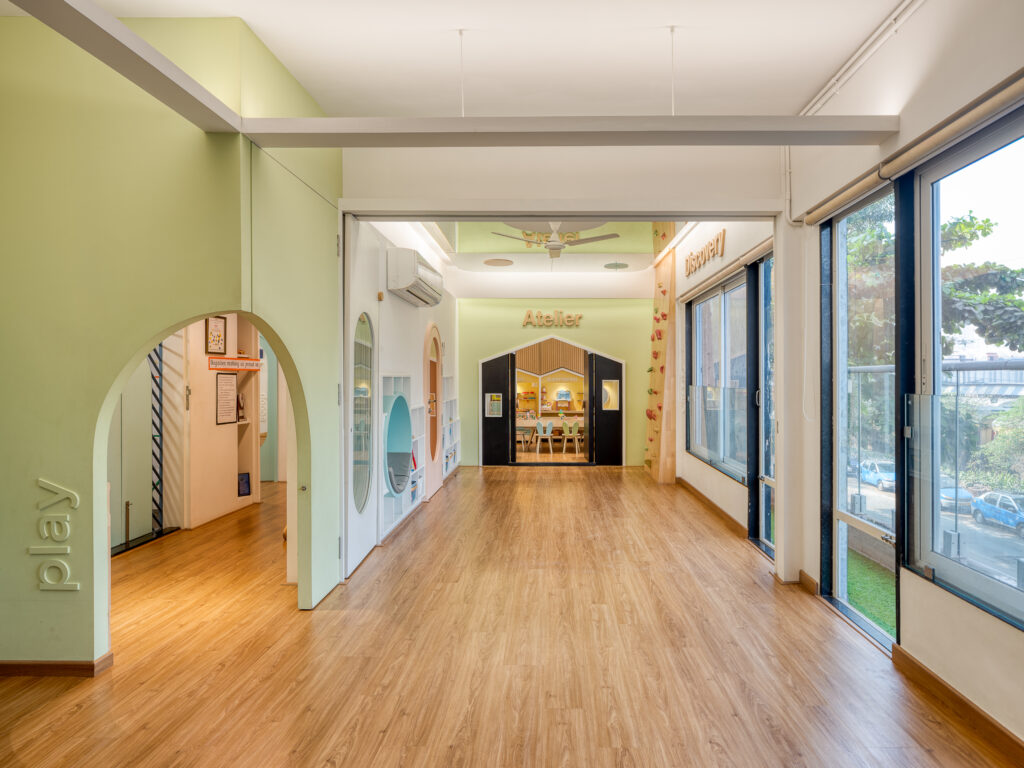
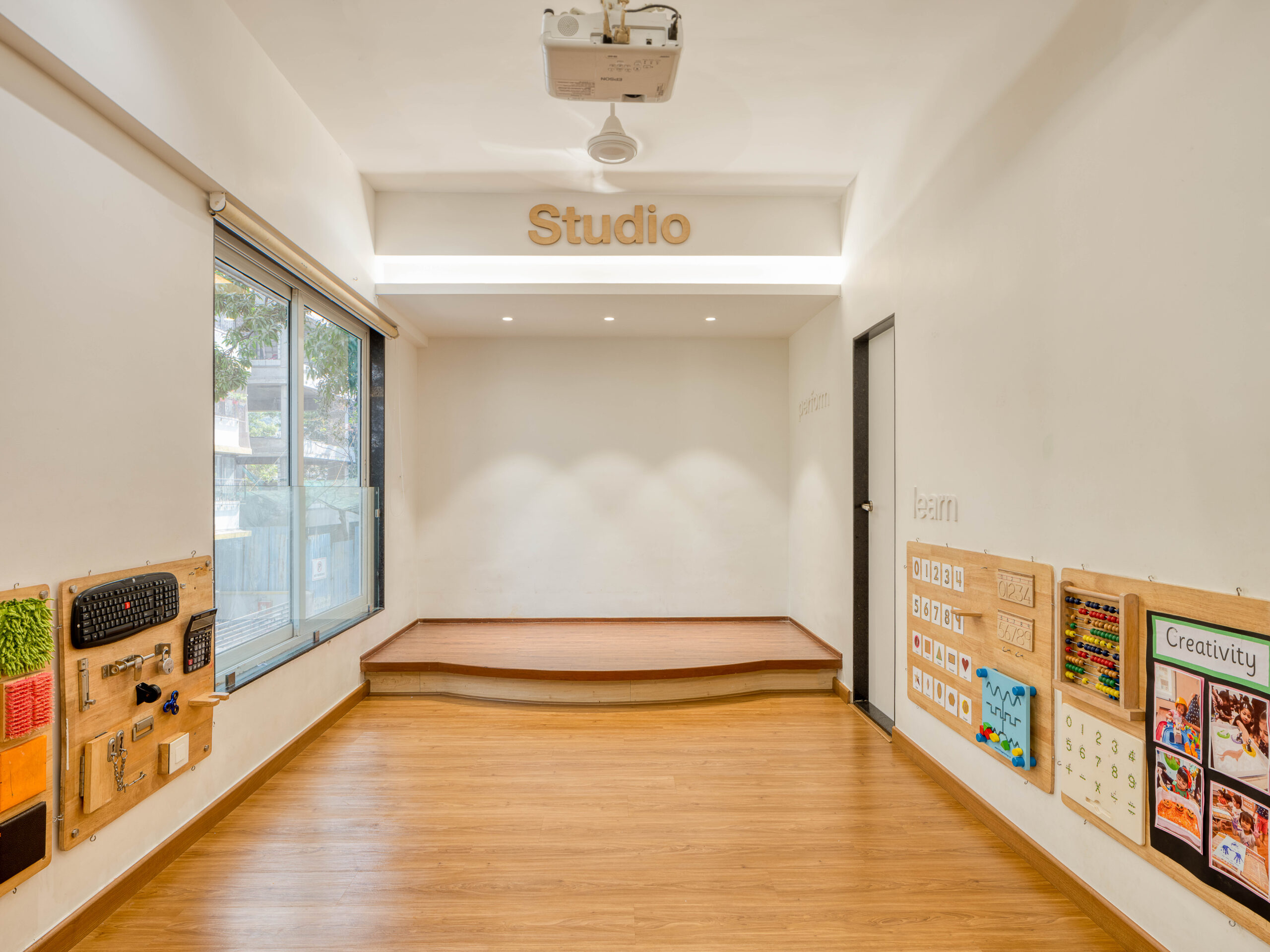
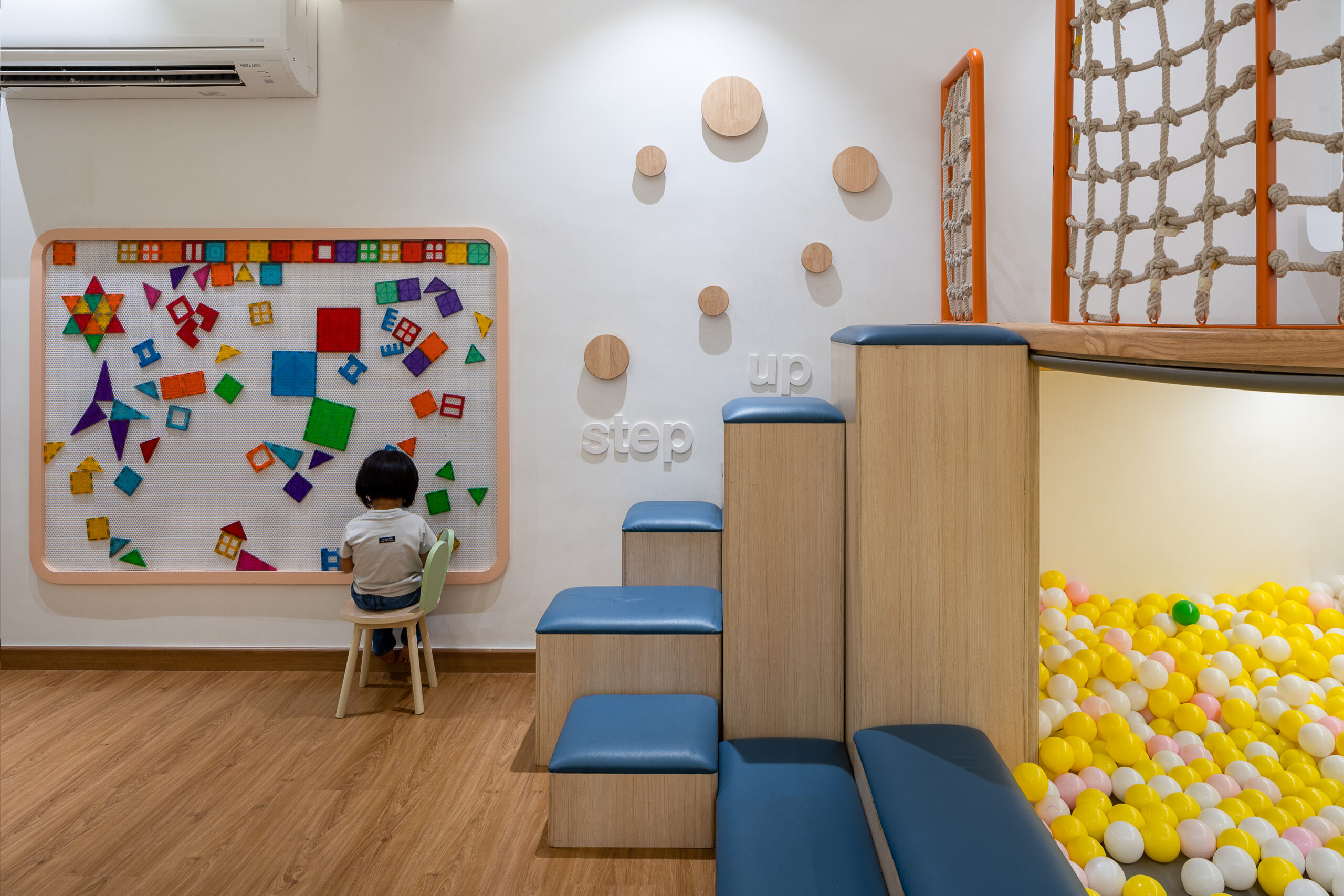
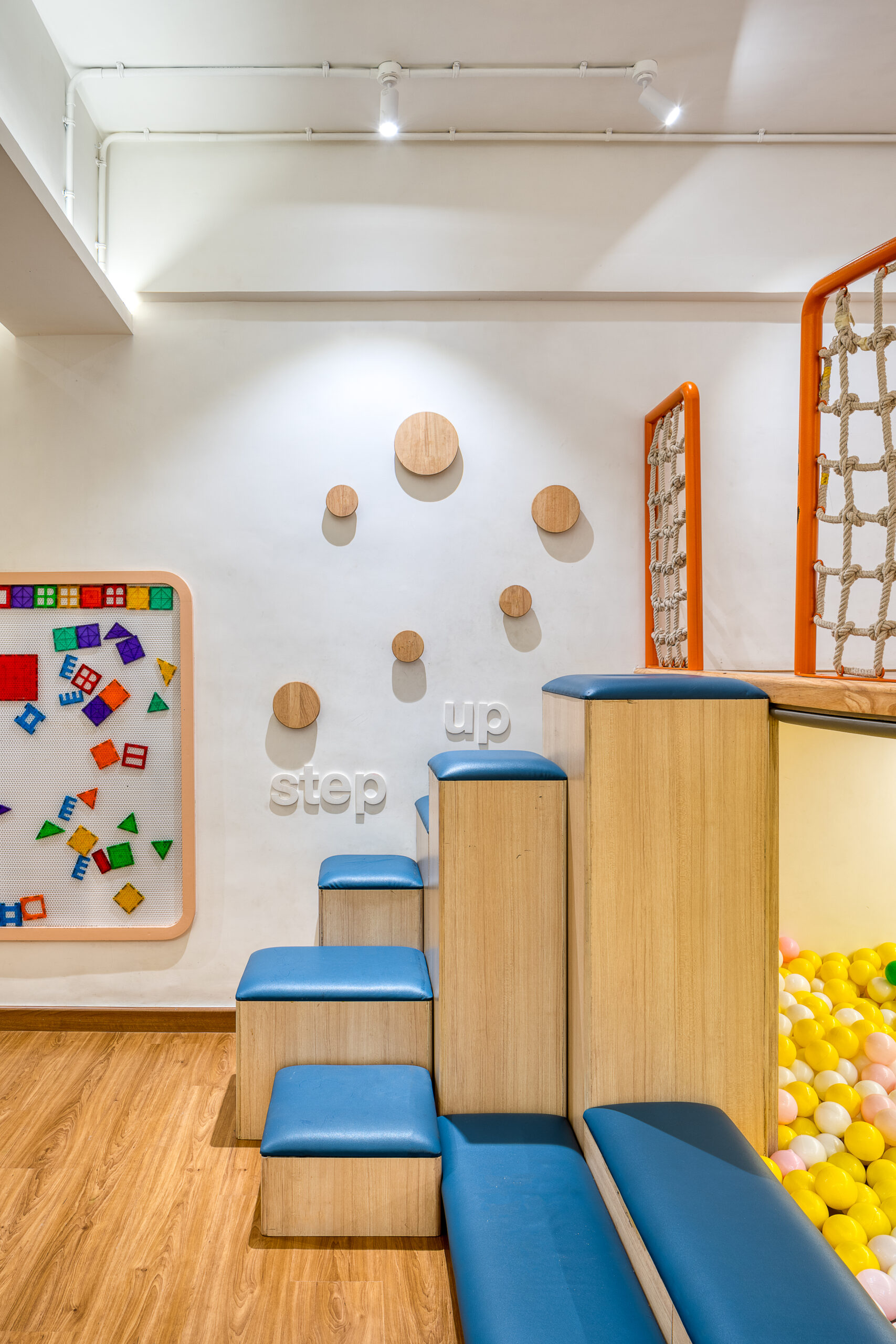
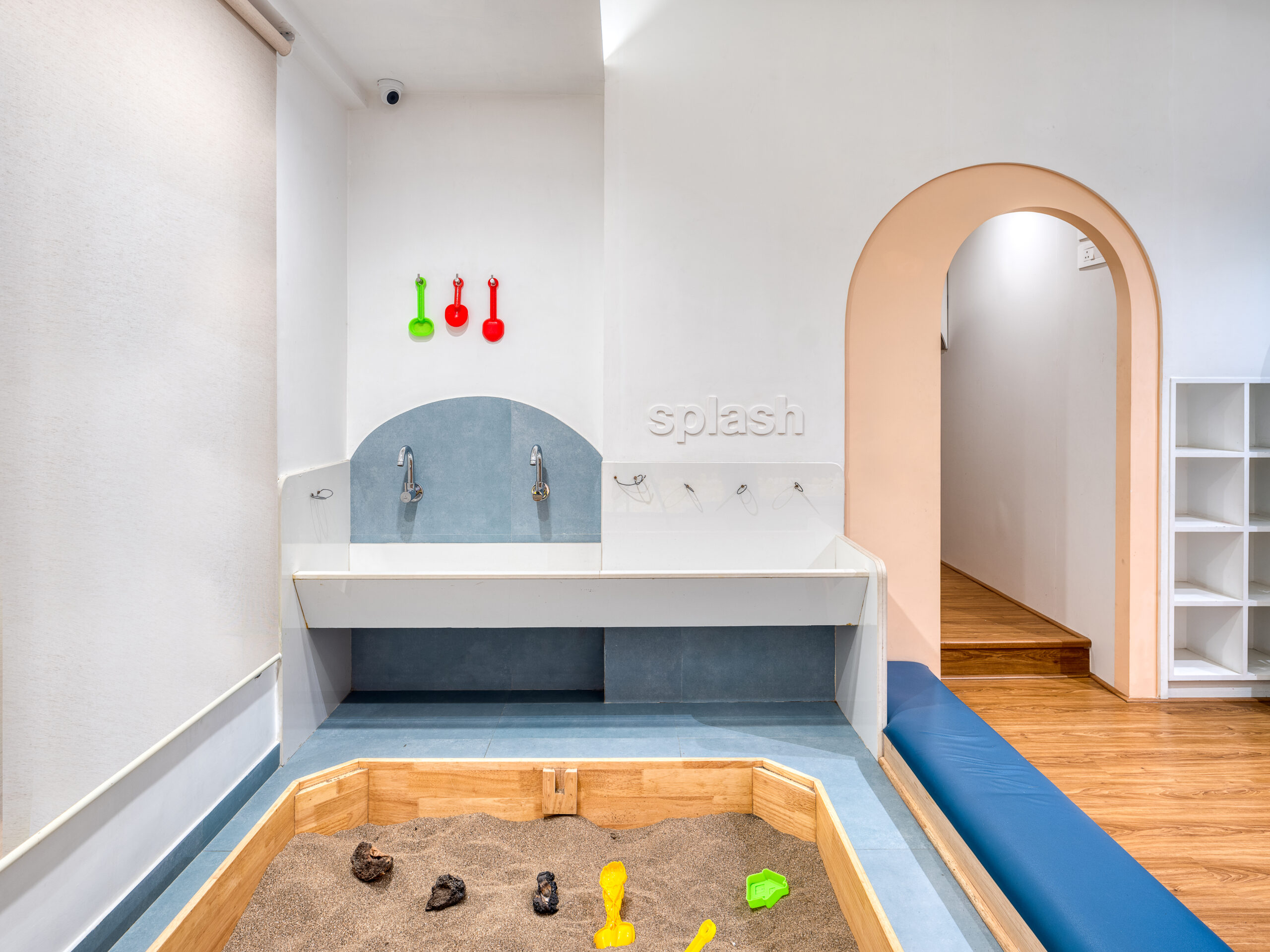
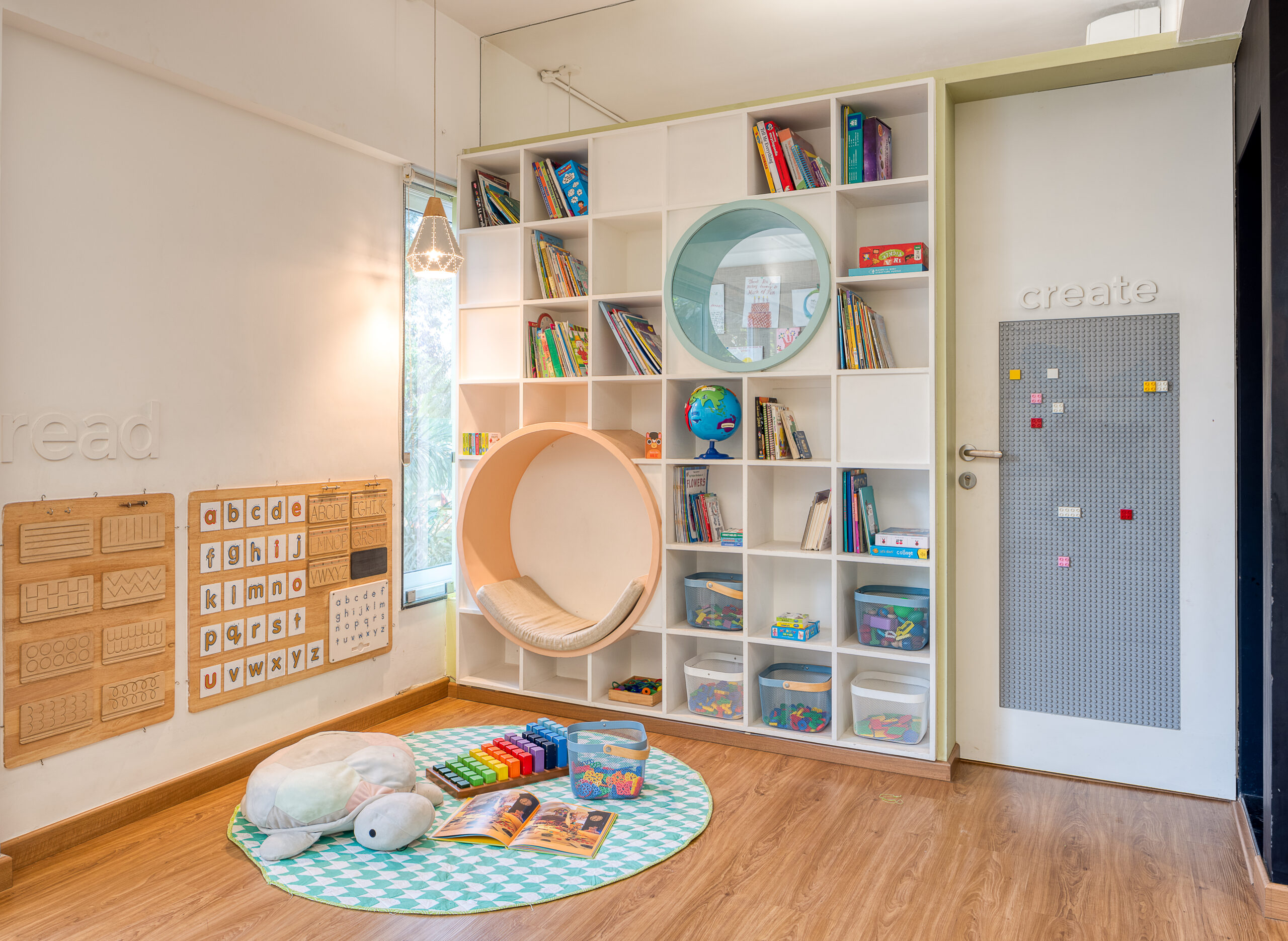
A defining idea shaped the entire project: the school is all about the walls. Rather than treating walls as passive boundaries, they become active learning interfaces that support engagement, interaction, and discovery. This approach allowed the design team to minimise loose furniture and maximise usable floor area, creating a series of flexible experiential environments where every surface serves a purpose.
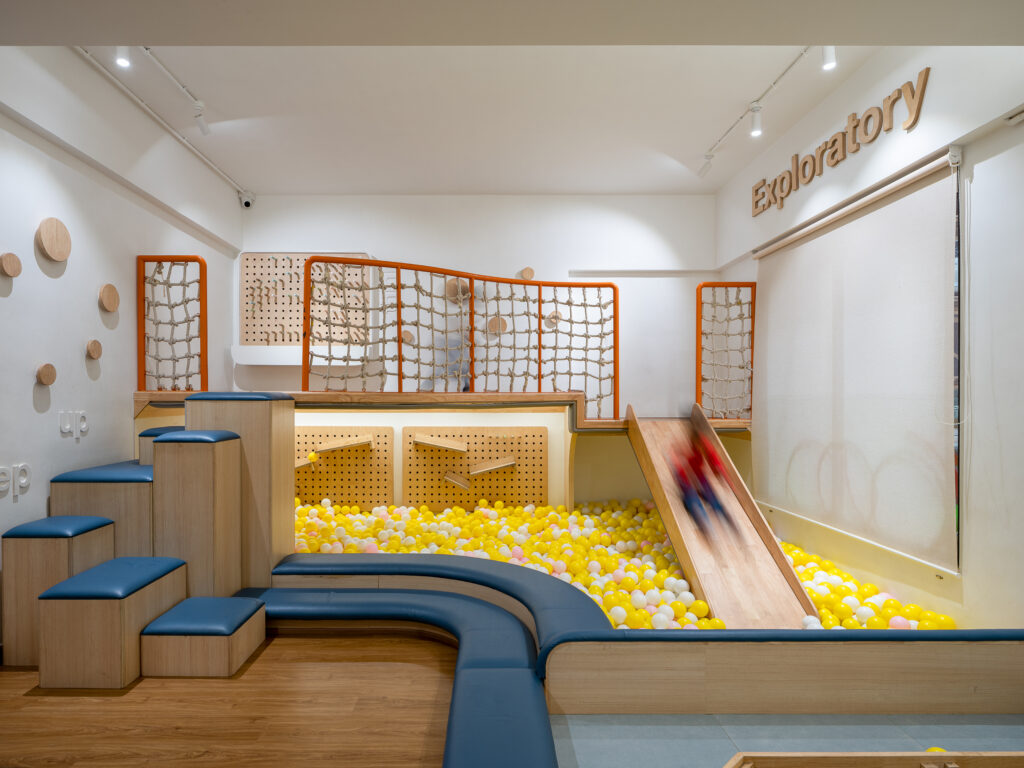
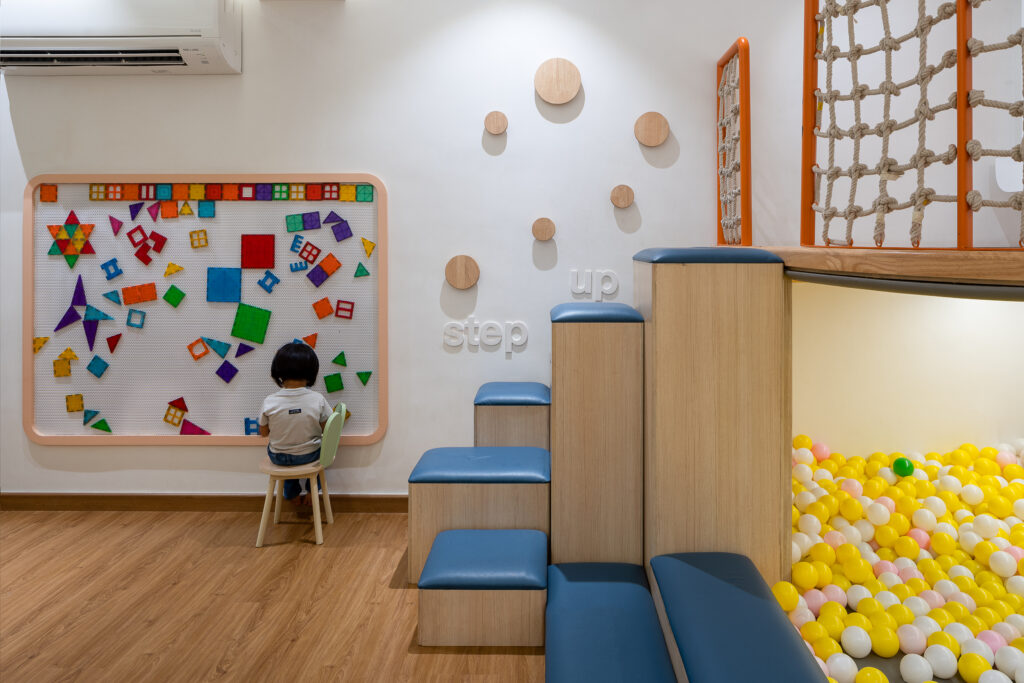
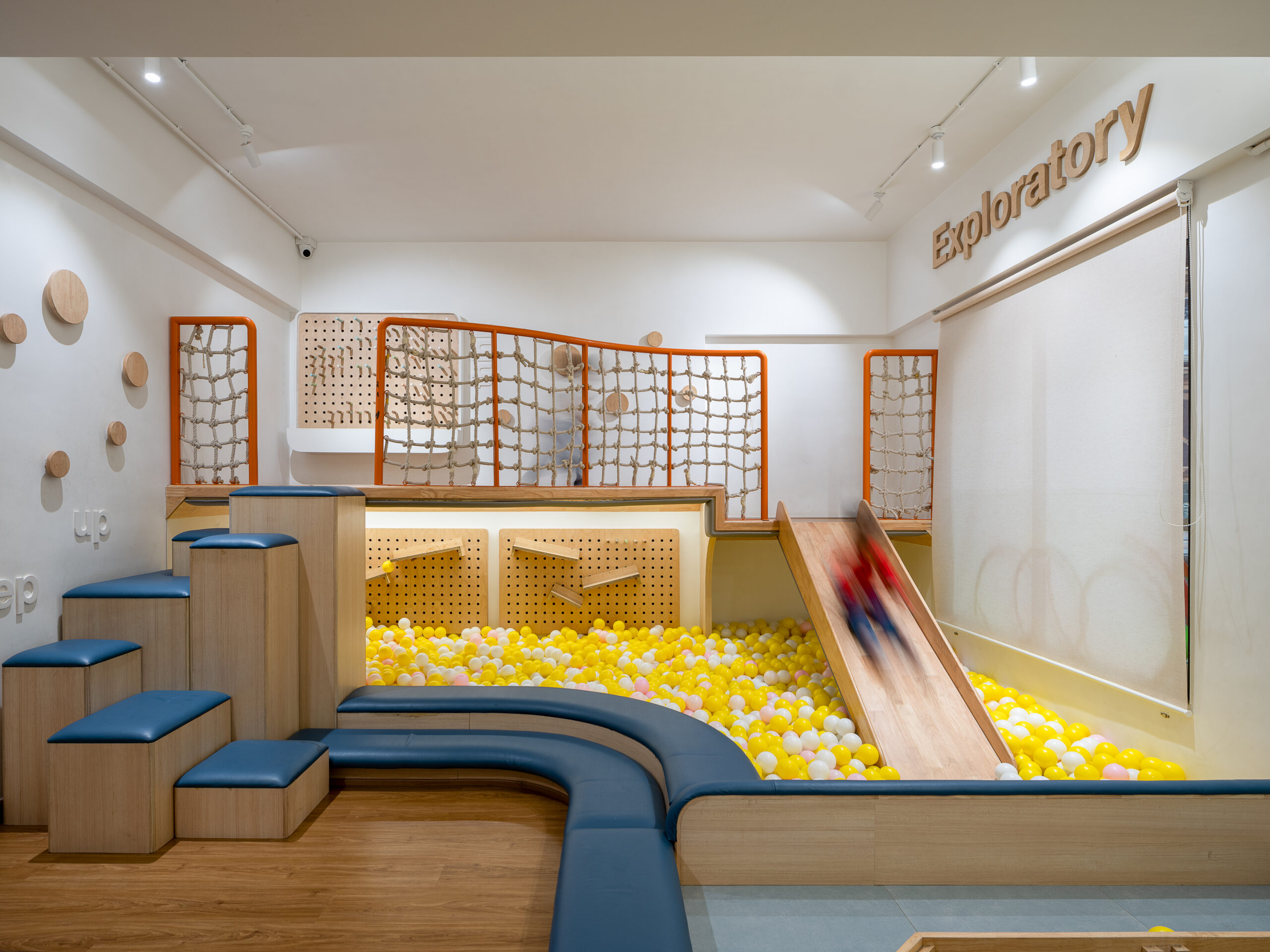
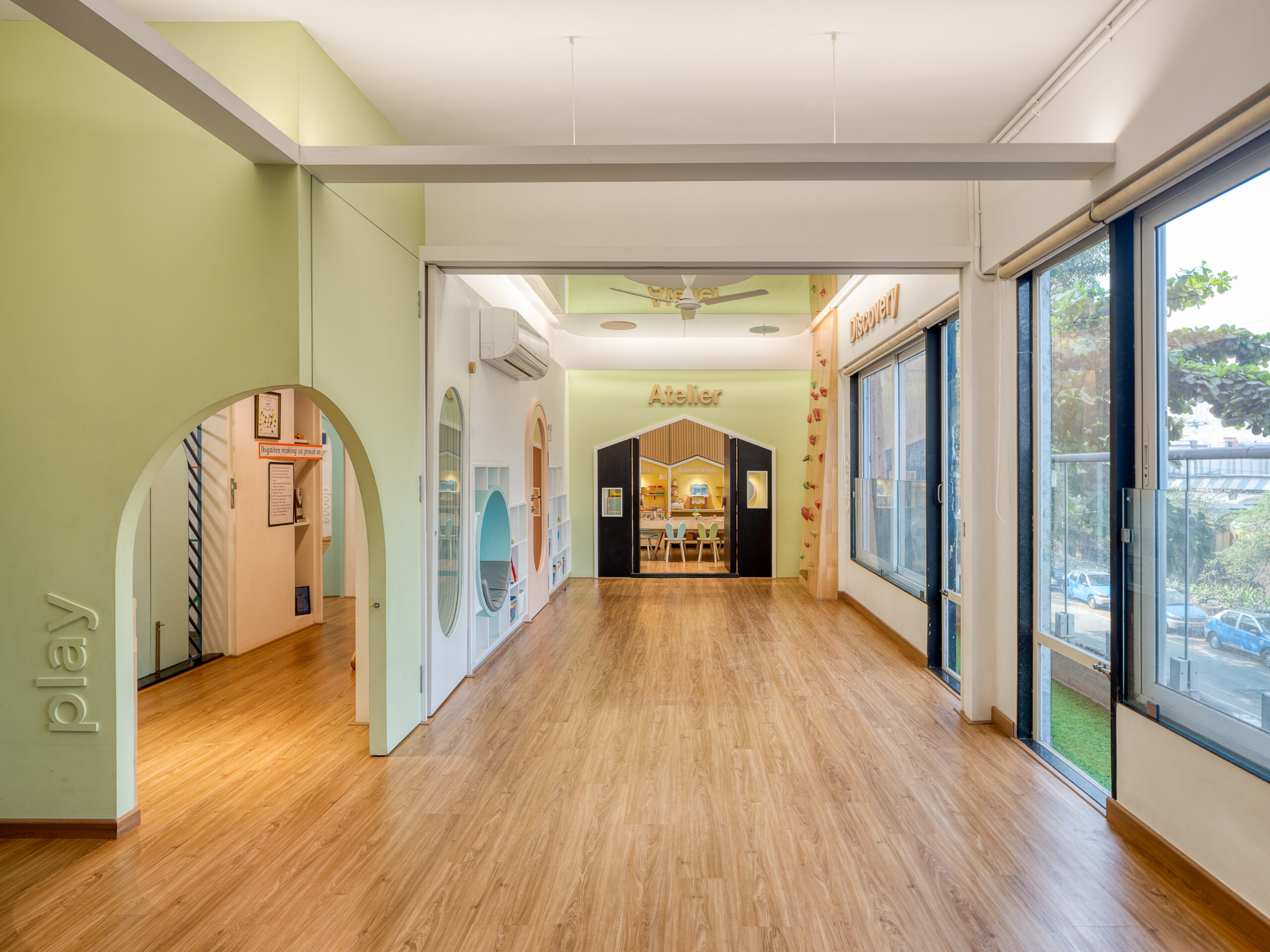
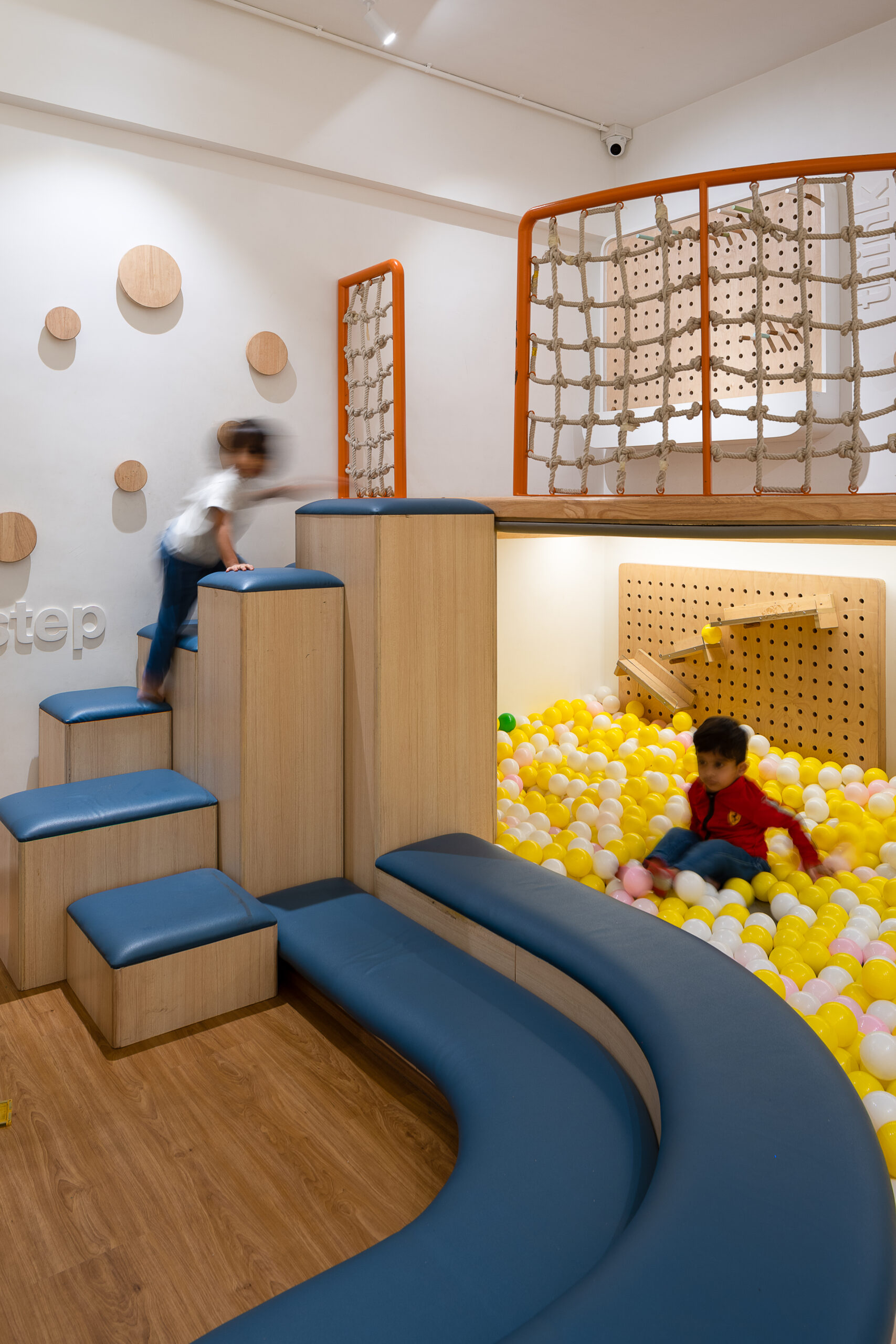
The school unfolds through a collection of themed learning zones tailored to different stages of development. The Exploratory Zone focuses on physical activity and sensory engagement through climbing elements, tactile installations, stepping platforms, and movement-based interactions that support coordination and motor skill development.
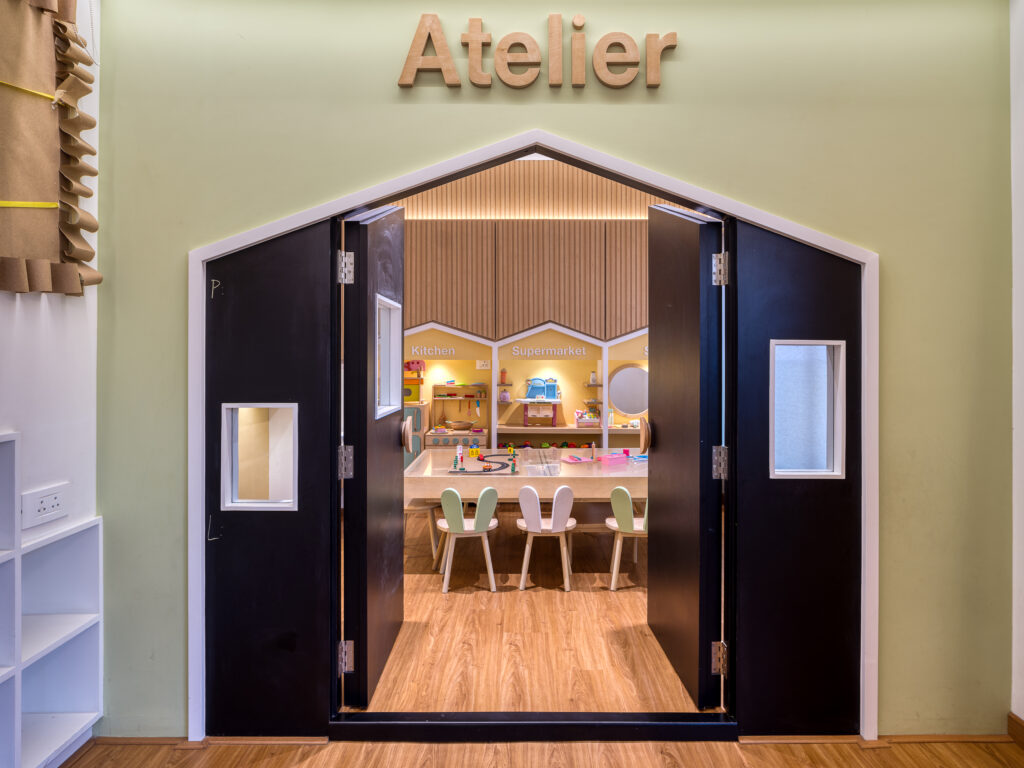
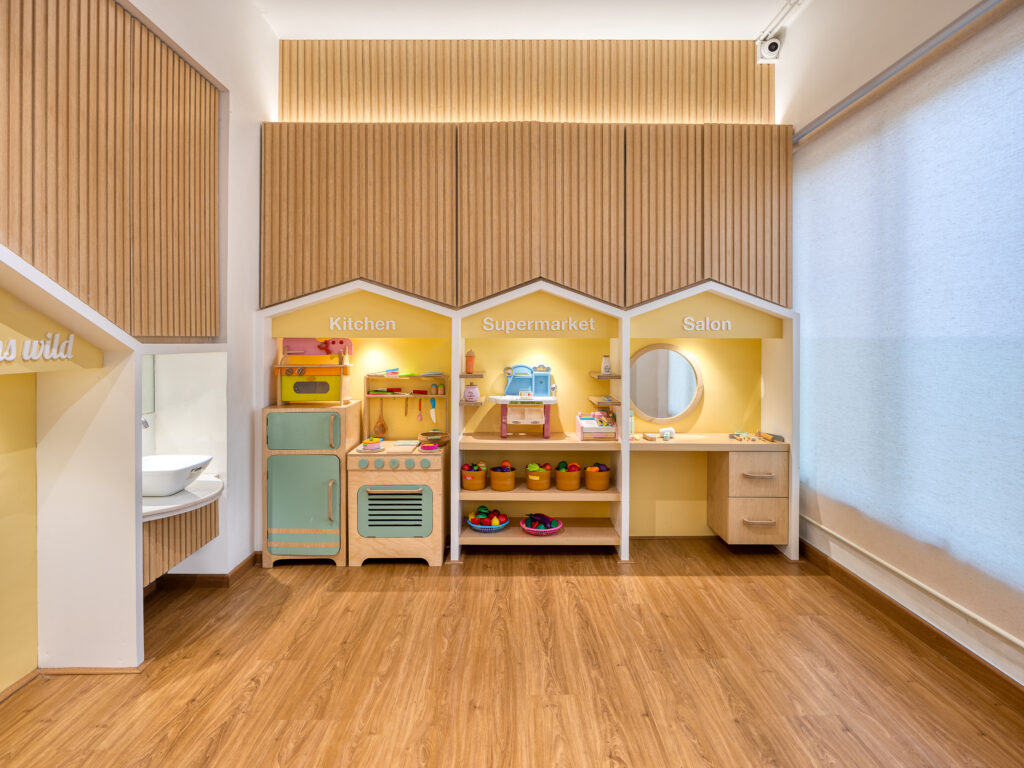
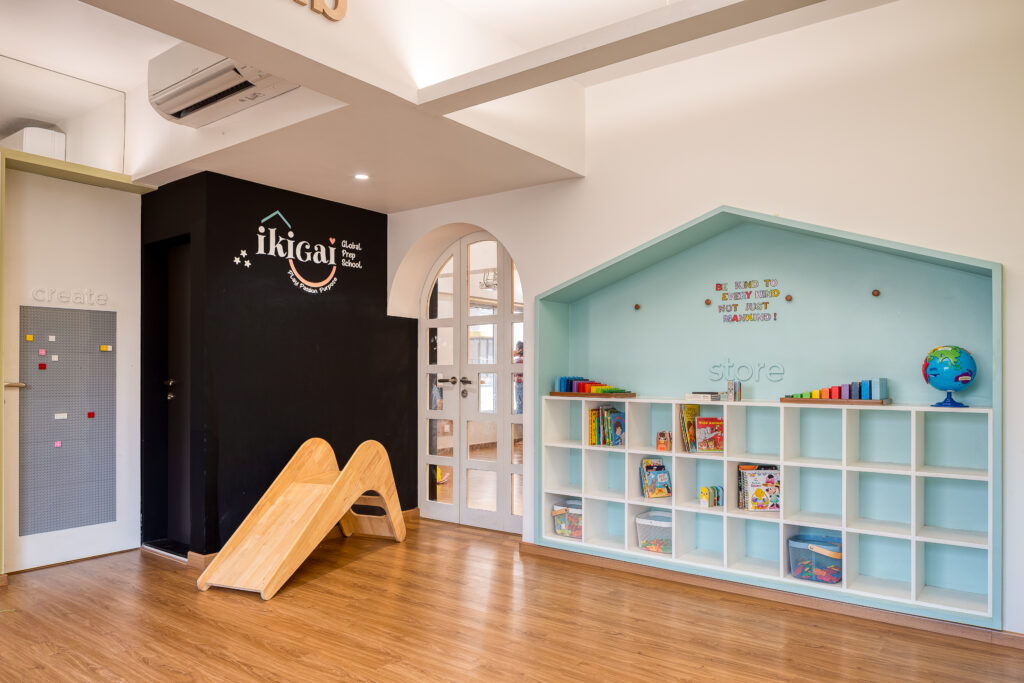
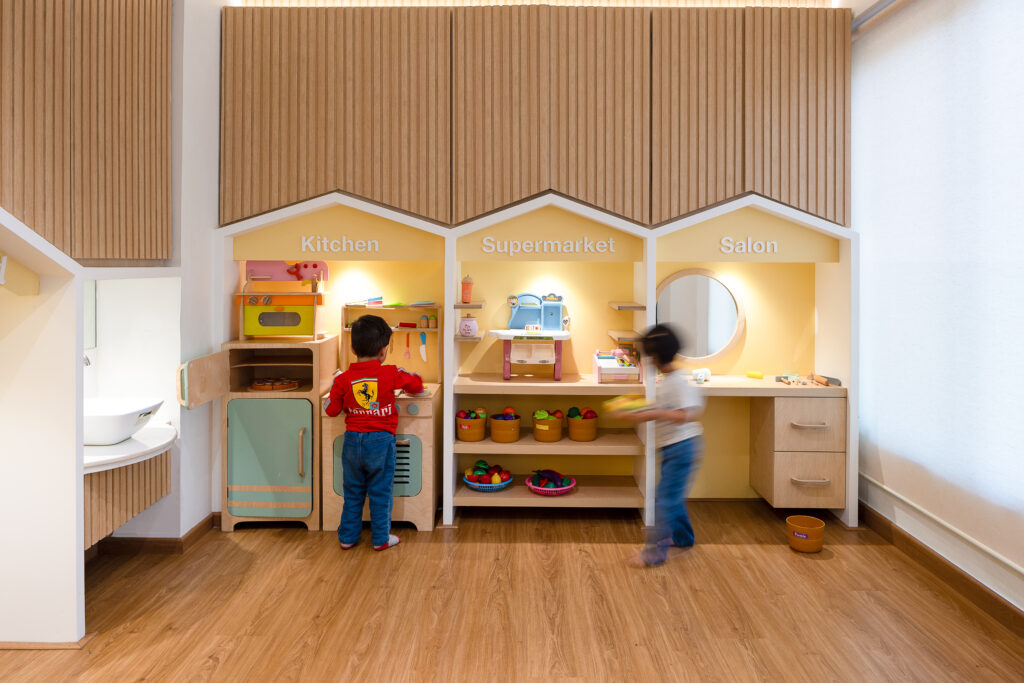
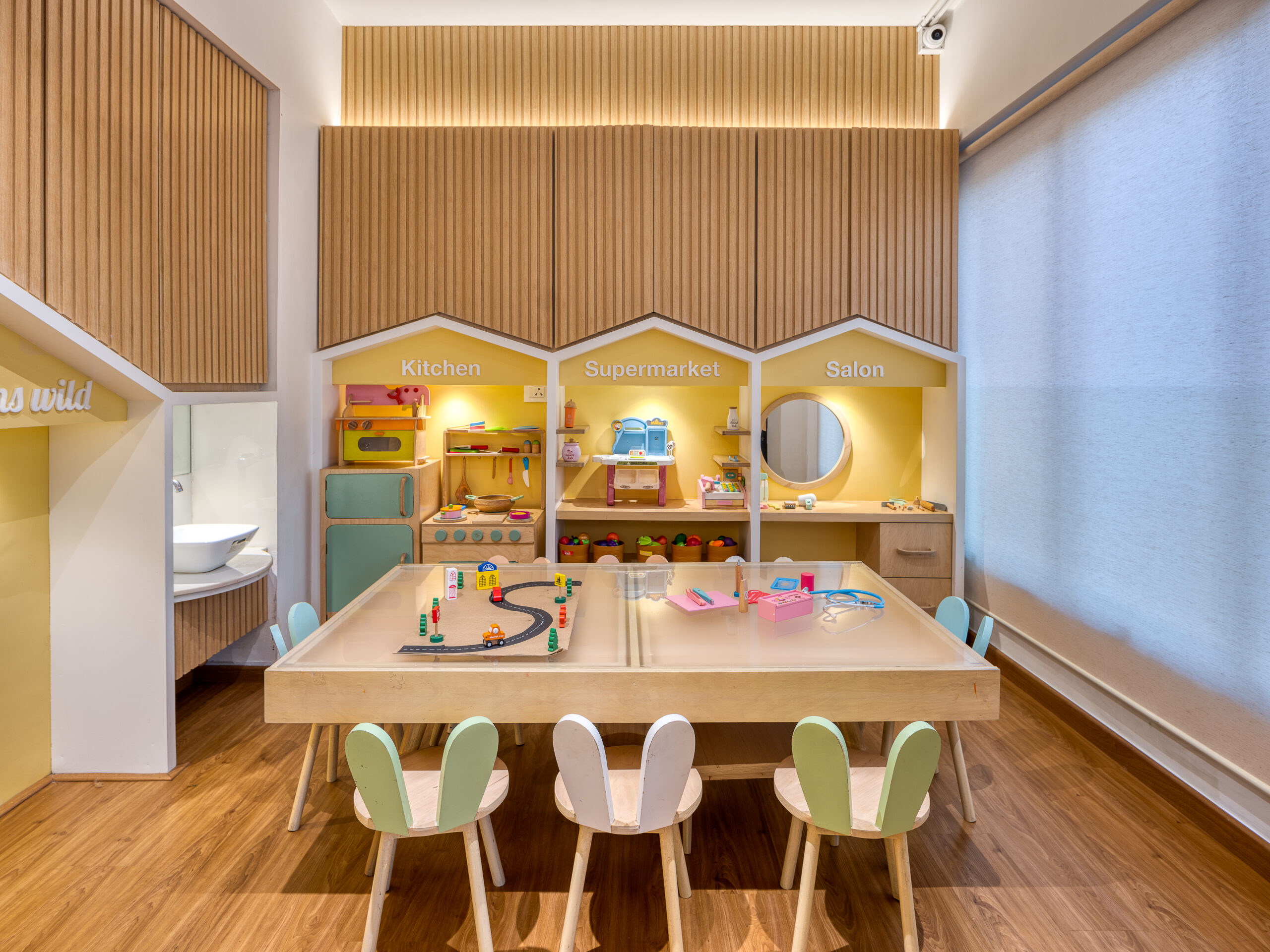
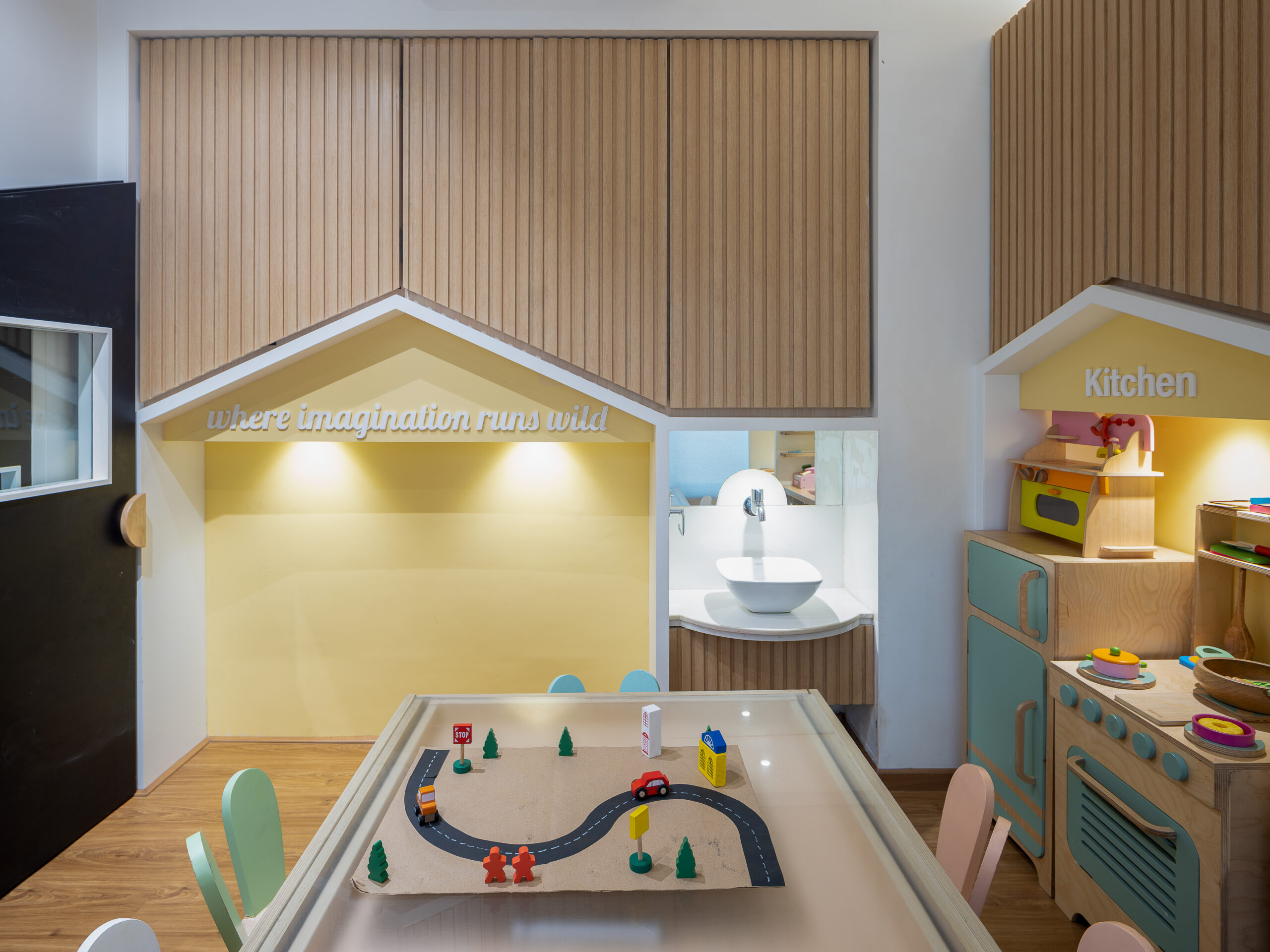
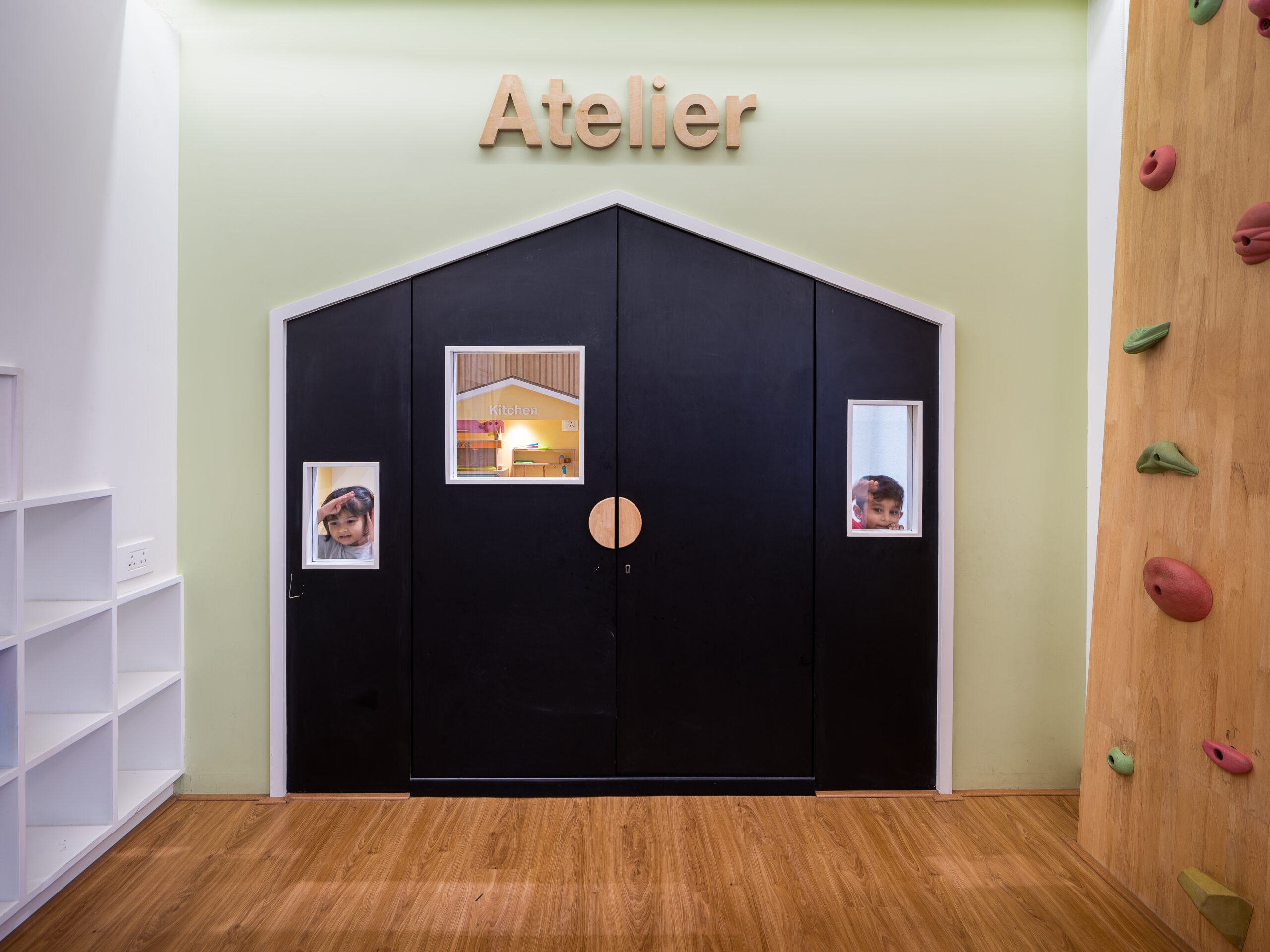
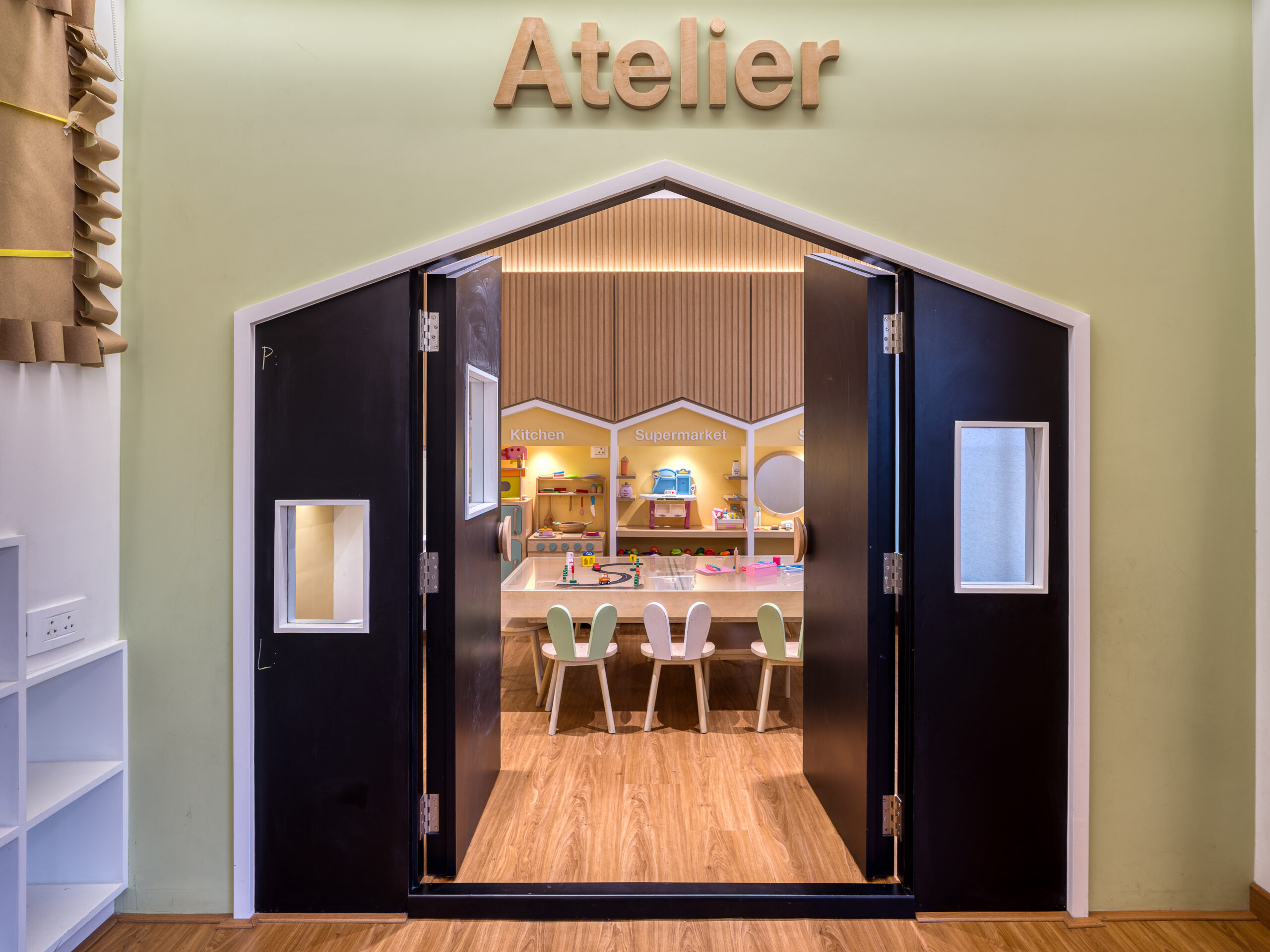
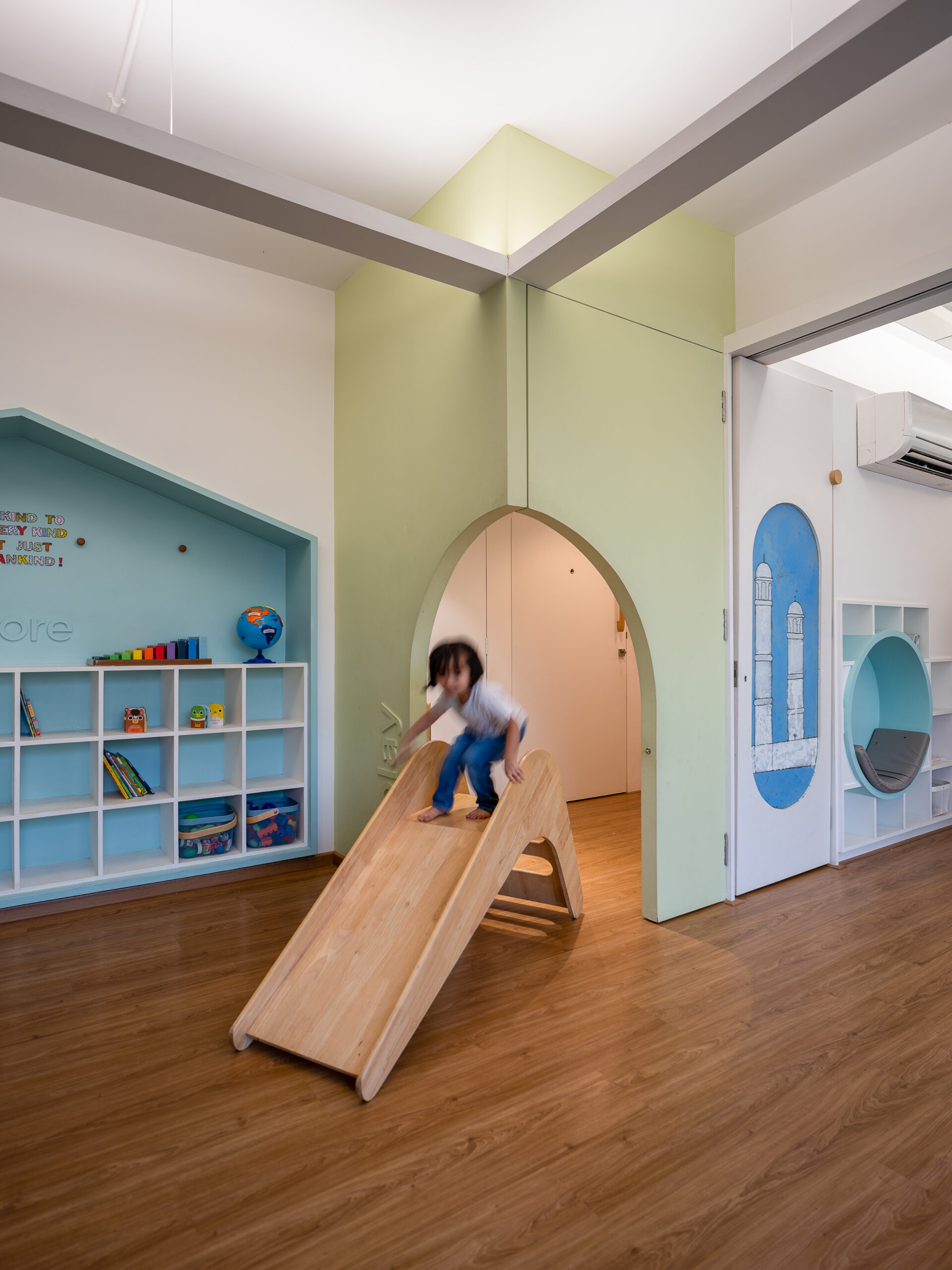
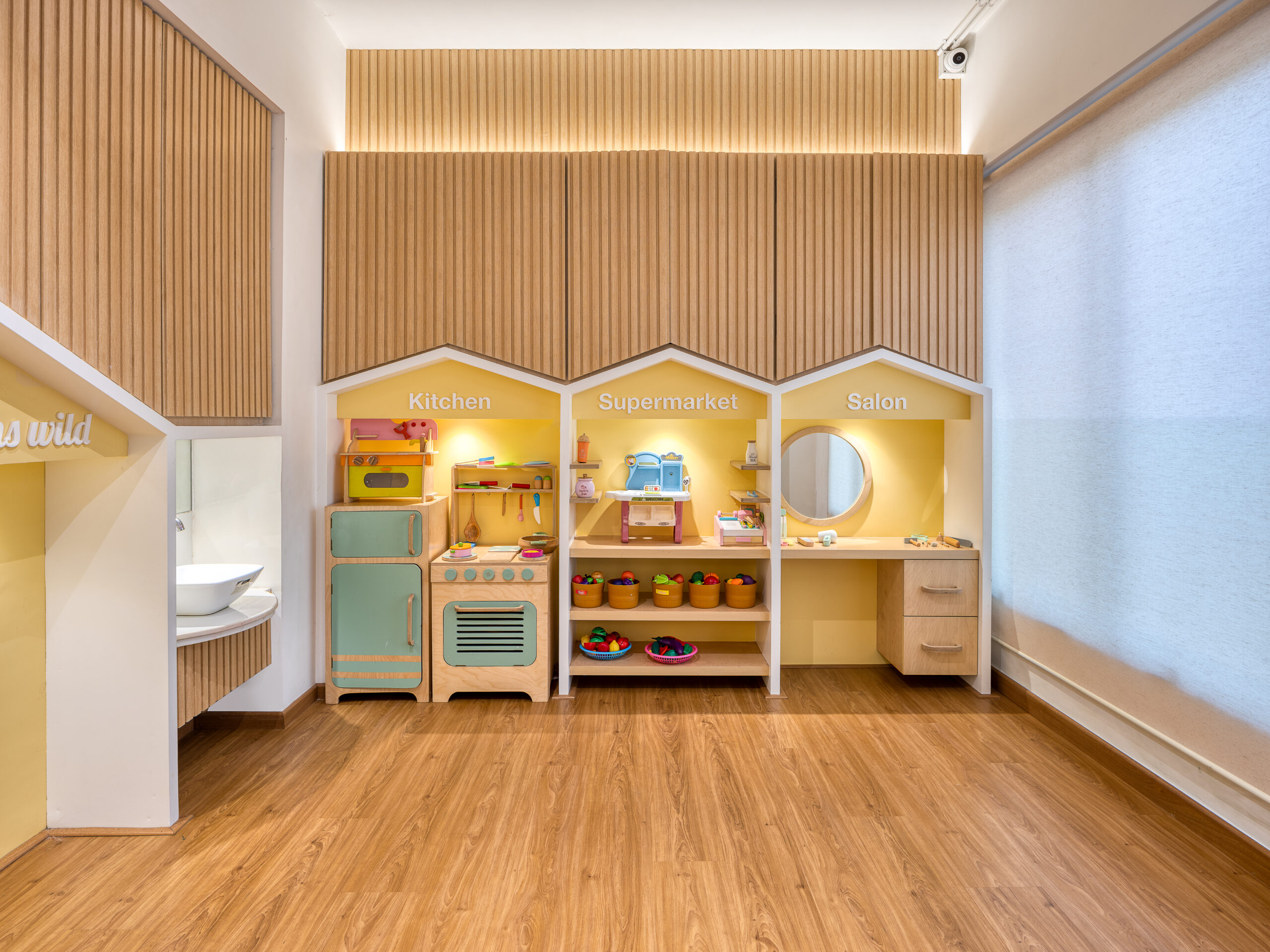
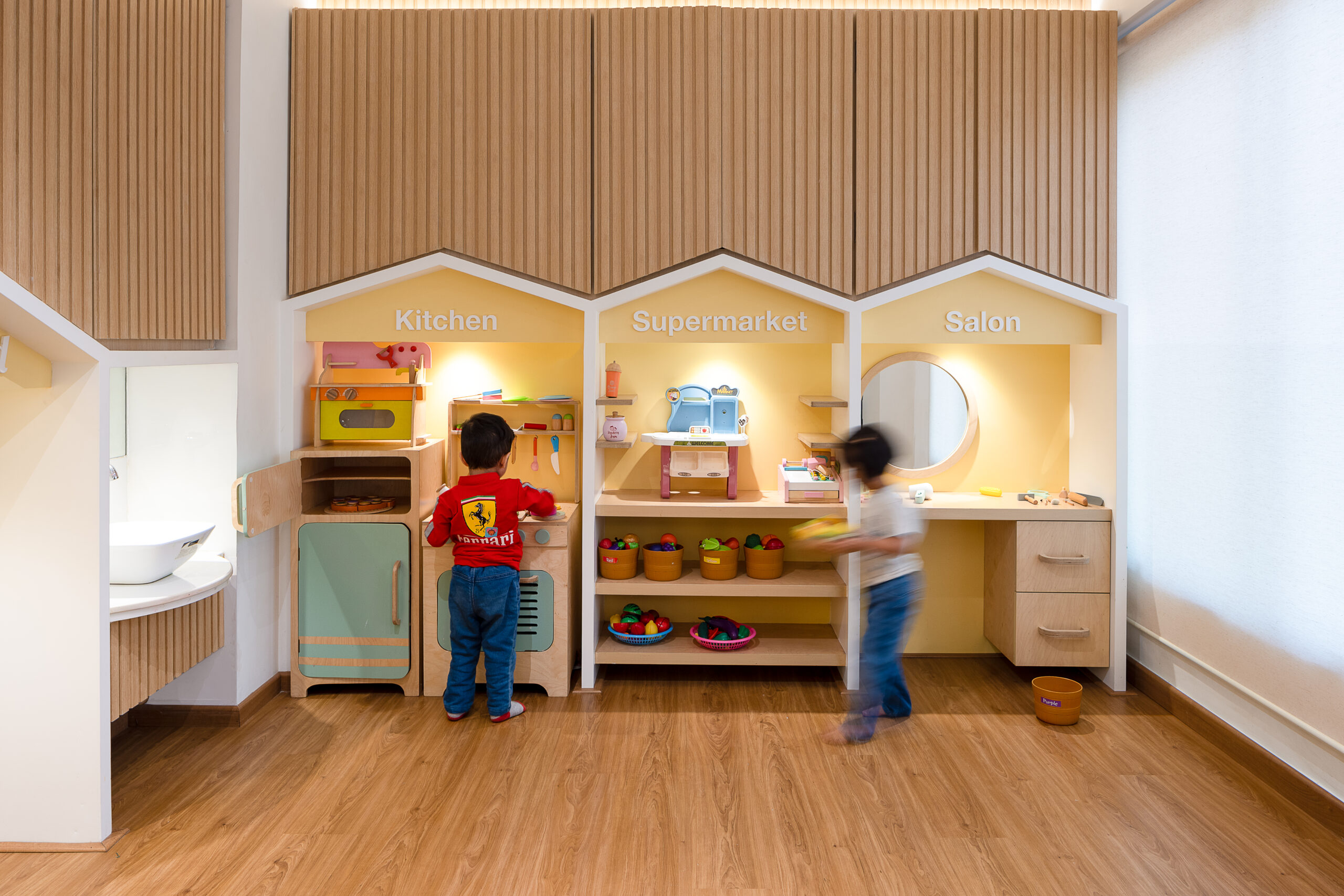
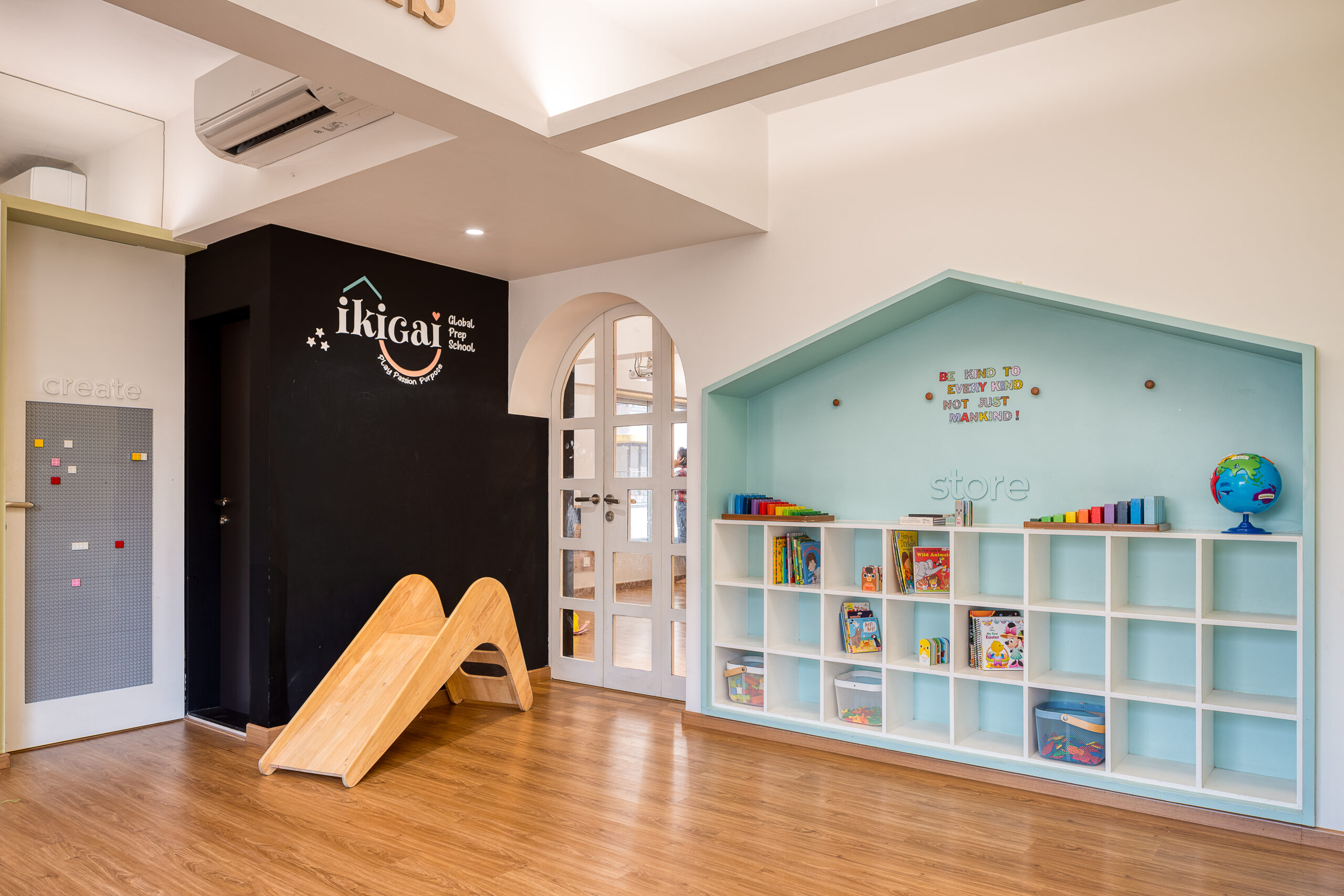
The Atelier introduces children to imaginative role play through miniature environments such as kitchens, supermarkets, and salons, encouraging creativity, communication, and social interaction. The Language Lab transforms entry into an experience in itself, accessed through a playful slide that sparks curiosity and excitement before learning begins.
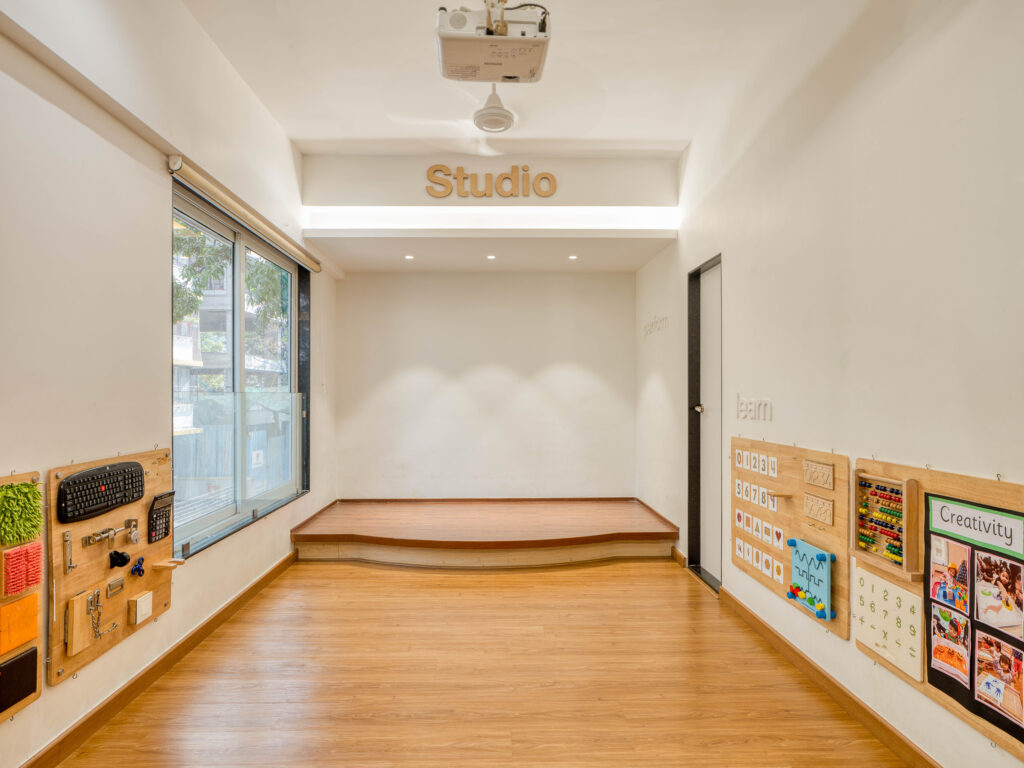
The Studio remains intentionally open and adaptable, featuring blackboard walls, sensory installations, and a performance stage that support creative expression, collaboration, and group activities.
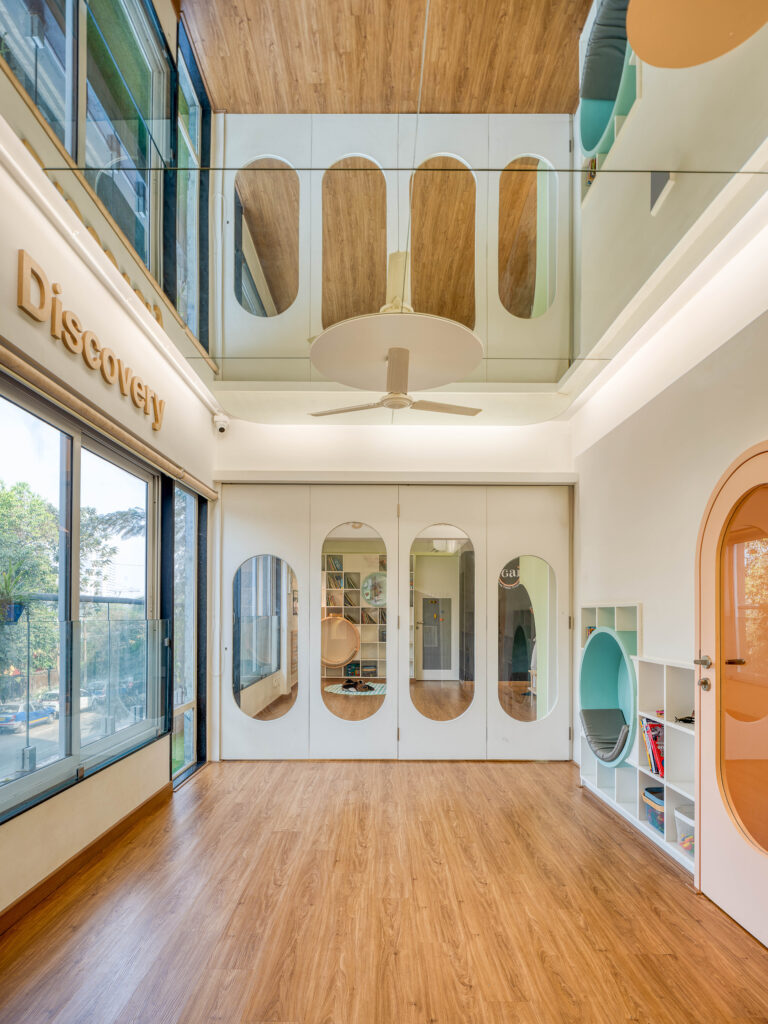
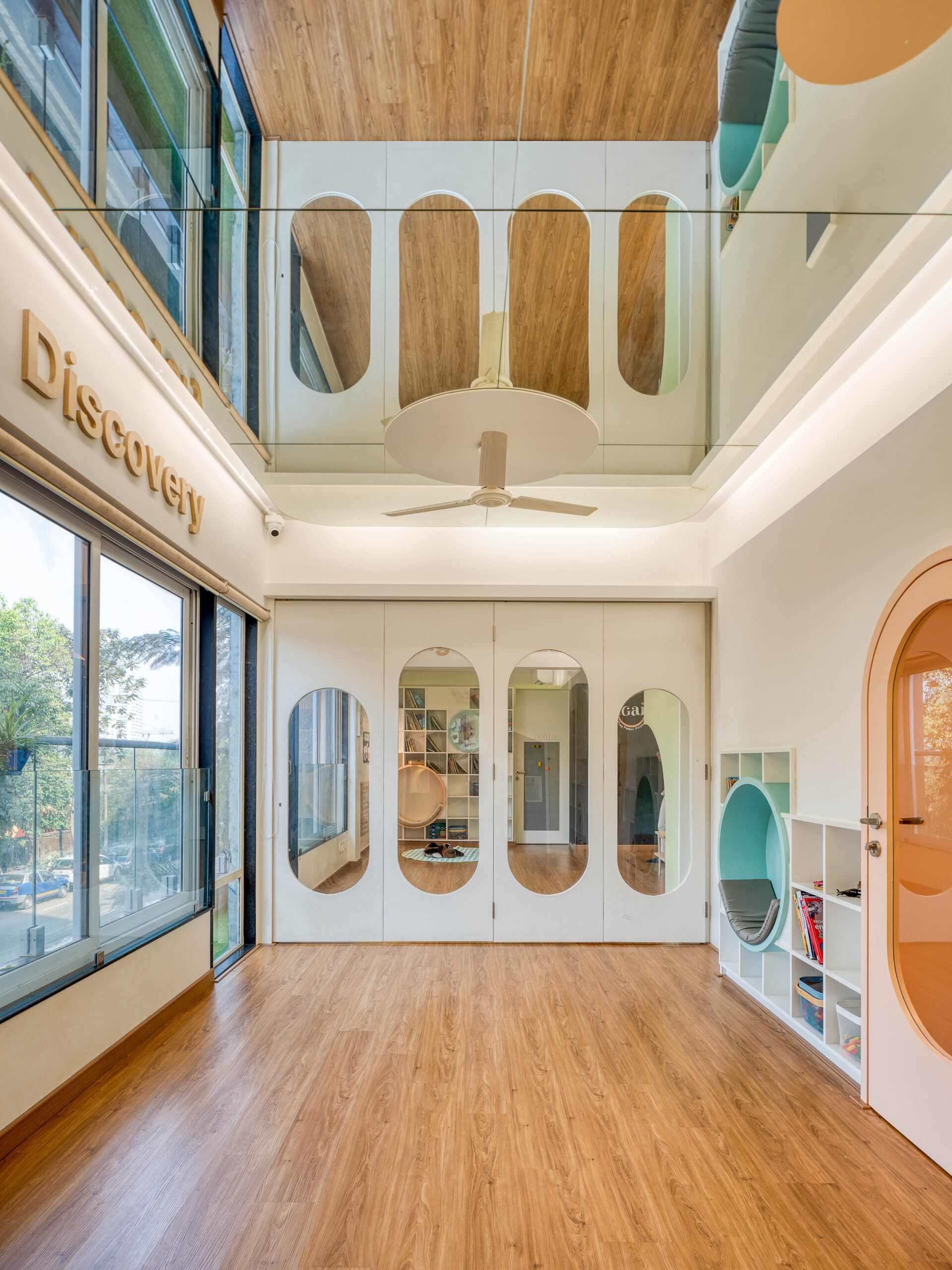
One of the most distinctive spaces within the school is The Discovery, a double-height volume animated by ceiling mirrors and carefully positioned openings that amplify daylight and create layered visual connections. Reflections, transparency, and changing perspectives encourage observation and curiosity while making the compact footprint feel larger and more dynamic. Throughout the project, natural light becomes an active design element, shaping atmosphere, improving spatial quality, and enhancing the overall learning environment.
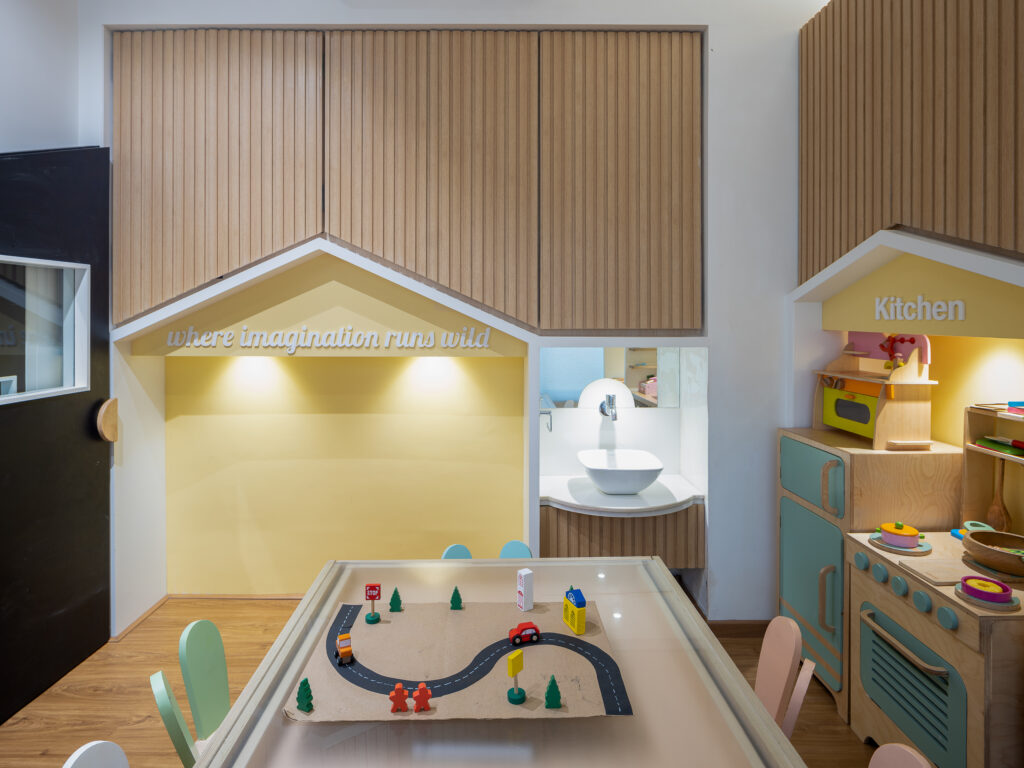
Materiality was approached with equal care. Soft rubberwood, rounded edges, non-toxic finishes, and child-sensitive detailing ensure safety while creating a warm and tactile environment. The predominantly white backdrop is complemented by muted blues, greens, peach tones, and soft yellows selected not only for their visual character but also for their positive influence on comfort, concentration, and emotional wellbeing. Gentle contrasts and natural textures create a calm environment that remains playful without becoming overstimulating.
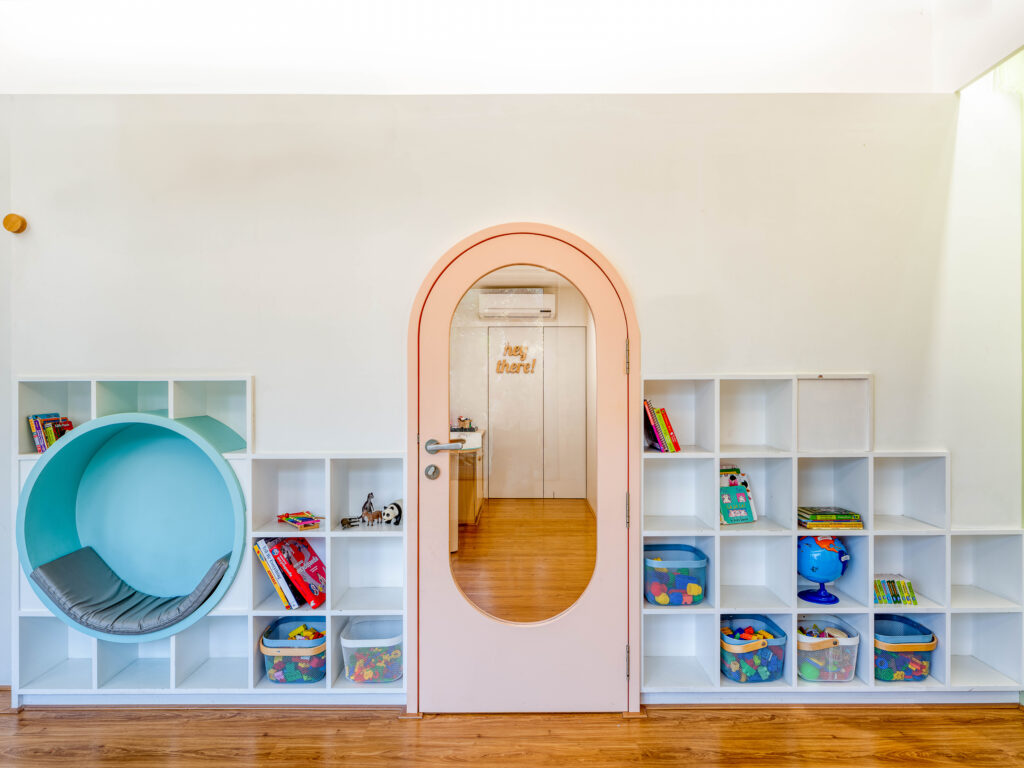
A key challenge was creating a highly engaging educational environment within a compact urban footprint while avoiding visual clutter. This was addressed through integrated architectural elements, multifunctional walls, and a furniture-free planning strategy that maximises flexibility and adaptability. The open layouts allow spaces to be used for dance, yoga, collaborative learning, performances, and future educational activities without significant modifications. Balancing safety with freedom of exploration was another important consideration, achieved through carefully considered proportions, rounded forms, and child-responsive detailing that support independent movement while maintaining a secure environment.
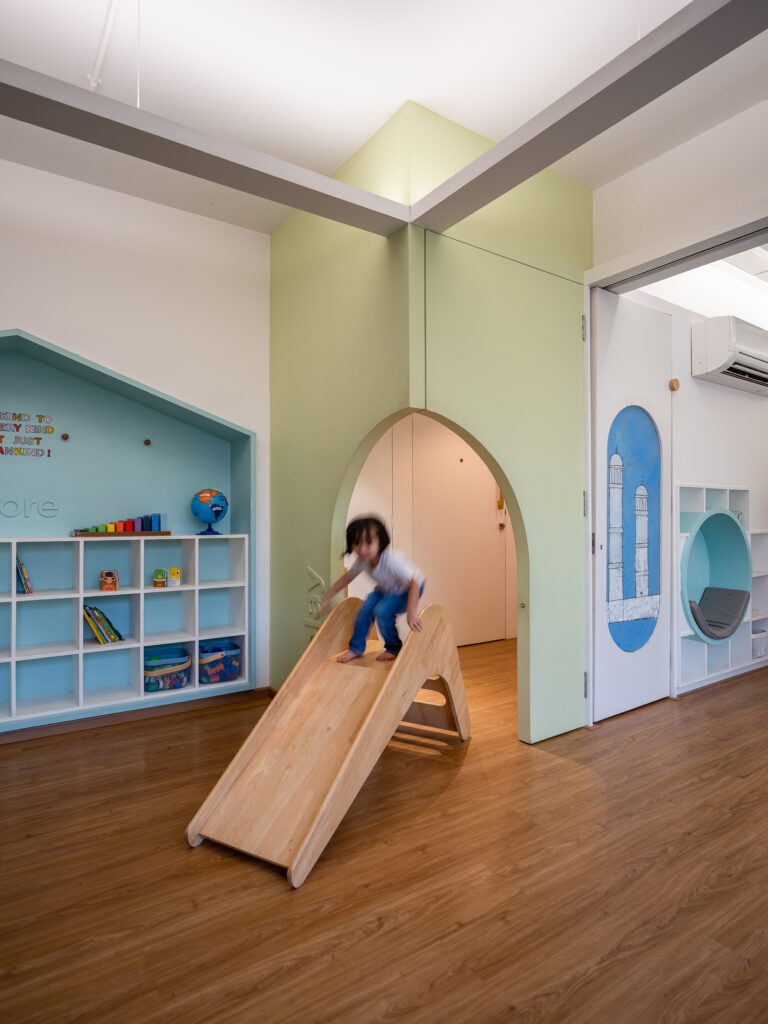
At its core, Ikigai Global Prep School demonstrates how architecture can become an active participant in early childhood education. By embedding learning opportunities within the built environment, the project supports creativity, movement, collaboration, and self-discovery while responding thoughtfully to the developmental needs of young learners. The result is a preschool that feels intuitive, safe, and emotionally engaging, where architecture quietly contributes to the process of growing, learning, and discovering the world.
Project Gallery:
Cite: “Ikigai Global Prep School, Mumbai, India / Kypad Design Office LLP 19 June 2026. GLSN. Accessed .https://theglsn.com/ikigai-global-prep-school-mumbai-india-kypad-design-office-llp/