
Author: Raquel Teixeira dos Santos, Space for Play
Rethinking everyday spaces for climate adaptation
It is widely acknowledged that cities are at the forefront of the fight against climate change. Urban areas must adapt quickly to respond to current and future challenges on multiple levels: from reducing motorised traffic, to promoting sustainable mobility such as public transport and cycling, to improving water drainage and infiltration through resilient infrastructure. Increasingly, cities are turning to public space as a key site for climate adaptation.
Yet the future of our cities will not be secured through public spaces alone. We must also rely on more unconventional spaces as learning and testing grounds for climate-adaptive solutions. And this raises an important question: what about enclosed open spaces?
Schoolyards are spaces with enormous potential for cities, yet they are still largely overlooked as part of the response to climate change. If we were to combine the area of all schoolyards in a single city, it would amount to a large city park. That’s a lot of square meters! In many cities, schoolyards remain predominantly hard-surfaced, often dominated by large sports fields (gender inclusion is a topic for another article) and a few standard (often plastic) play structures such as swings and slides. Trees are scarce, and when they do exist, access to them is often restricted.
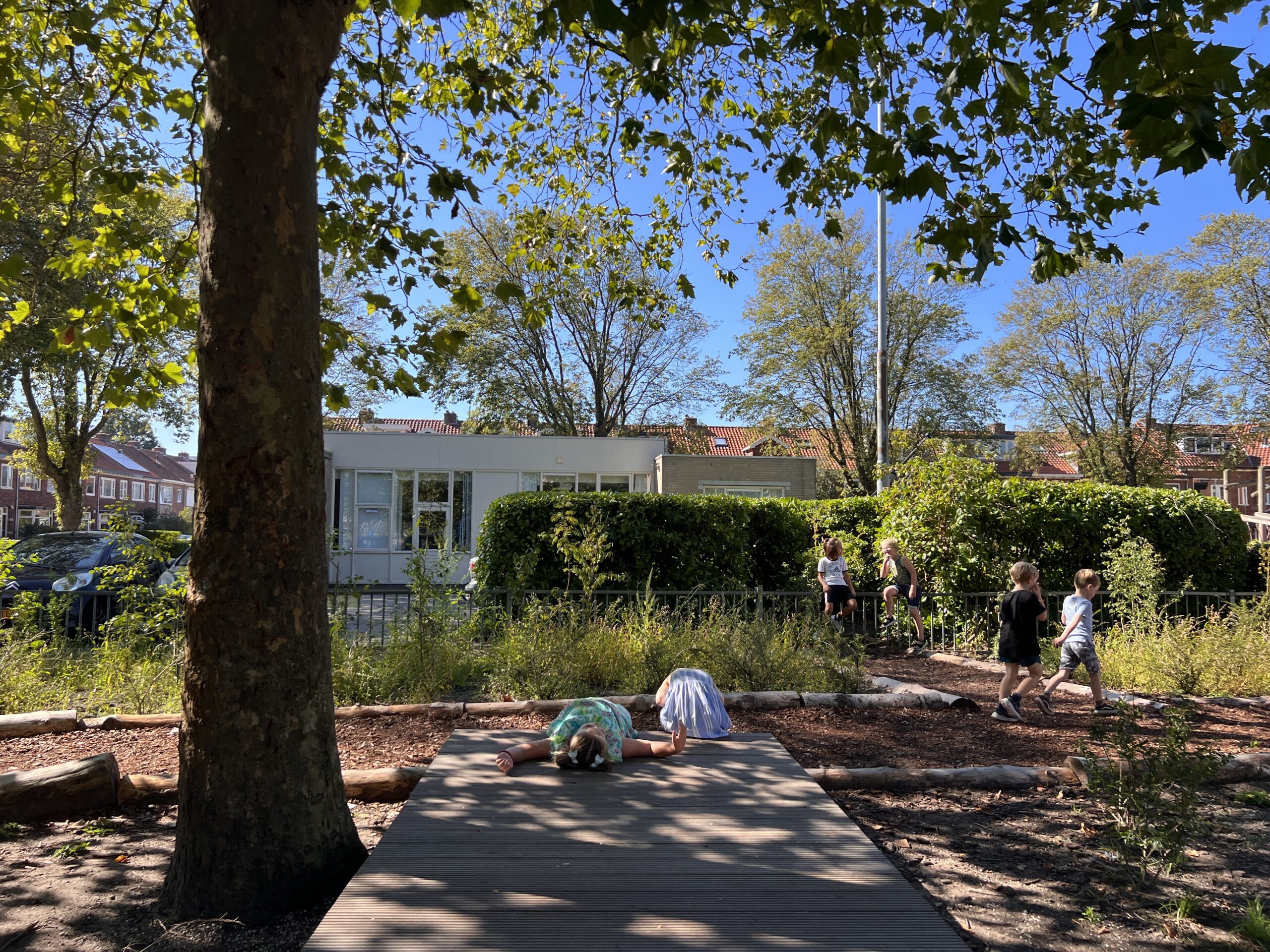
From my personal experience between Portugal and the Netherlands, what I consistently observe is that drawn to trees, green spaces, and what adults often describe as ‘messy places’. These spaces become secret hideouts, places for imagination, exploration, and private conversations during break time. What matters most, however, is how we, as adults, perceive these environments.
Our instinct is usually to prioritise safety. Trees, especially climbable ones, are often seen as dangerous. What we tend to forget is that children are naturally inclined to take risks, explore their surroundings, and creatively adapt spaces to their needs. When we provide sufficient natural elements within a schoolyard, children learn through experience: they grow more confident, more aware, and more adventurous.
At the same time, introducing greenery into schoolyards does much more than enrich play. It helps reduce heat stress, mitigate flooding, improve air quality, and address pollution. And beyond climate benefits, green schoolyards create more inclusive environments, offering children equal opportunities to play, meet, and learn together. Sounds like a win- win situation, right?
Co-creation with children for their climate-adaptive schoolyards
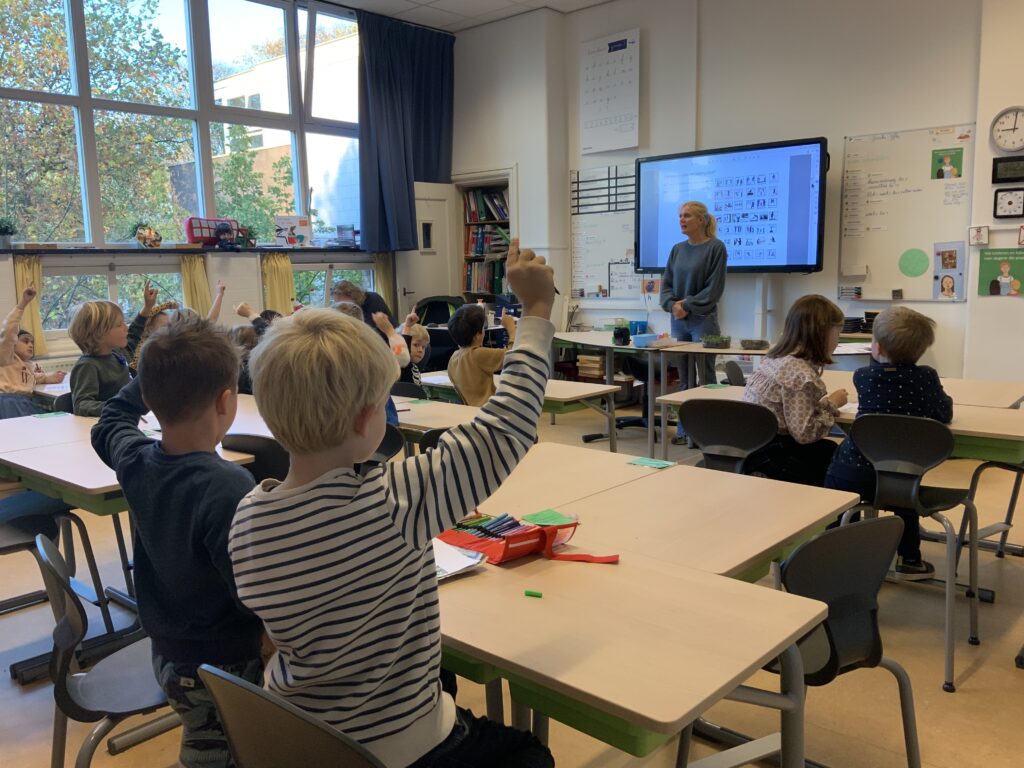
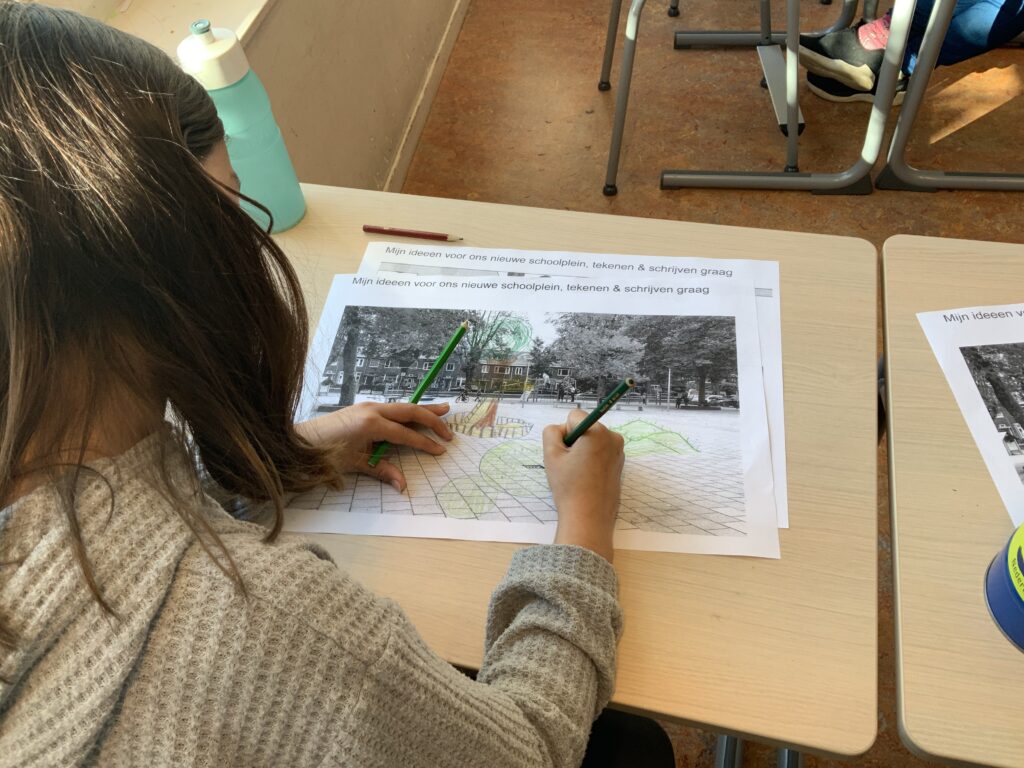
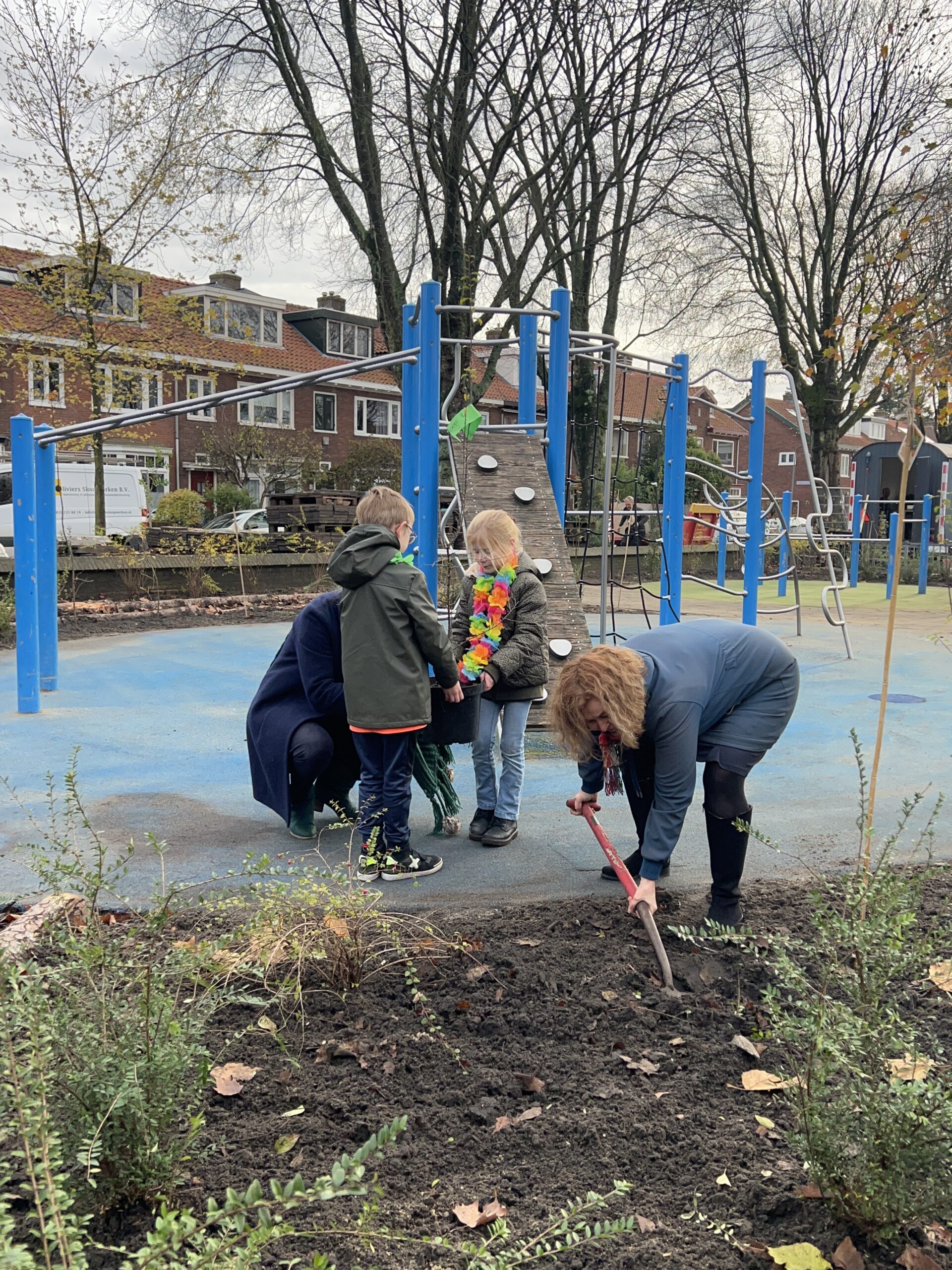
Schoolyards are therefore critical spaces for climate adaptation. At Space for Play, this has been a core strategy for over 20 years. Our work goes beyond simply adding greenery, sometimes increasing green space by more than 35%, and is grounded, in a strong co- creation process. It includes four steps: Co-Learn, Co-Design, Co-Construct & Co-Plant, and Co-Maintain.
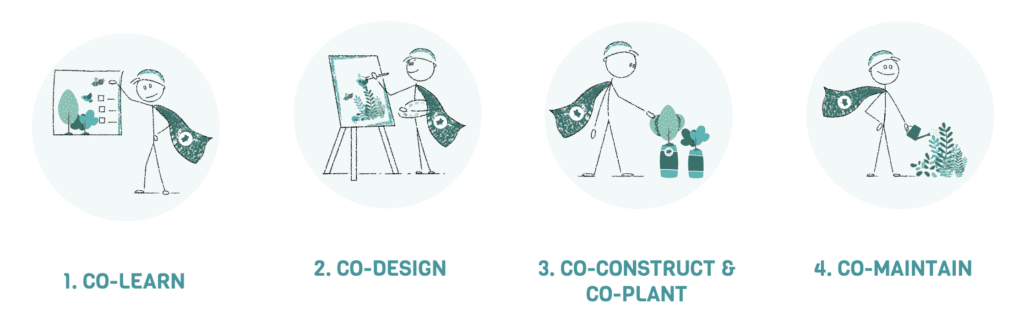
We begin by working with children to understand climate change: what it means, how it affects their daily lives, and how their schoolyard can become part of the solution through play (Step 1. Co-Learn). We listen carefully to their needs, wishes, and perceptions of what is missing from their outdoor space through drawing exercises (Step 2: Co-Design). This input is then translated into design proposals, which are continuously discussed, refined, and together with the school and the wider community until a final design is agreed upon.
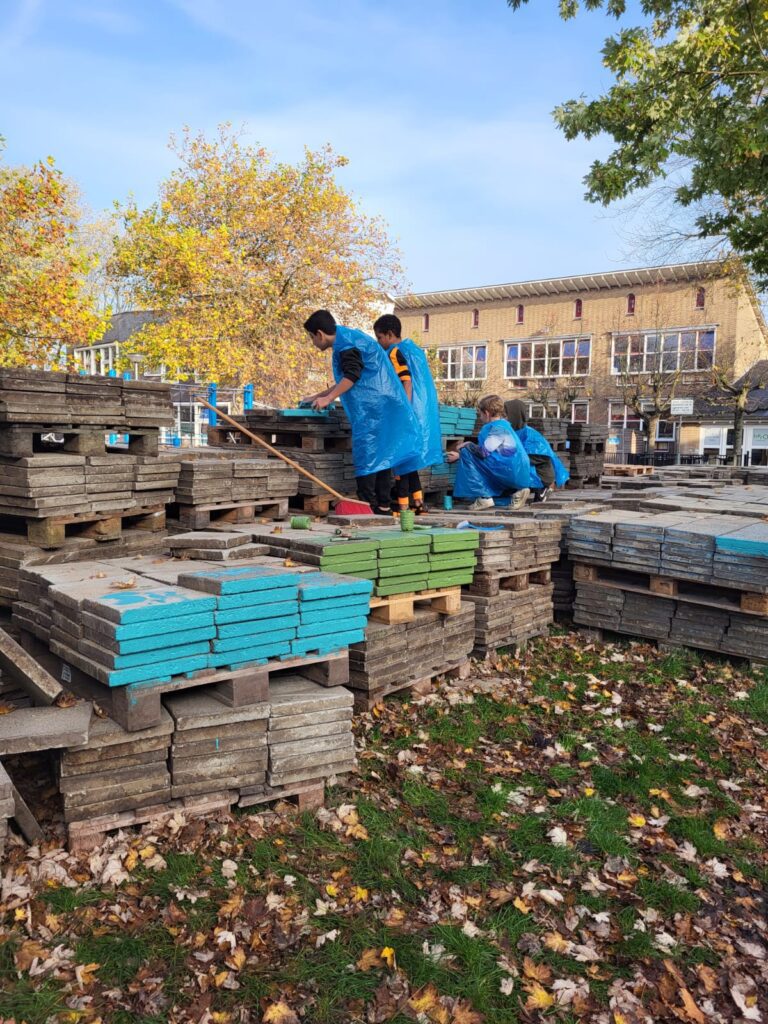
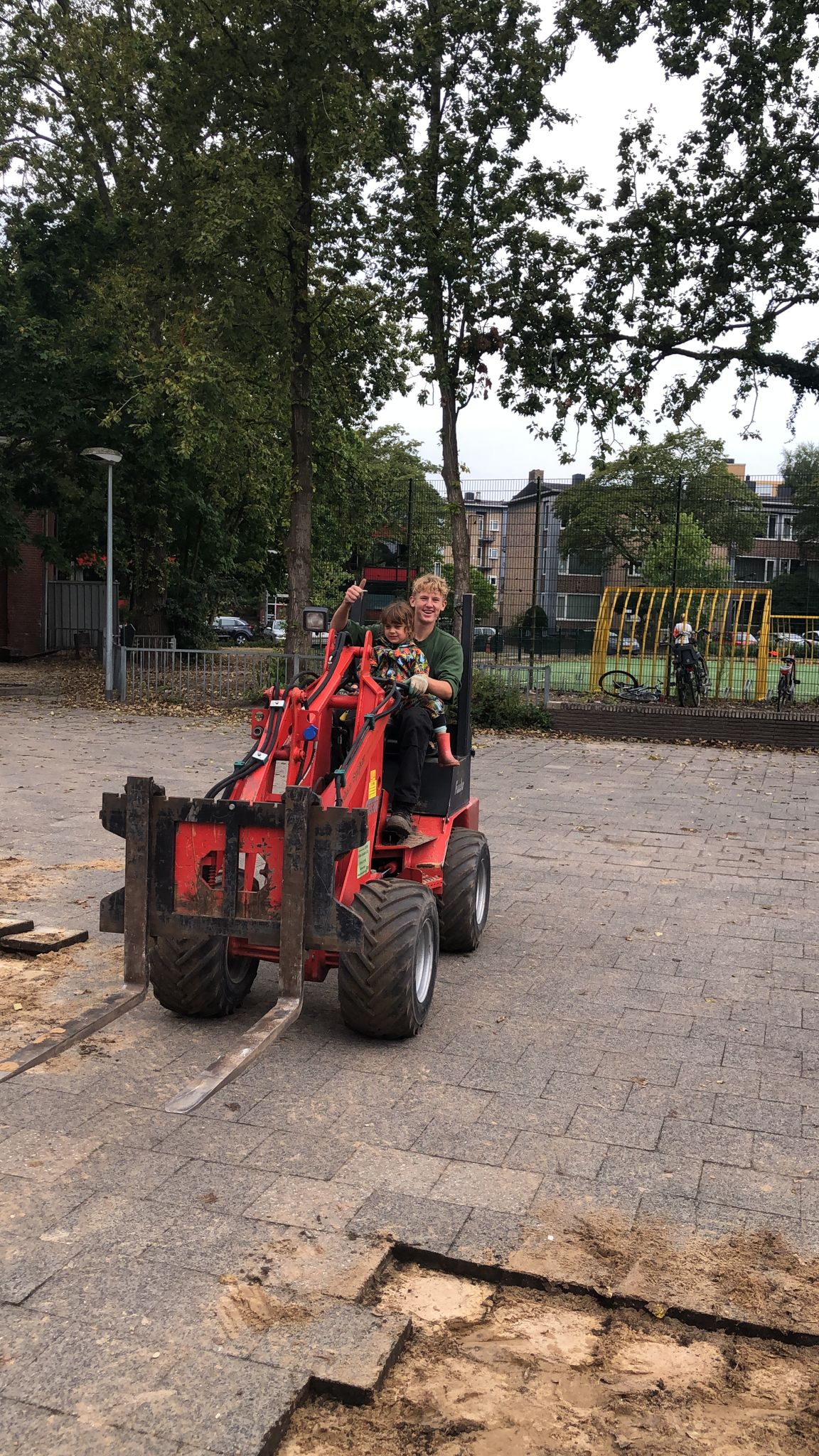
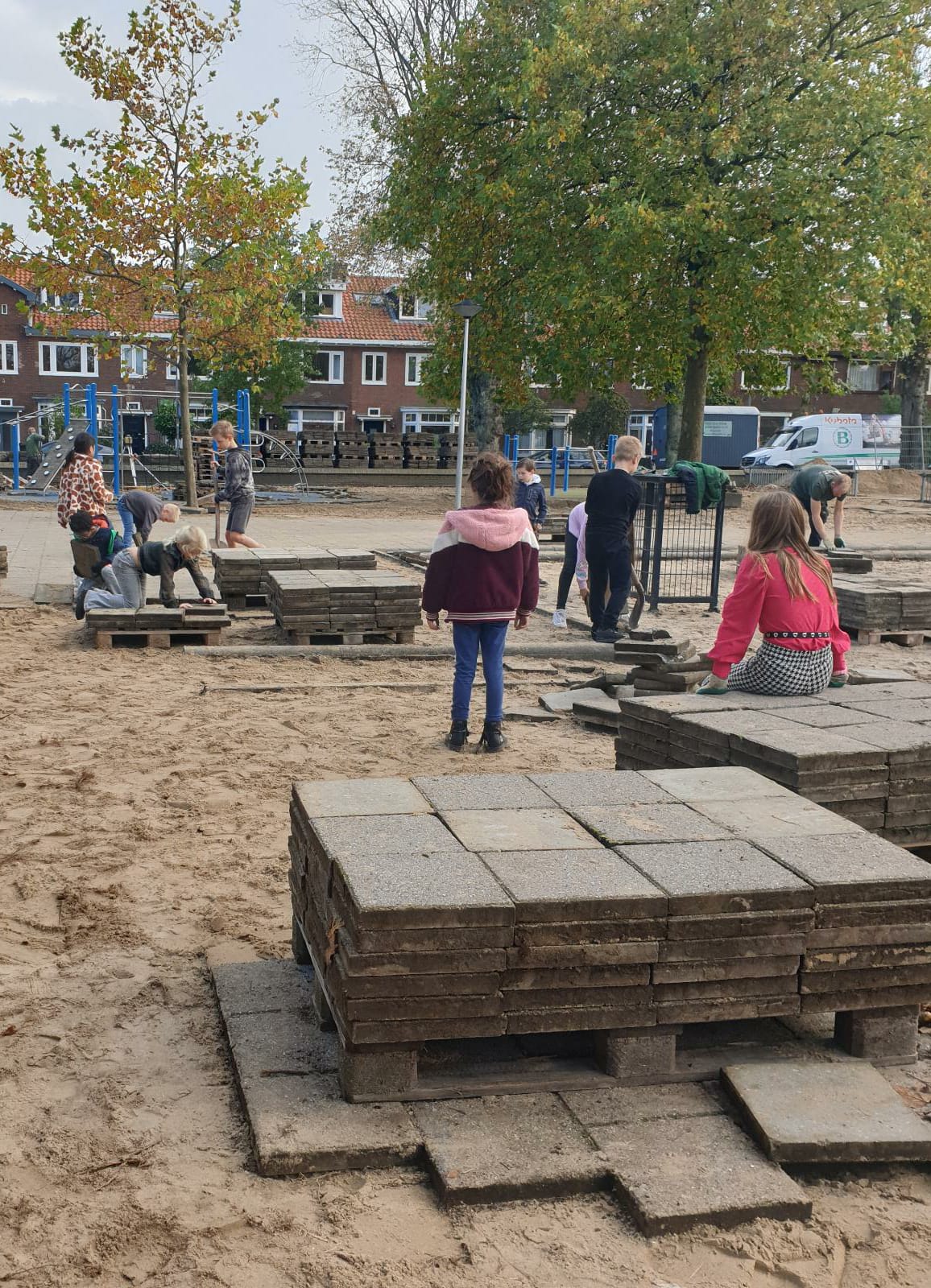
Once construction begins, children become active participants again. They help remove tiles (yes, they actually take them out themselves), and through this process they understand what it means to replace hard surfaces with soil, plants, and water (Step 3. Co- Construct). Suddenly, flooding disappears. Imagine what could happen if we repeated this process everywhere.
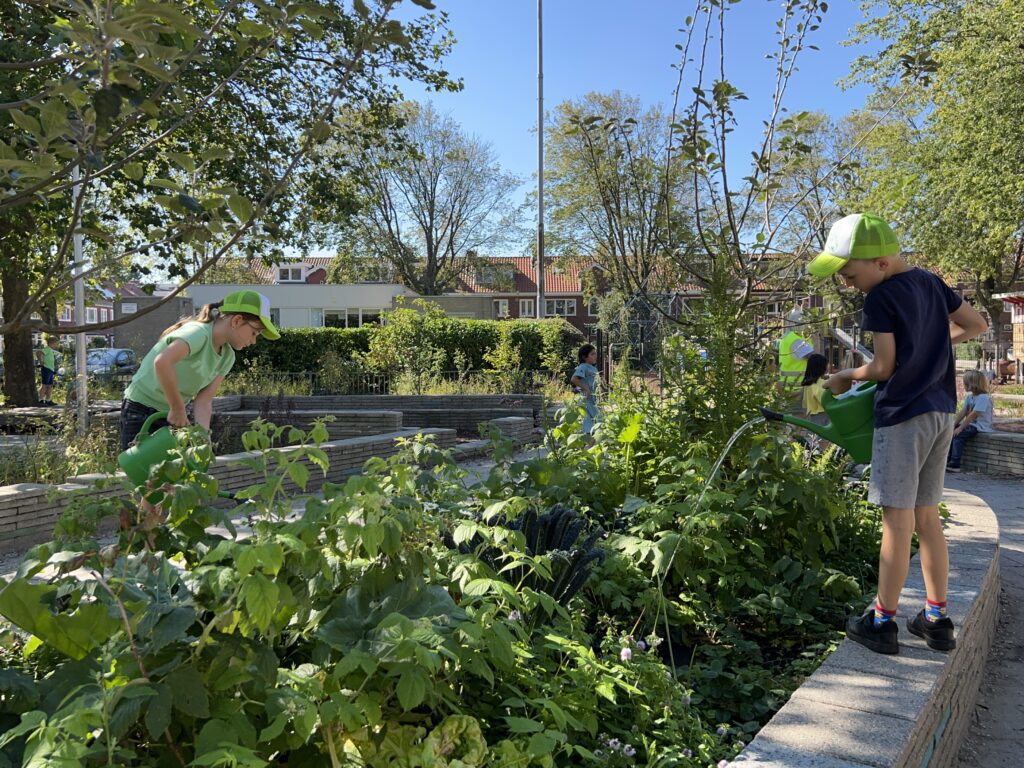
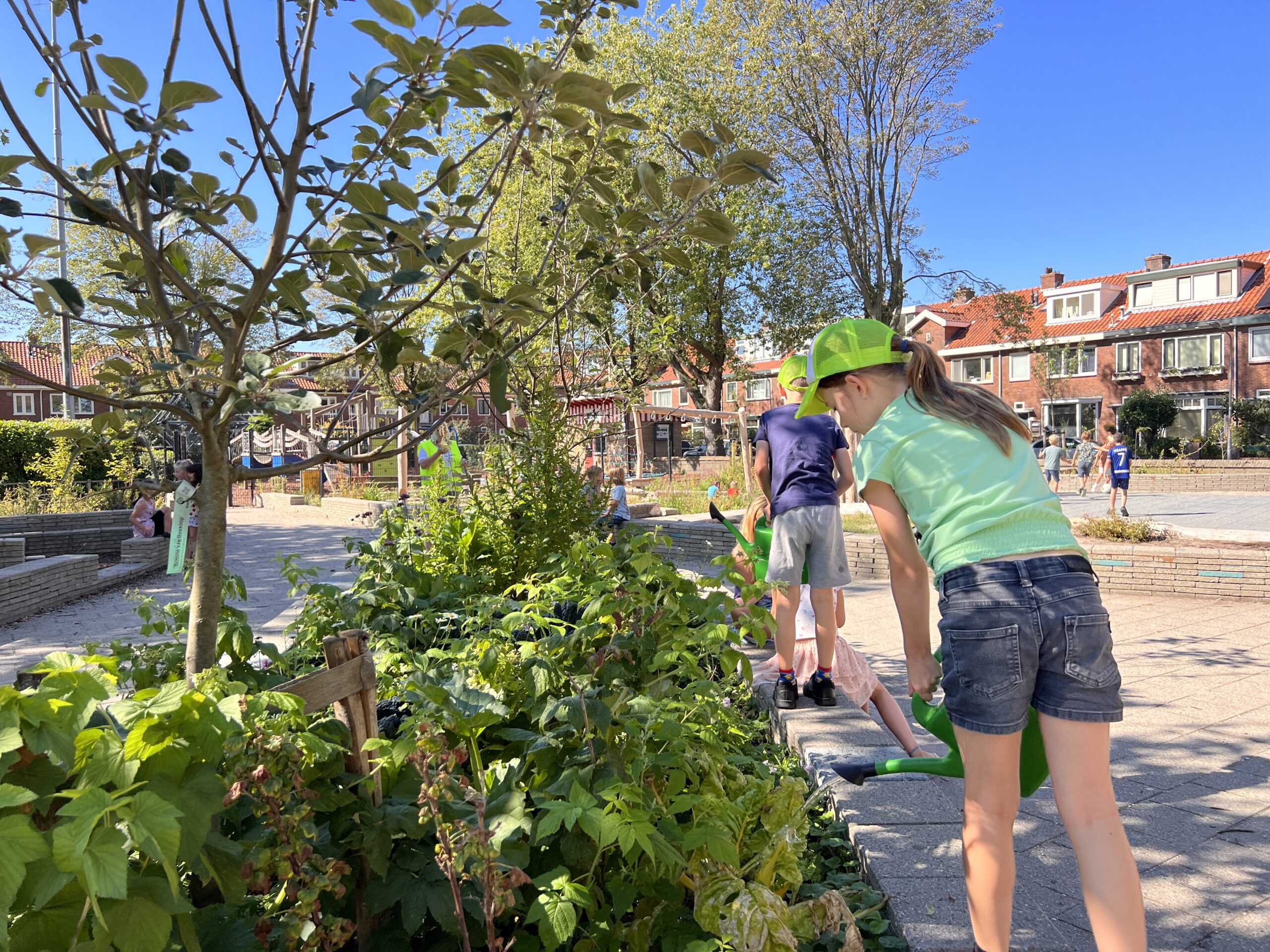
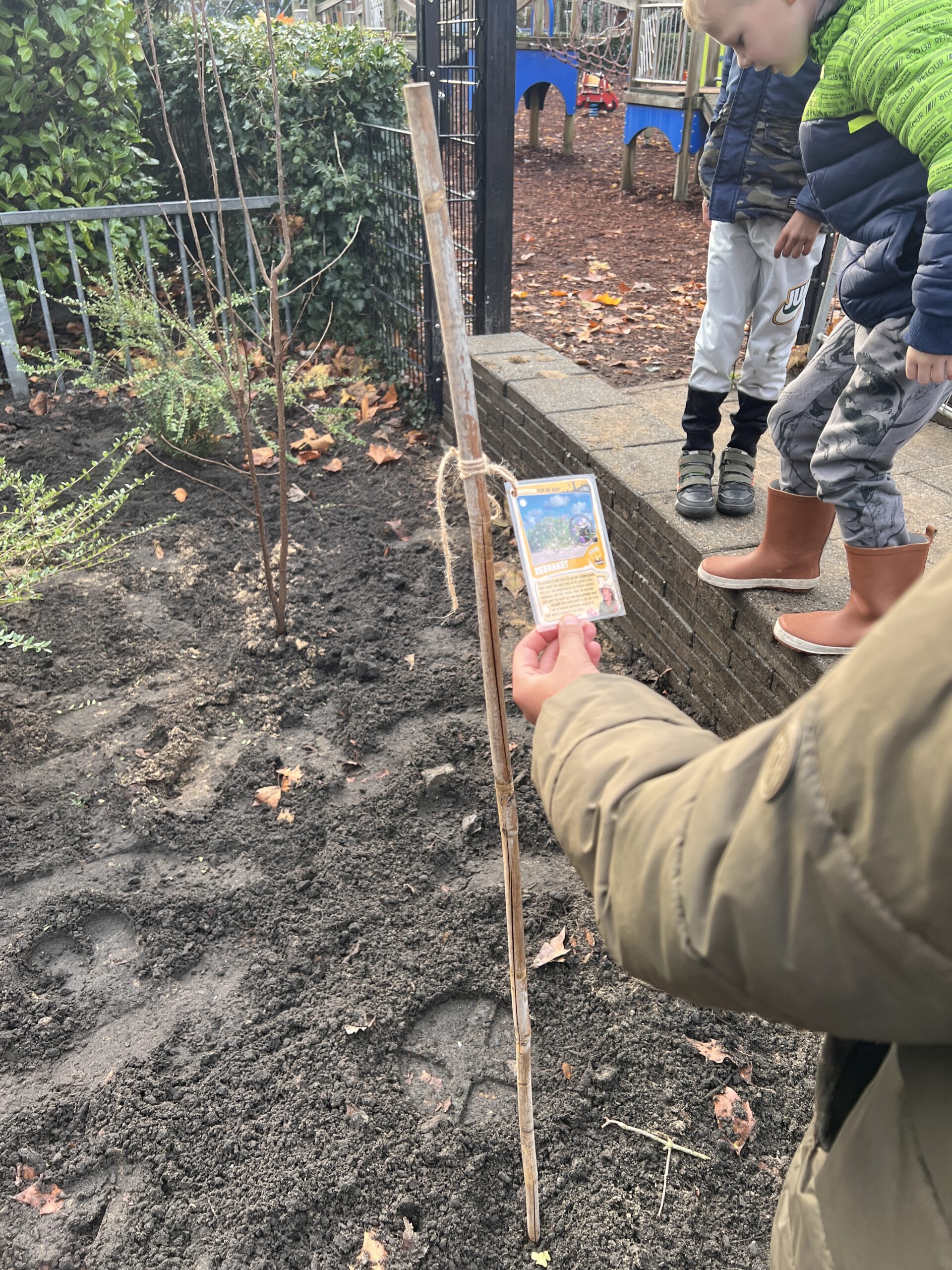
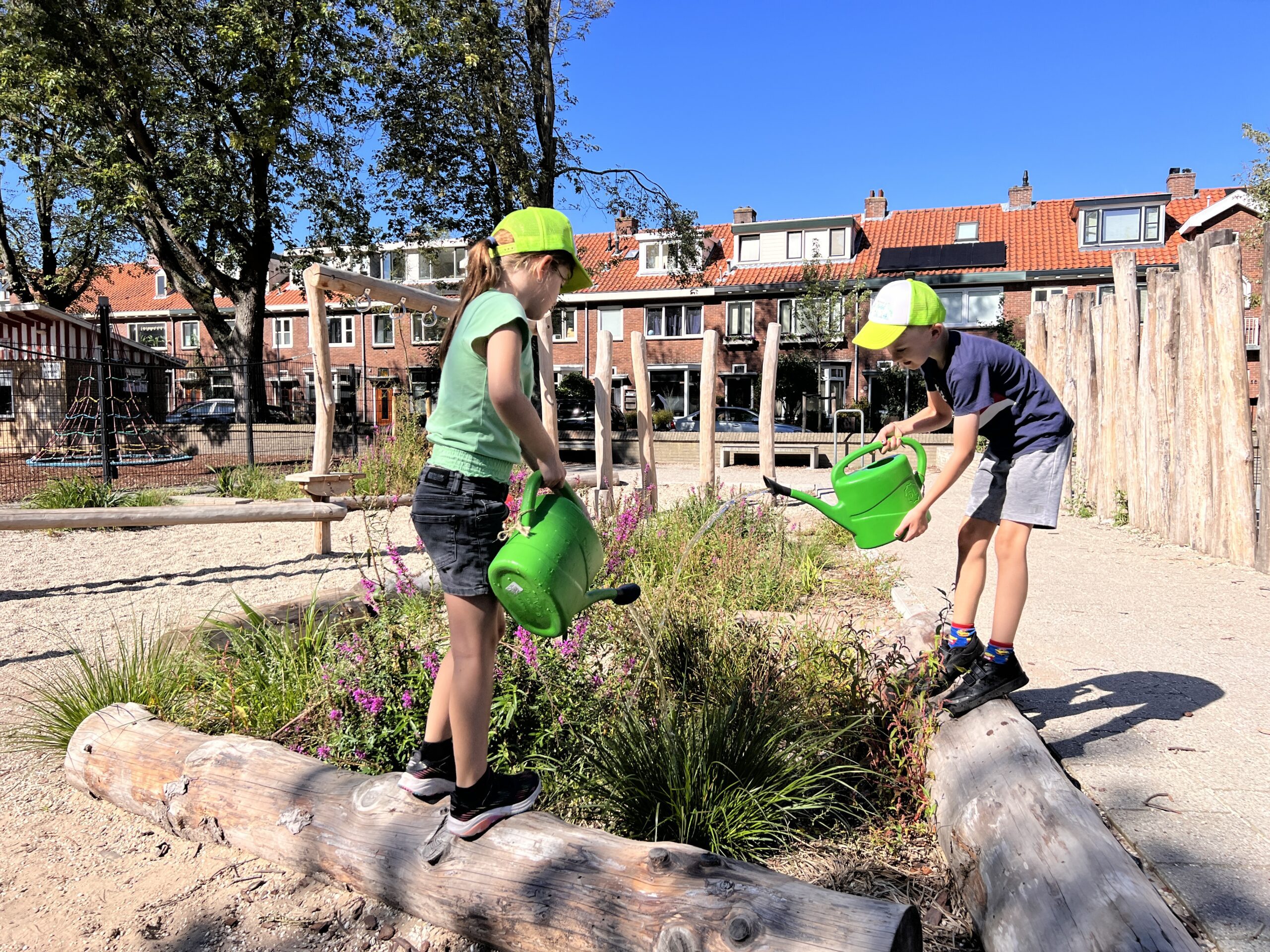
After the transformation is complete, our work continues. We guide children in understanding how to care for their new schoolyard through the NATURE-HEROES program: why plants should not be trampled, why flowers should not be picked, and how watering and maintenance are part of shared responsibility (Step 4. Co-maintain). Along the way, they discover insects, leaves, stones, and natural materials that can be transformed into small works of art. None of this would be possible without a genuine co-creation process.
Let’s look at one concrete example.
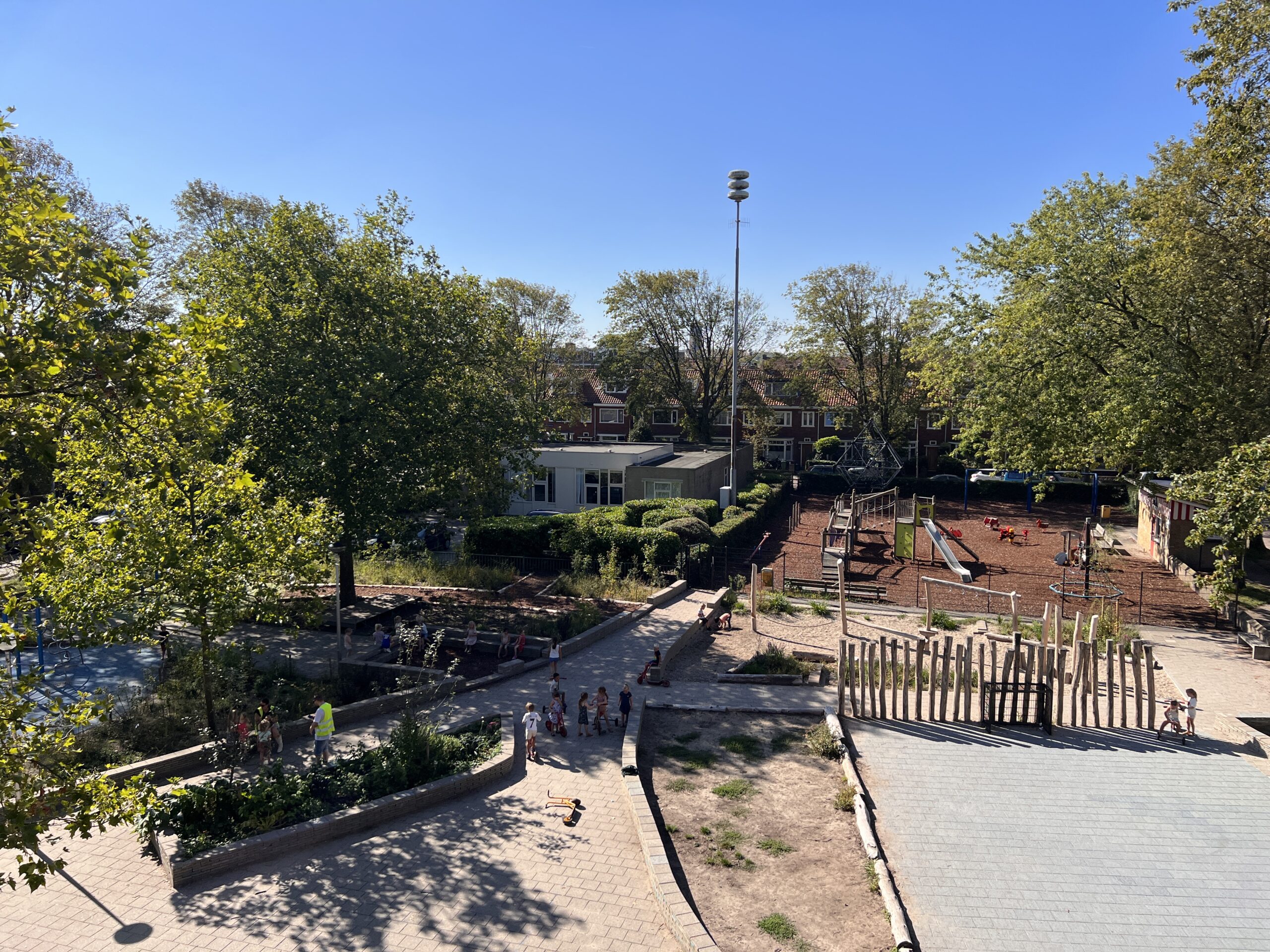
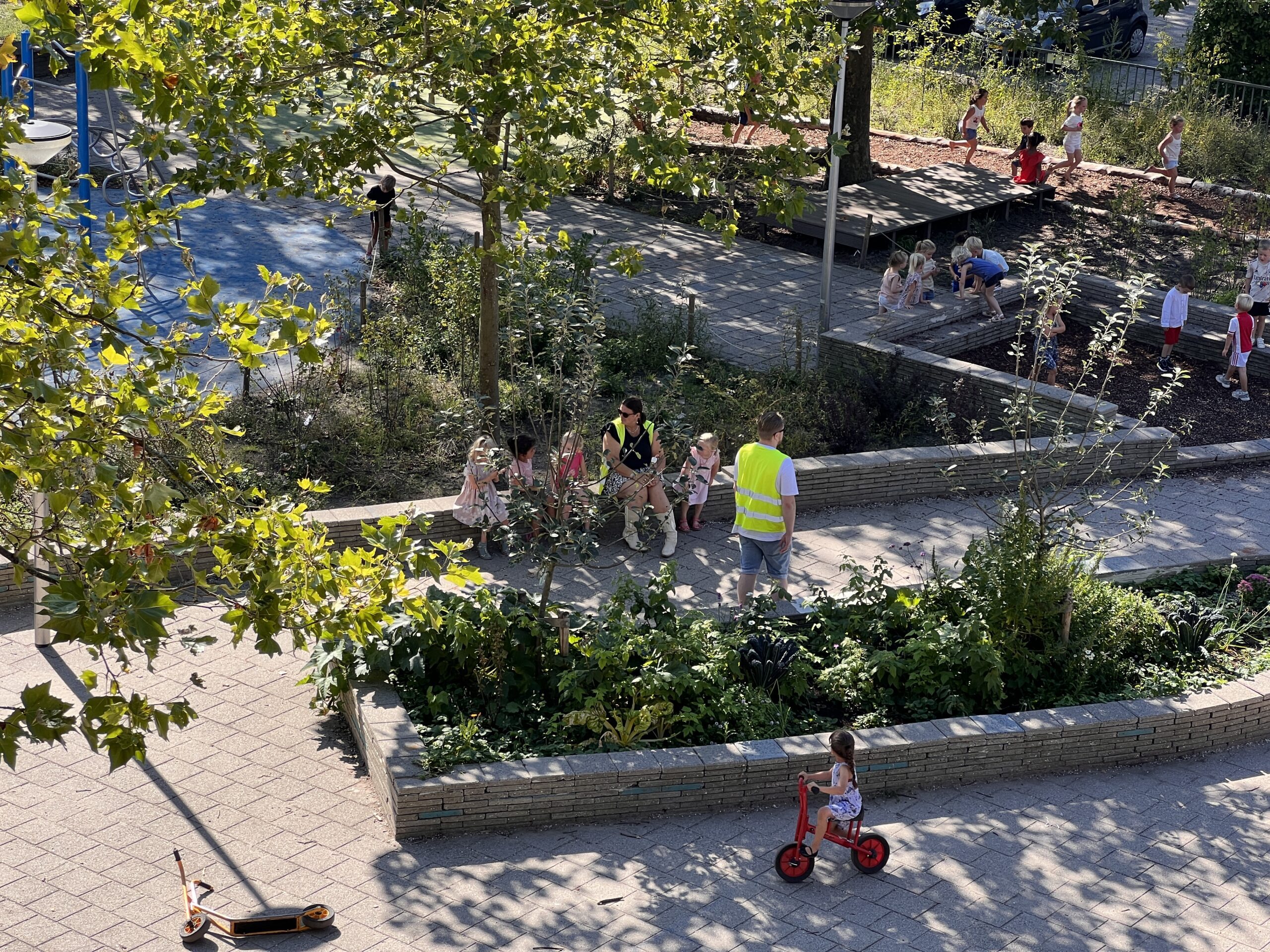
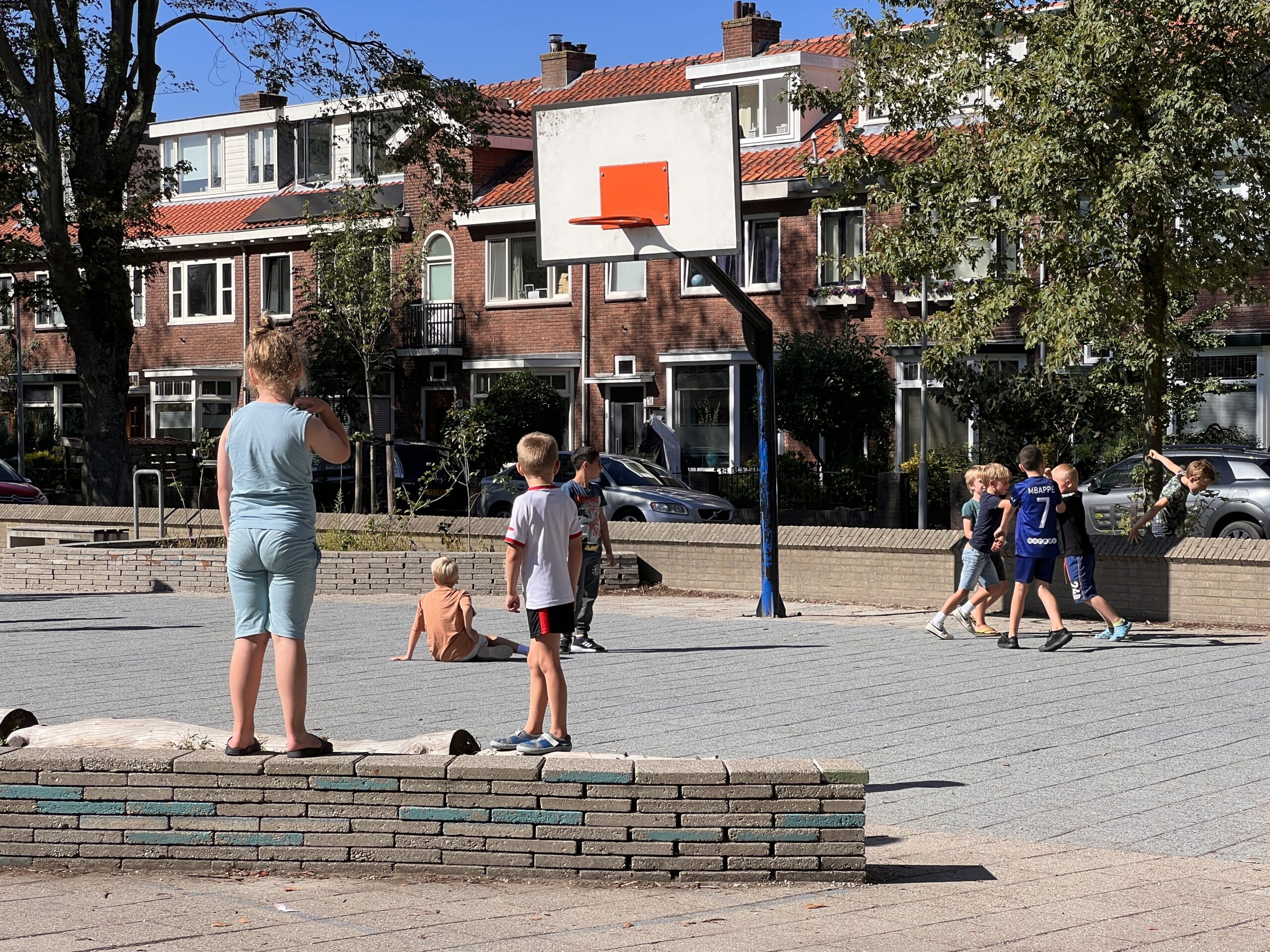
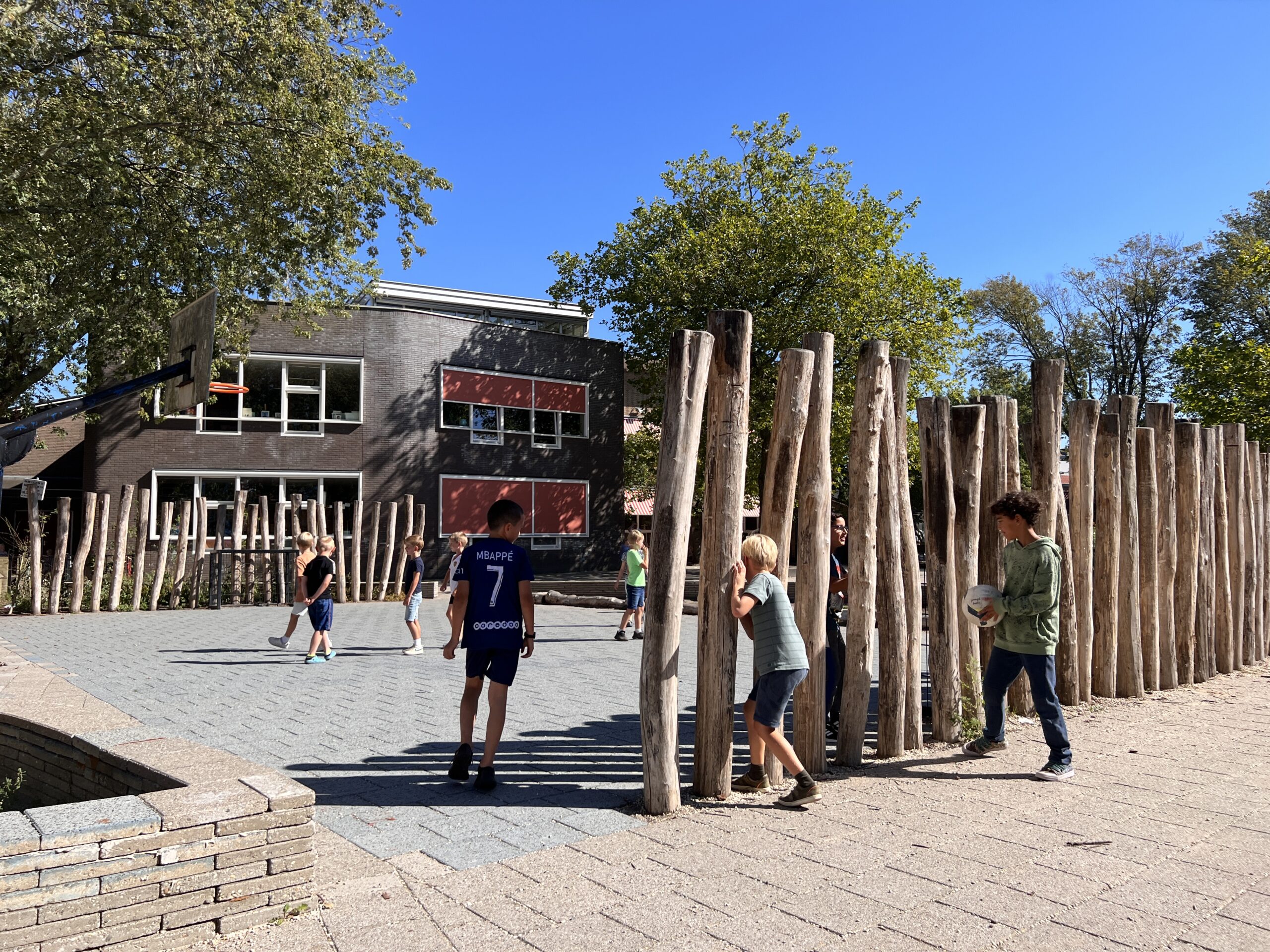
The transformation of the Dolfjin Schoolyard
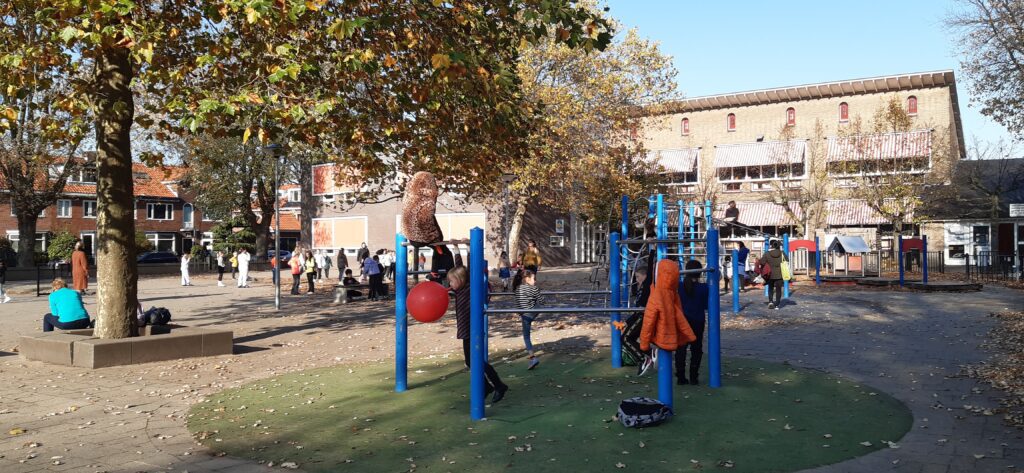
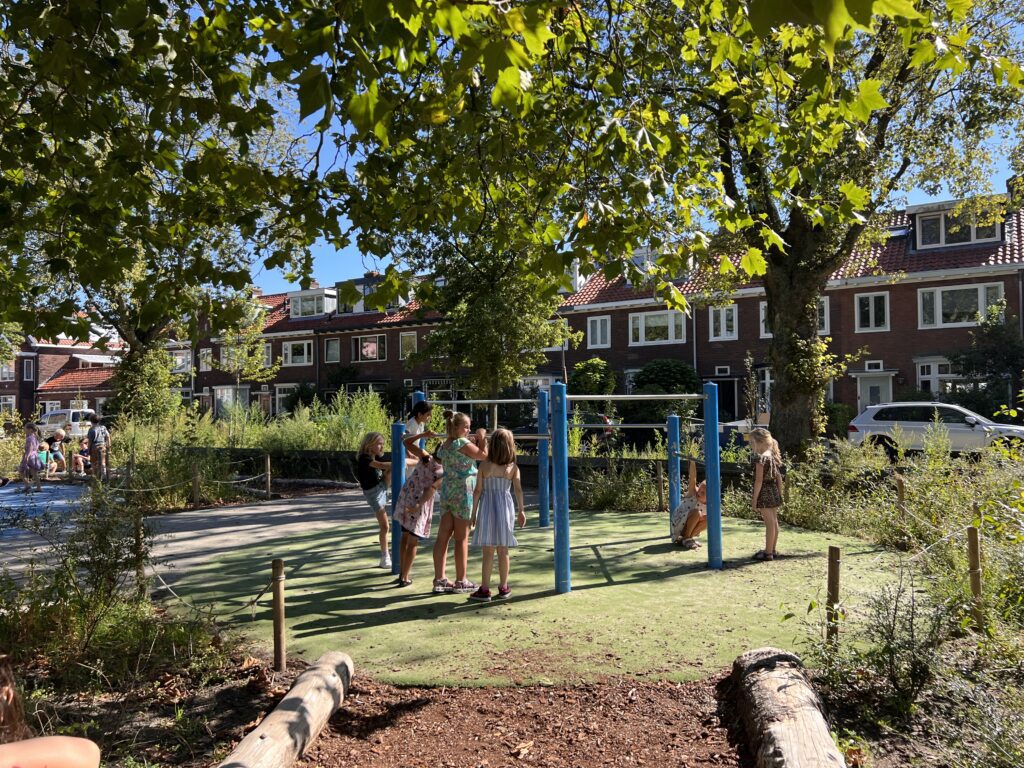
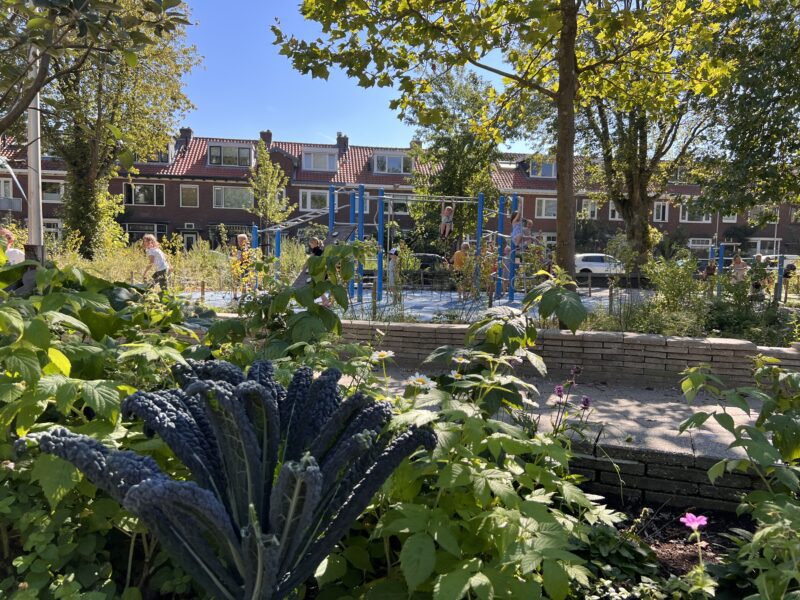
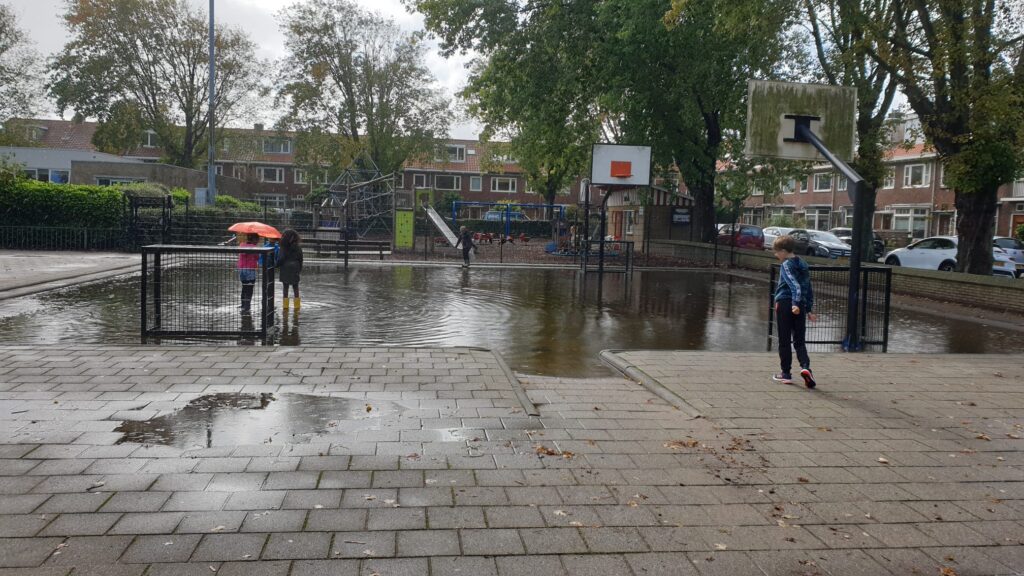
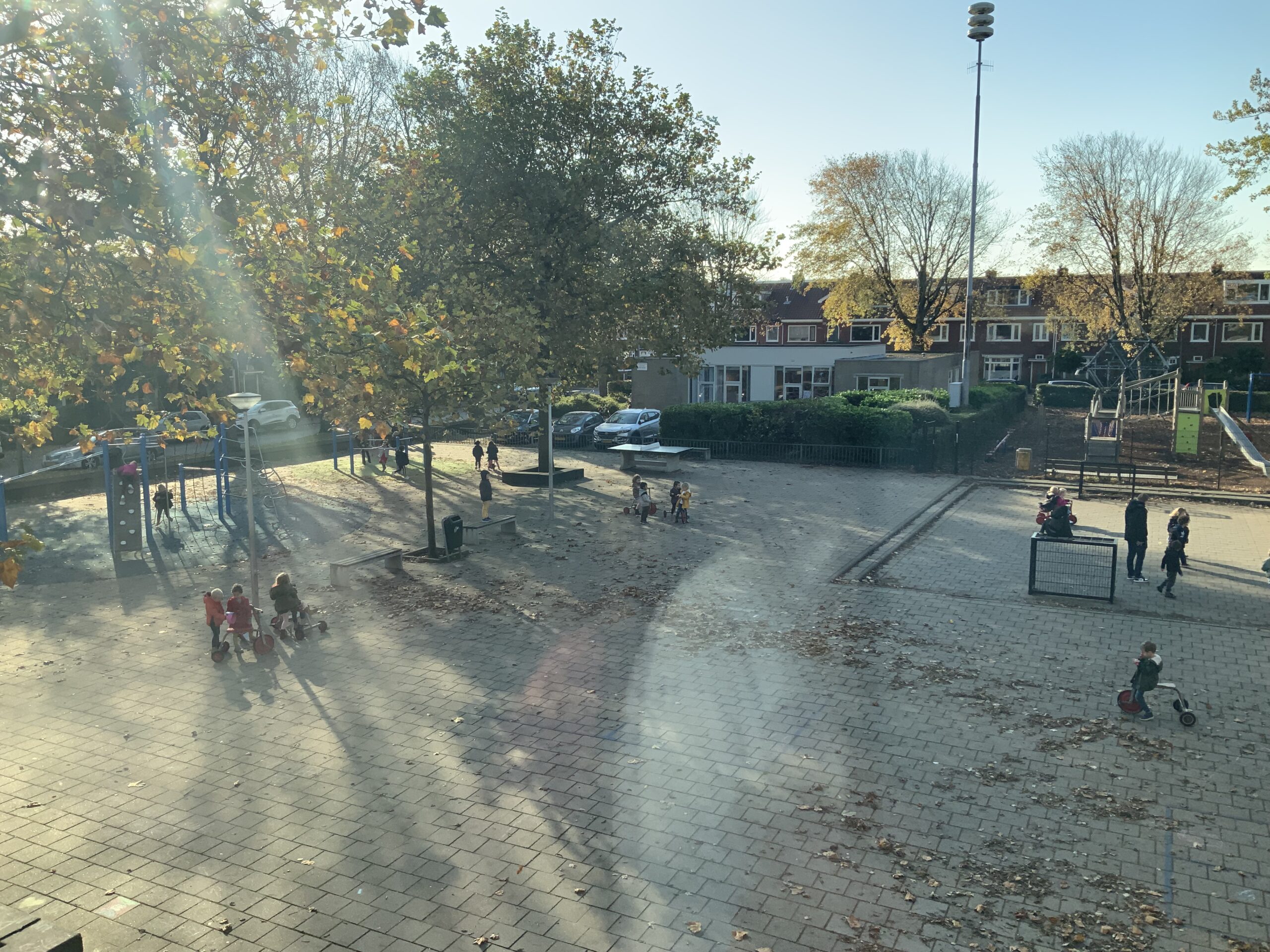
The Dolfjin Schoolyard (Dolphin, in English), located in Haarlem, the Netherlands, was a very typical schoolyard. Two large football and basketball pitches occupied nearly half of the space. Flooding was a recurring issue, there were only 1 big play structures and 4 small ones, and just 7% of the area was green. At the same time, the schoolyard functioned as a shared space for both the school and the surrounding neighbourhood, accessible after school hours and during weekends. It was open on all sides, with clear visibility throughout, making it a strong example of multifunctional use.
However, the lack of greenery led to significant heat stress and flooding, making outdoor play impossible at certain times.
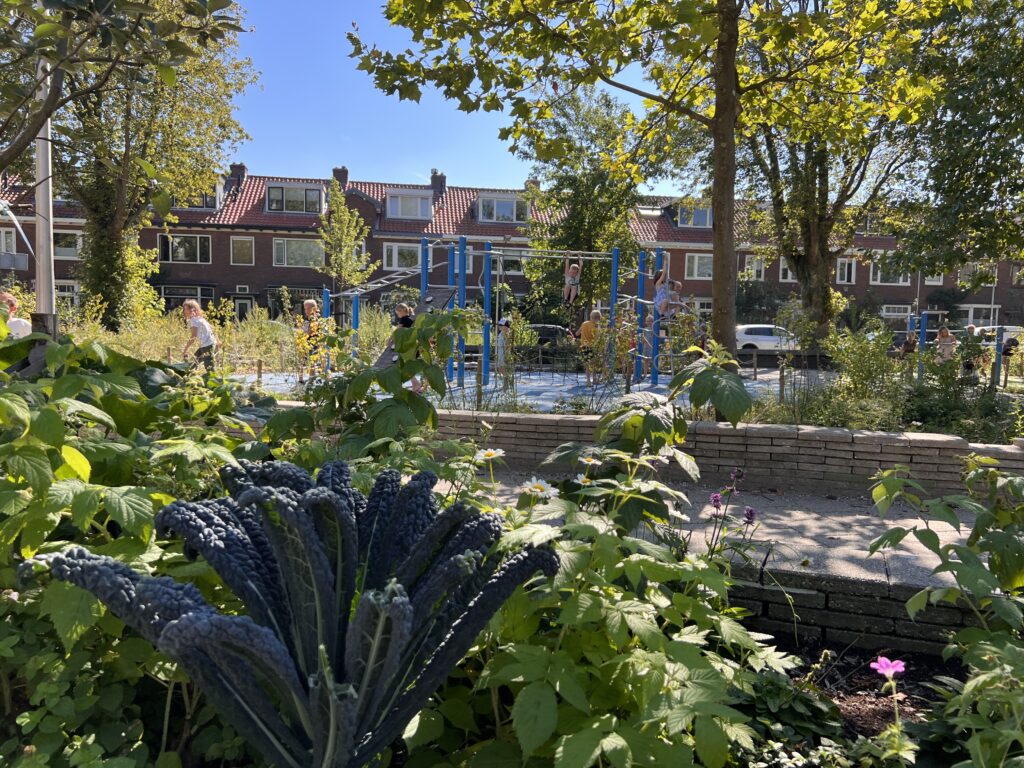
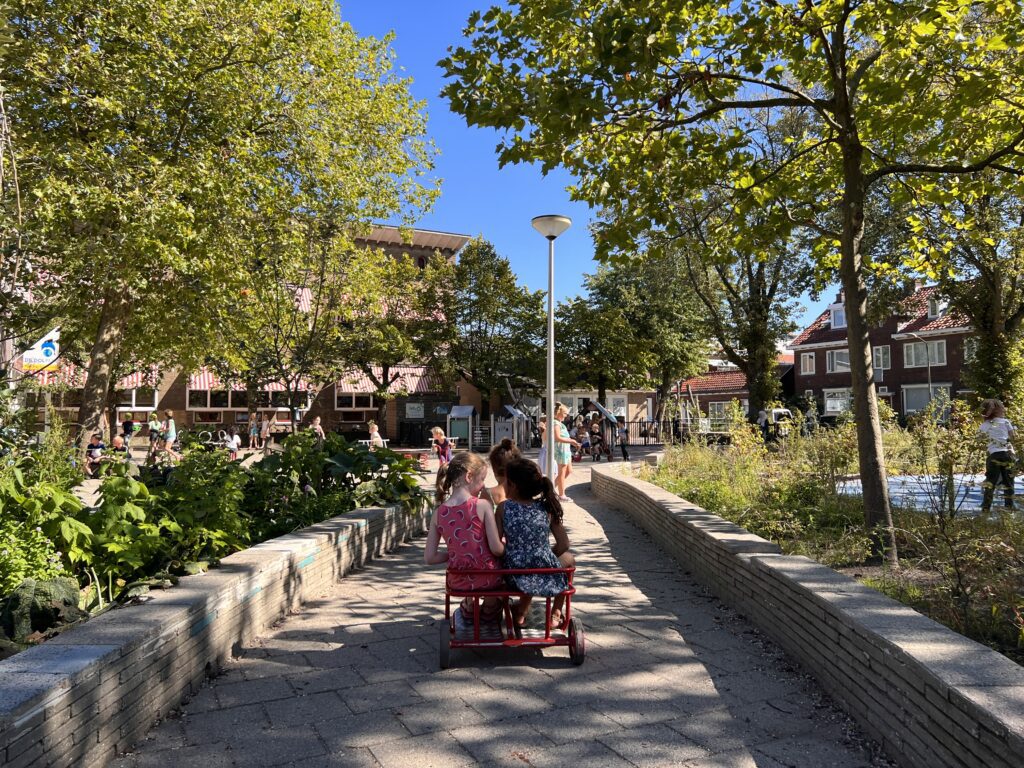
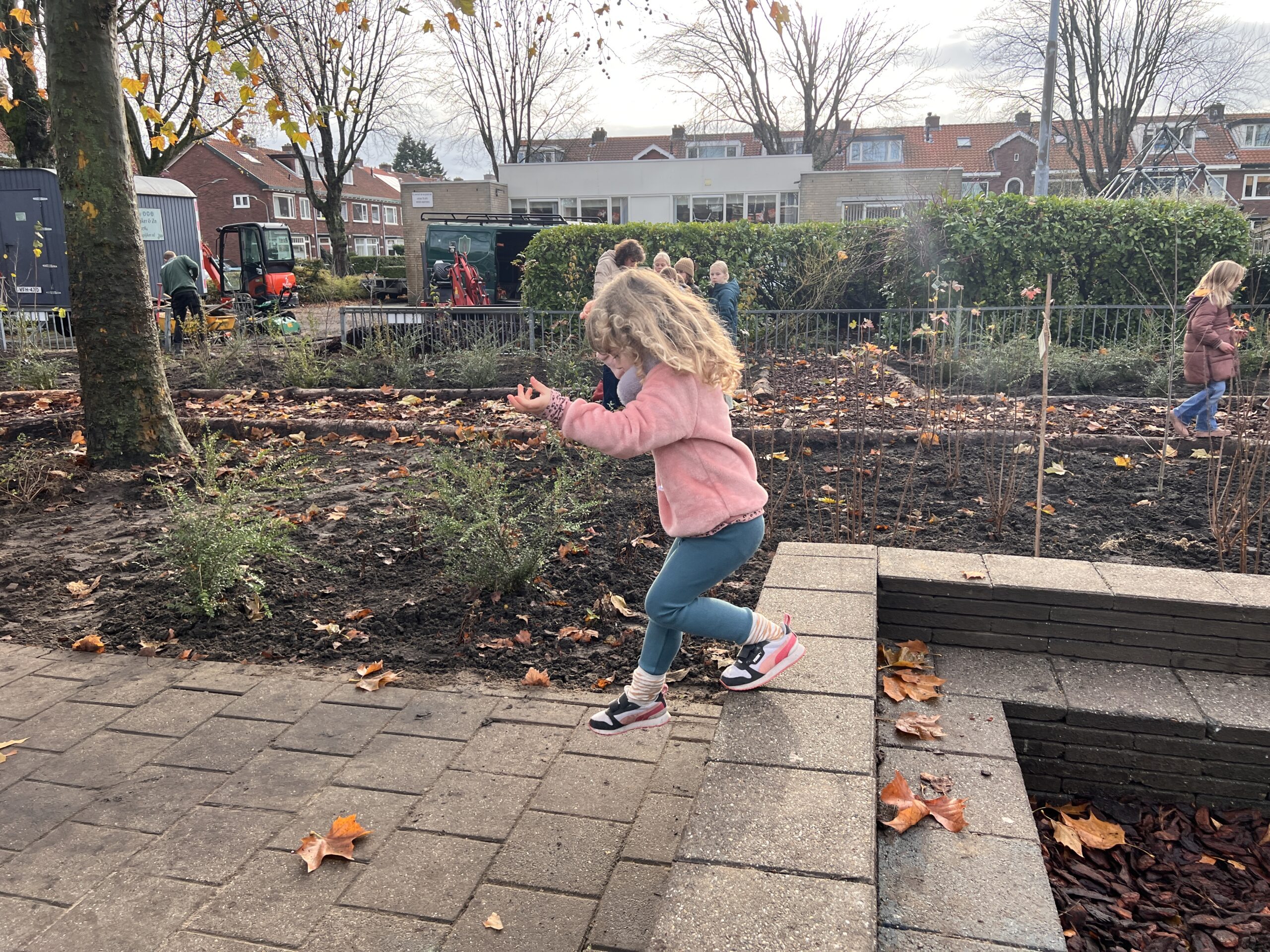
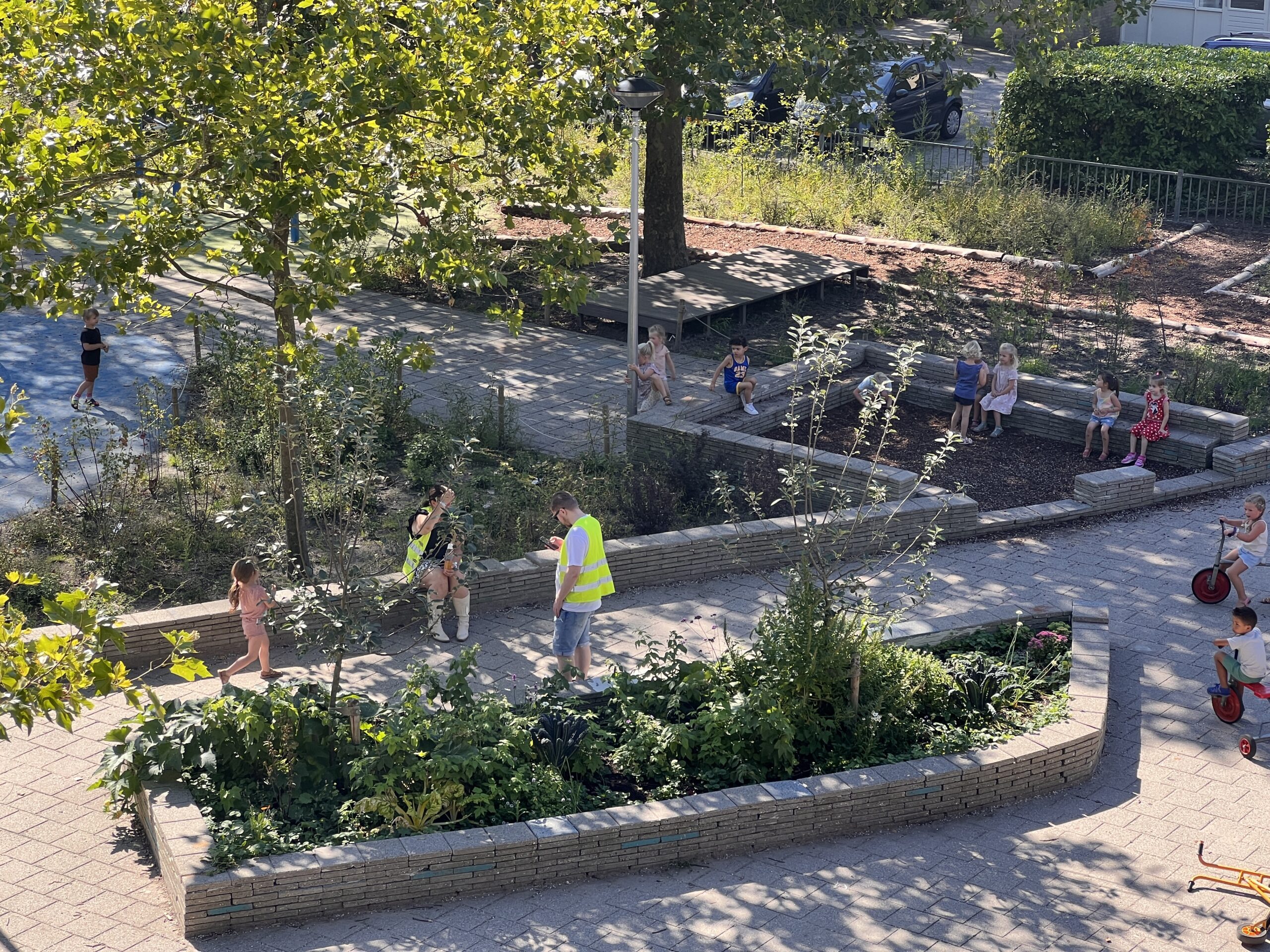
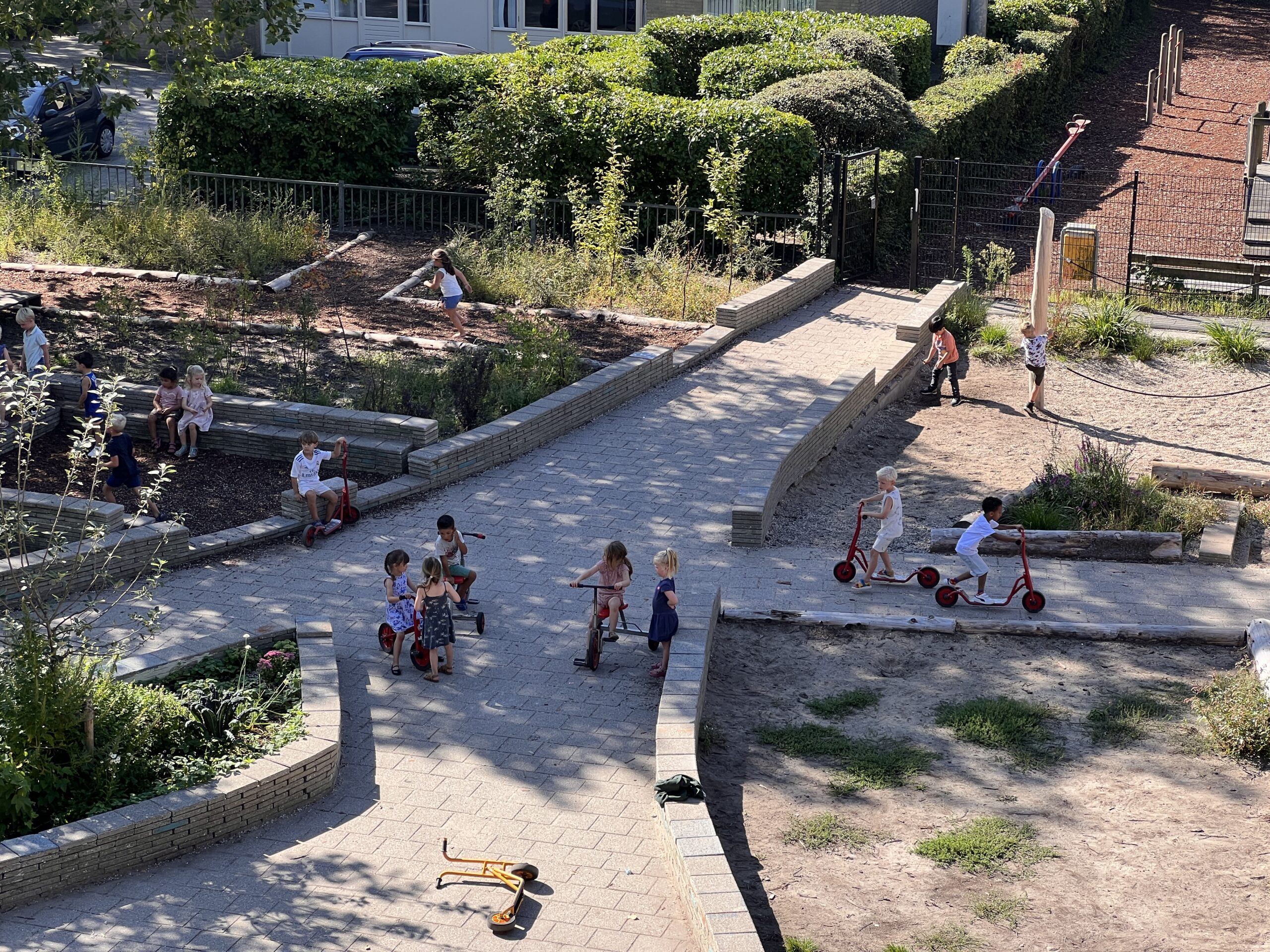
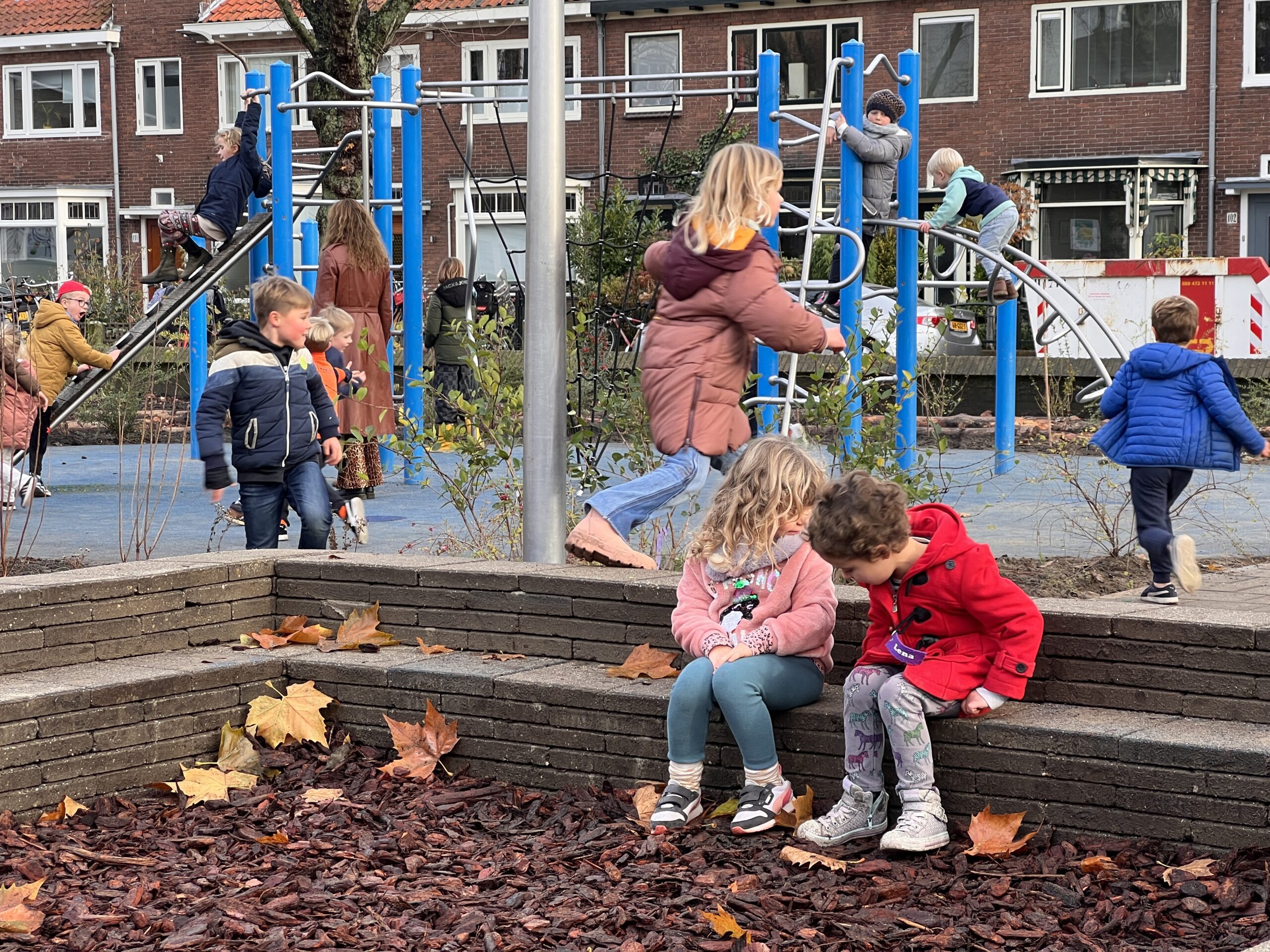
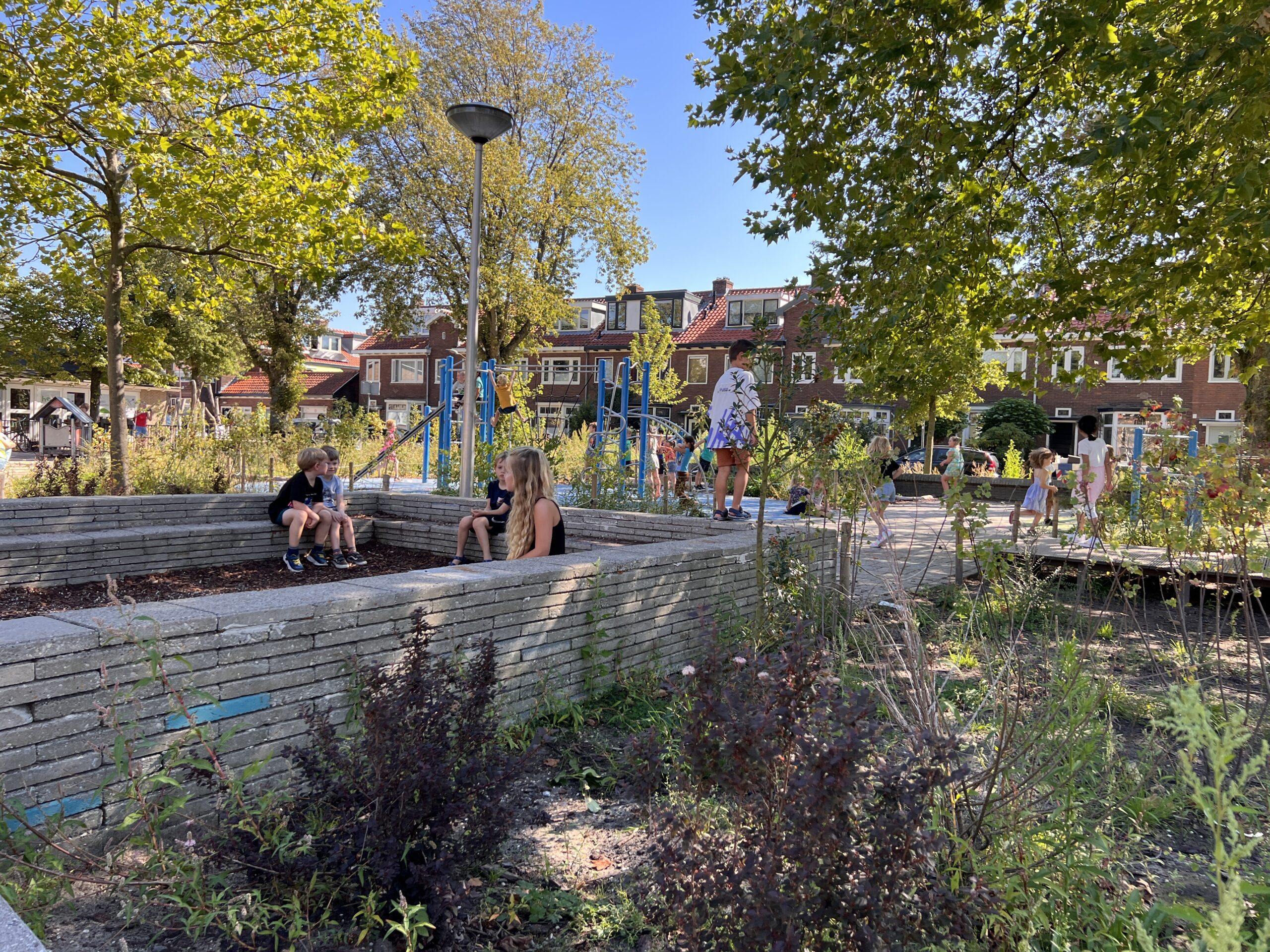
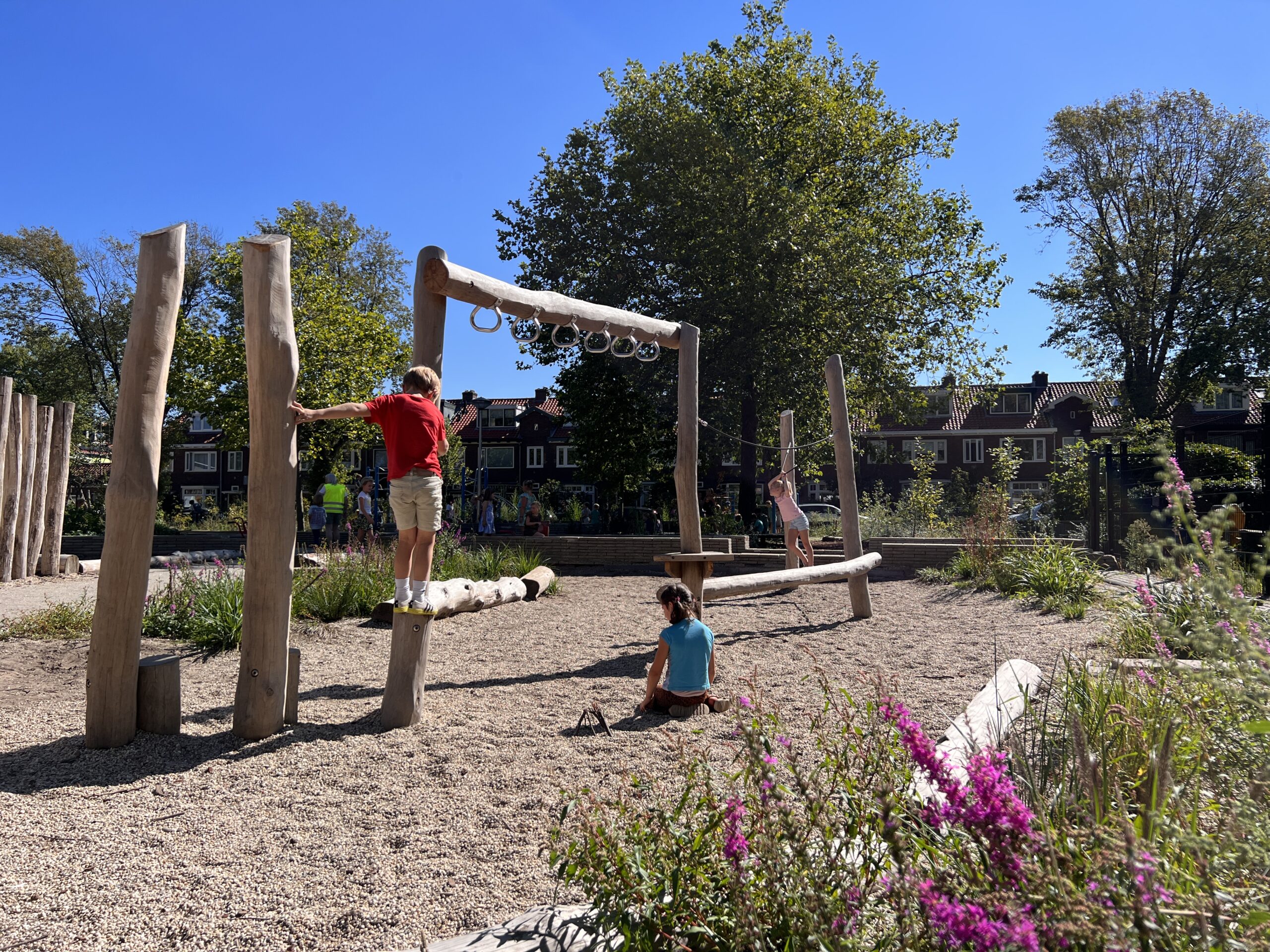
During the co-creation process, children asked for more greenery and greater diversity in play opportunities, while the local community emphasised the importance of maintaining visibility across the space. The design responded to both needs. We created distinct areas for different activities: outdoor classrooms, paths with varied materials, and walls with different heights built using reused tiles (the very ones children helped remove). Only one new play structure was added, specifically for risky play, while existing equipment was retained. Several “natural islands” were introduced, encouraging children to interact directly with nature.
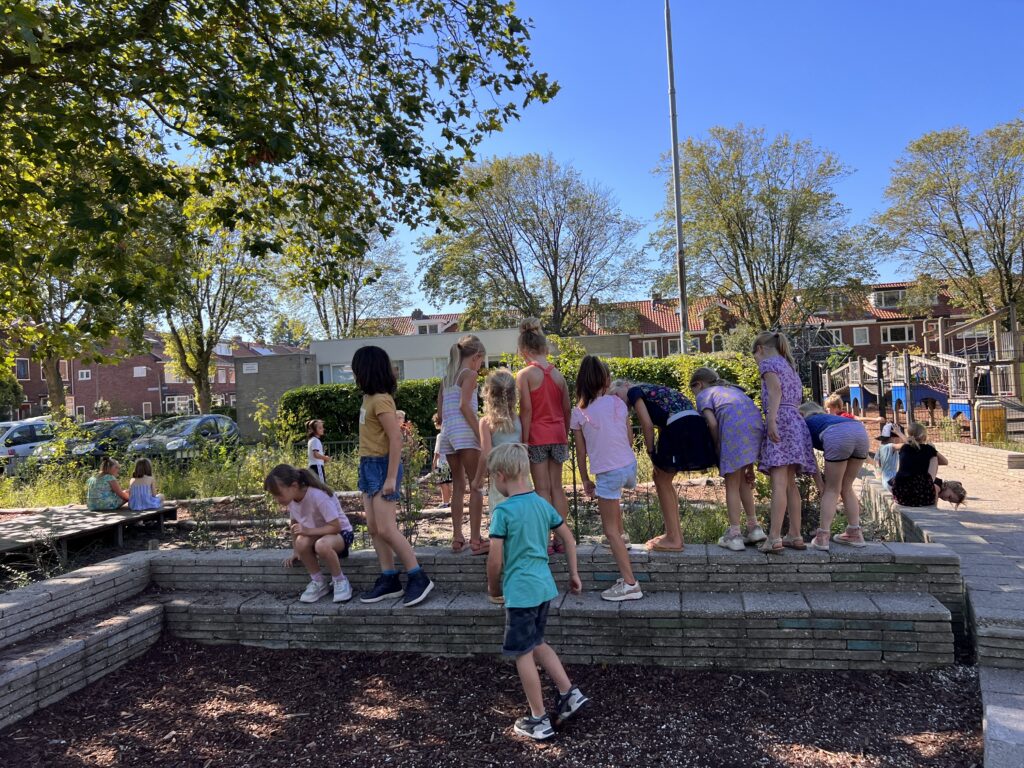
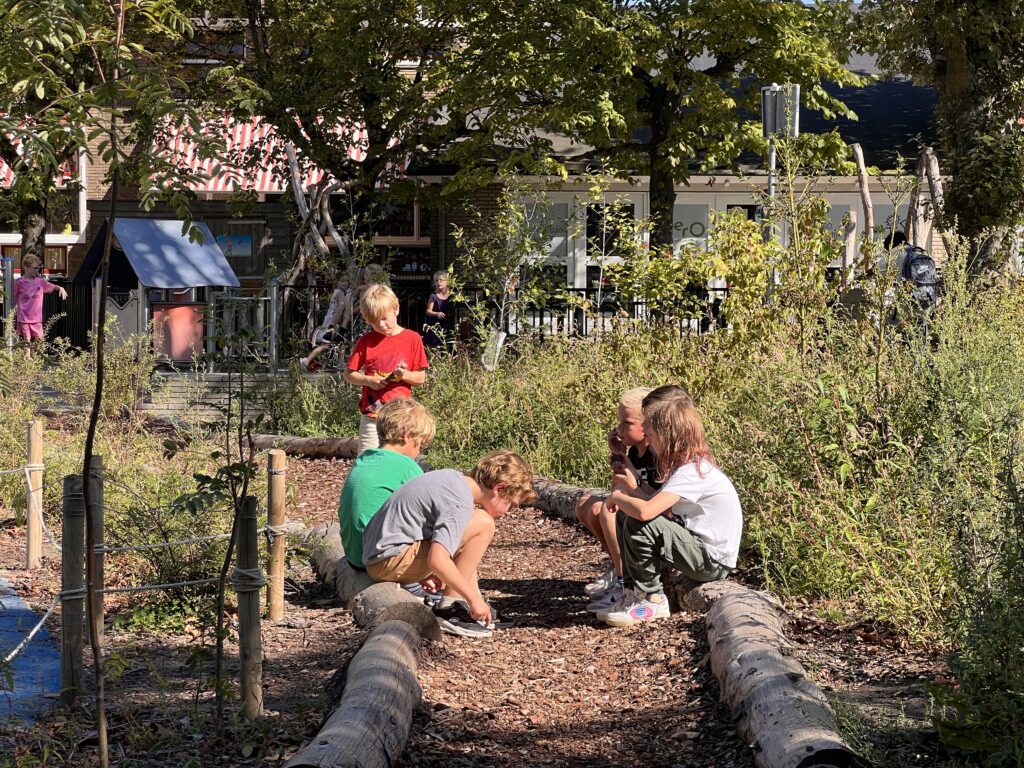
The results were immediate and visible: children climbing, jumping, sitting on tree trunks, walking along walls, and exploring the space they had helped imagine. Green space increased to 35%, fundamentally changing the microclimate and the experience of the schoolyard. Everyone was happy and so were we, as designers.
A new opportunity for children, schools, and cities
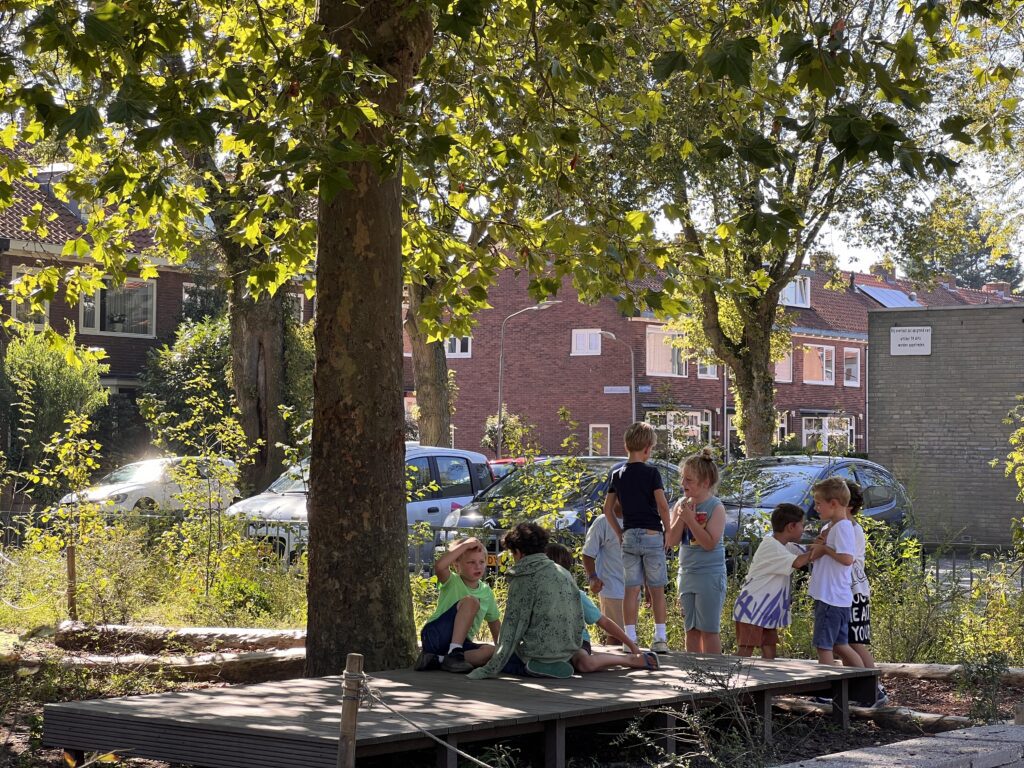
Climate-adaptive schoolyards represent a powerful opportunity for cities, whether schools are publicly or privately owned. The benefits are simply too significant to ignore. Crucially, this transformation does not require building new schools. Existing schoolyards can be rethought incrementally, through zoning strategies and phased investments that align with annual budgets and local priorities.
It is therefore essential for designers to advocate for the transformation of these spaces together with children, teachers, parents, and surrounding neighbourhoods. At the same time, policy must support this shift by recognising schoolyards as climate infrastructure, aligning investment with long-term climate goals, and committing to a new paradigm for everyday public spaces.
In the end, we are not the true architects of these places, children are. And when given the opportunity to shape their own environments, they do more than imagine better spaces: they take ownership of them. The result is not only greener, more resilient schoolyards, but cities that learn, adapt, and grow alongside the next generation.
Gallery:

The views expressed in this article are those of the author and do not necessarily reflect those of GLSN.