Shared by the architects upon our invitation.
Vision and Educational Philosophy
The design of Tagore School began with a clear and uncommon brief from the client: create a campus that prioritizes children over infrastructure. Instead of maximizing built-up area or focusing solely on operational efficiency, the vision was to build an environment that nurtures curiosity, safety, interaction, and emotional well-being.
The educational philosophy guiding the project recognizes that learning extends beyond classrooms. Corridors, courtyards, and transitional spaces become equally important as places where children socialize, observe, explore, and develop independence. The architecture therefore focuses on creating environments that feel intuitive, safe, and engaging for young users.
Rather than rigidly structured academic spaces, the campus encourages movement, discovery, and informal learning. Spaces are designed to support collaboration, play, and observation; acknowledging that social interaction and spatial experience play a vital role in childhood development.
In this sense, Tagore School is conceived not merely as an institution but as a landscape of learning where architecture quietly shapes behaviour, curiosity, and memory.
Context and User Demographics
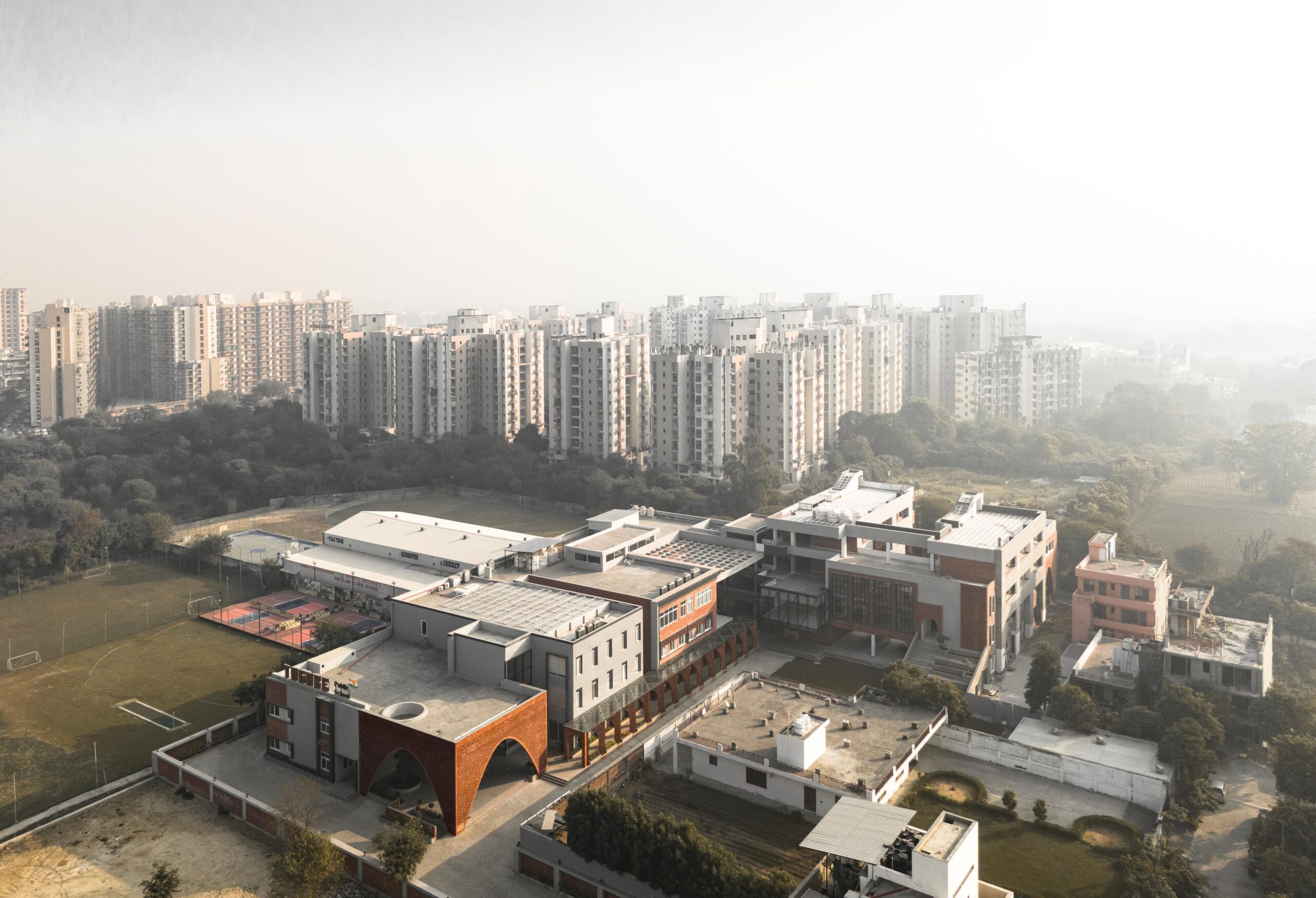
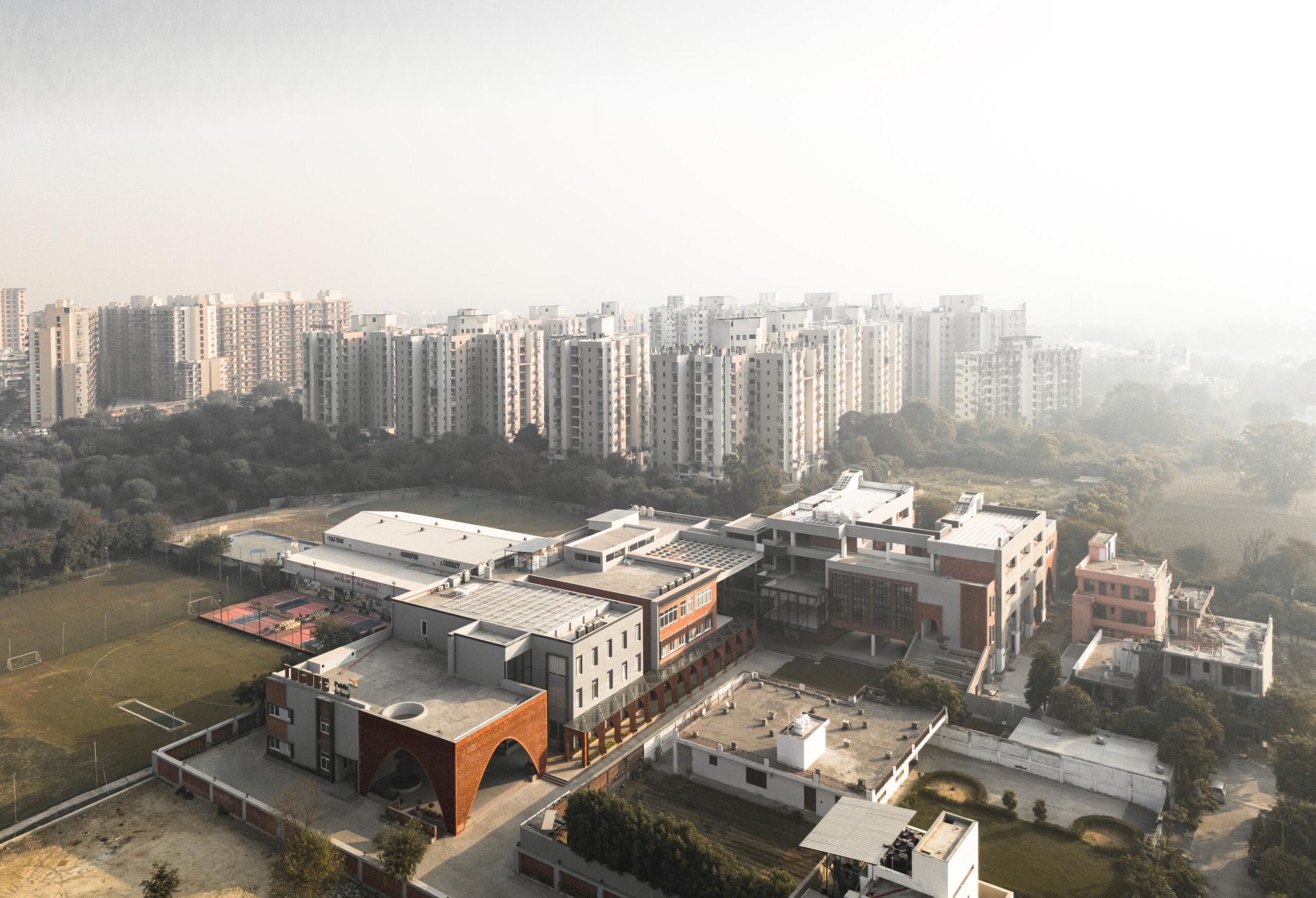
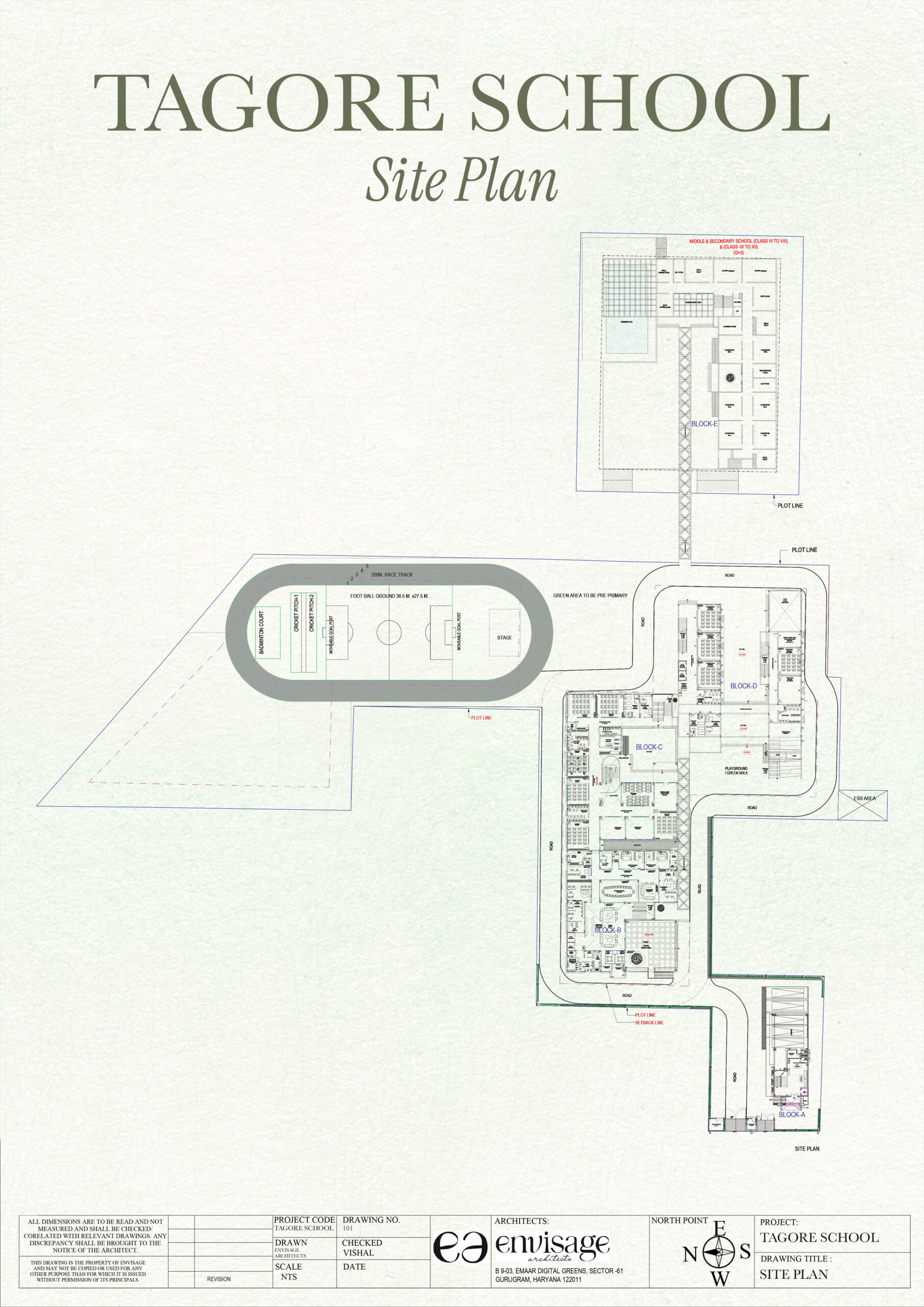
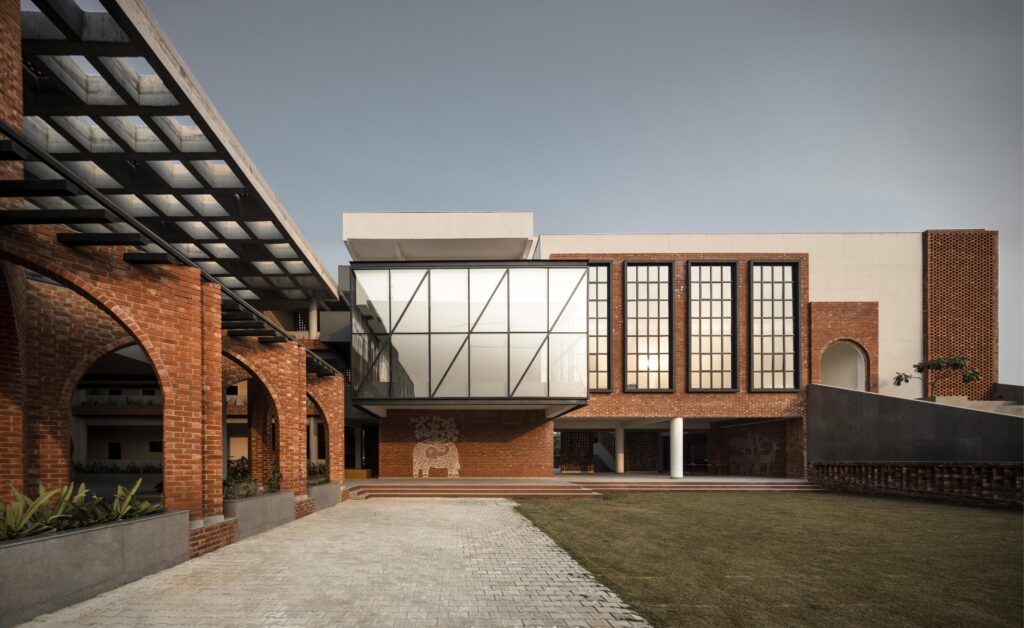
Located on a large site divided into five regulatory zones, the campus presented both complexity and opportunity. Instead of forcing a single monolithic building onto the site, the design responds to these constraints by creating a distributed campus composed of multiple interconnected blocks.
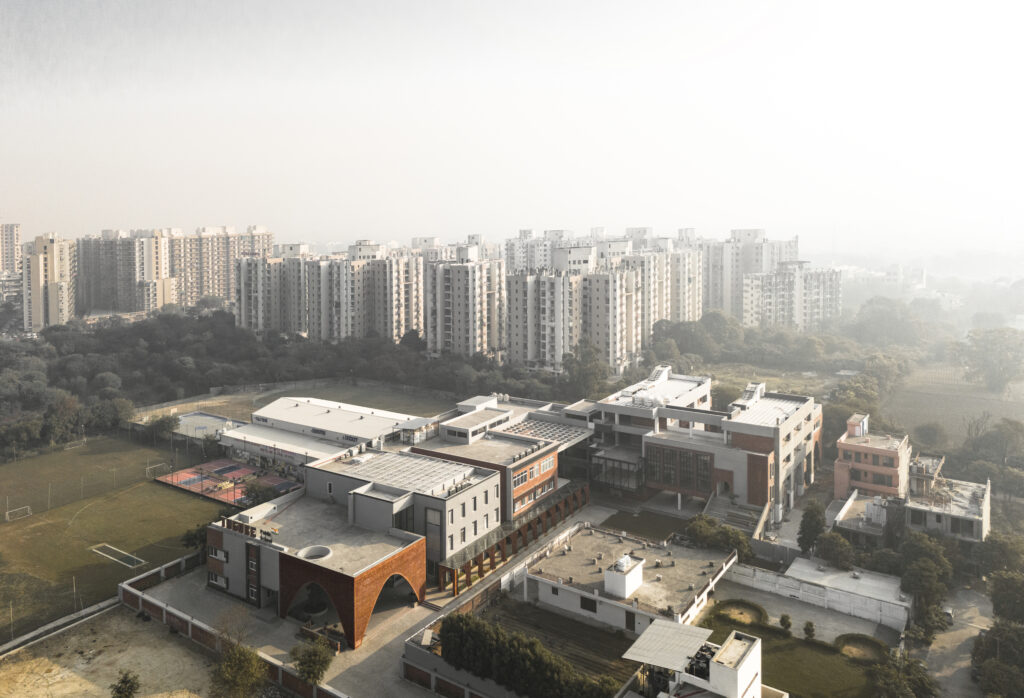
The school caters to a wide age range, from kindergarten through senior classes. Recognizing that children of different ages experience space very differently, the campus avoids placing all students within one overwhelming structure. Instead, each age group occupies its own cluster of spaces calibrated to appropriate scale, activity, and supervision needs.
The project is also deeply influenced by cultural context and climate. The design embraces openness, natural ventilation, and the integration of nature into everyday learning spaces reflecting the belief that children learn best in environments connected to the natural world.
Design Elements and Spatial Strategies
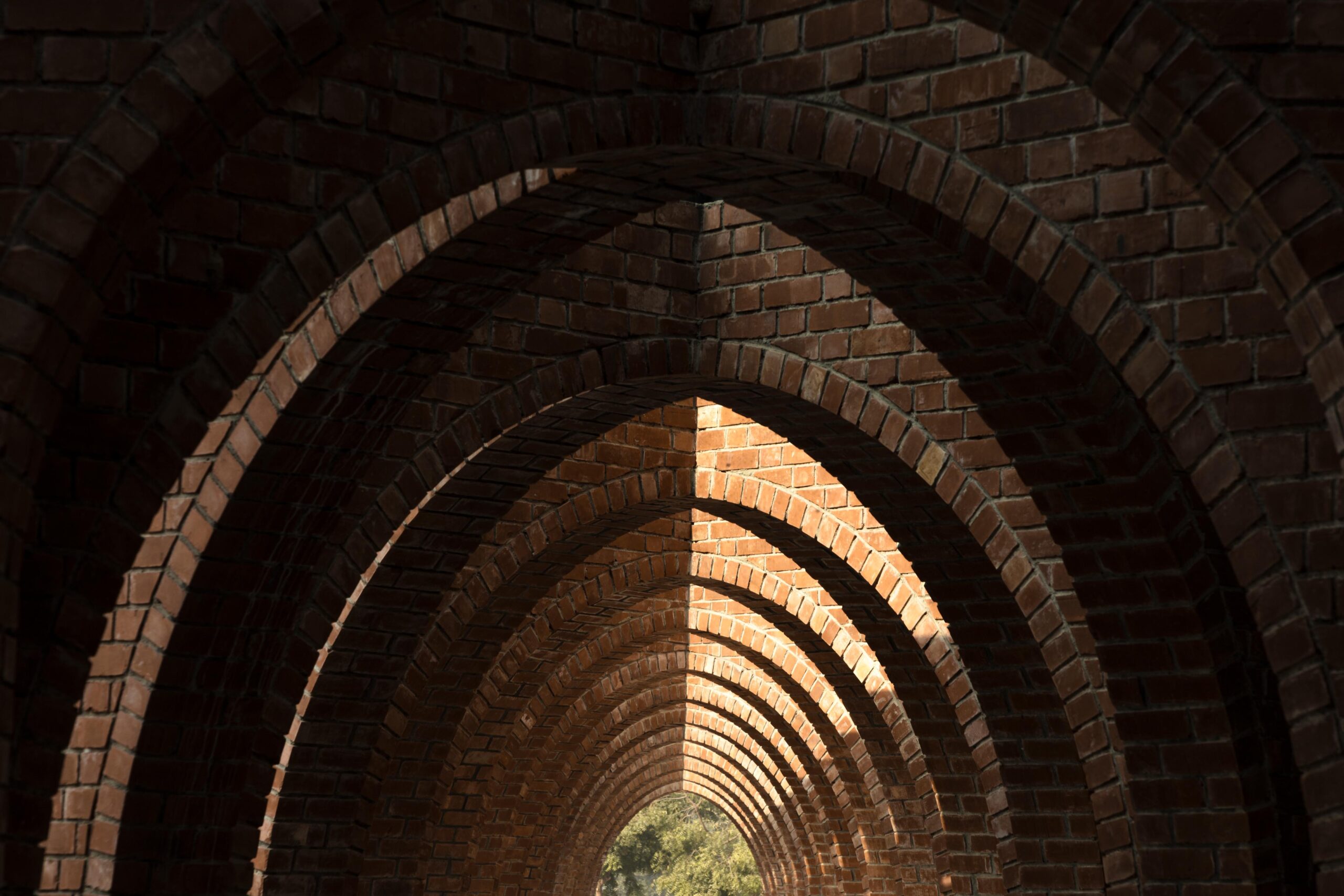
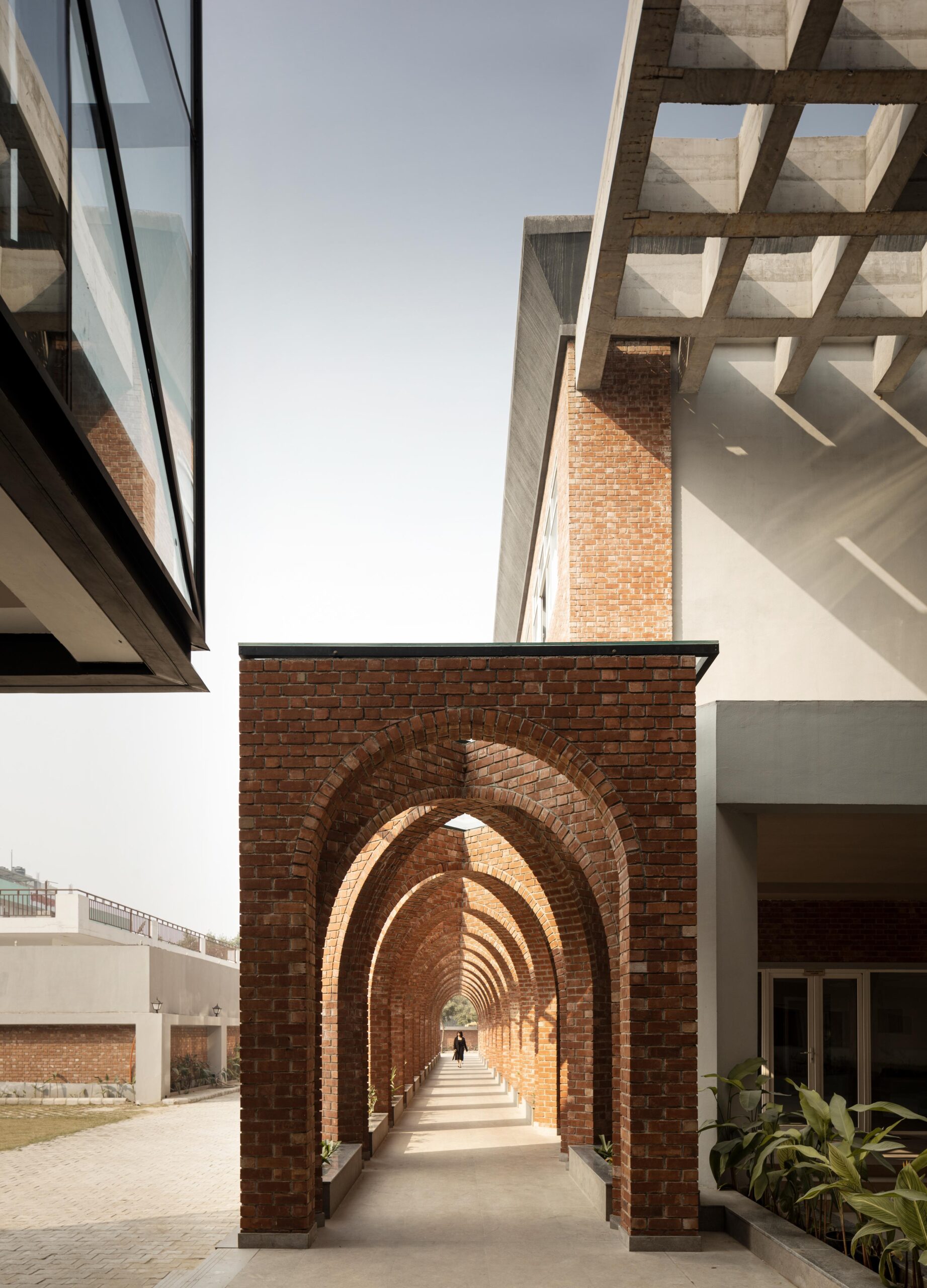
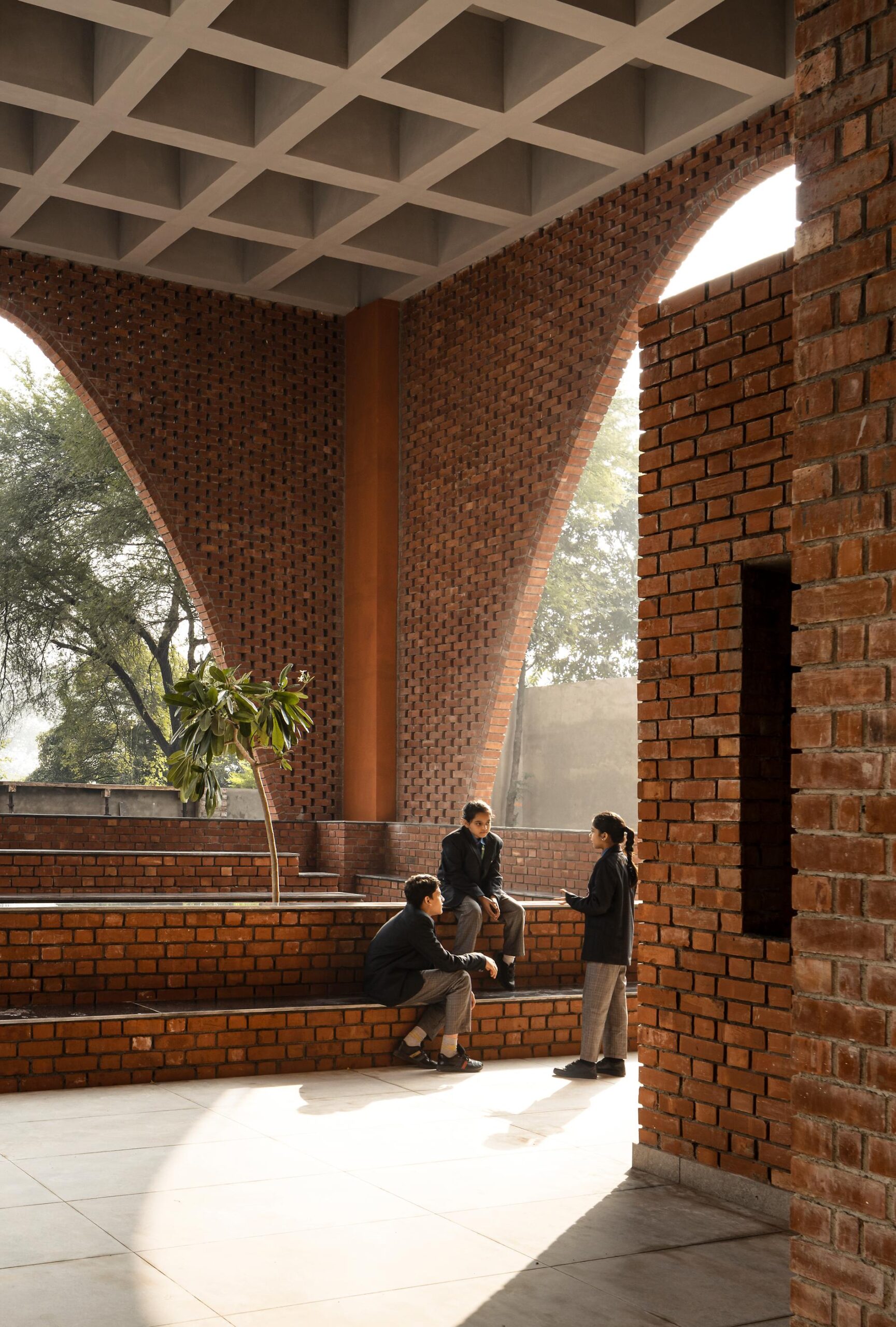
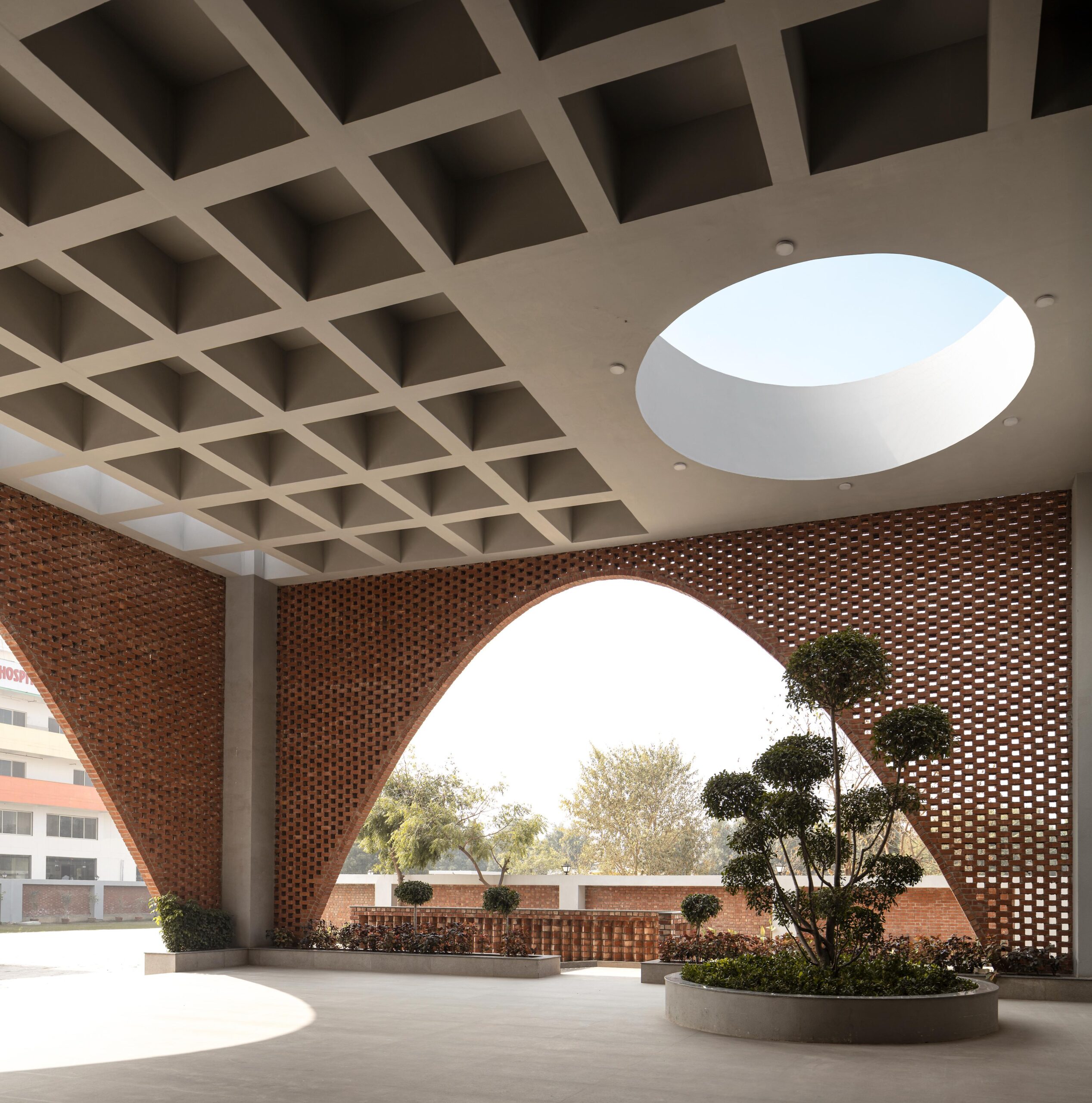
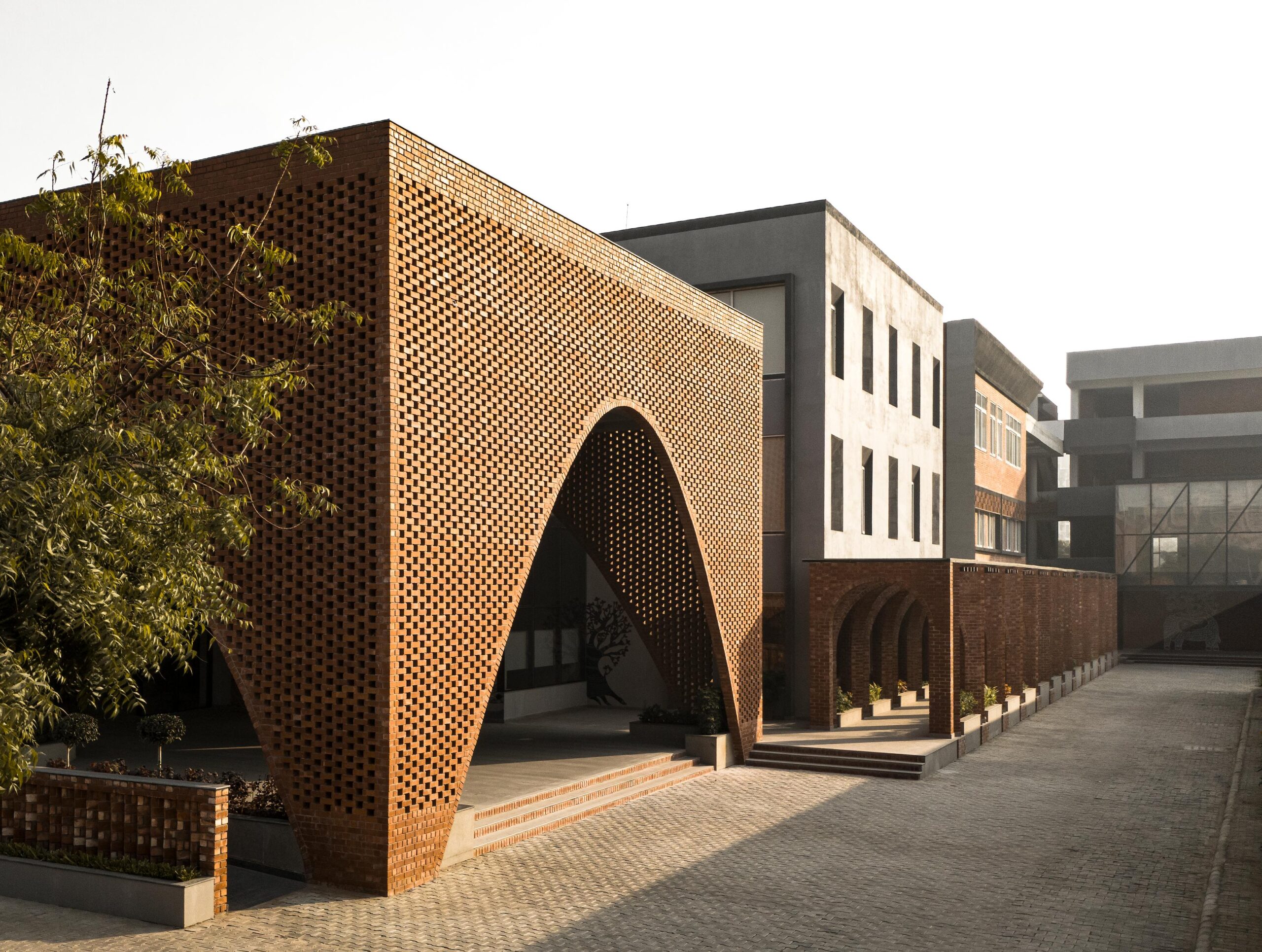
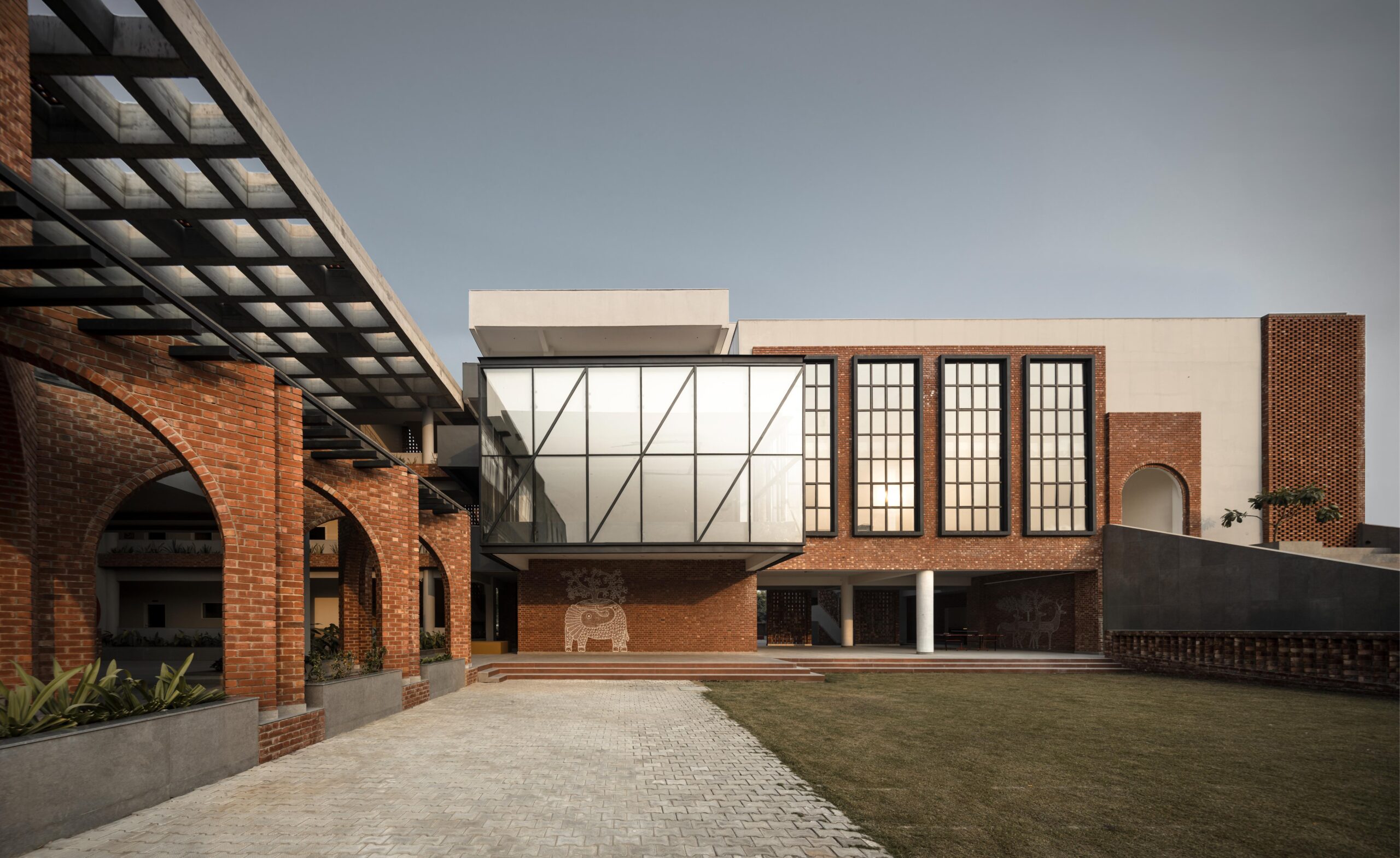
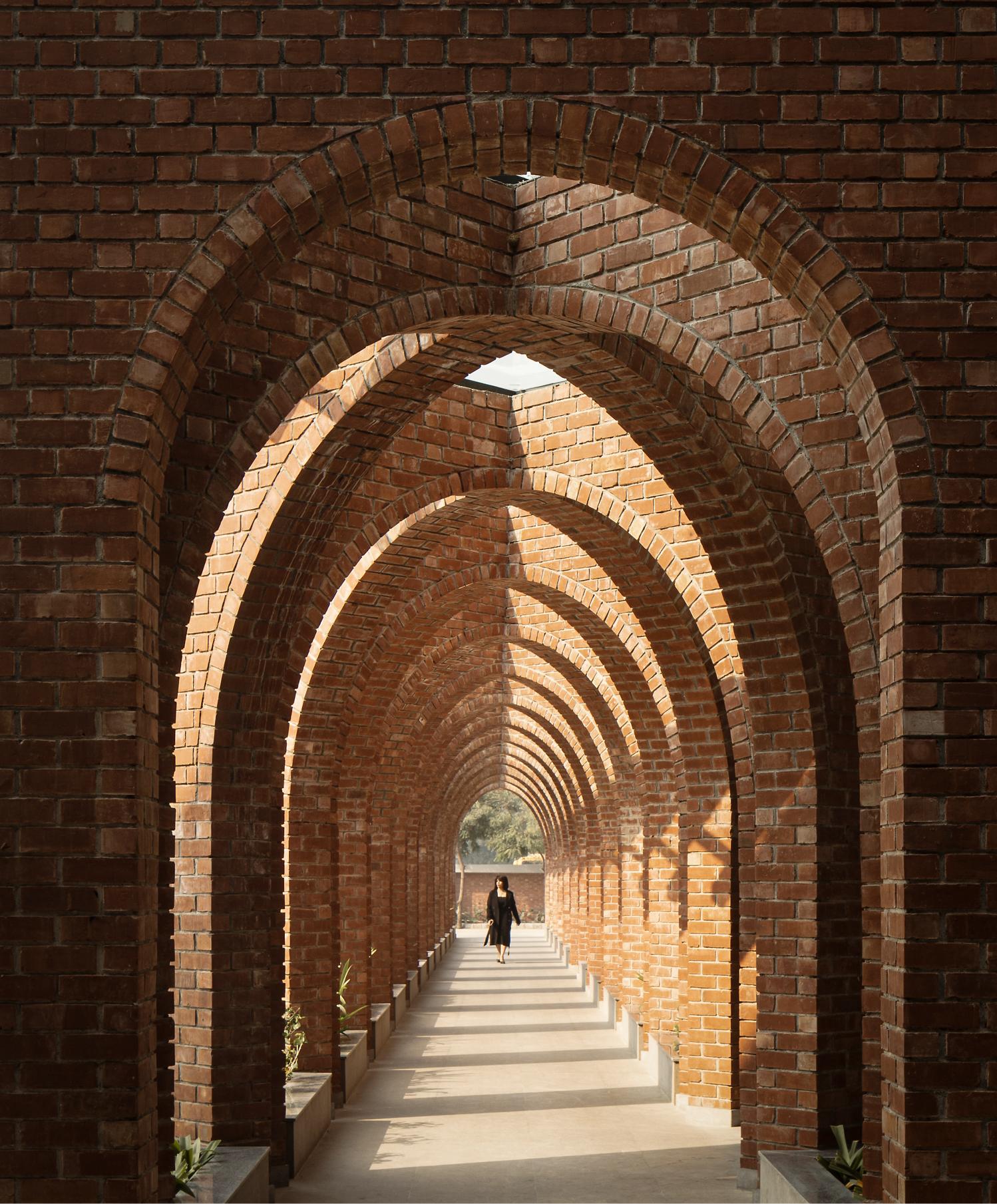
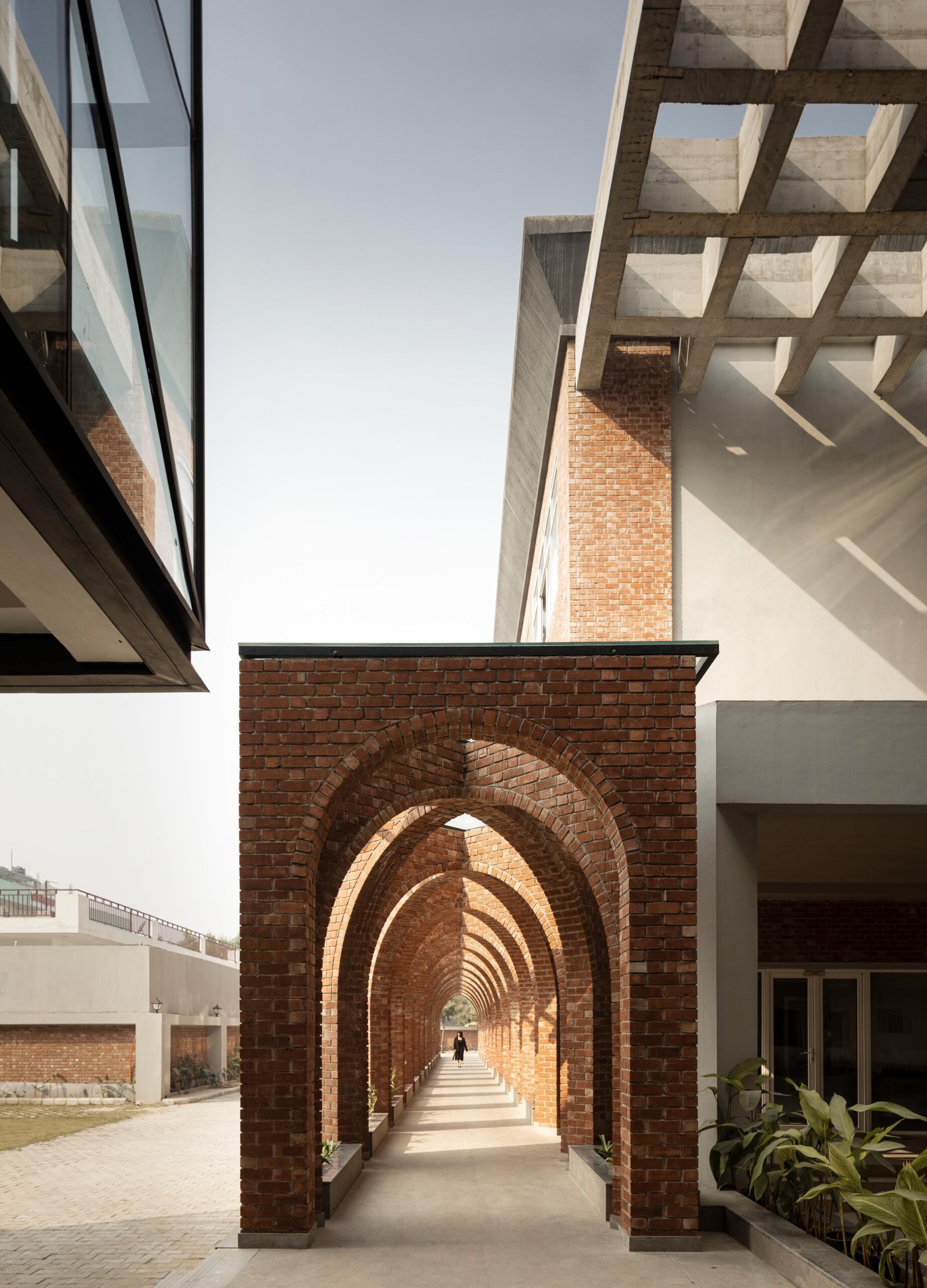
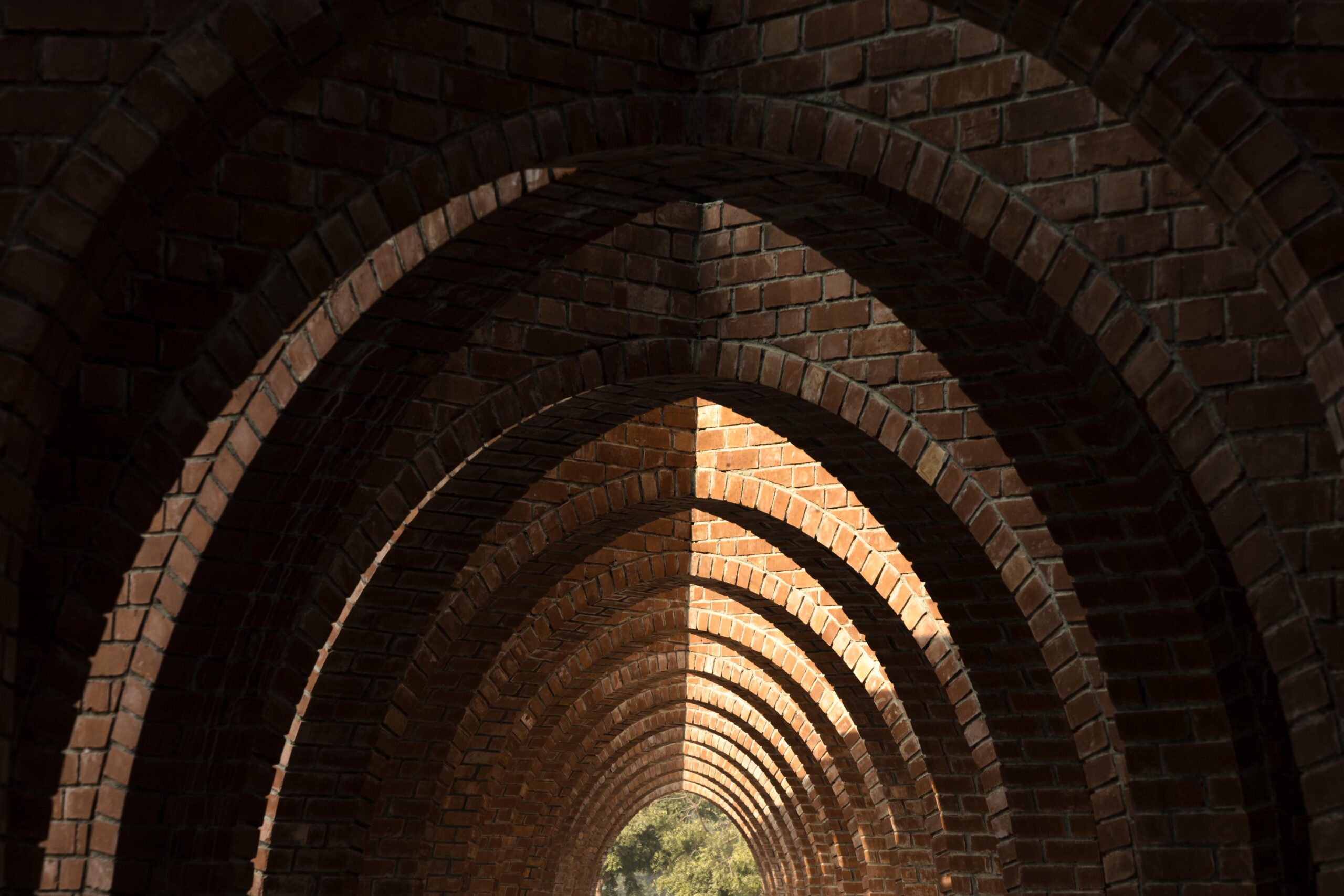
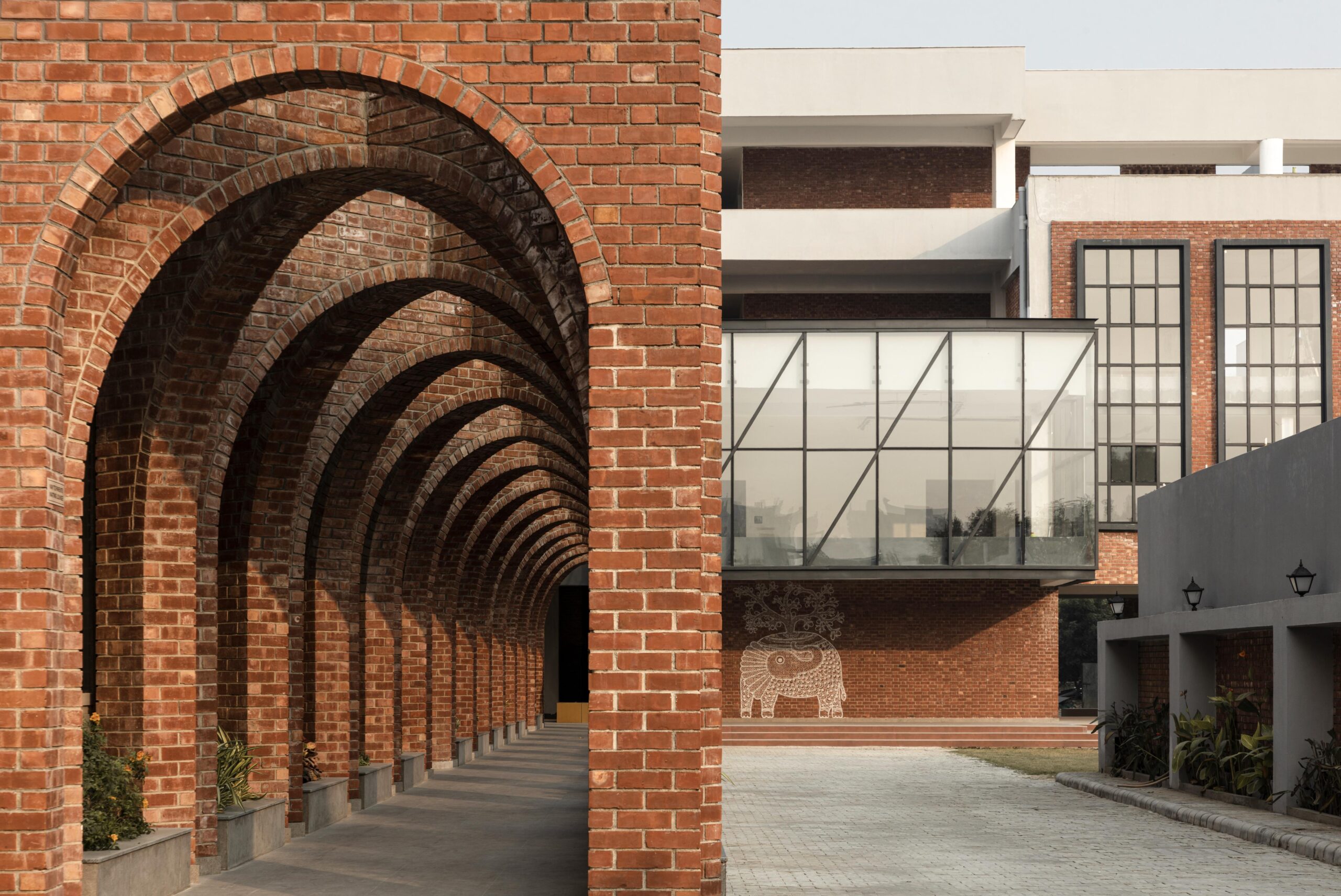
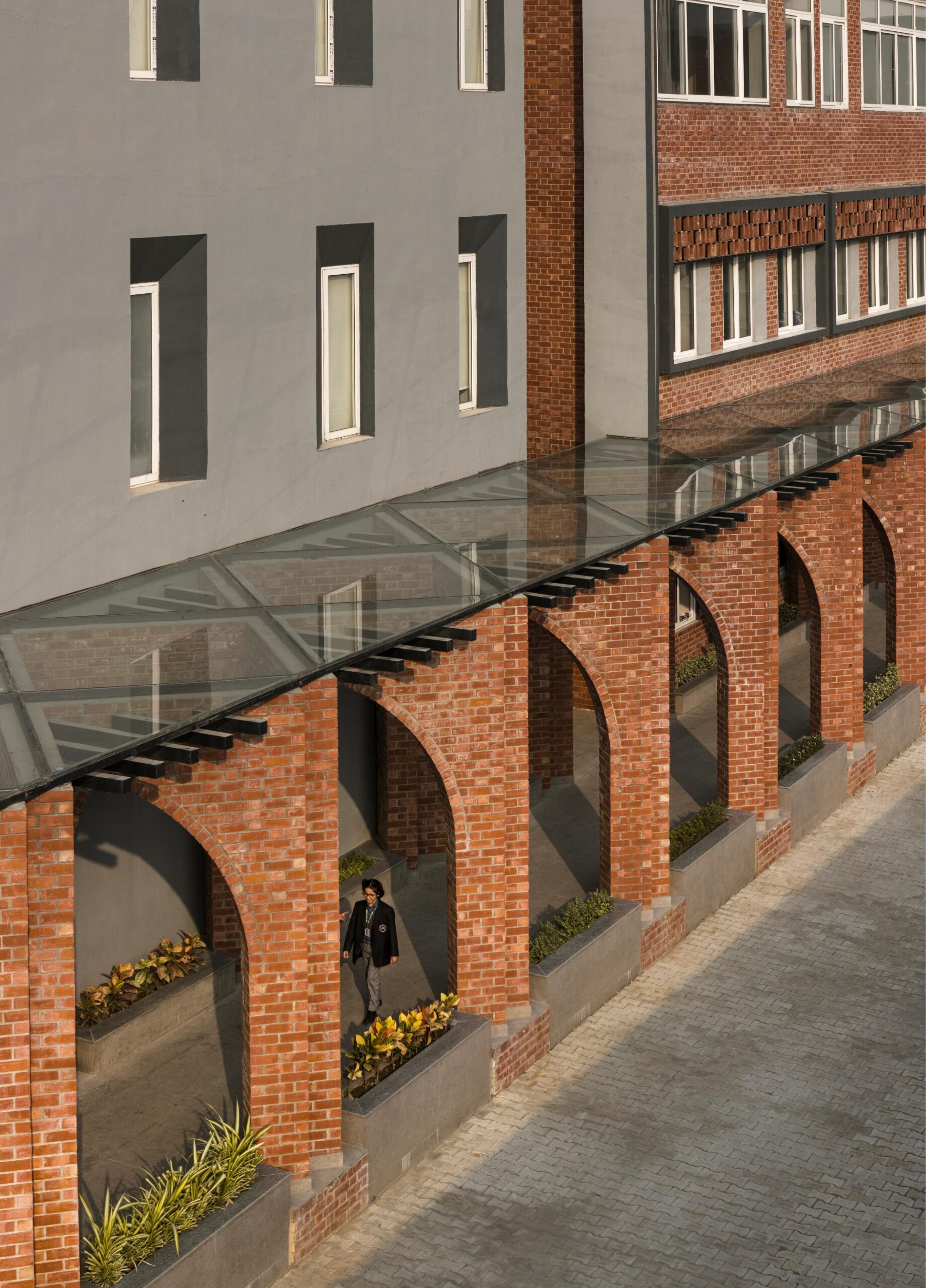
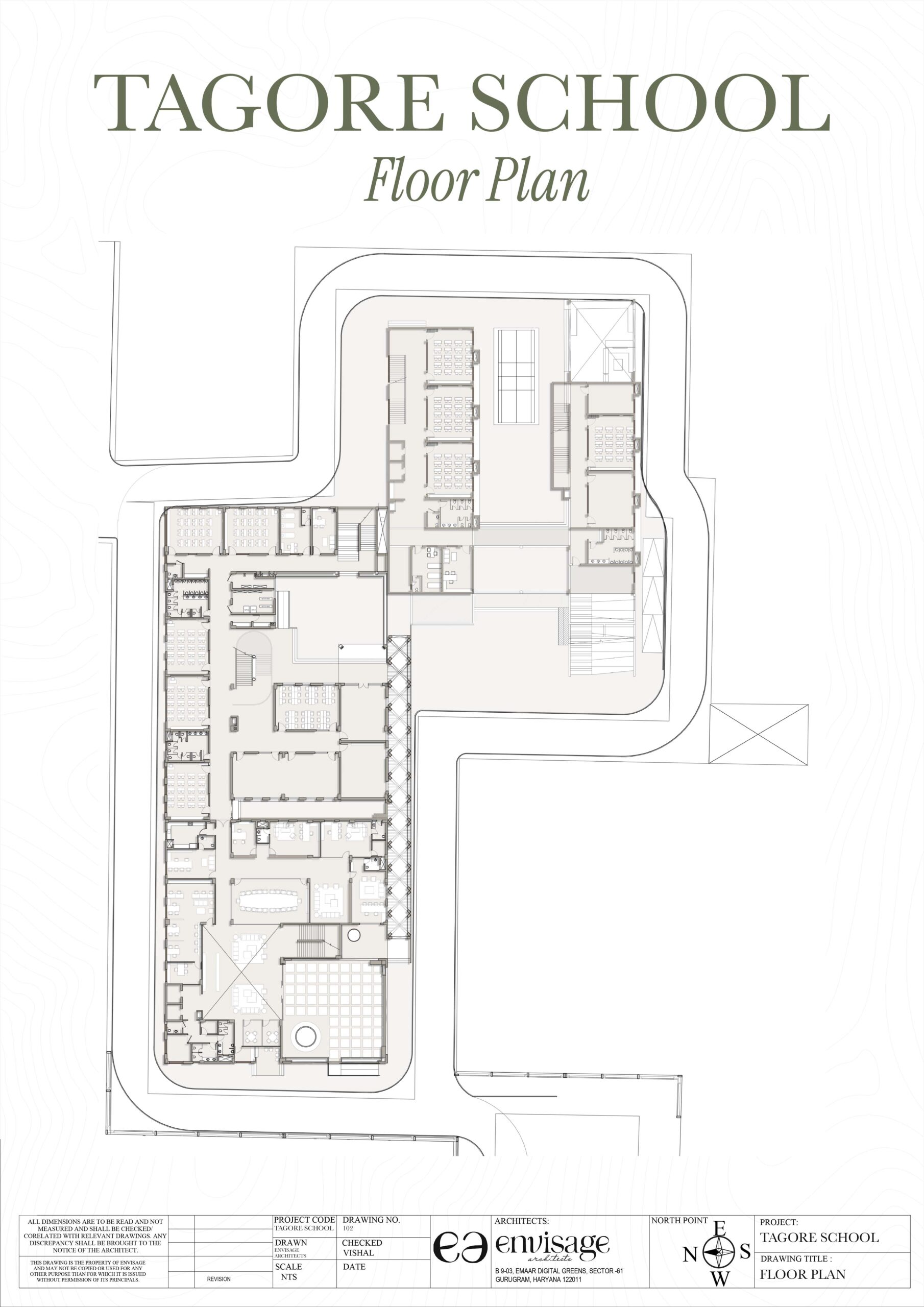
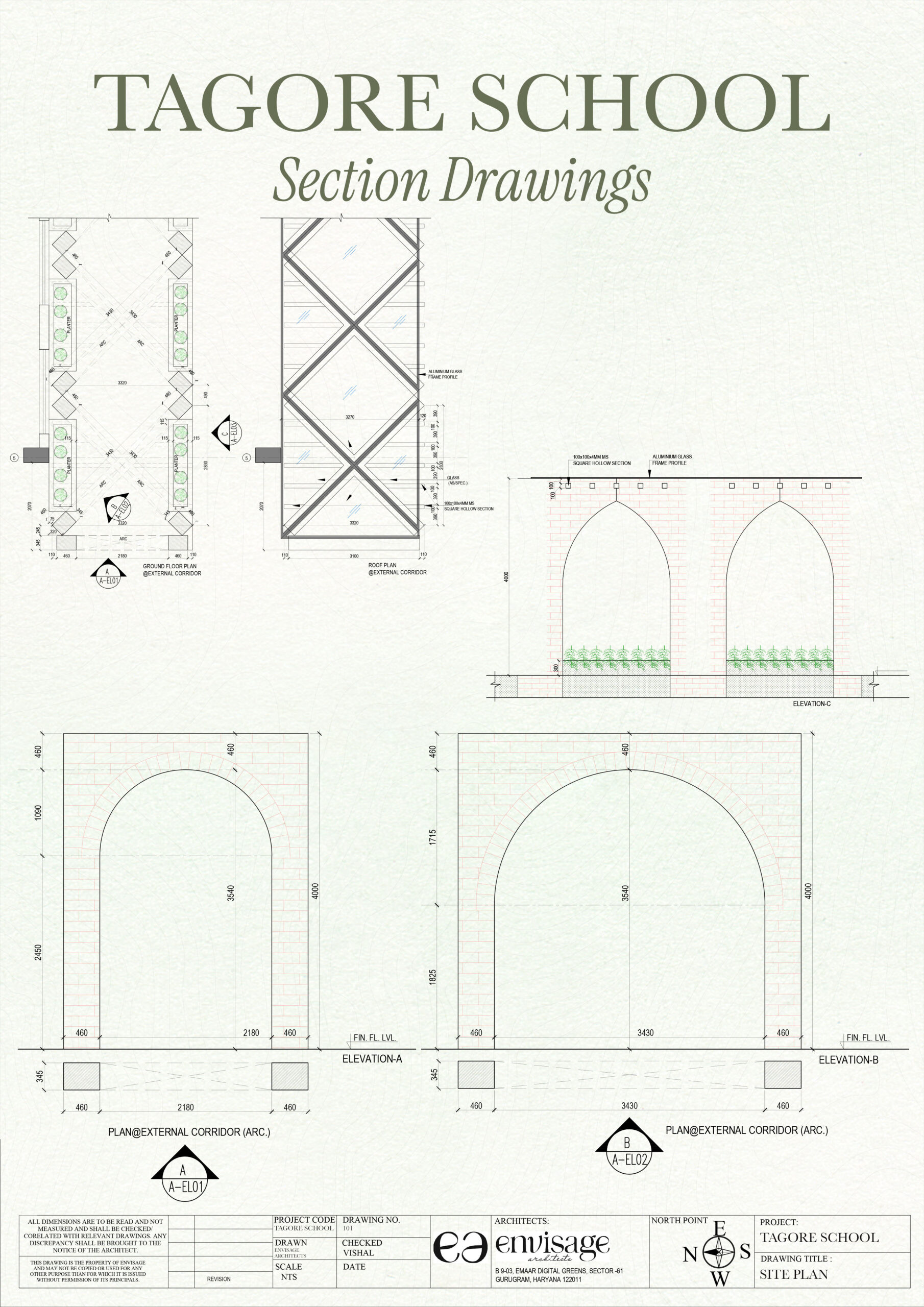
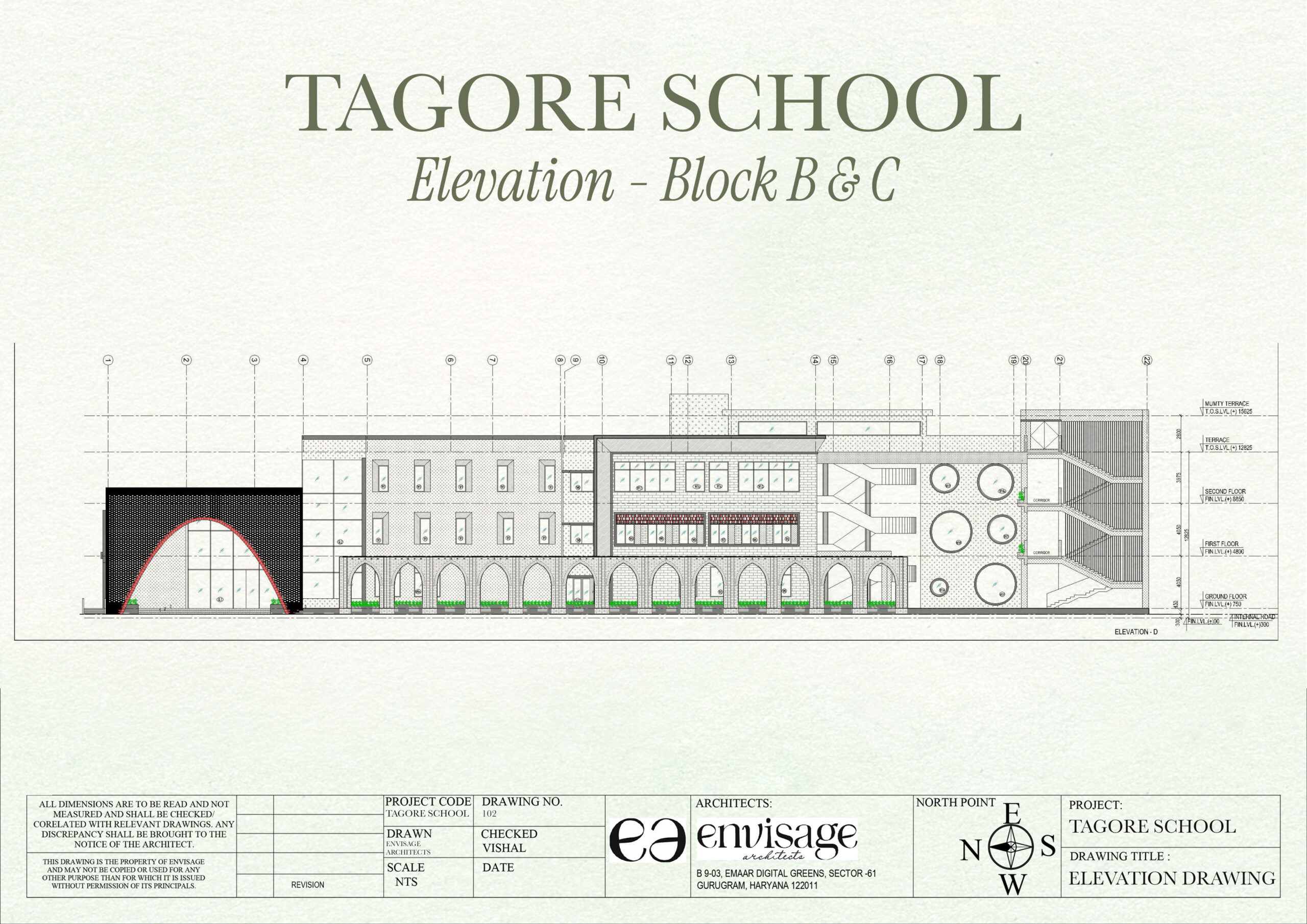
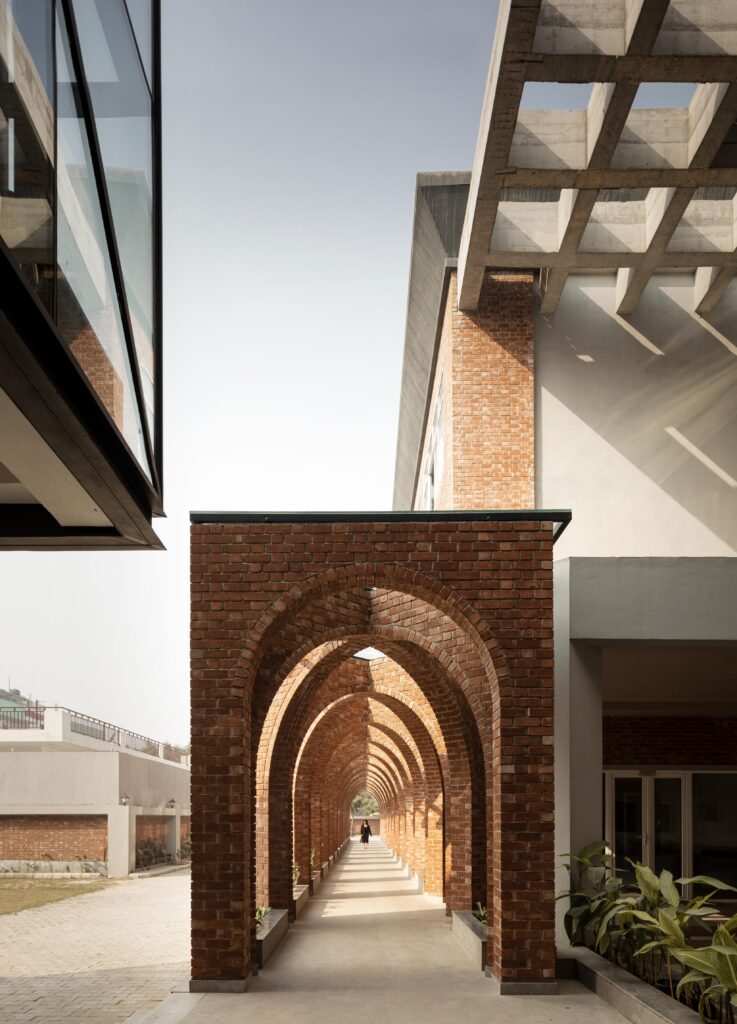
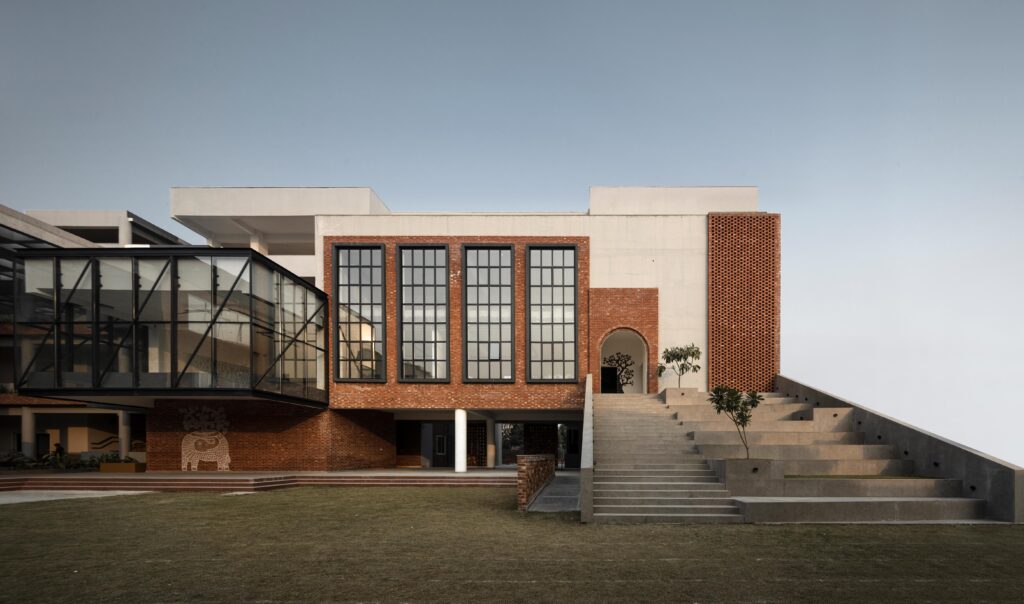
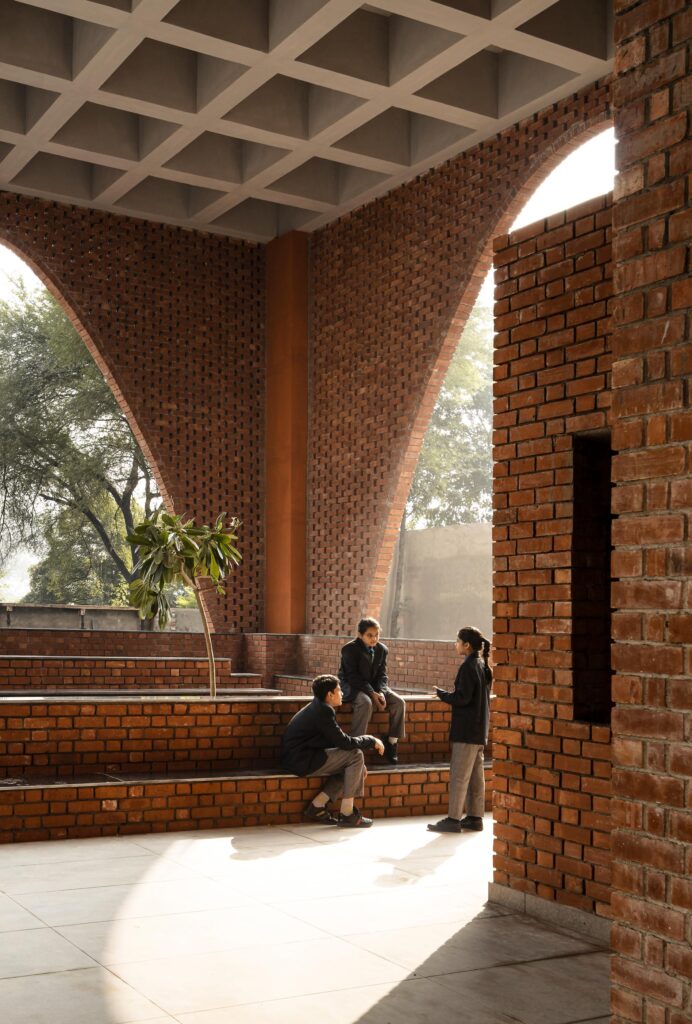
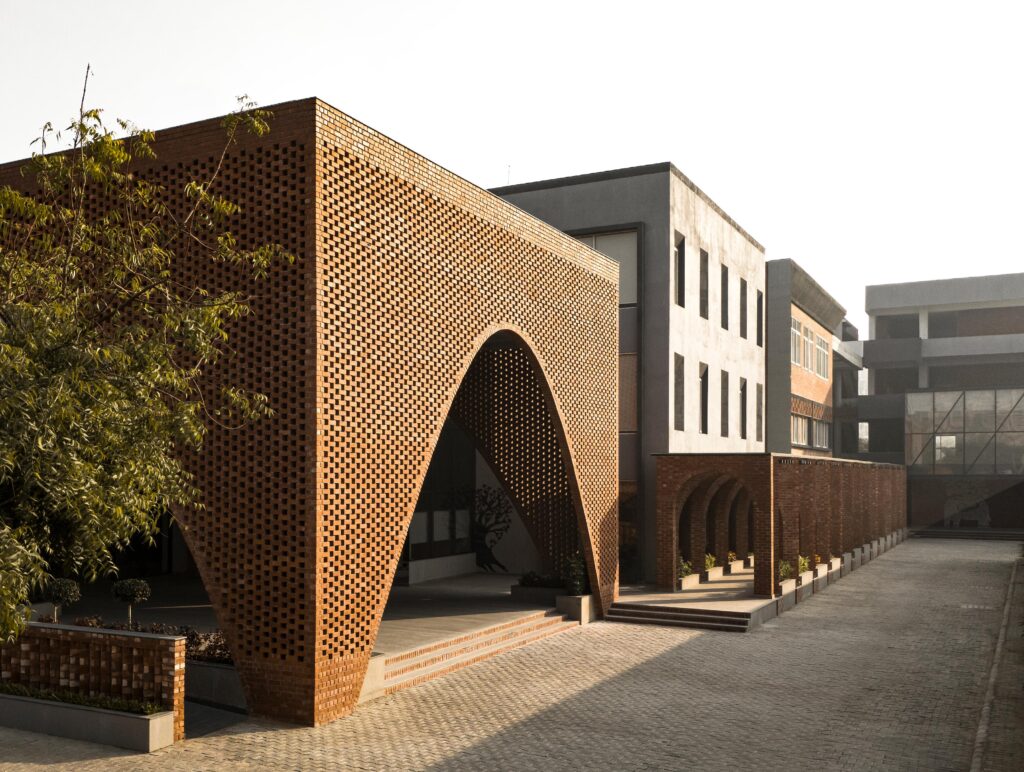
The campus is organized as a constellation of smaller buildings linked through a shaded cross-arched corridor that acts as the primary connective spine. This semi-covered pathway allows children to move safely between blocks while remaining protected from sun and rain.
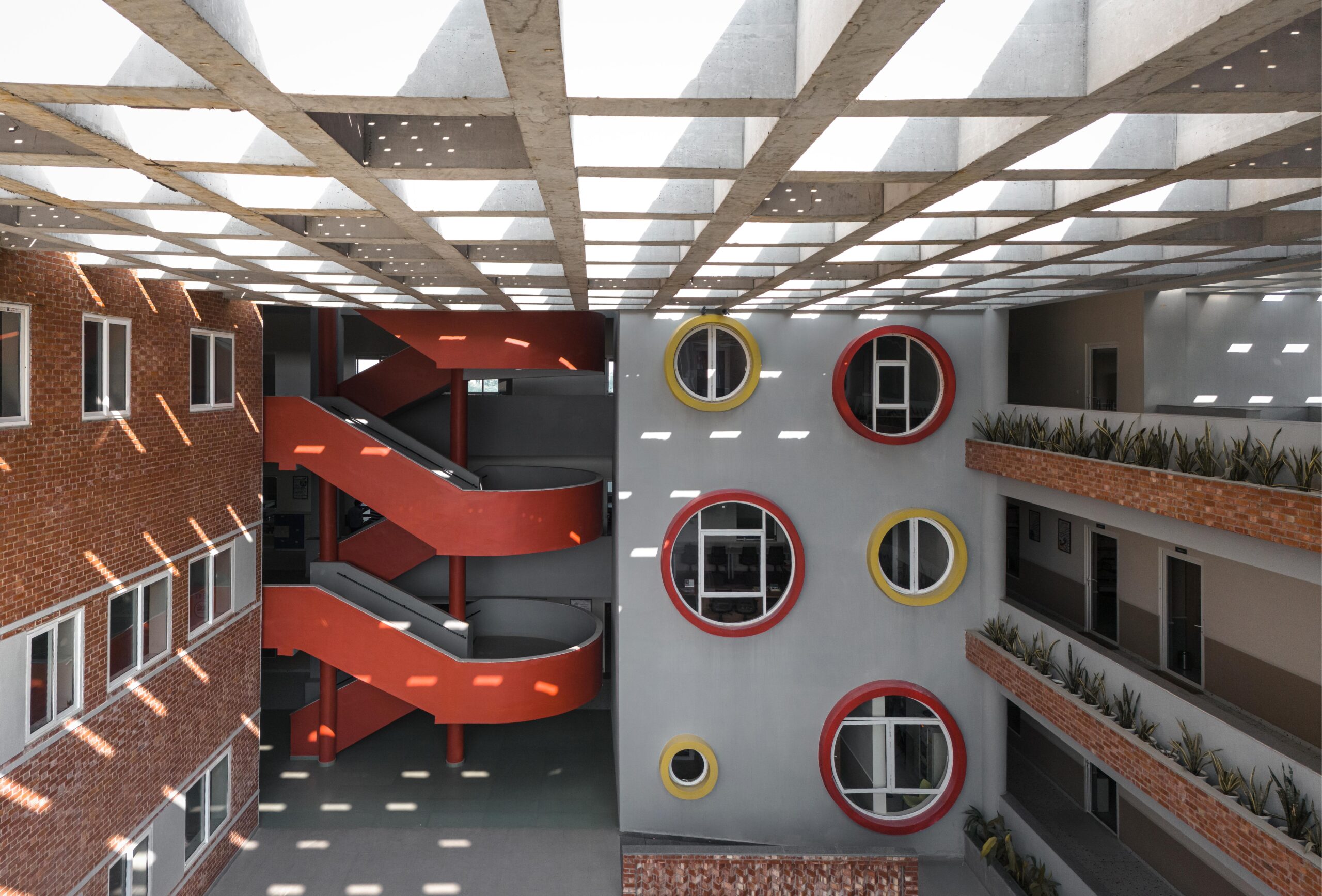
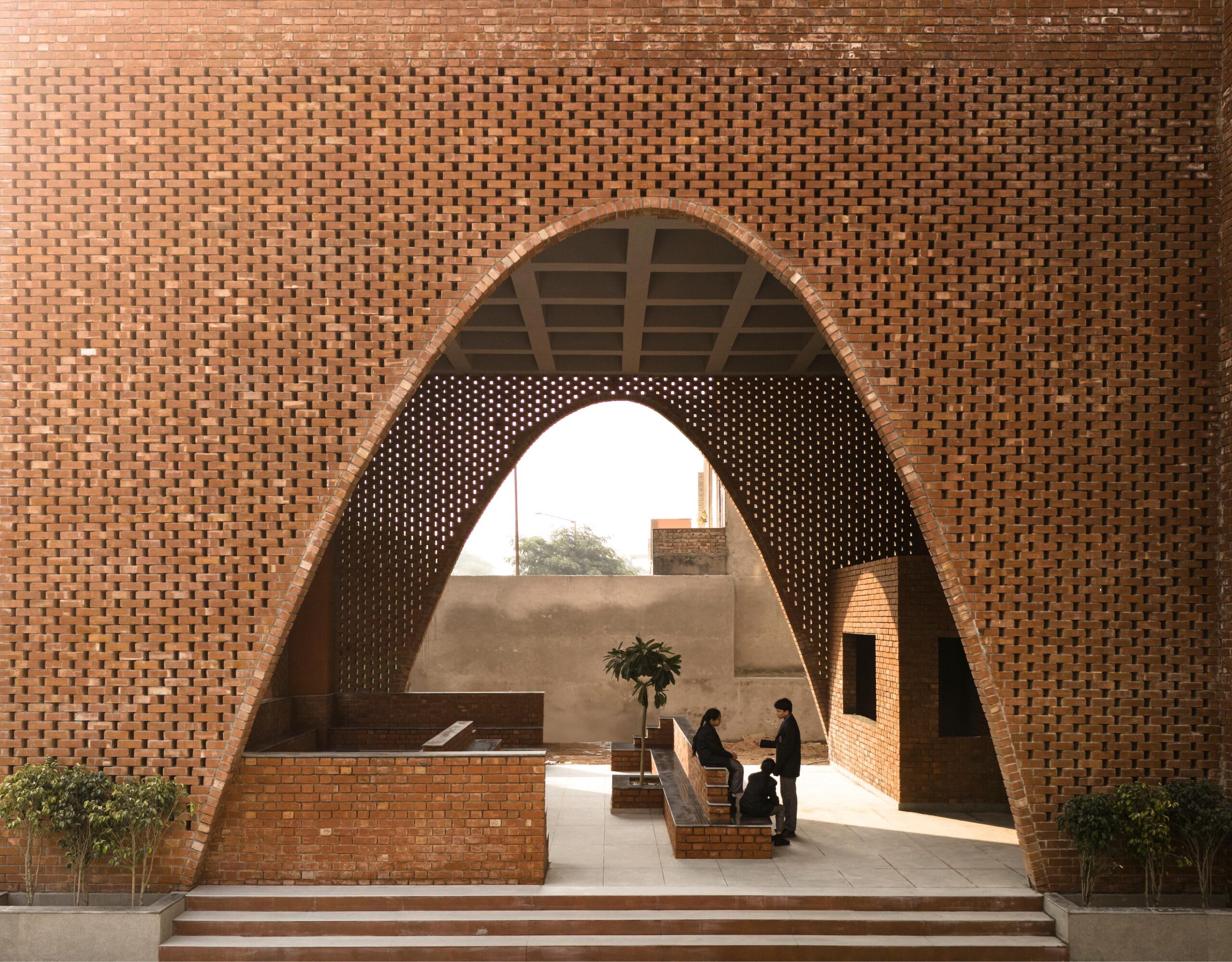
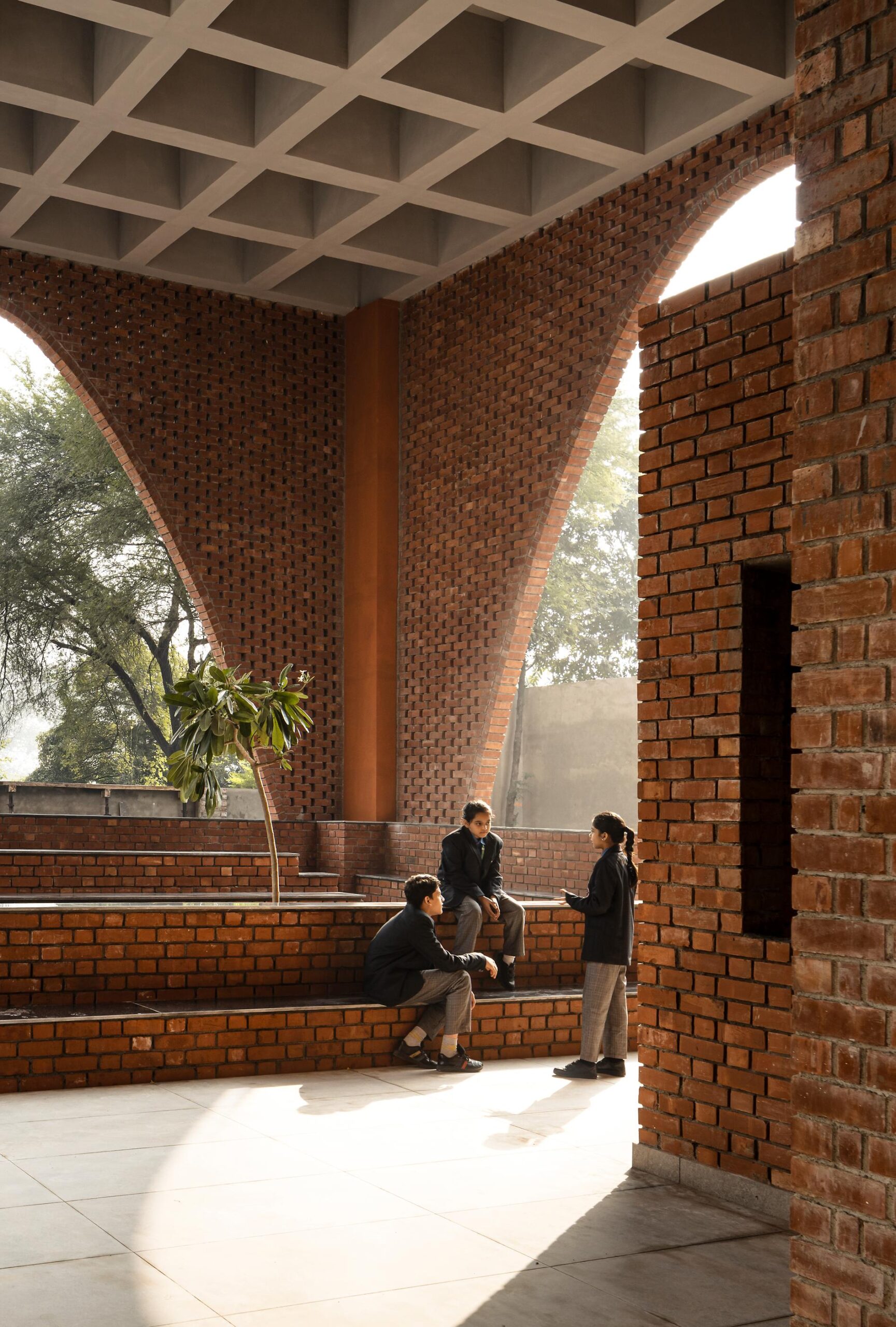
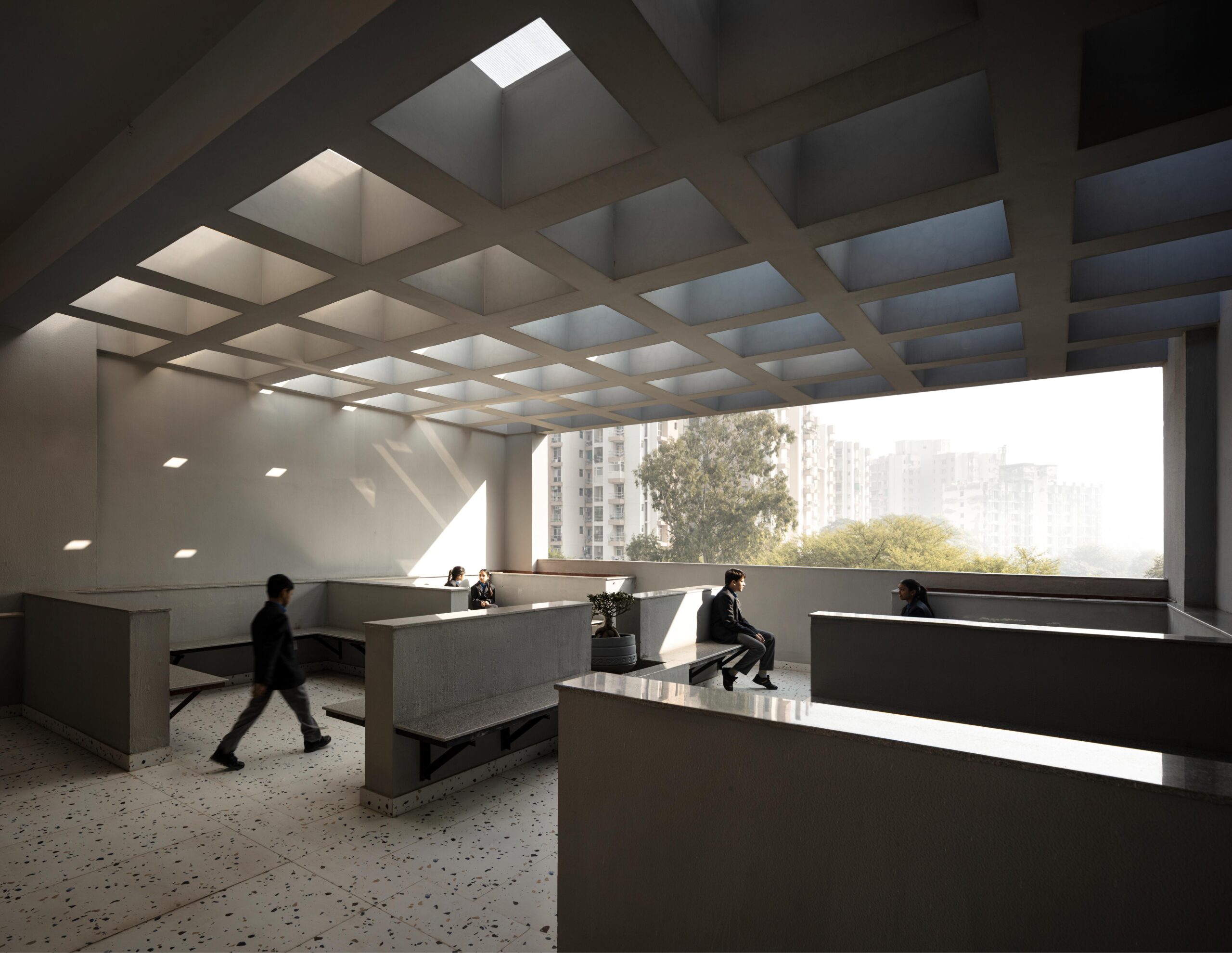
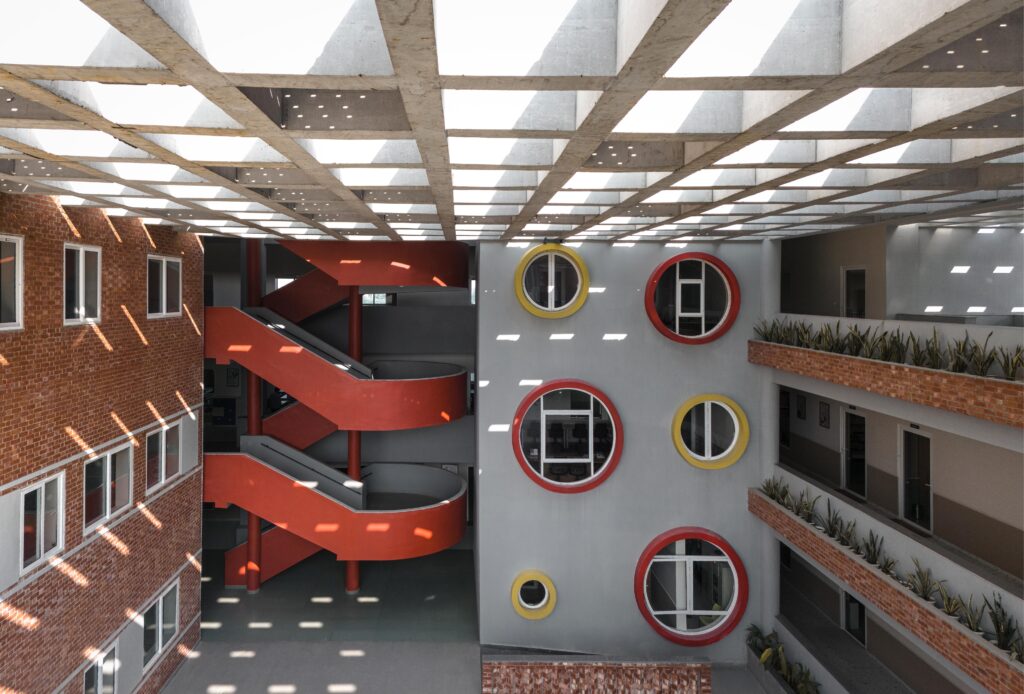
Courtyards form the heart of each block, functioning as both engagement spaces and environmental regulators. These courtyards provide daylight, natural ventilation, and places for informal interaction and play. Rather than being ornamental, they act as social and climatic lungs of the campus.
Several design decisions directly enhance the learning experience:
Human-scaled architecture
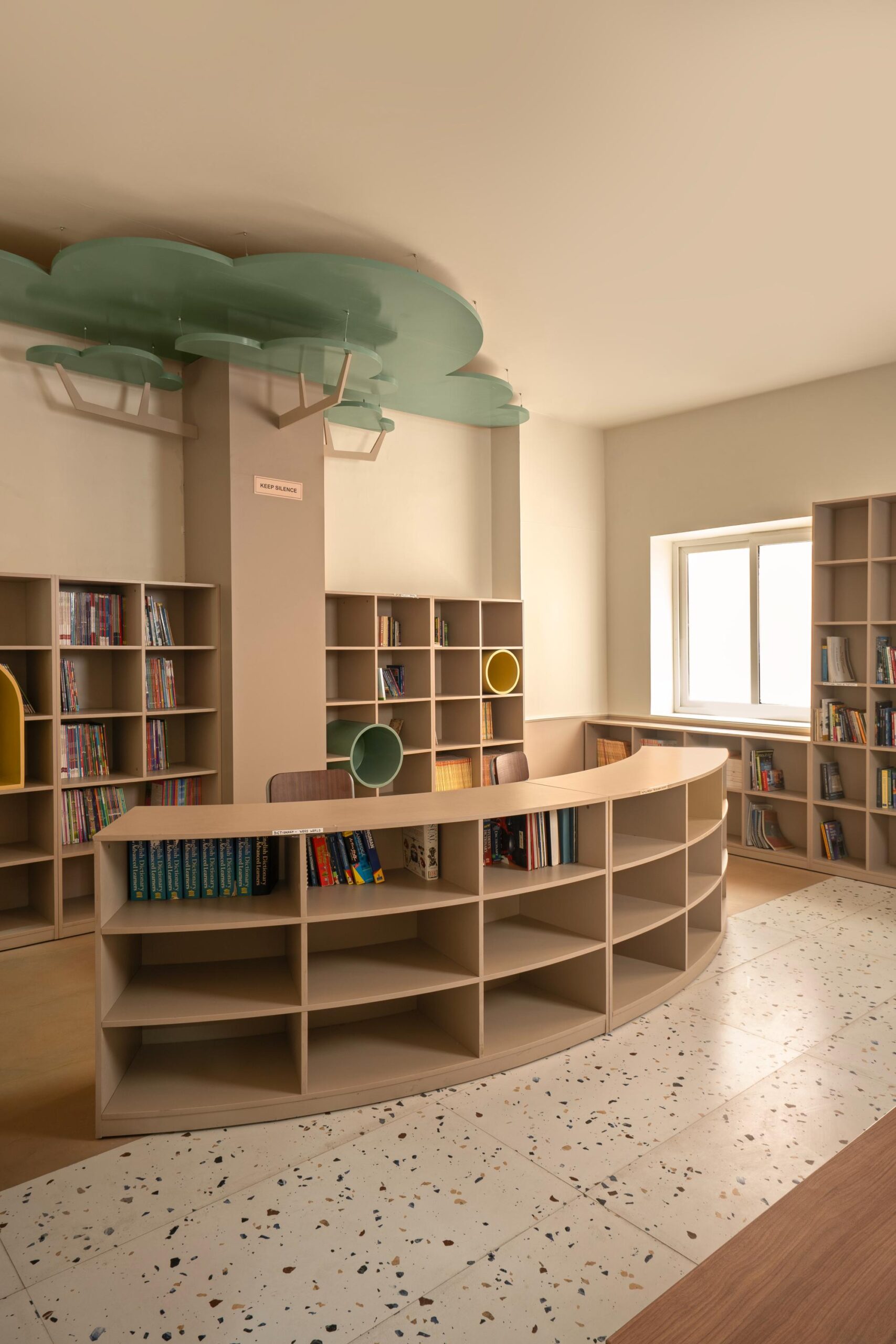
Buildings are broken into smaller volumes rather than a single large mass. This ensures that children never feel overwhelmed by institutional scale.
Visibility and safety
The campus avoids hidden corners, narrow corridors, or isolated spaces. Classrooms open toward courtyards and corridors, ensuring clear visual connections and natural supervision.
Flexible engagement spaces
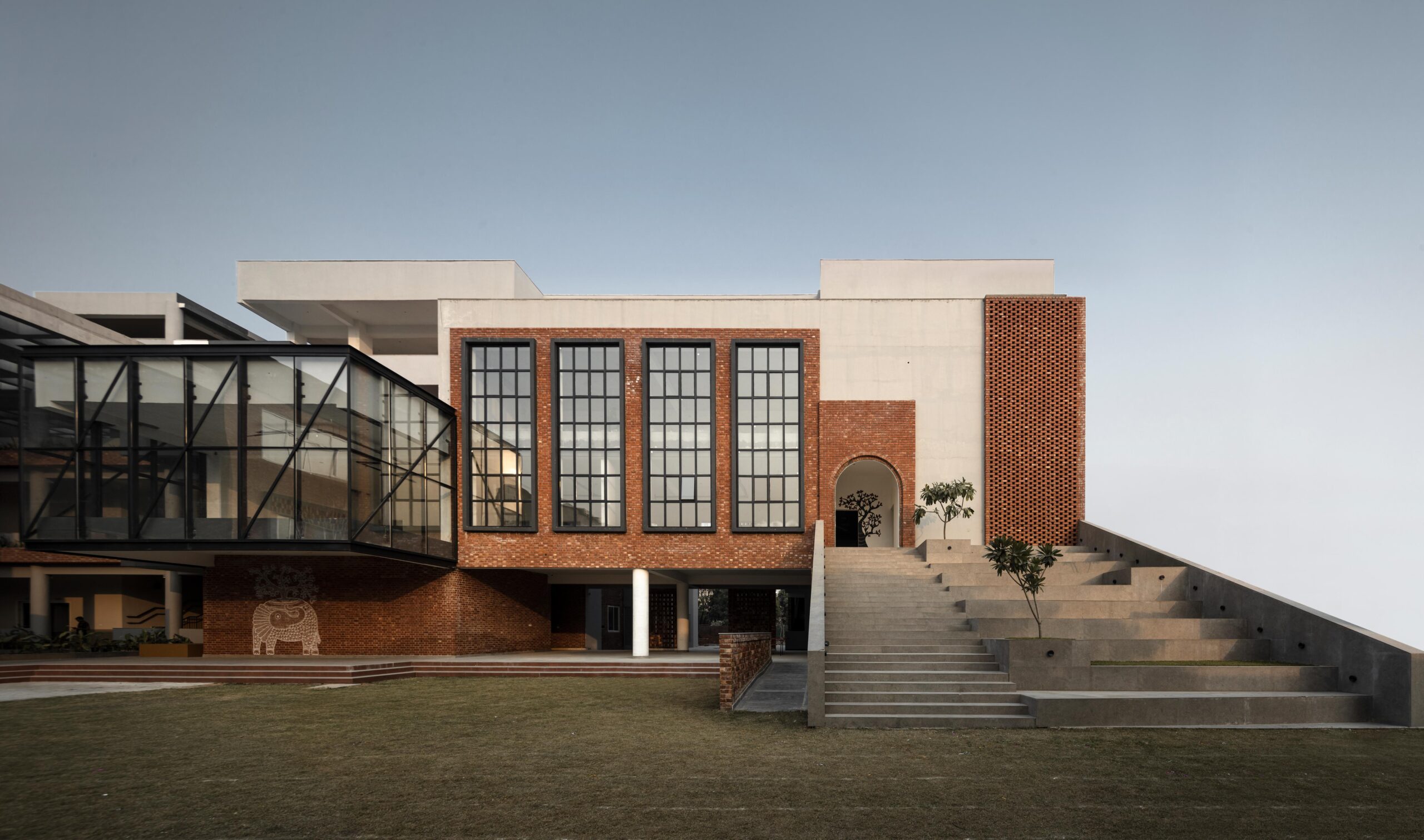
Amphitheatre steps, courtyards, and shaded corridors act as informal learning zones where children can gather, sit, discuss, and perform.
Open circulation networks
Movement between blocks becomes an experiential journey through light, greenery, and shadow rather than enclosed corridors.
Art as orientation and memory
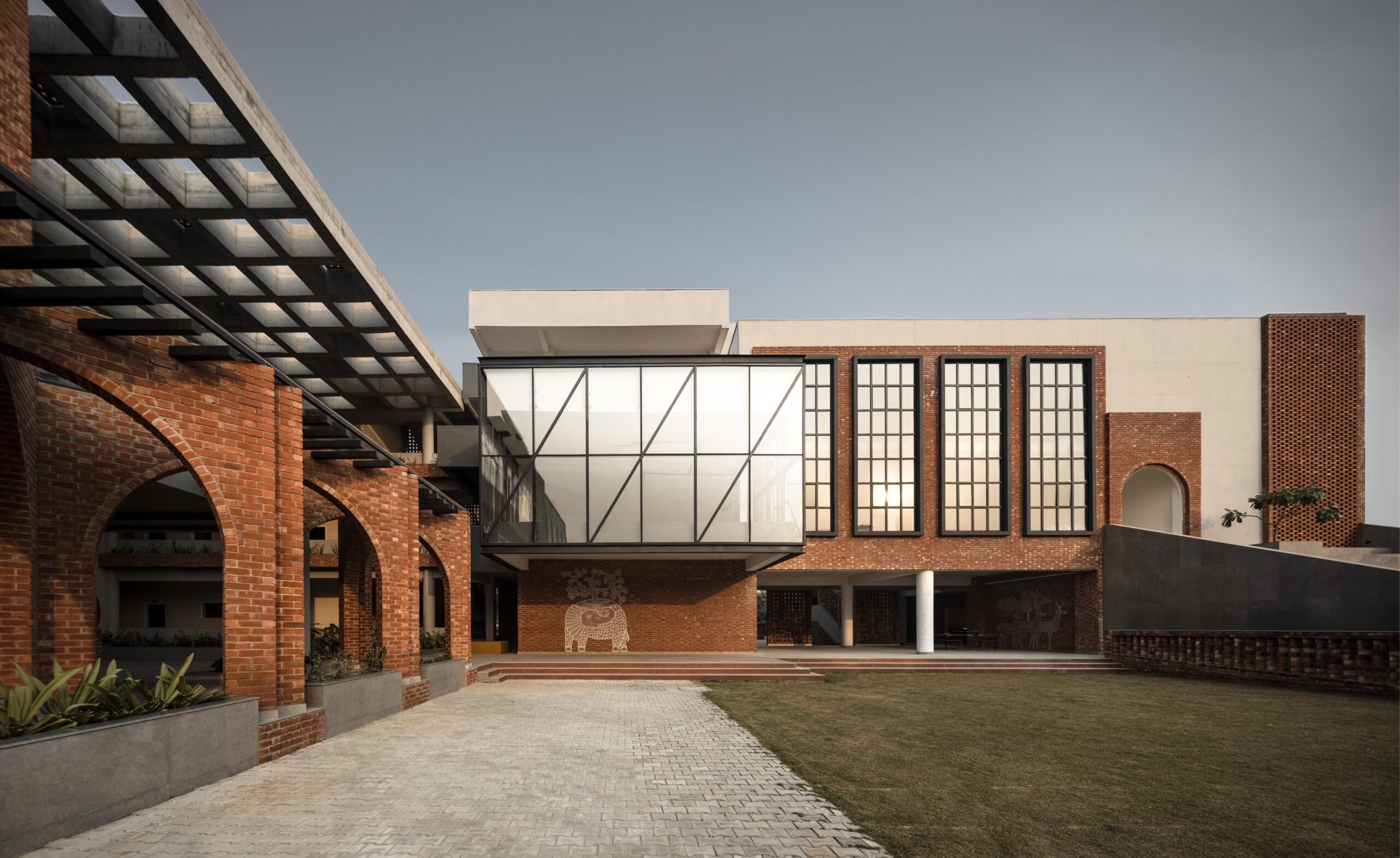
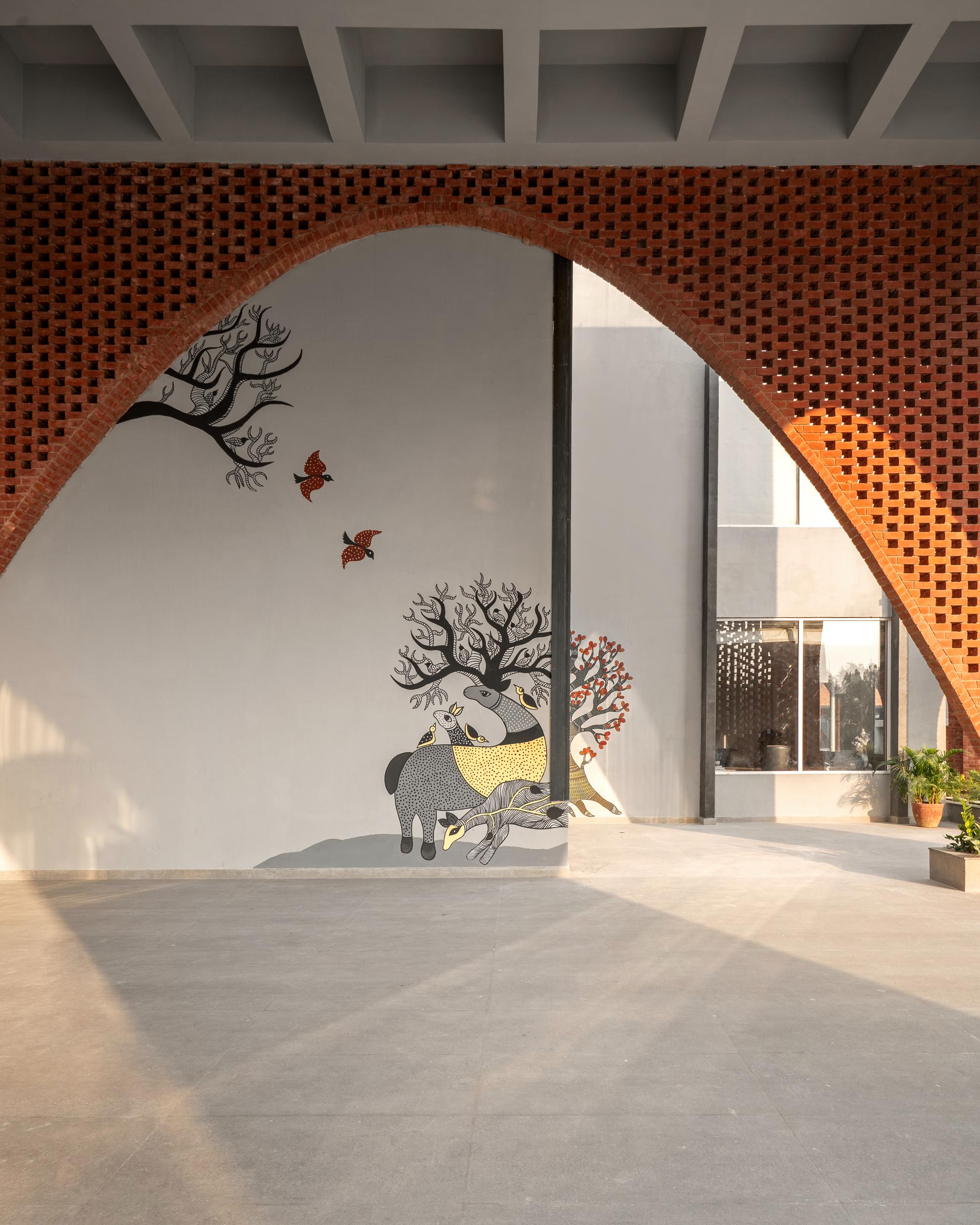
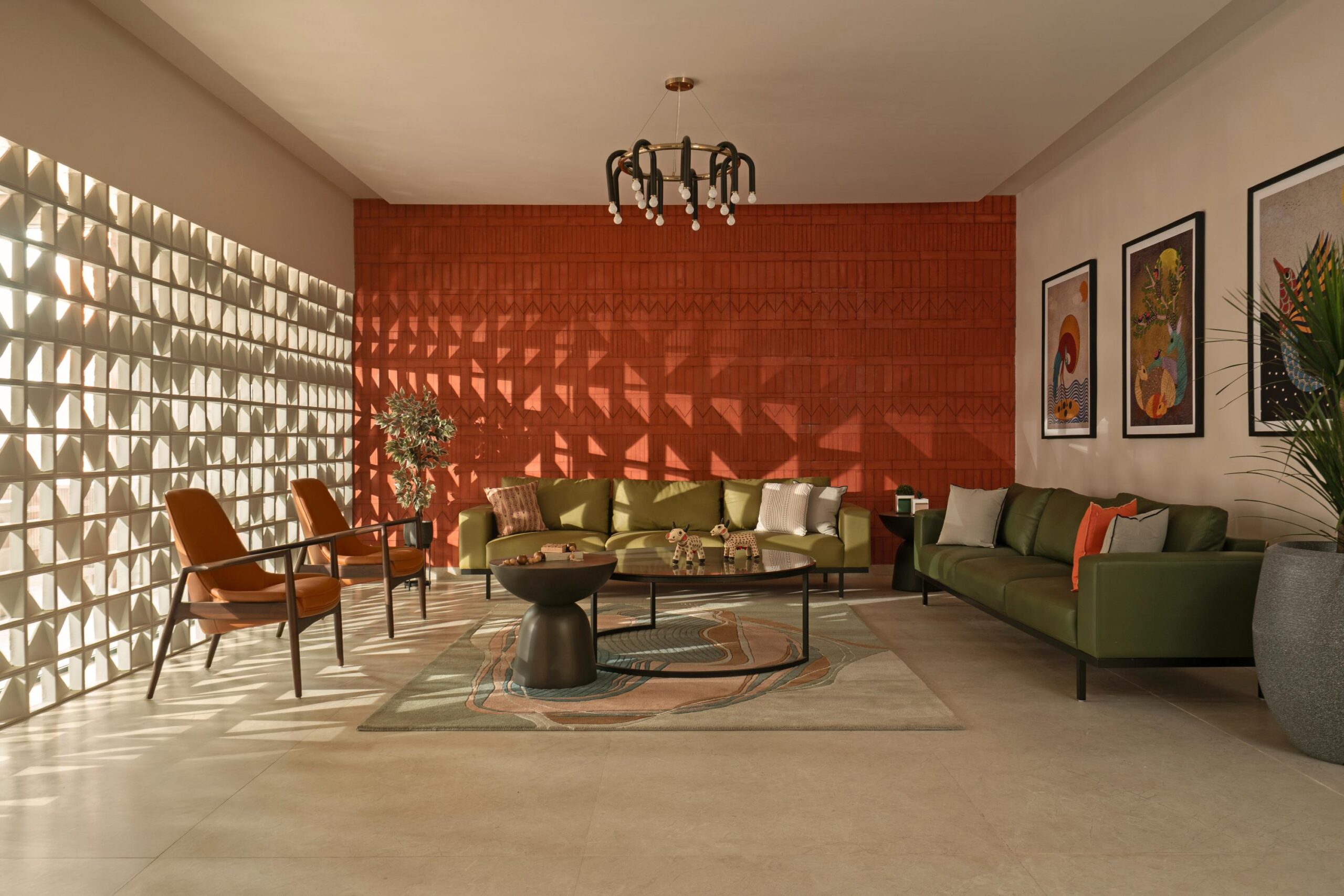
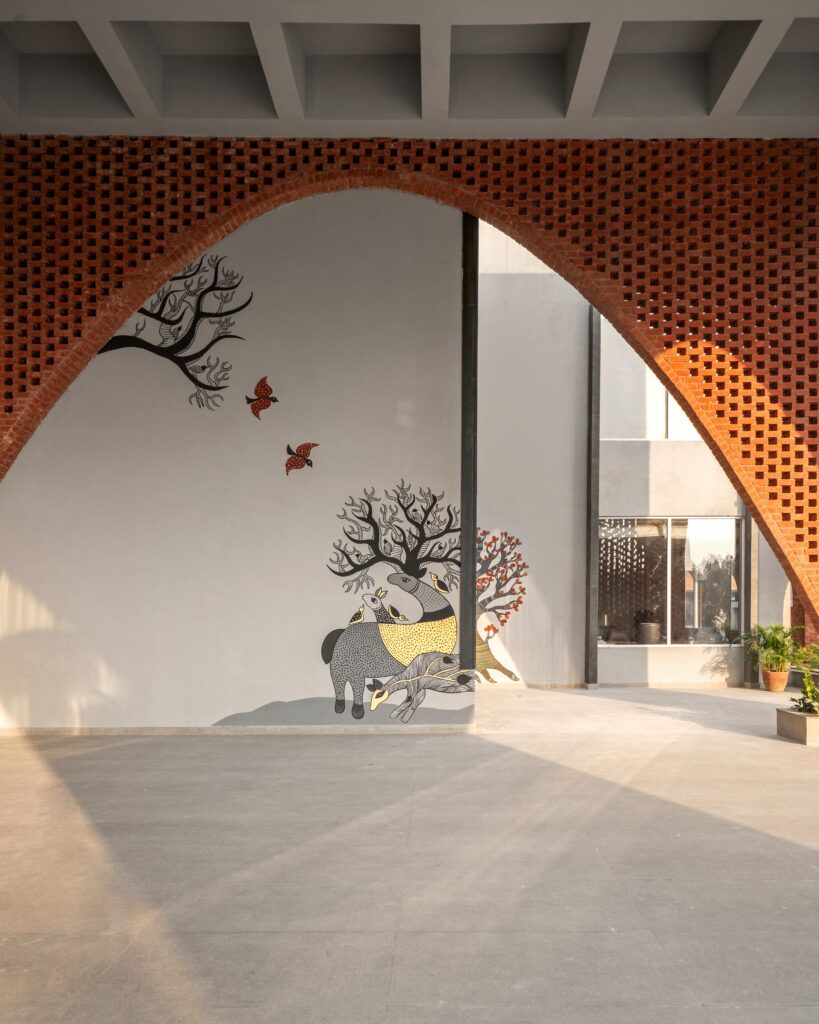
Gond art murals appear across walls and staircases throughout the campus, introducing playful imagery of animals, trees, and nature. Beyond decoration, these artworks act as visual landmarks that help children intuitively navigate the school, turning spaces into memorable reference points such as “the lion staircase” or “the deer courtyard,” embedding joy and identity within the learning environment.
Sensory sensitivity
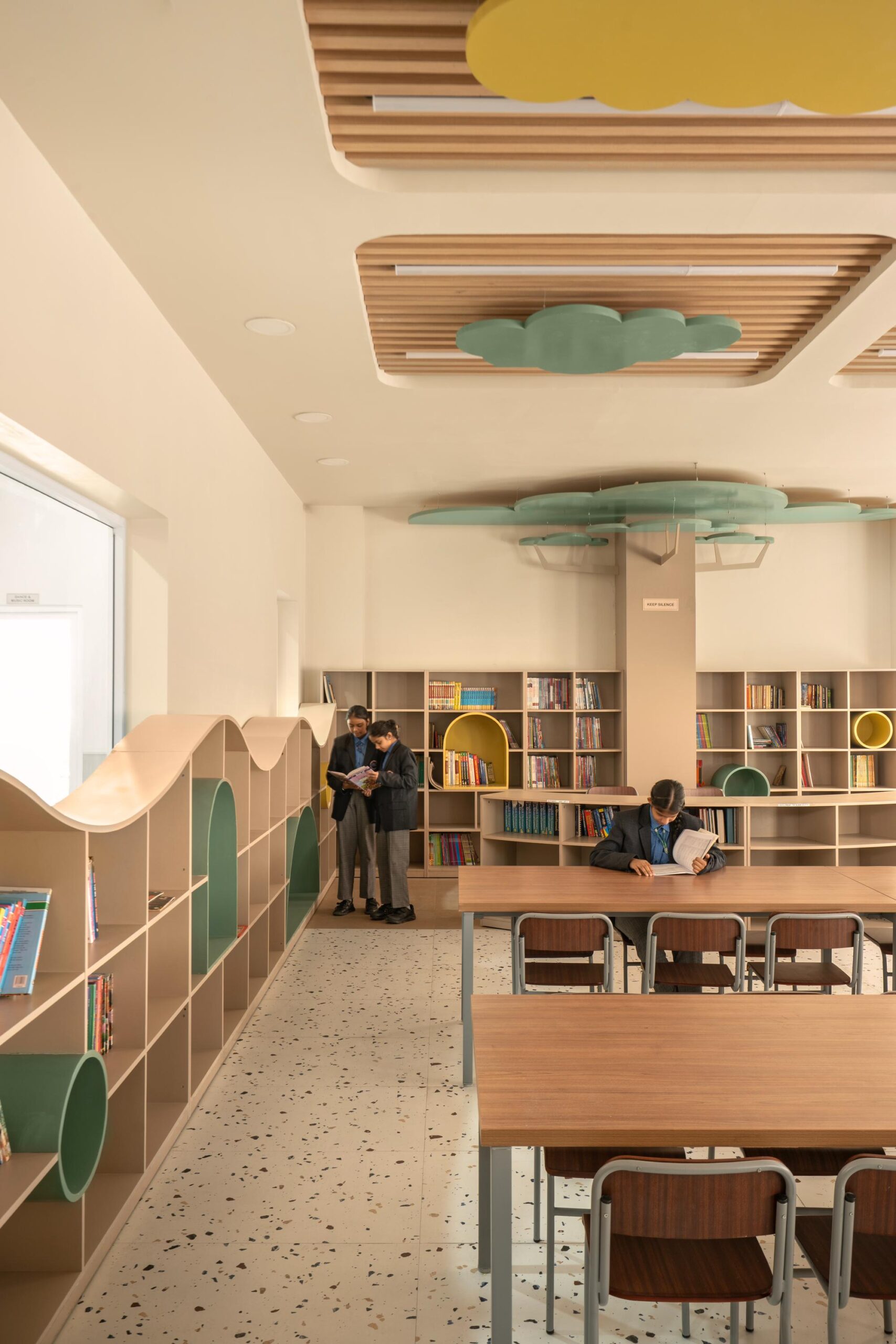
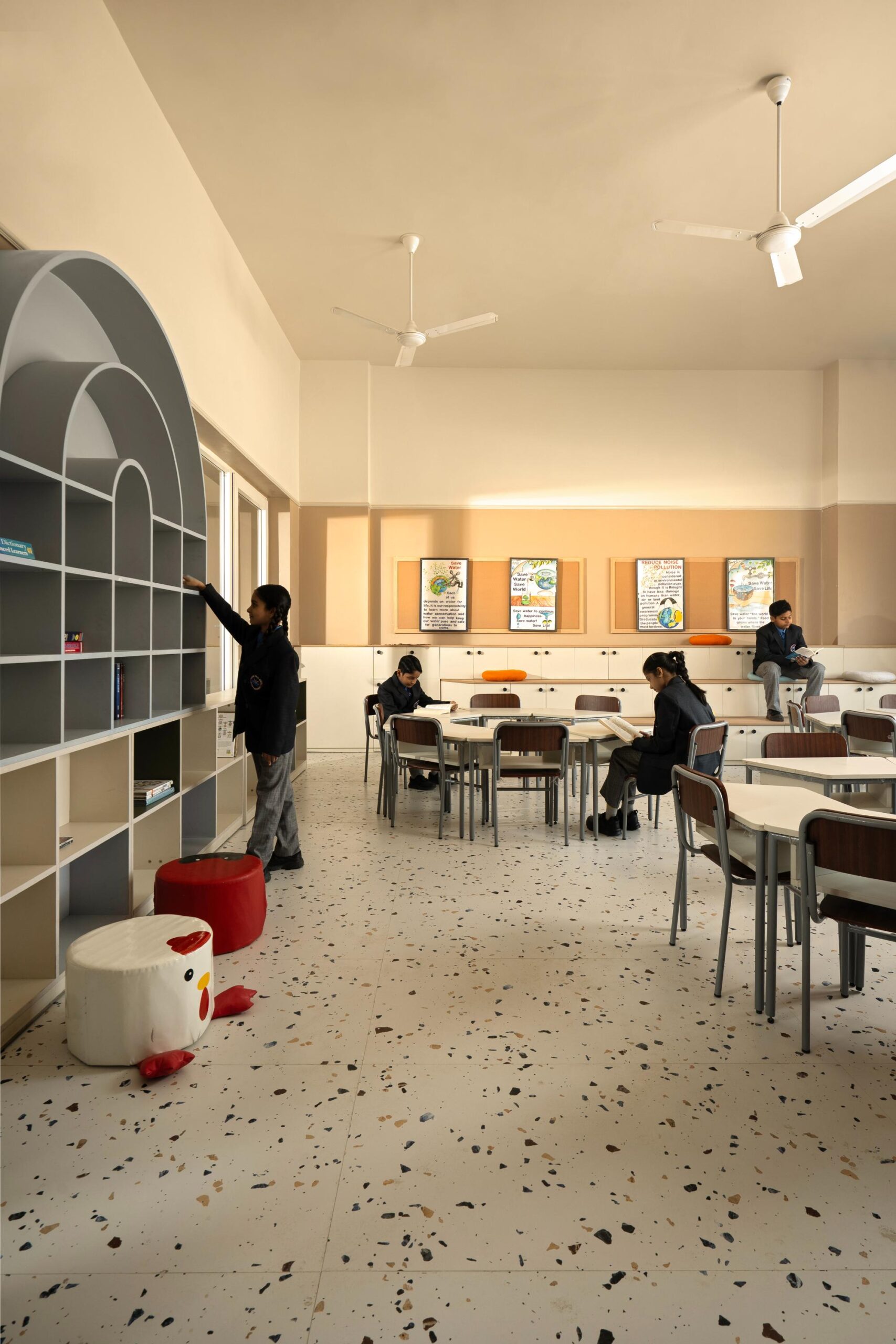
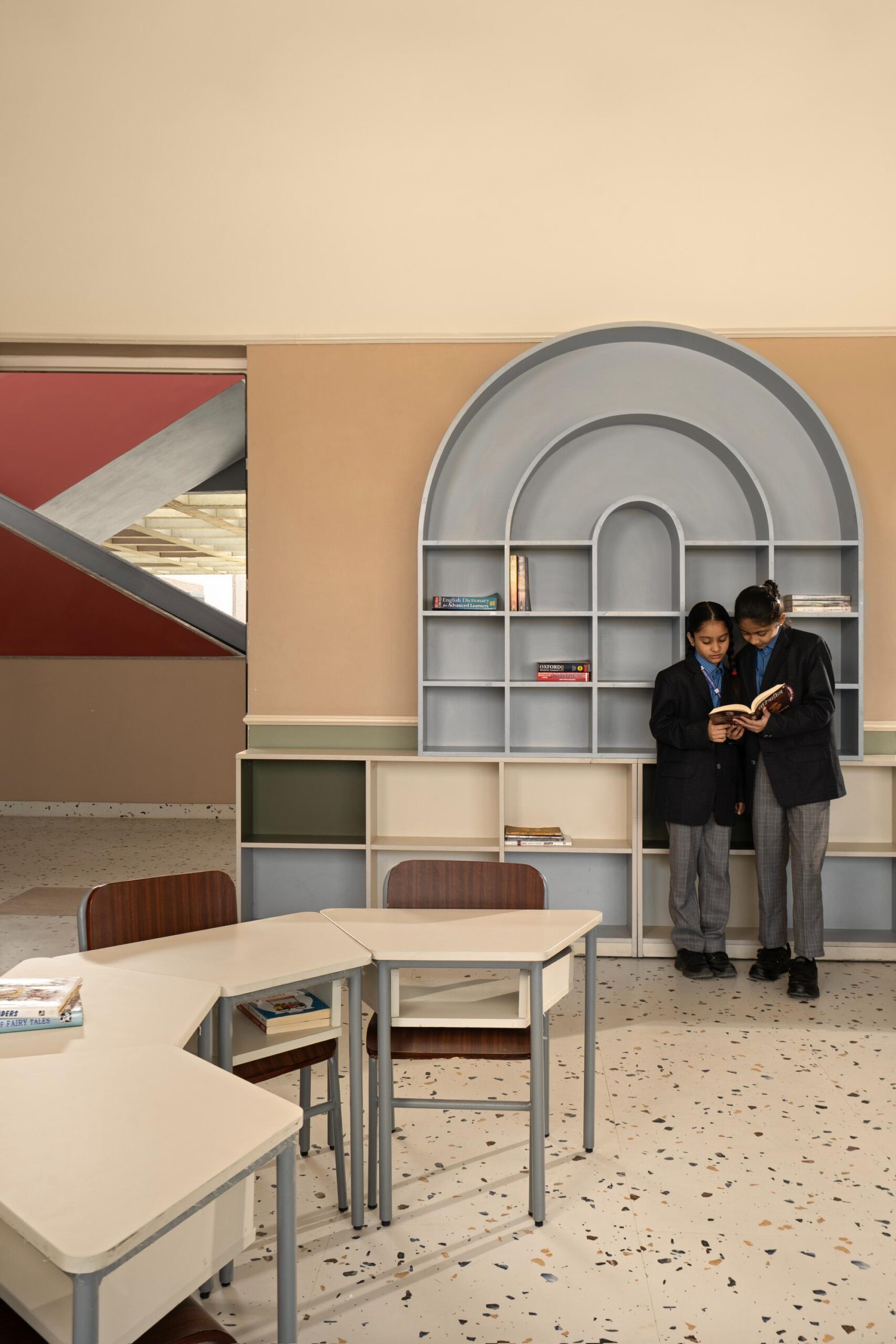
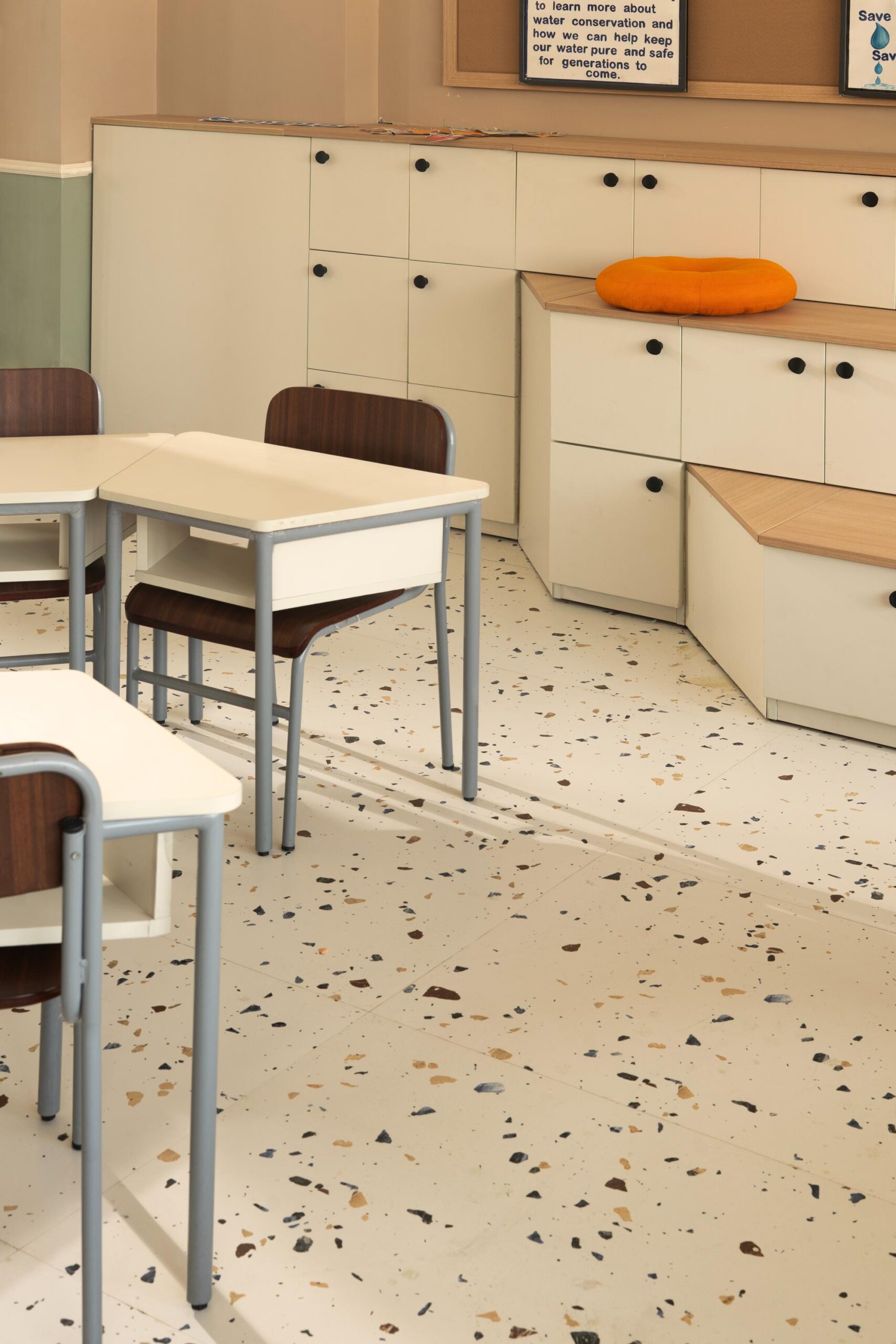
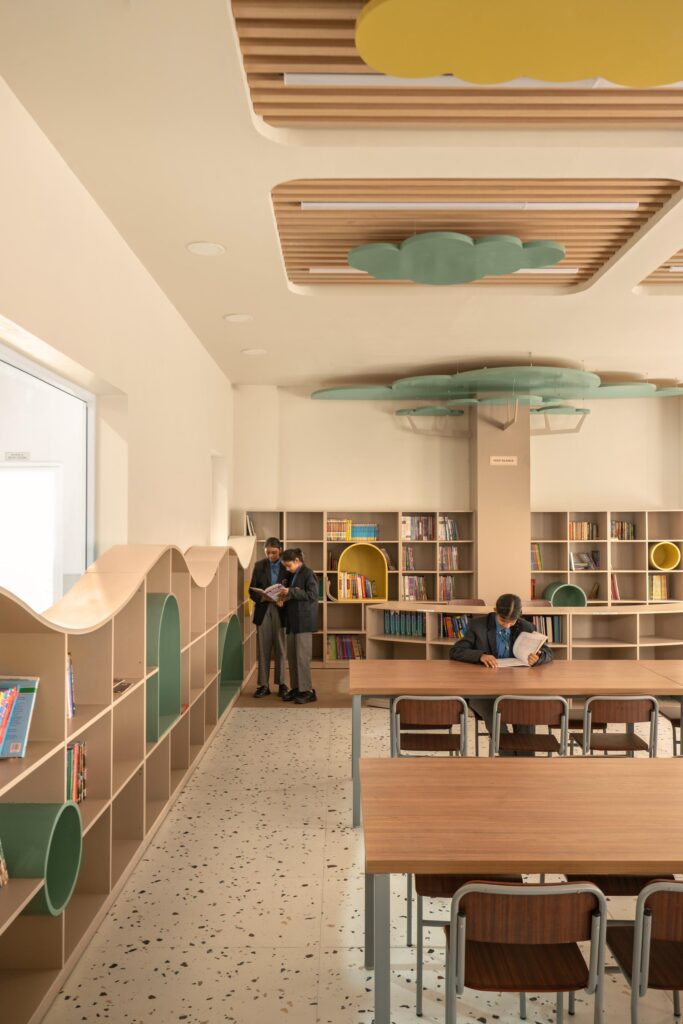
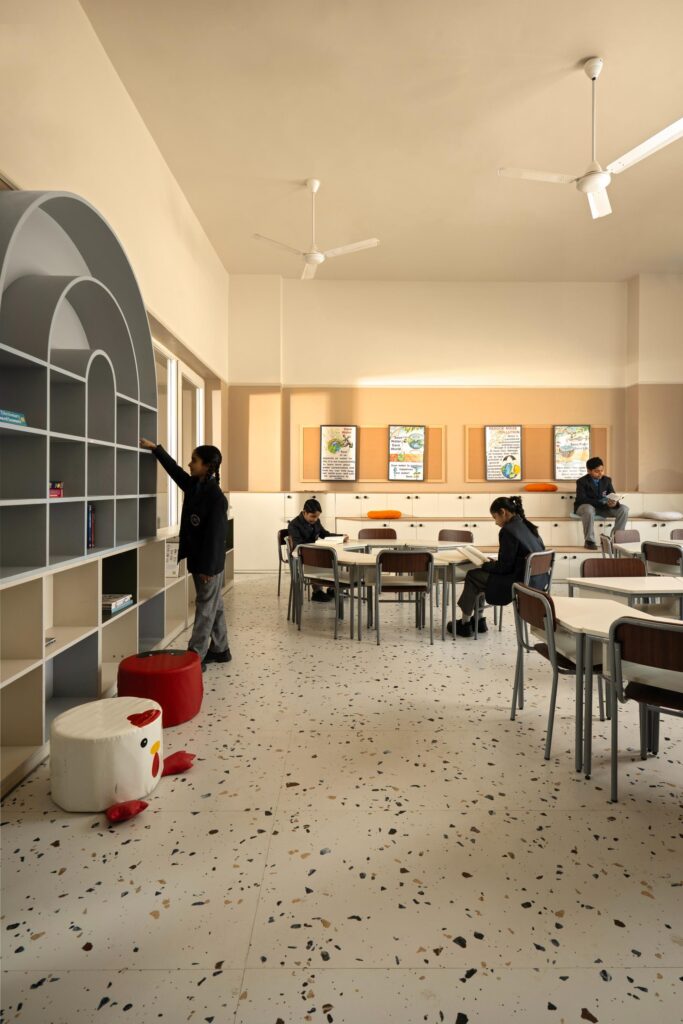
Classrooms use muted pastel colours instead of overstimulating primary tones, supporting children with diverse sensory responses.
Materials and Sustainability
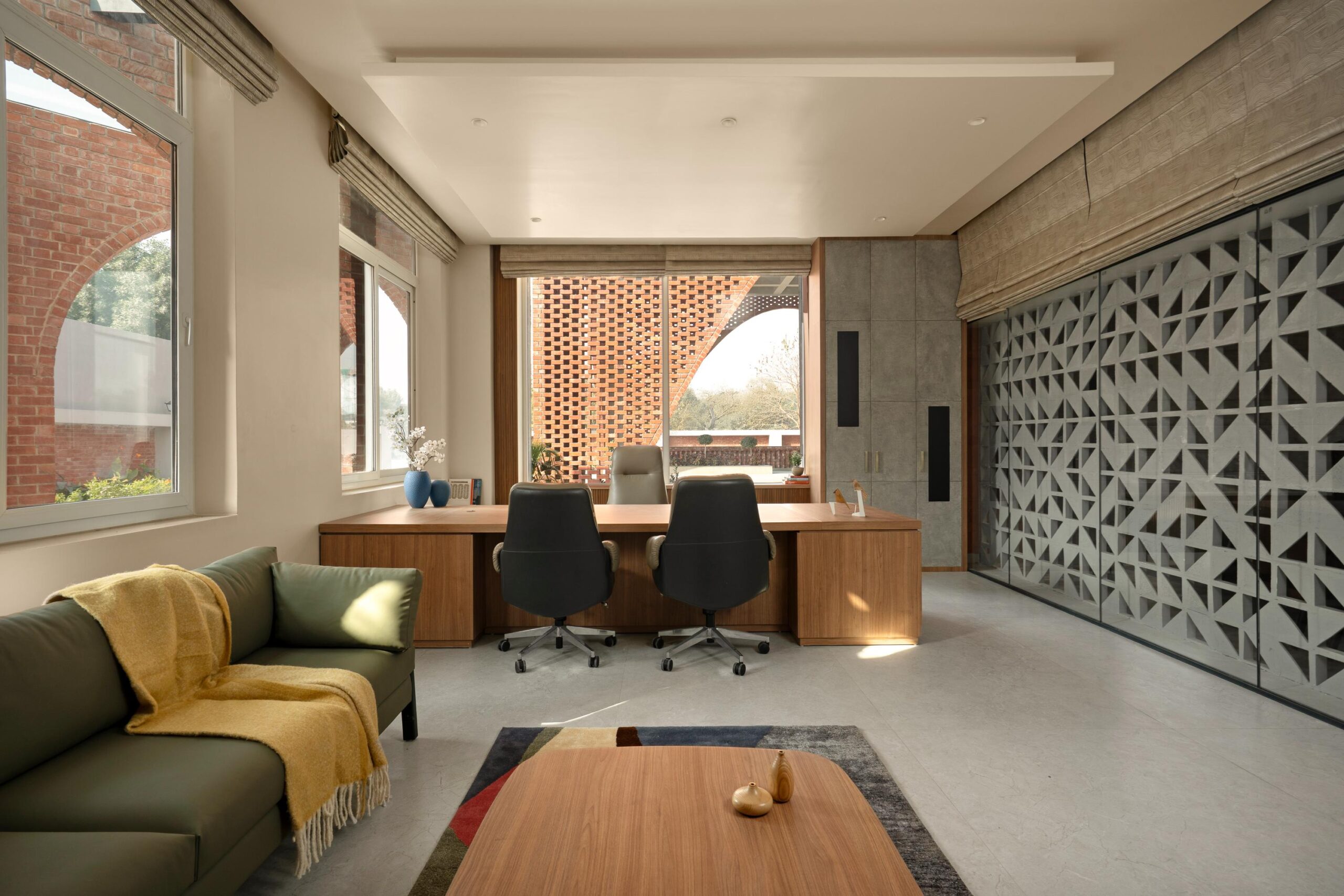
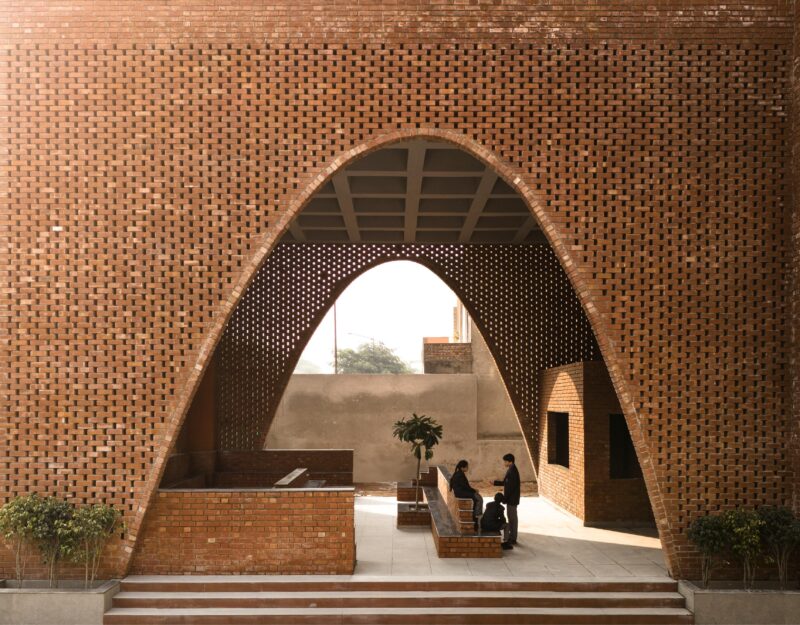
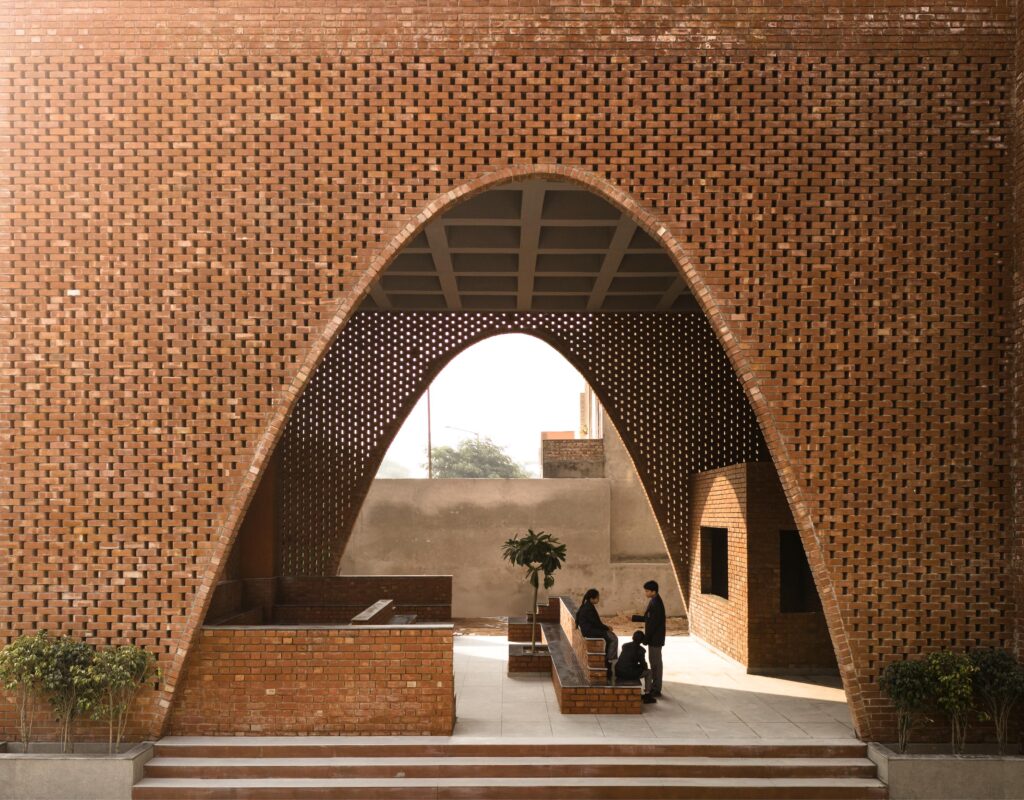
Material selection prioritizes durability, climate responsiveness, and honesty of construction. The campus uses exposed brick, concrete, and metal – materials that age gracefully and require minimal maintenance over time.
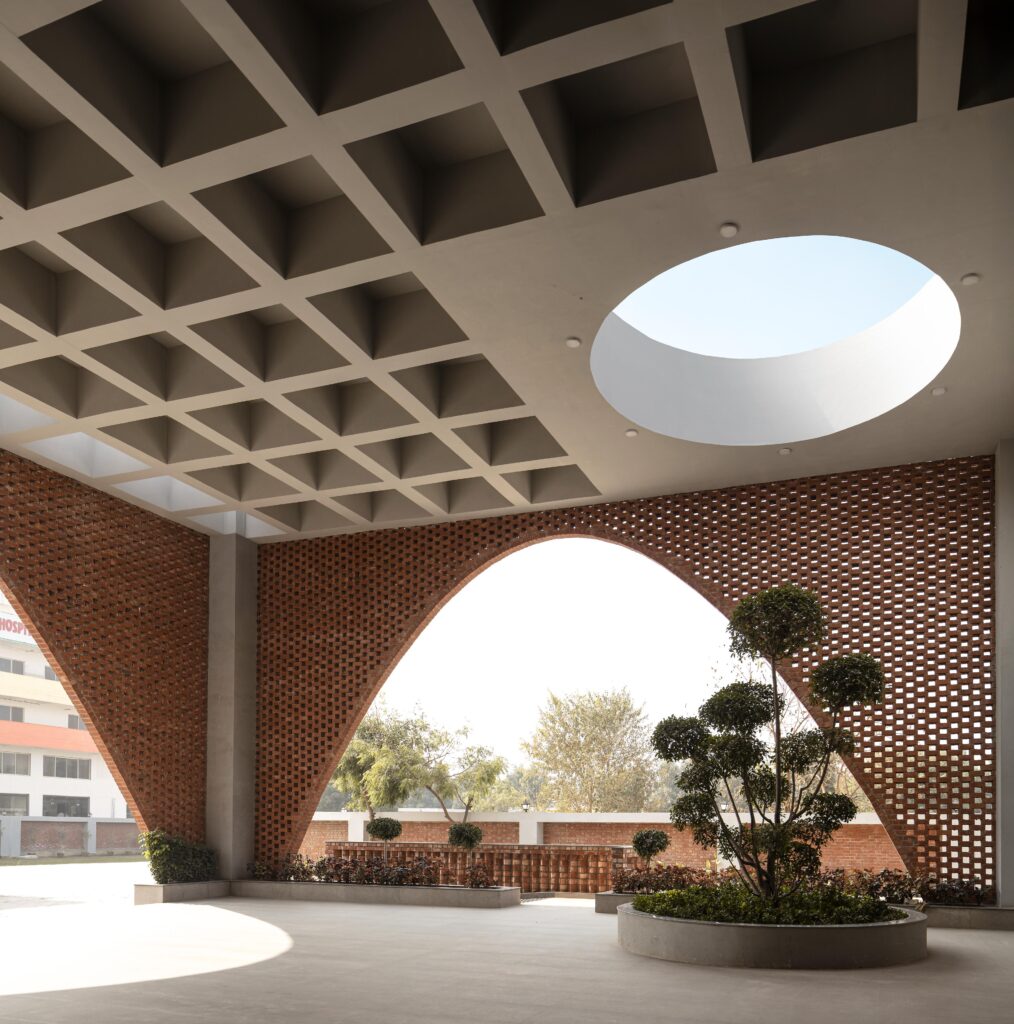
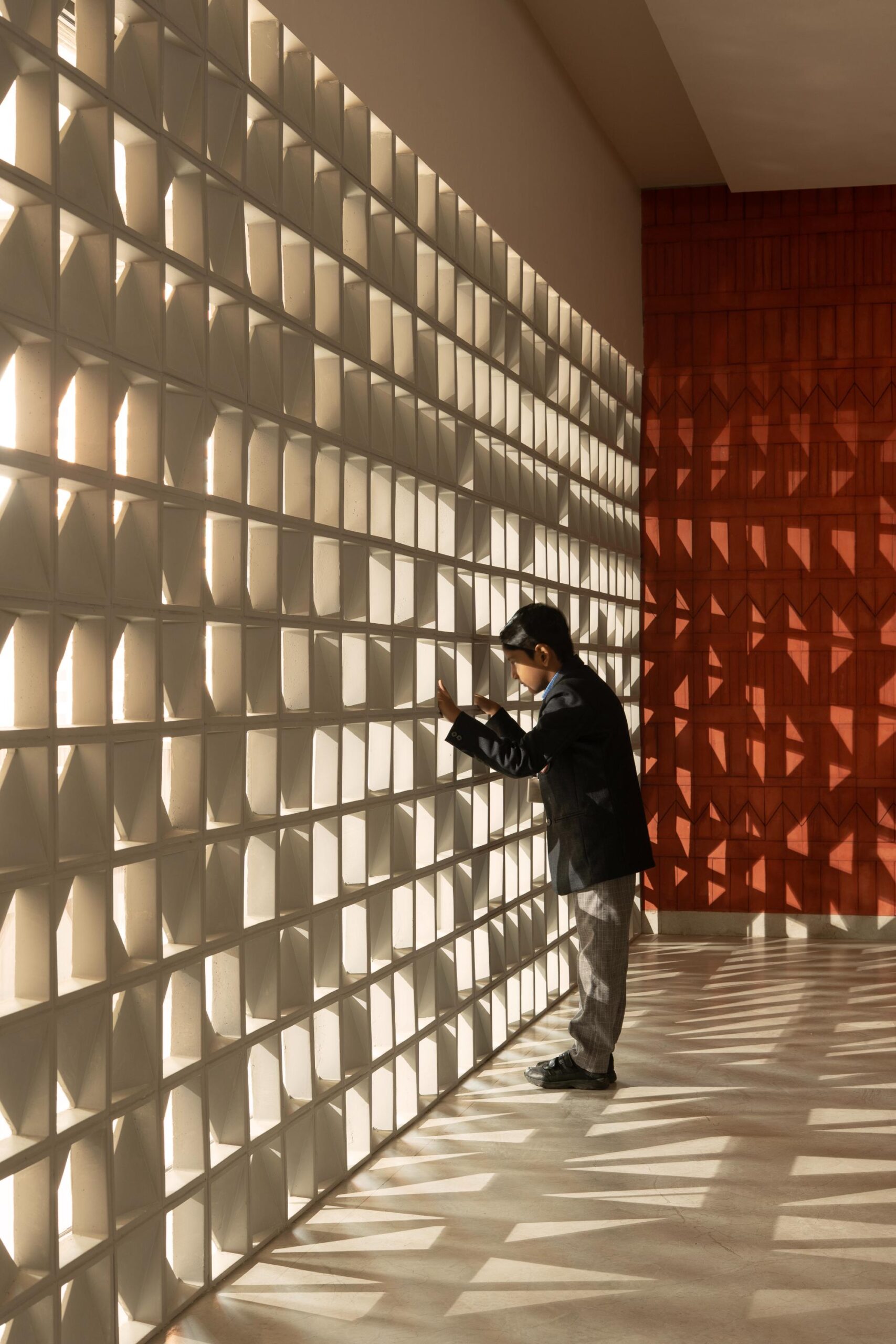
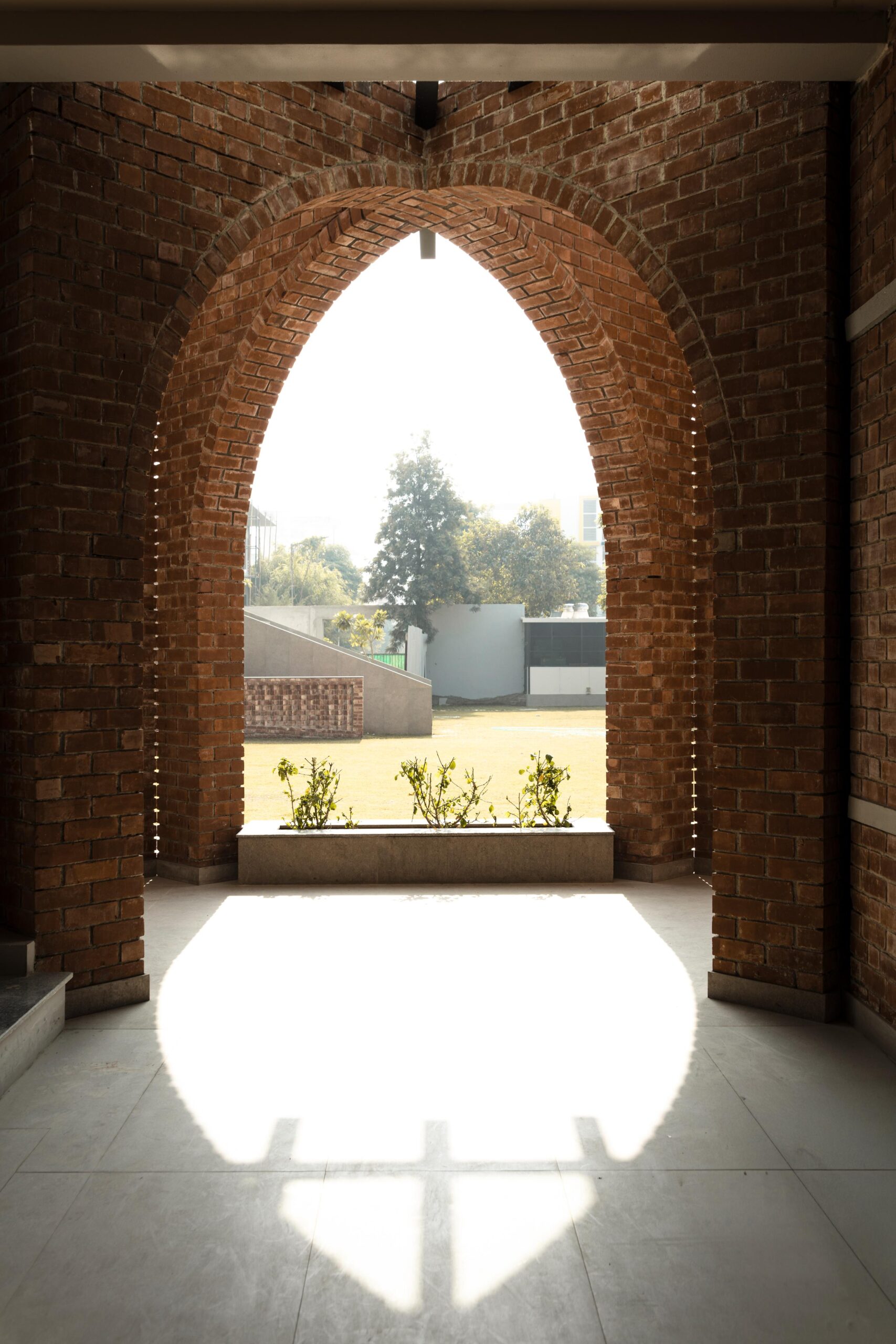
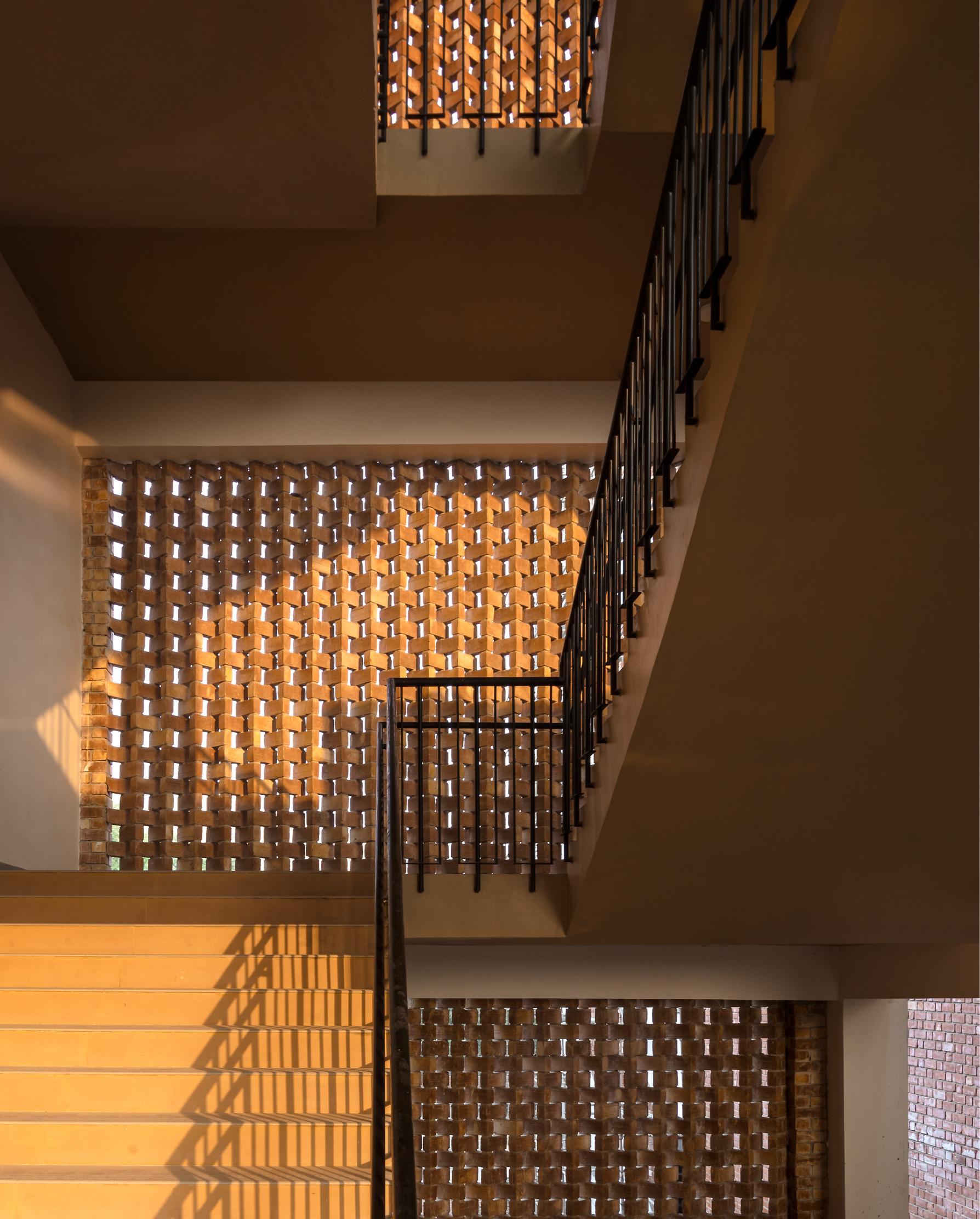
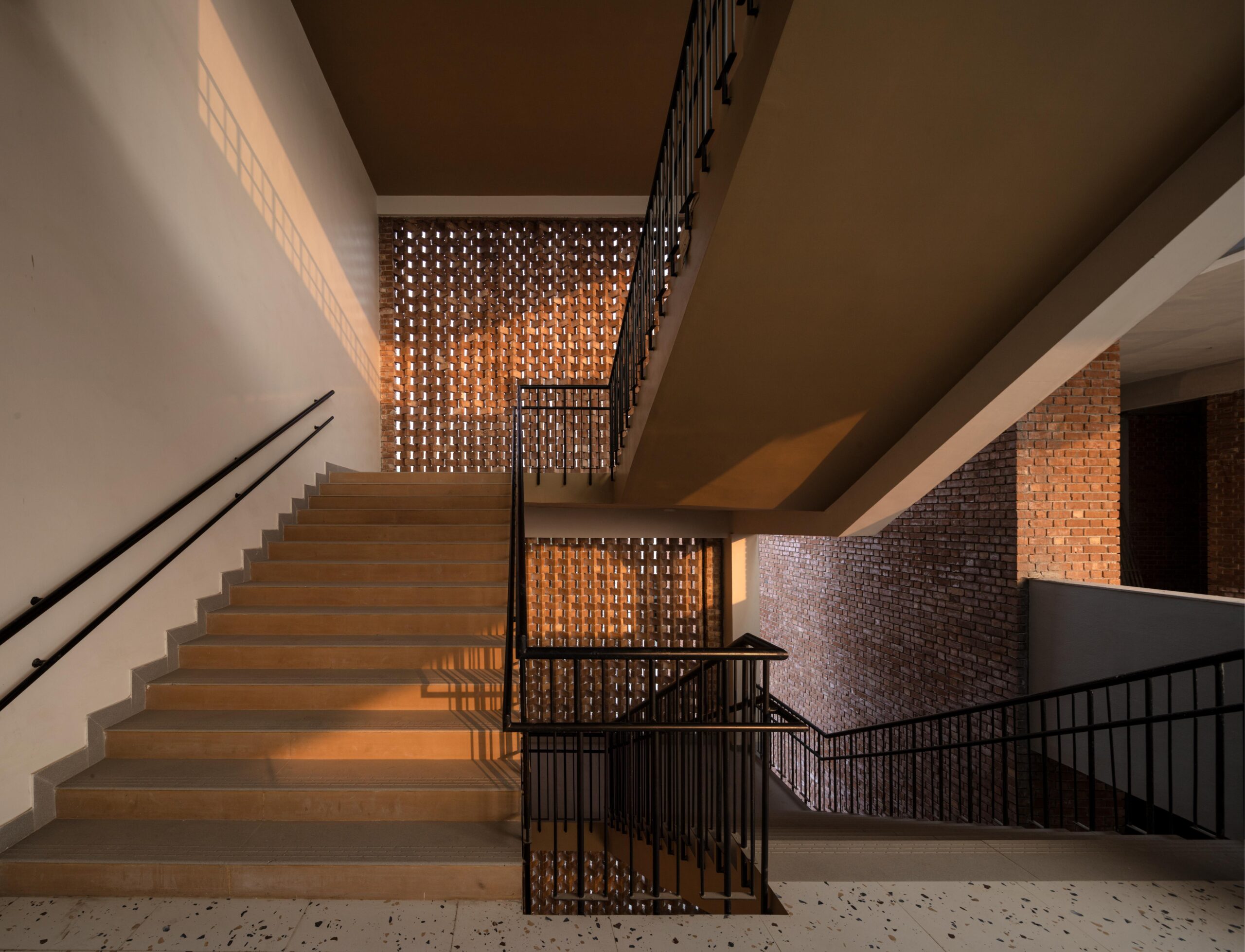
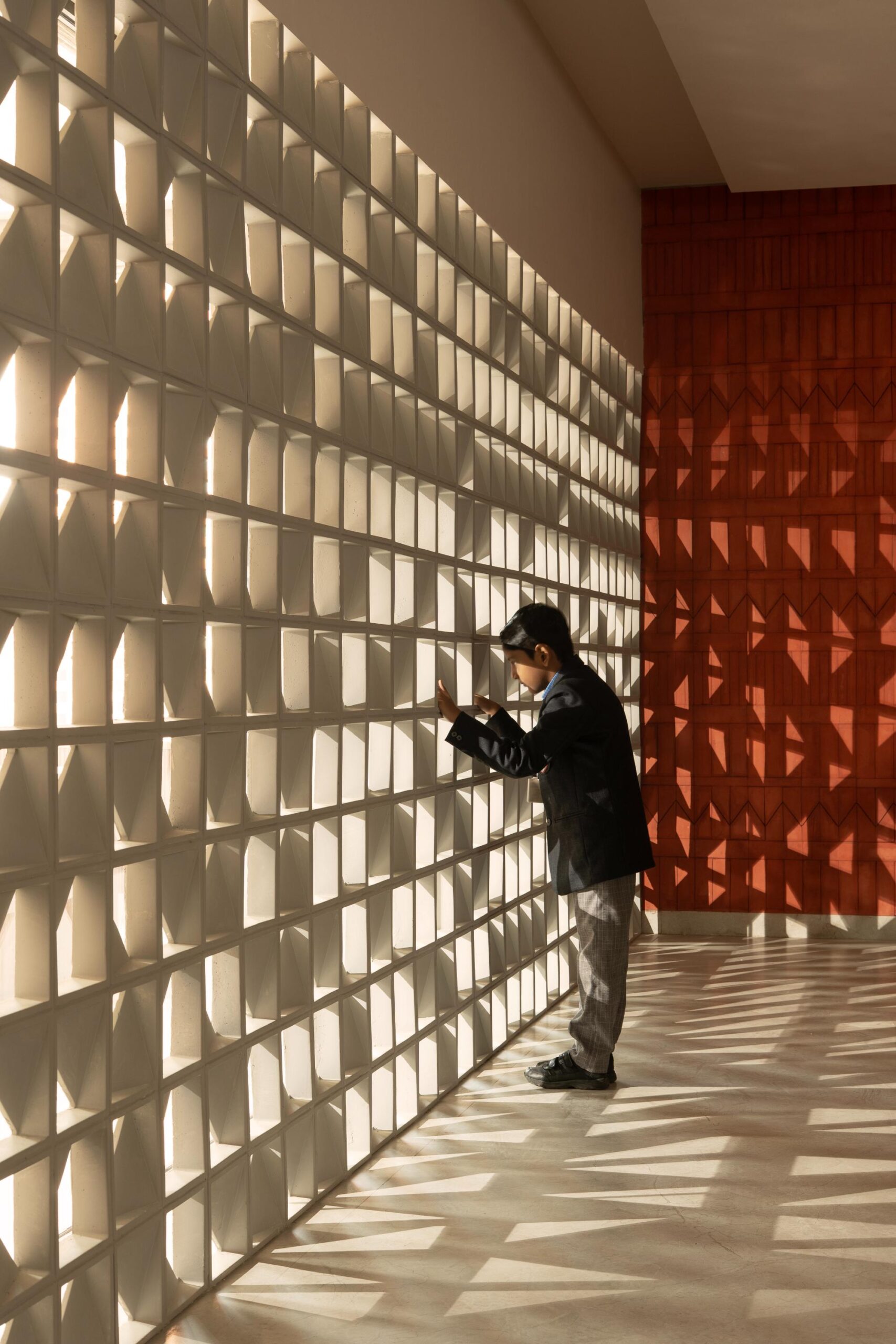
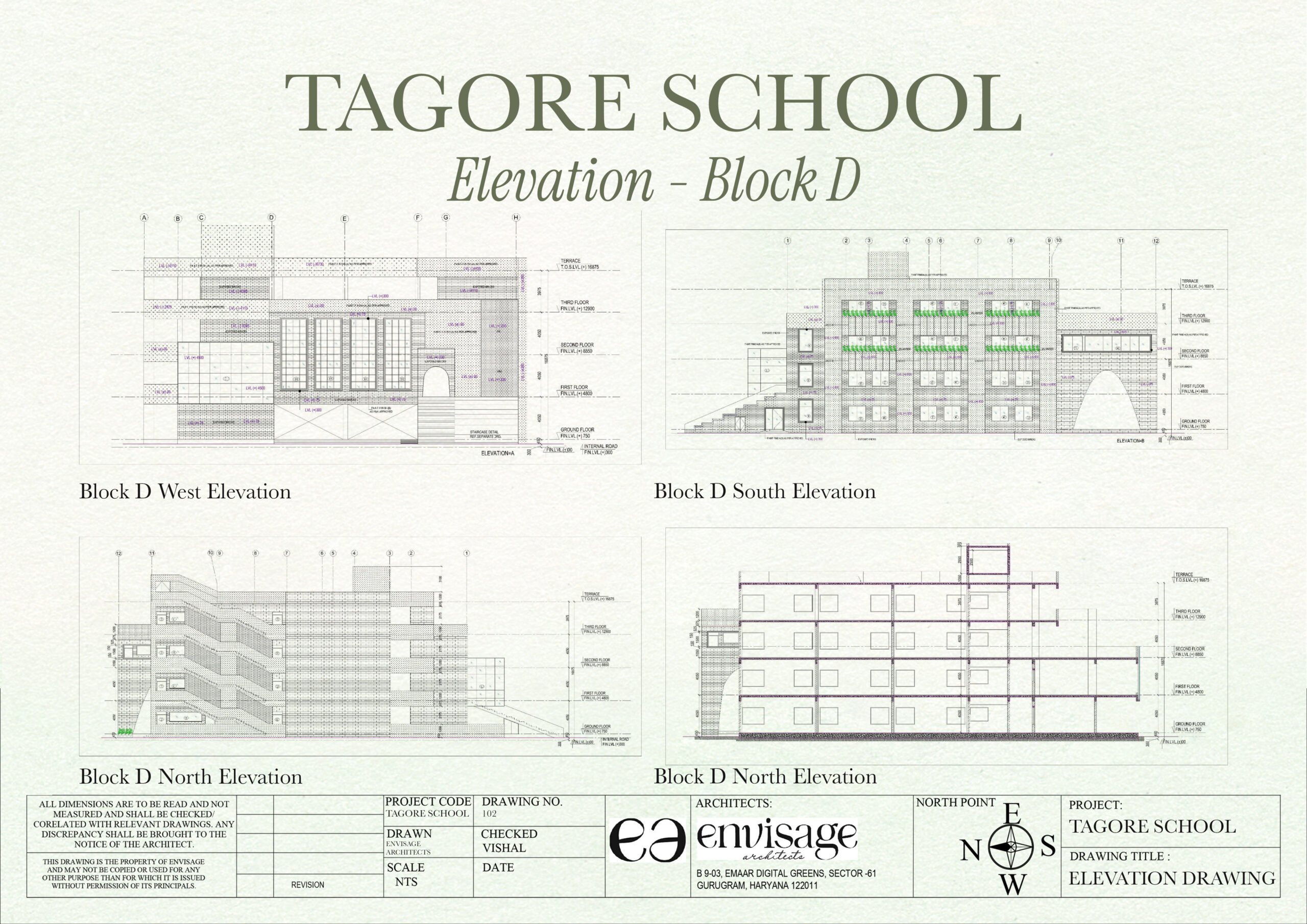
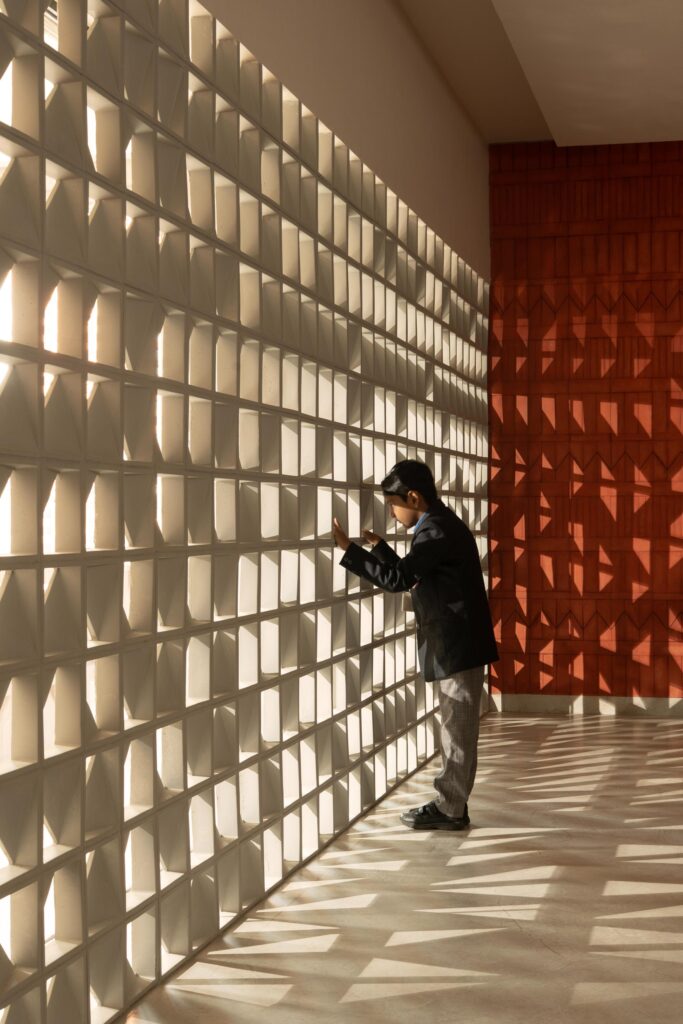
Natural ventilation is a core environmental strategy. Courtyards and brick jali walls enhance airflow across the campus. Ventilation shafts on south-facing facades act as wind tunnels, reducing heat gain while maintaining daylight inside classrooms.
The project also incorporates biophilic design principles through integrated planting along courtyards, passages, and railings, ensuring that greenery remains a constant visual and environmental presence.
In a small but meaningful sustainable gesture, brick surfaces were cleaned using a traditional tamarind wash instead of chemical acids. This method removes efflorescence without harming materials, soil, or workers, reflecting a commitment to environmentally responsible construction practices.
Challenges and Solutions
One of the primary challenges was the fragmented site condition. Instead of treating the five-zone site as a constraint, the design transformed it into an opportunity to create a campus-like environment.
Another challenge was designing for safety without creating a surveillance-heavy environment. The solution lay in spatial clarity – open sightlines, courtyard-centered planning, and naturally lit corridors ensure children remain visible without feeling monitored.
Climate responsiveness was also critical. Traditional south-facing classrooms required reconsideration due to rising temperatures. The introduction of recessed windows and ventilation shafts helped balance daylight with thermal comfort.
Impact on Users
The campus environment encourages exploration, interaction, and independence. Children move through spaces that feel safe yet stimulating, allowing both structured and informal learning to coexist.
Teachers benefit from naturally lit classrooms and open circulation spaces that support observation and interaction. Informal gathering zones such as courtyards and amphitheatres provide opportunities for collaborative learning and social development.
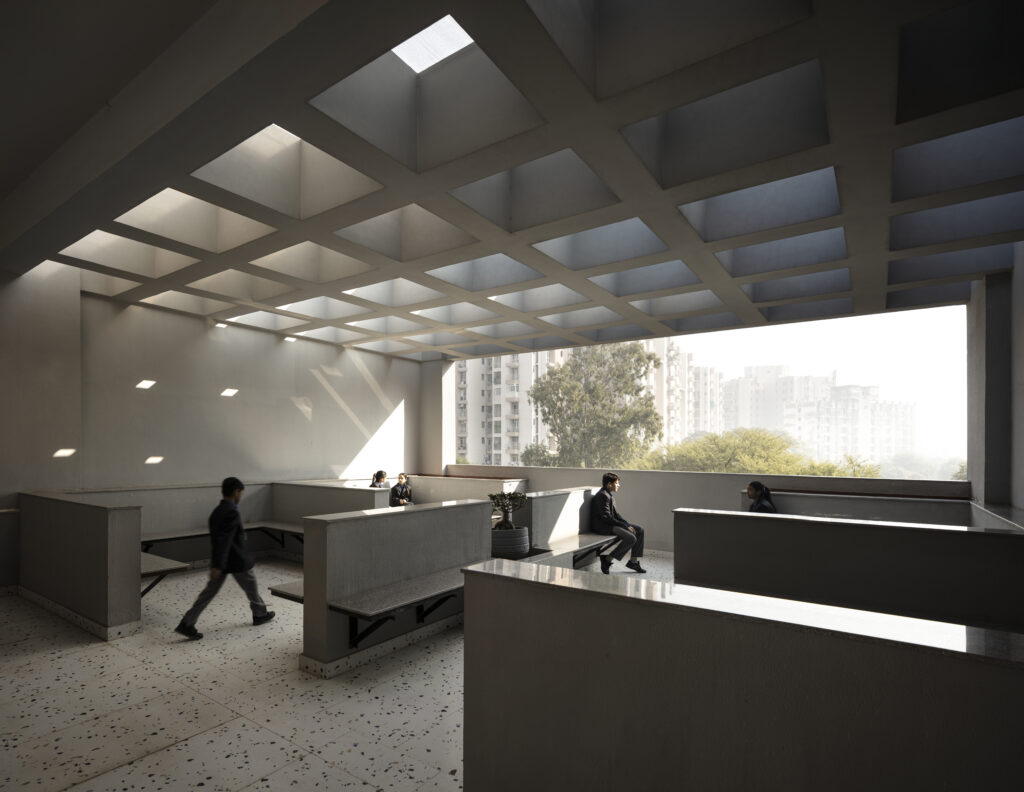
Ultimately, Tagore School demonstrates how thoughtful architecture can influence behaviour, learning patterns, and emotional well-being by creating an environment where children feel both protected and empowered.
Project Gallery