
Shared by the architects upon our invitation.

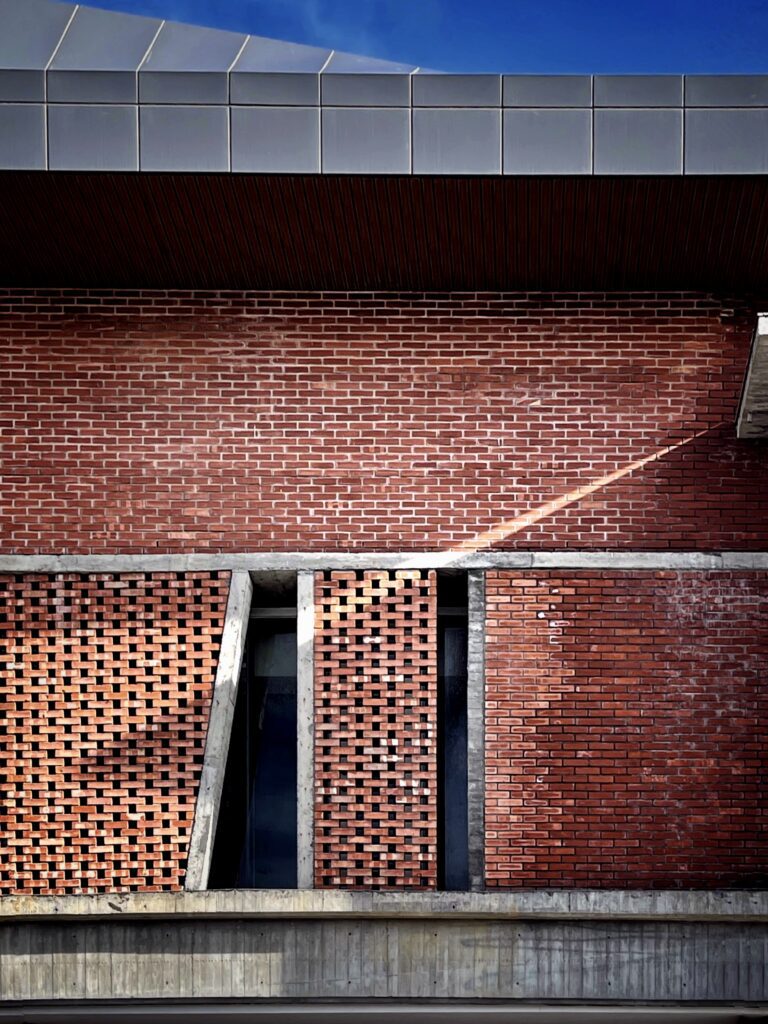
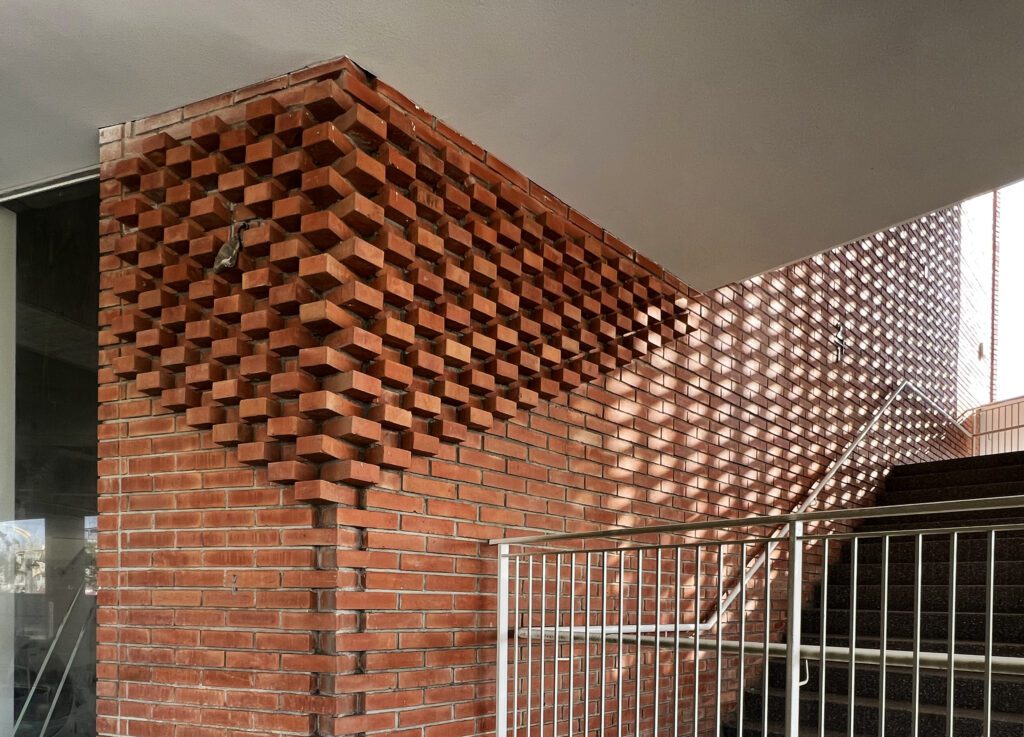
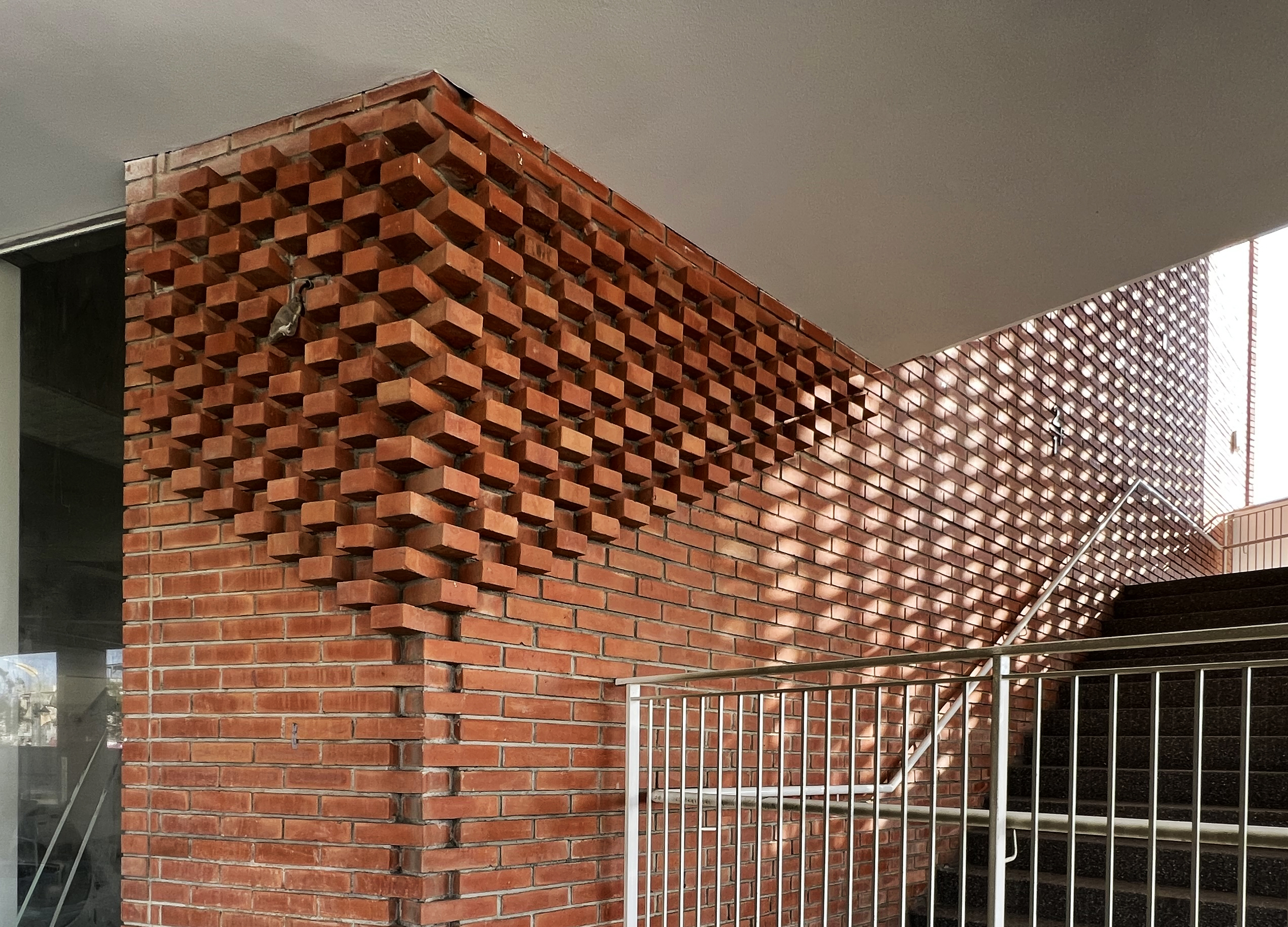
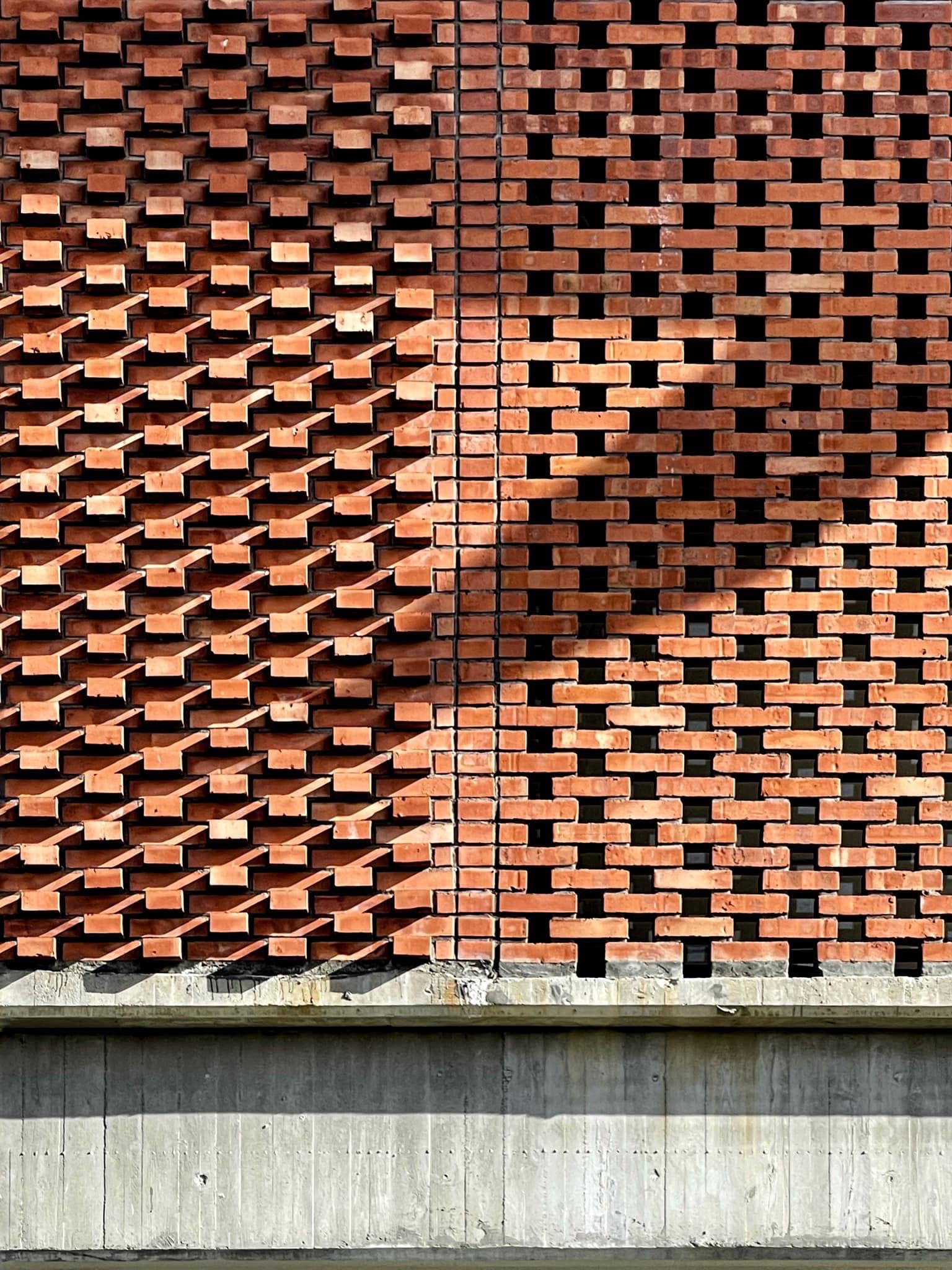
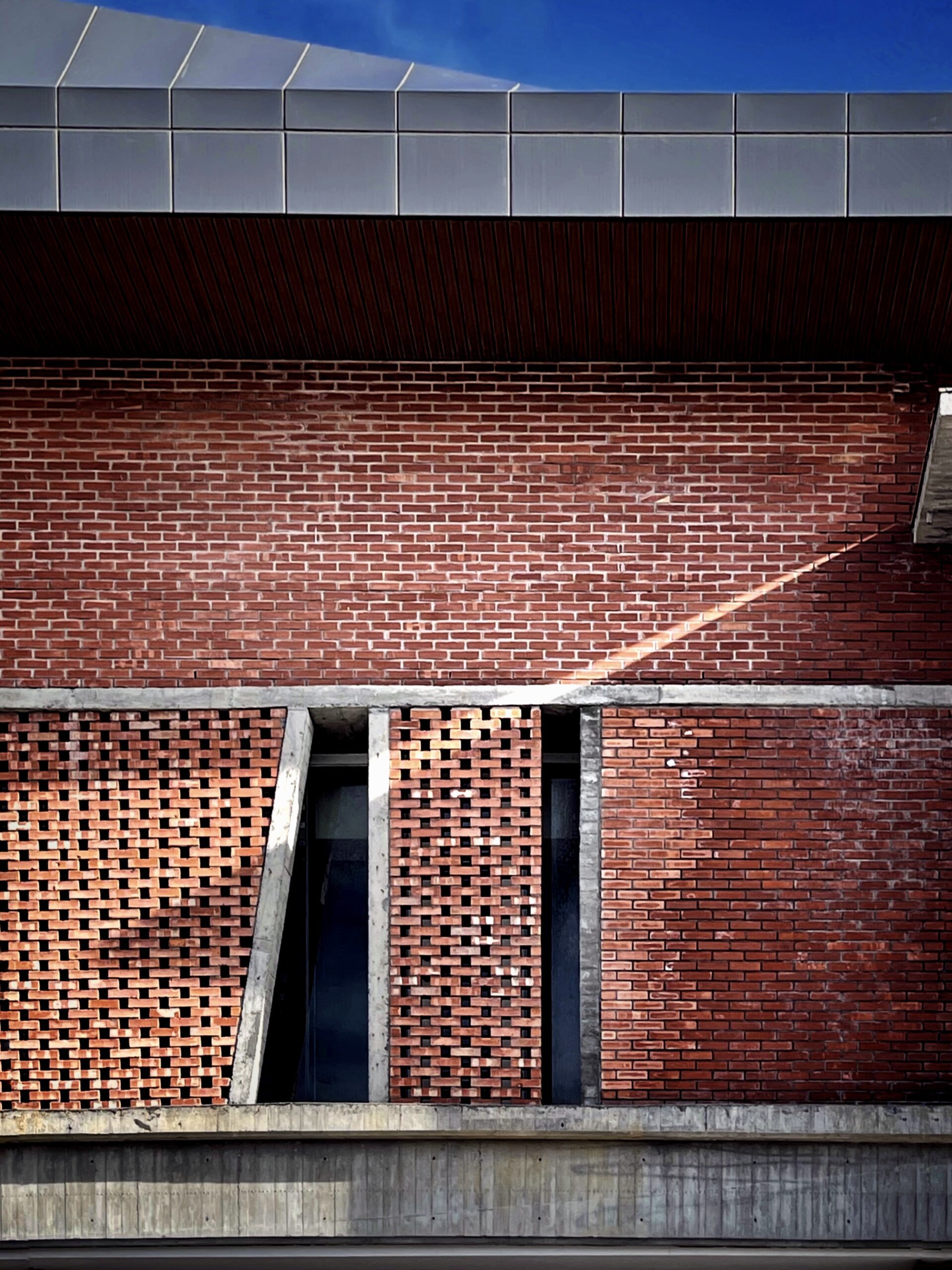
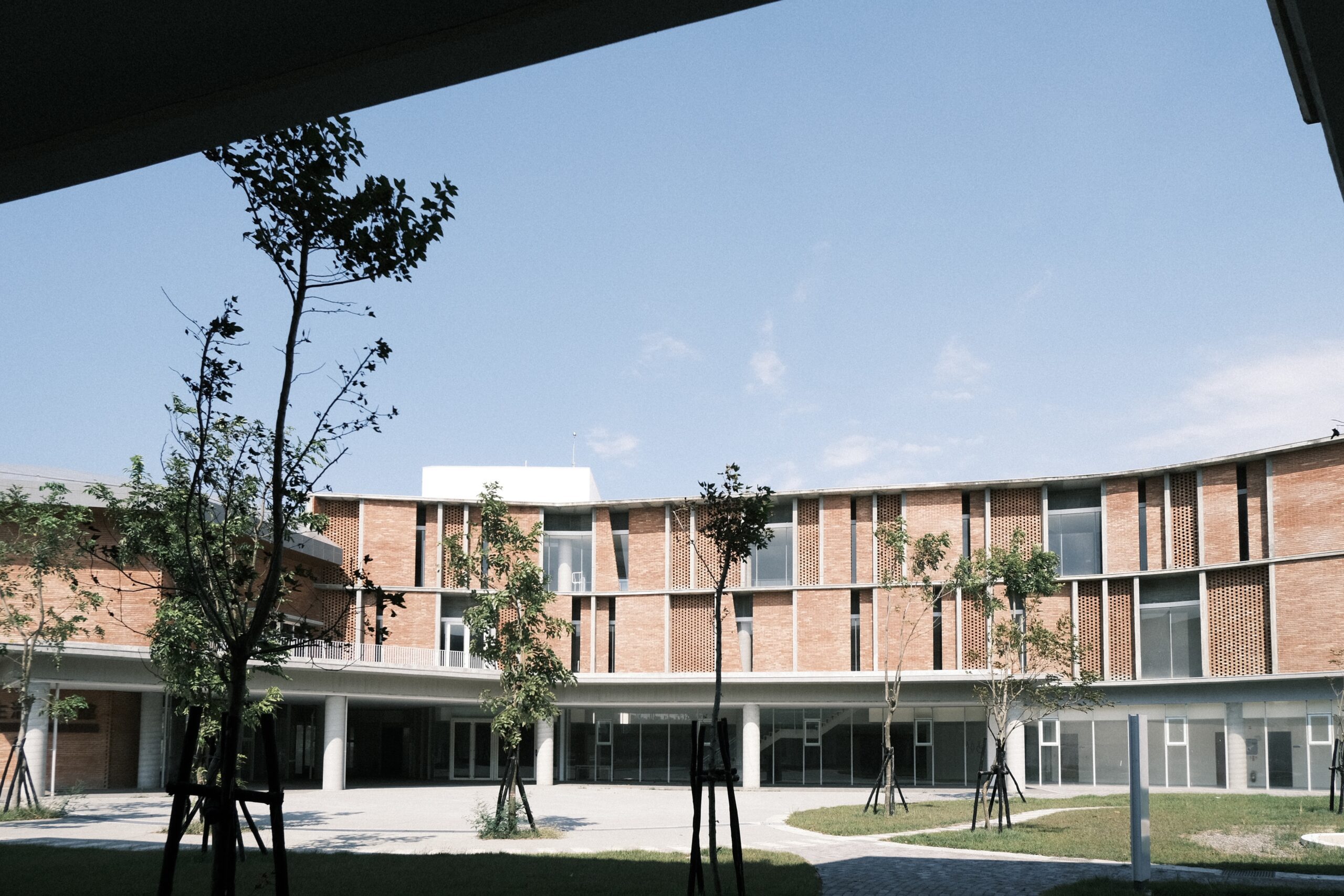
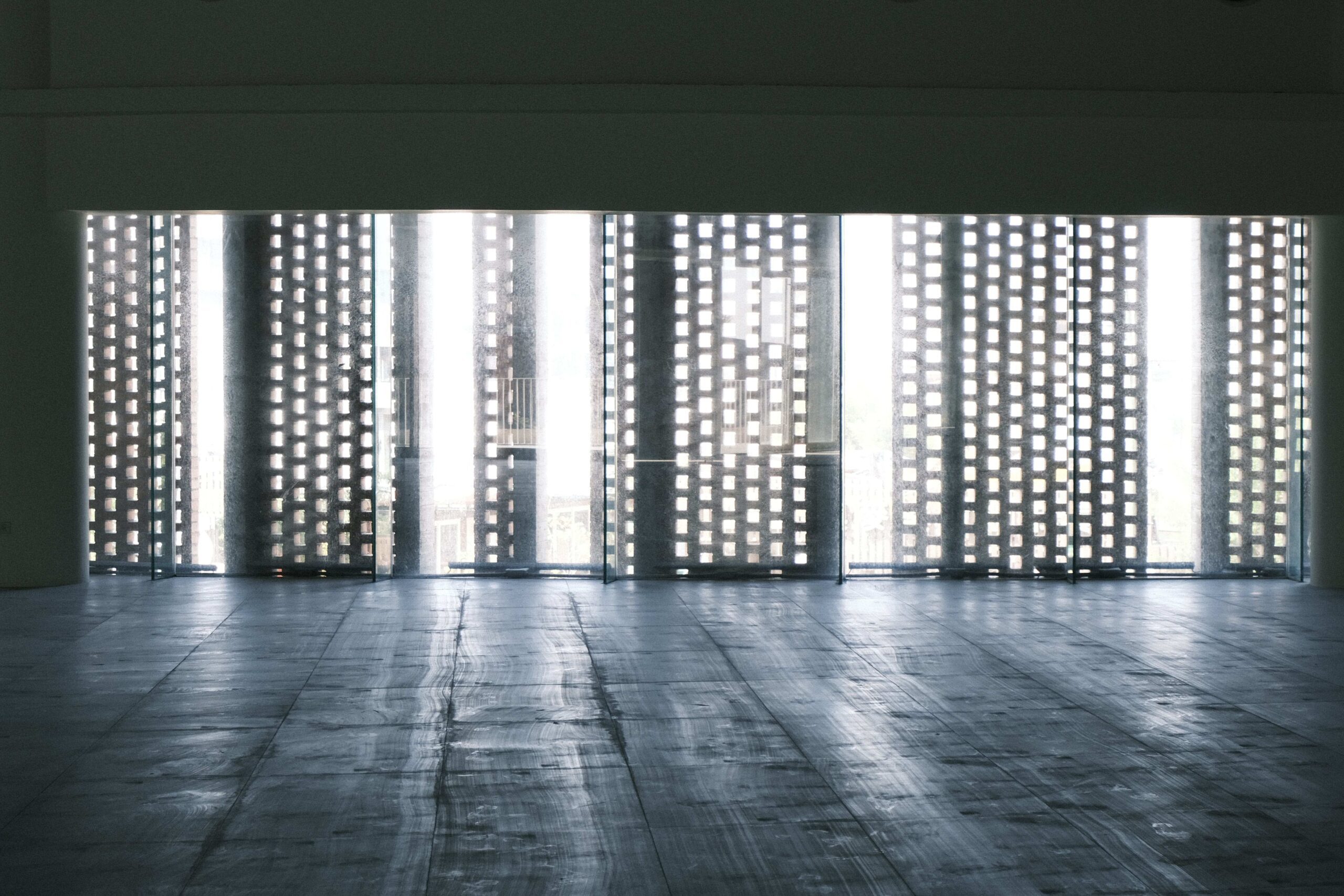
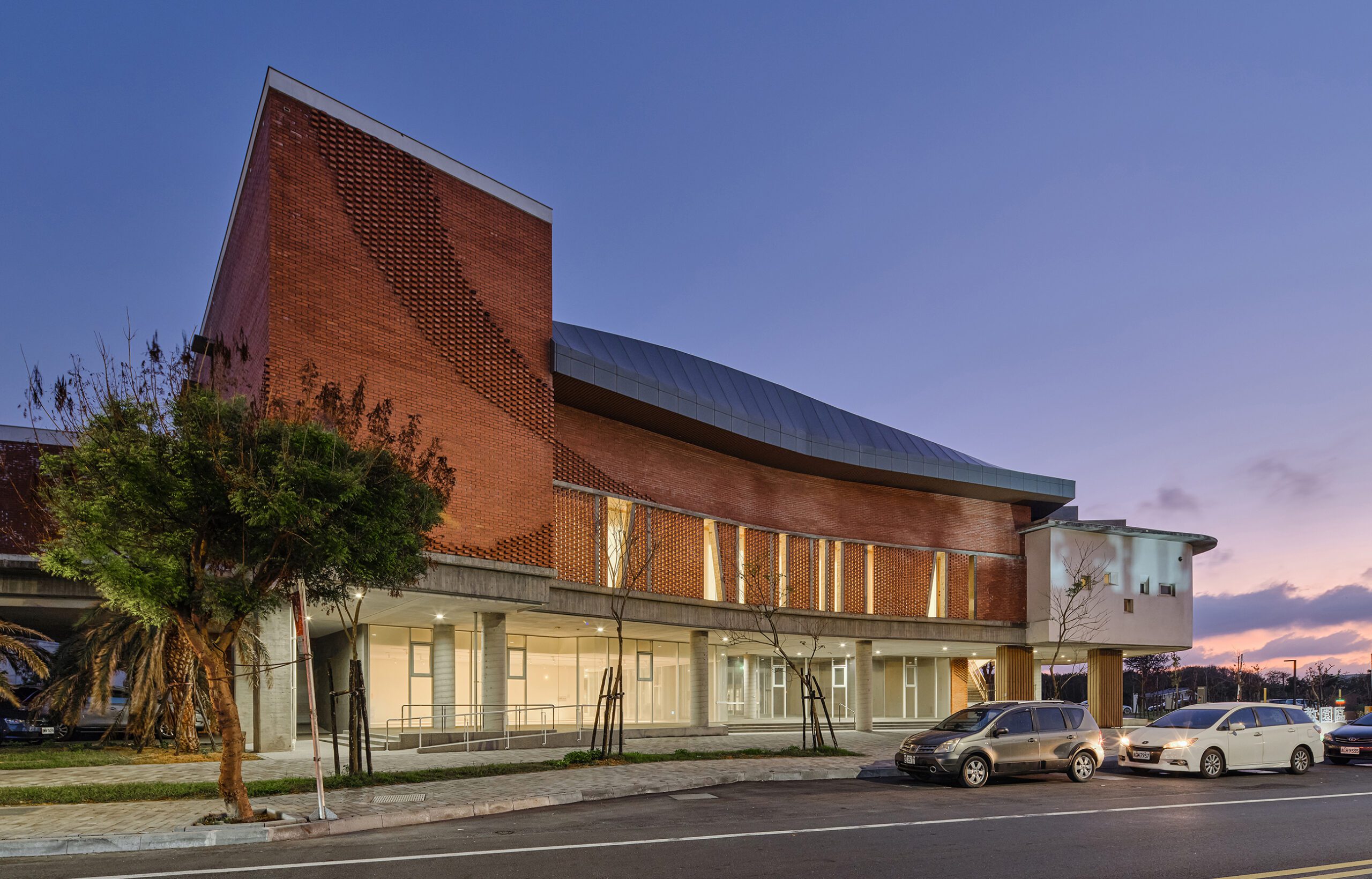
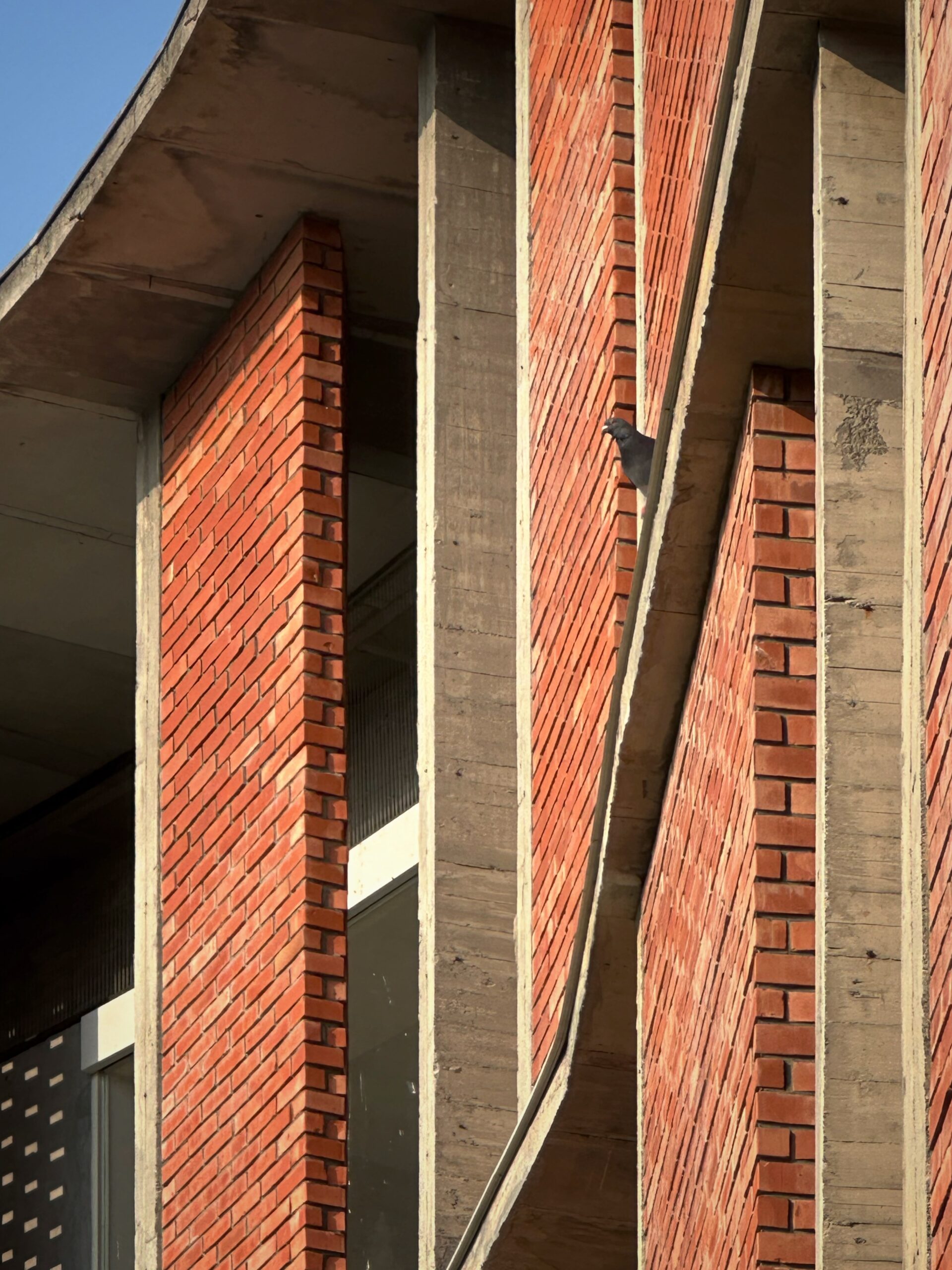
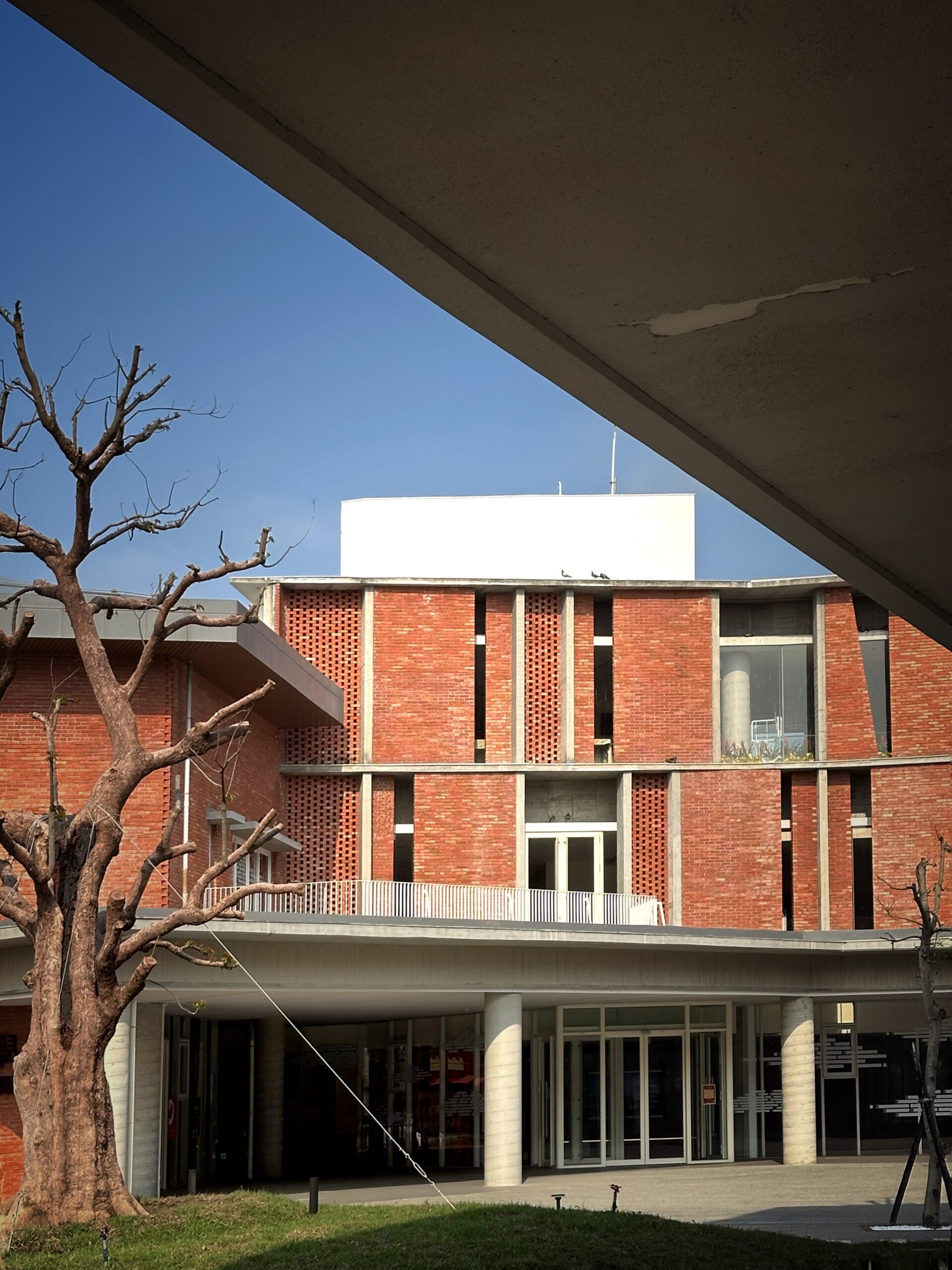
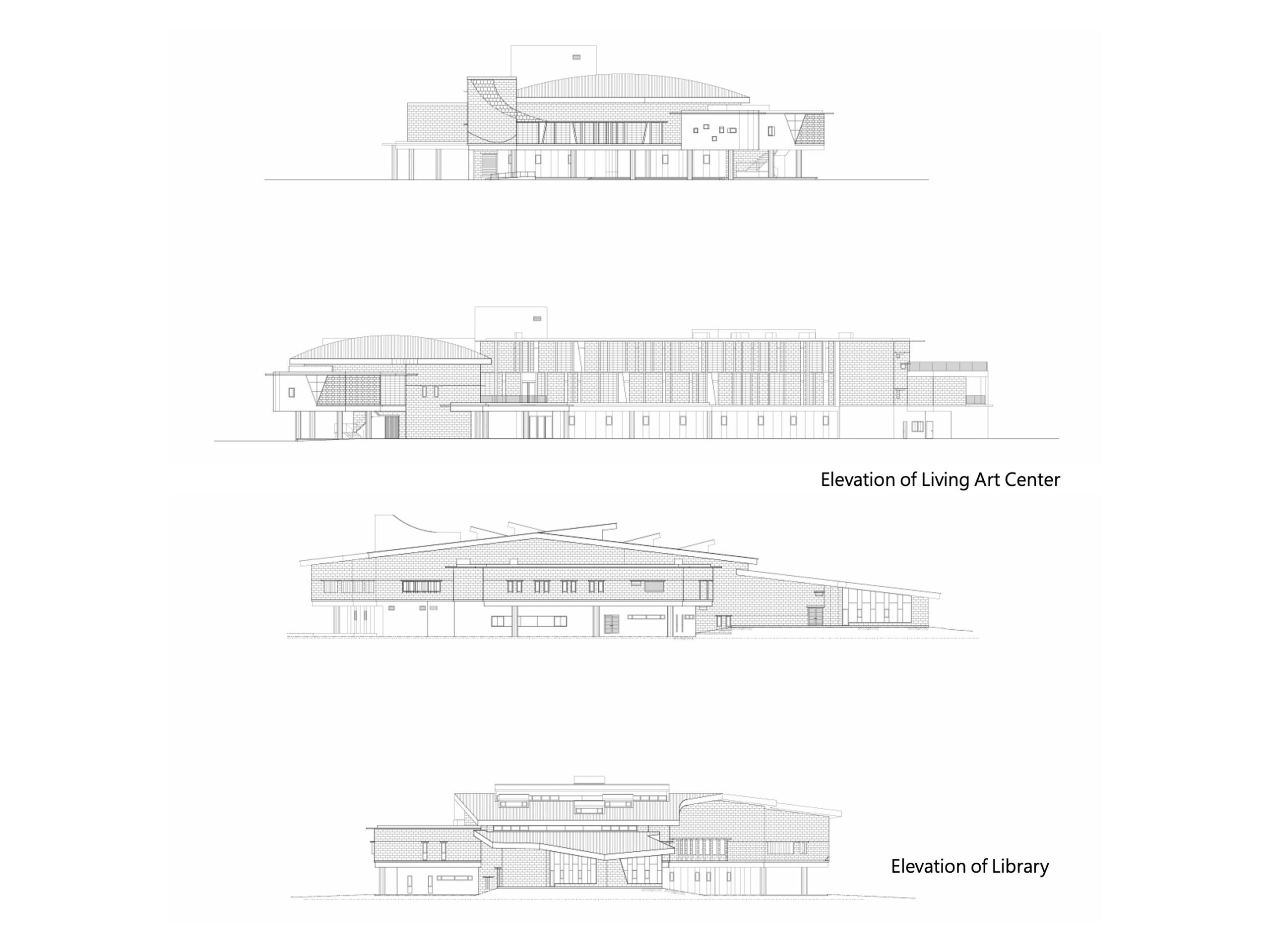
Red brick buildings can be seen everywhere in the countryside in Taiwan, and people have a special love for red bricks. In order to ventilate and lighten, the traditional pig house provides a comfortable environment for pigs, hollow brickwork is used, which is a very green building. The red brick material is taken from the earth, and the expression of the red brick building is particularly charming, but since the modernization of the city, this tradition has almost disappeared. One of the key points of this project design is to make full use of old materials to present modernity with historical memory. This is a dialogue between tradition and modernity.

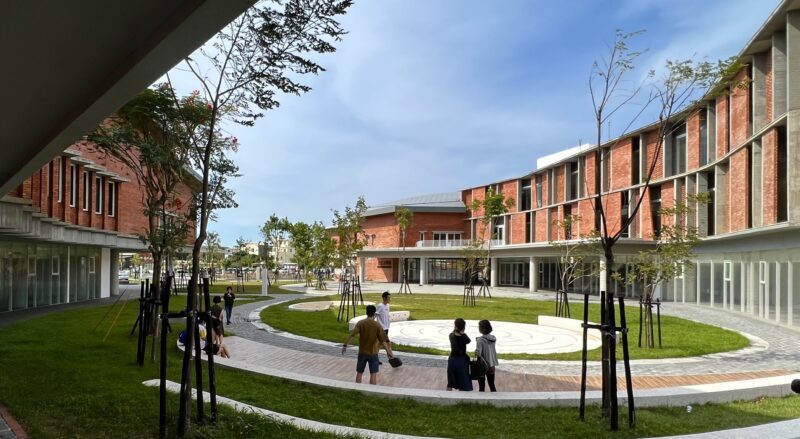
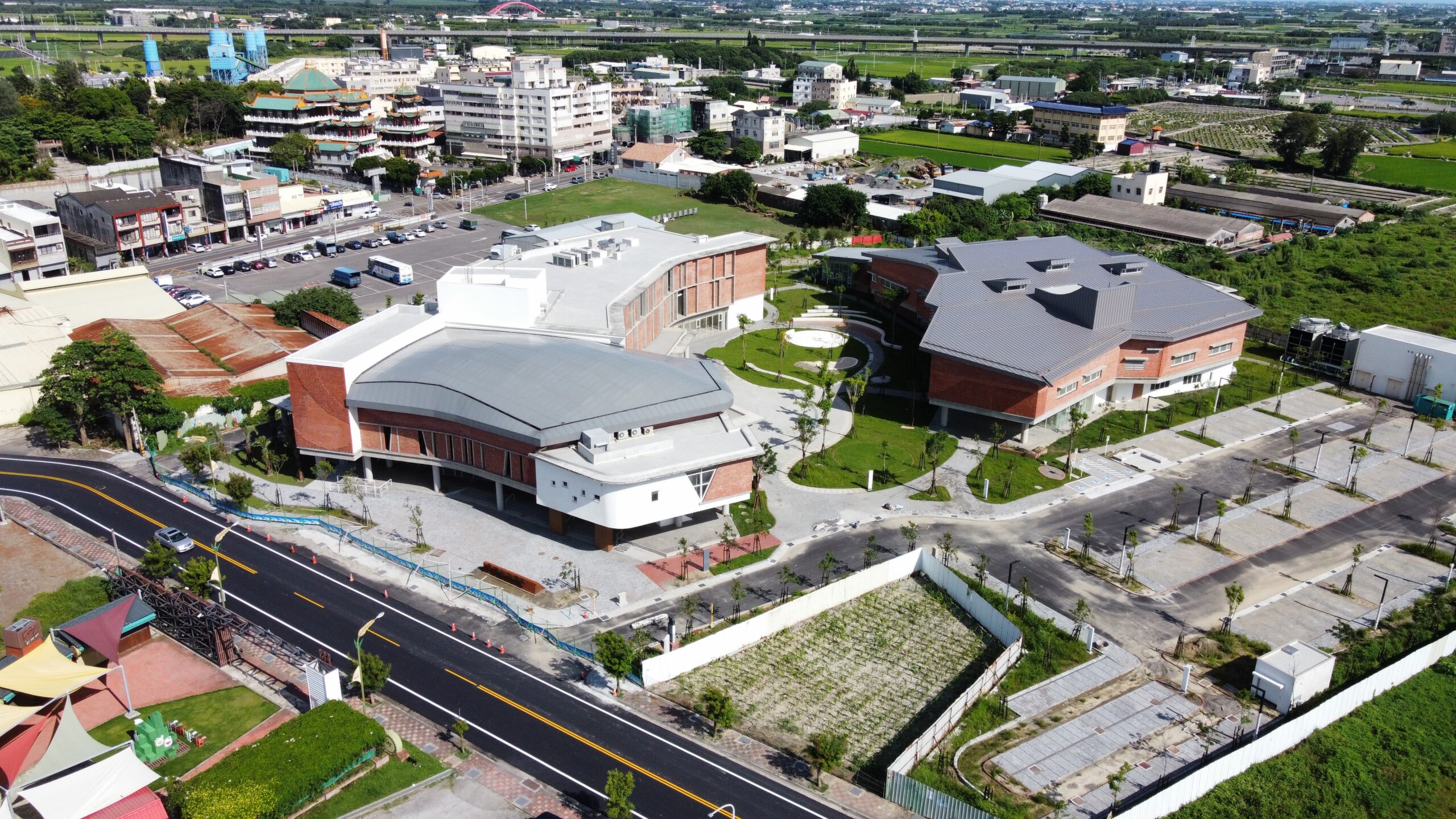
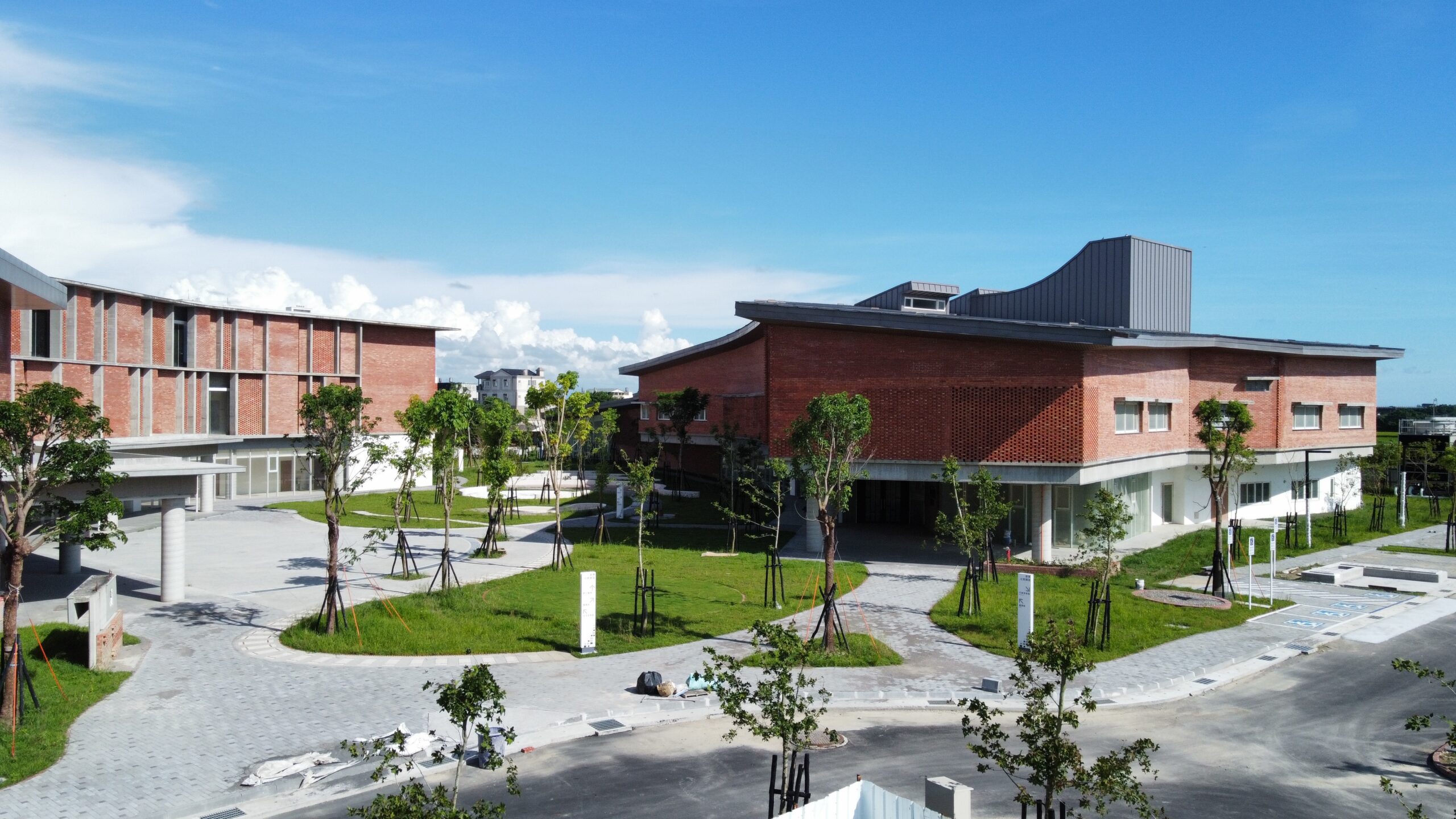
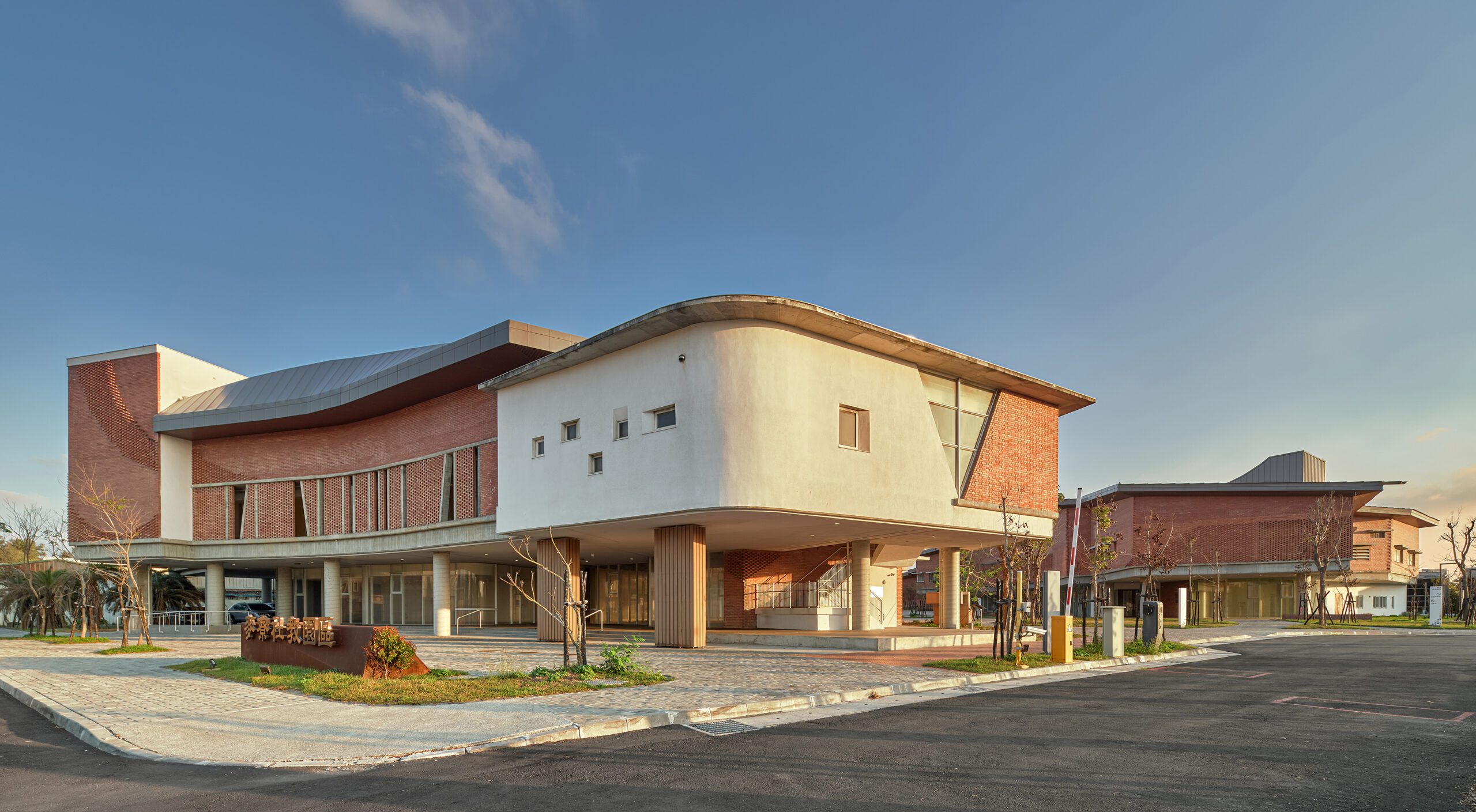
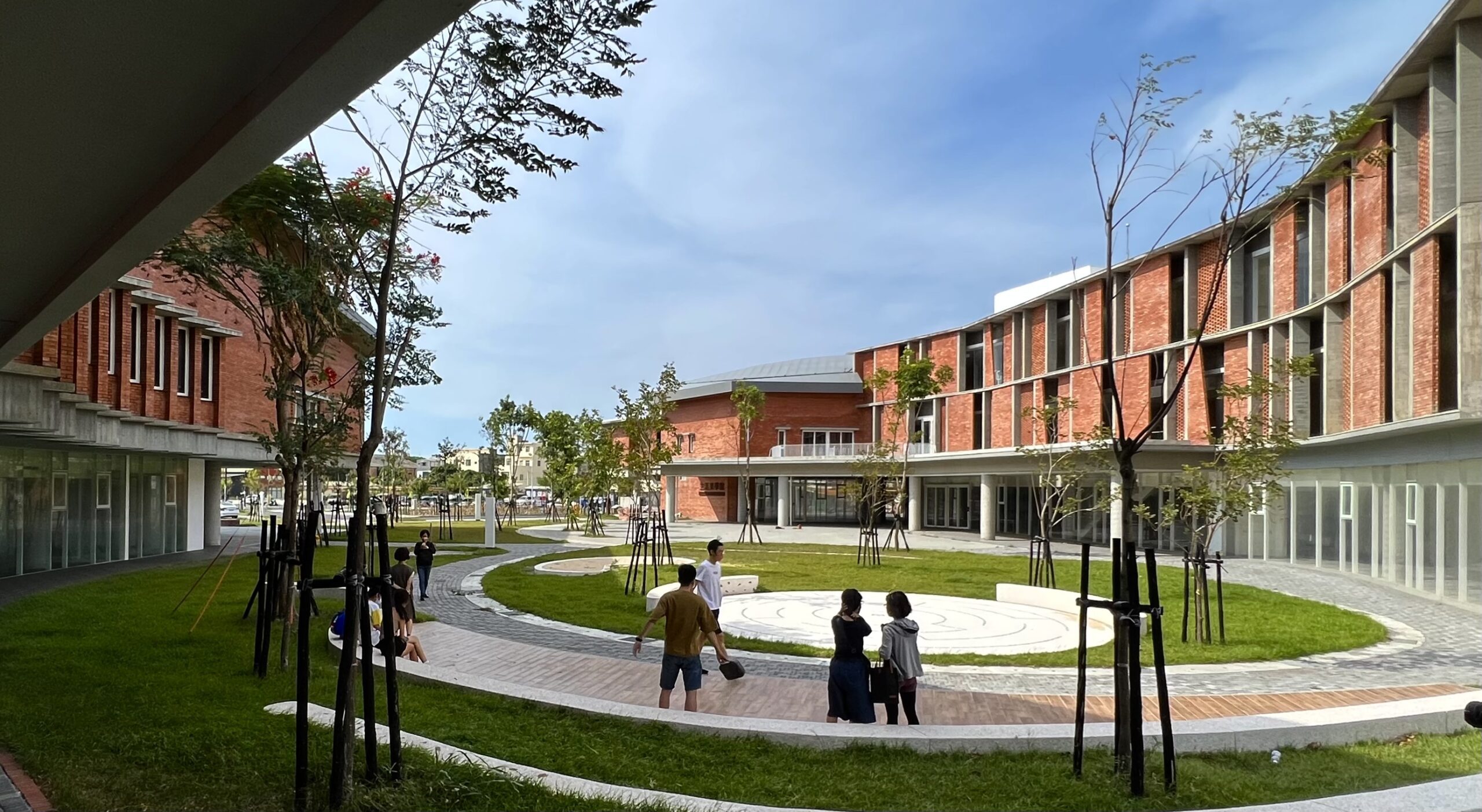
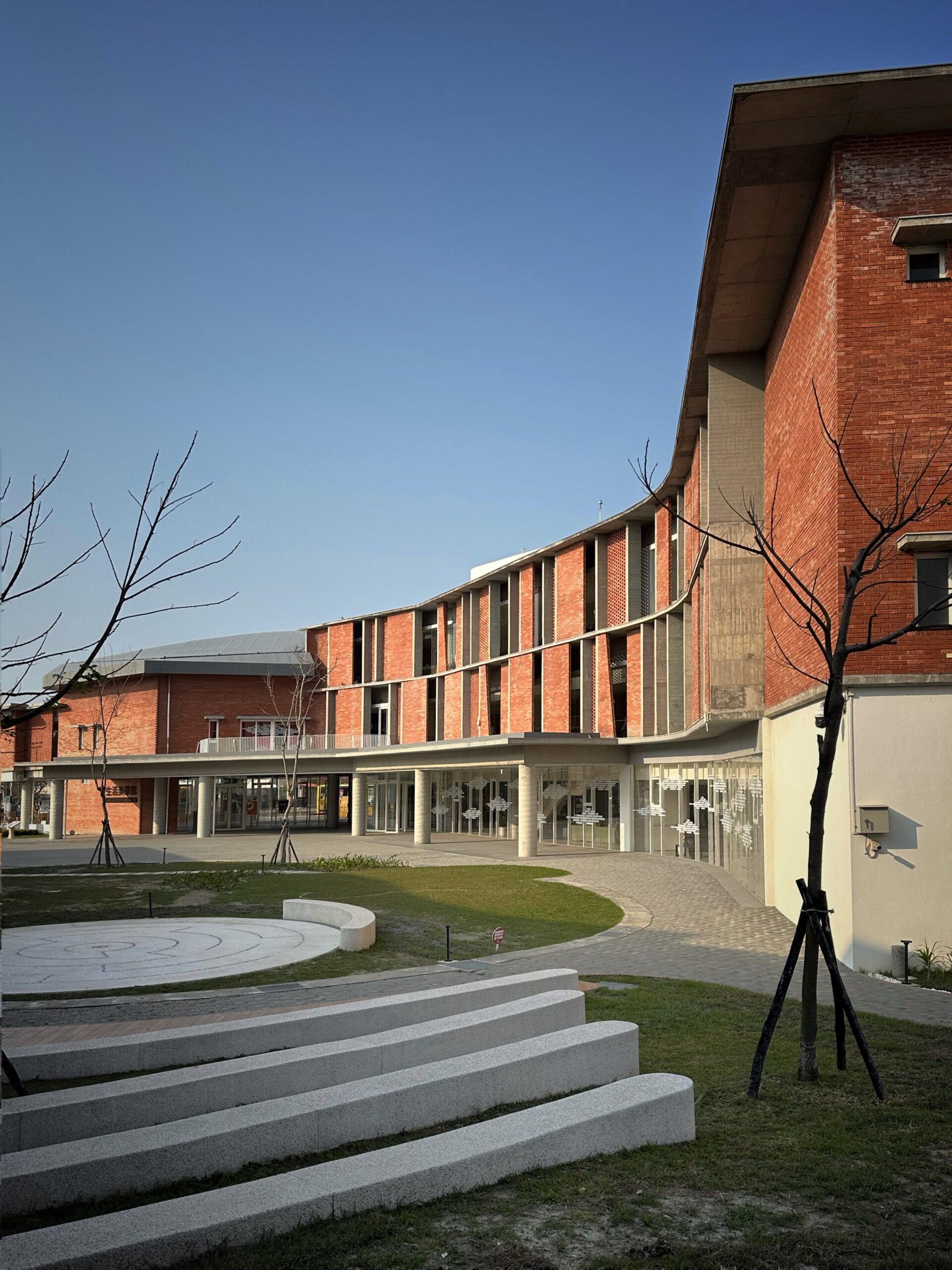
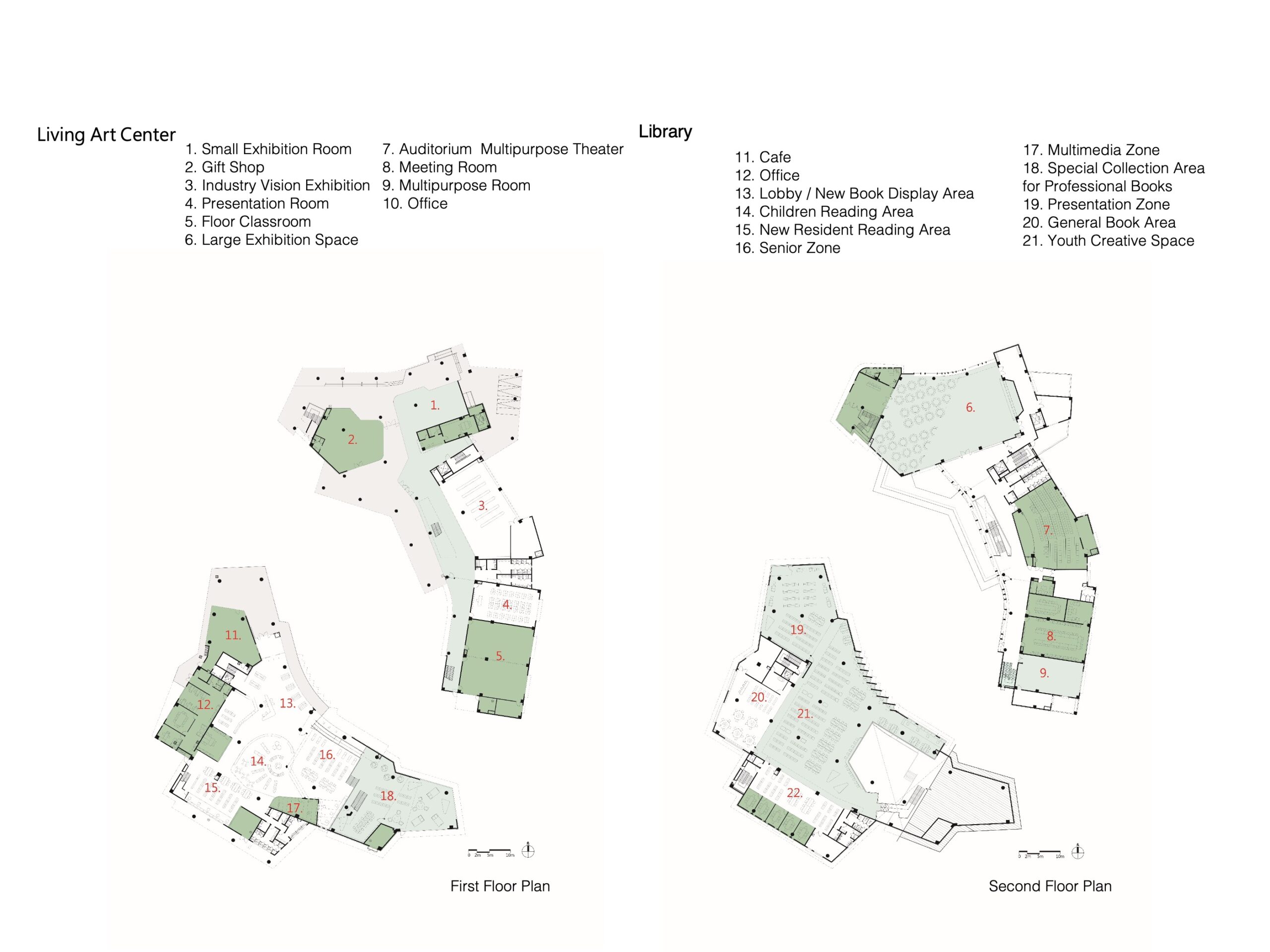
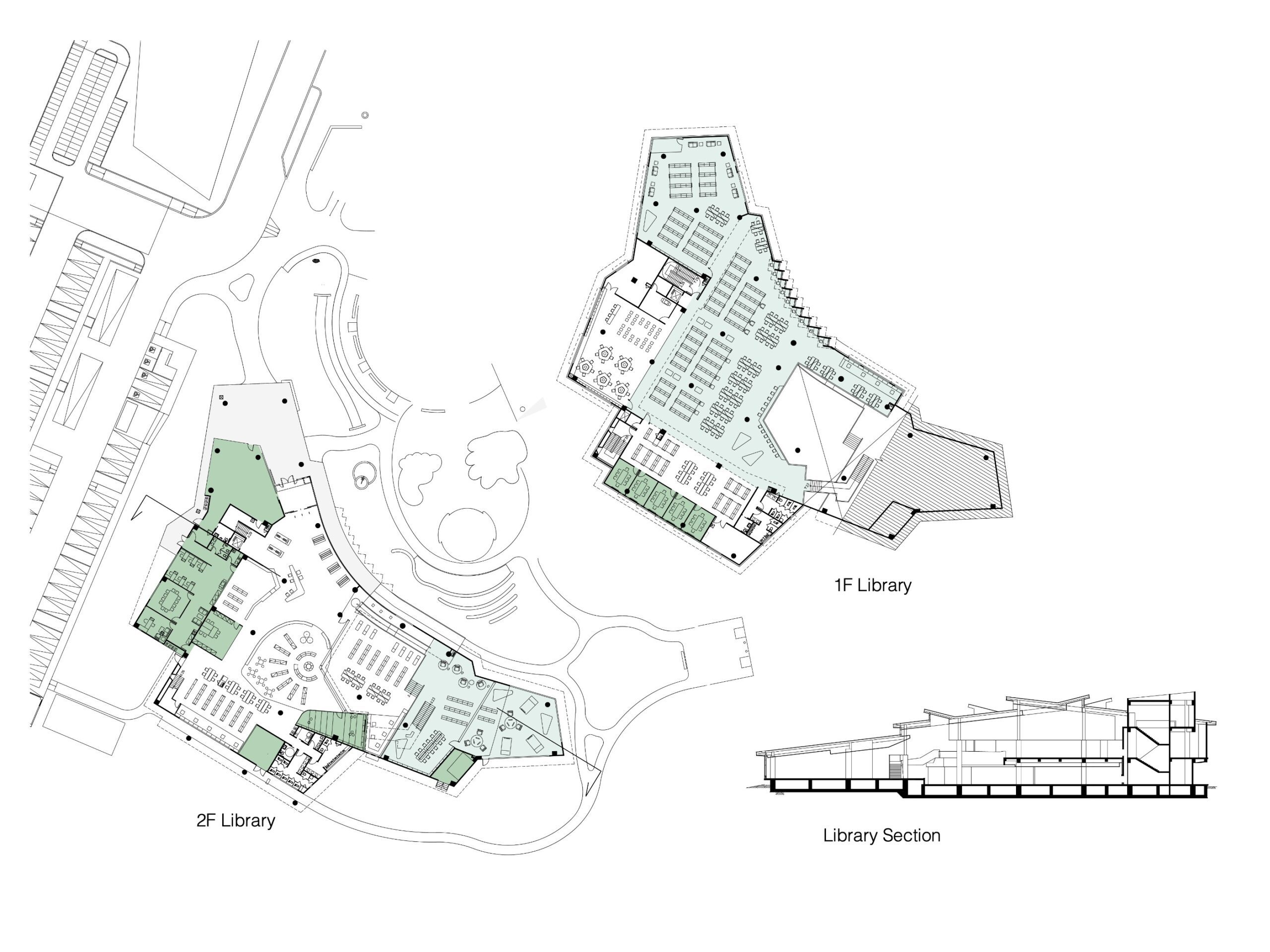
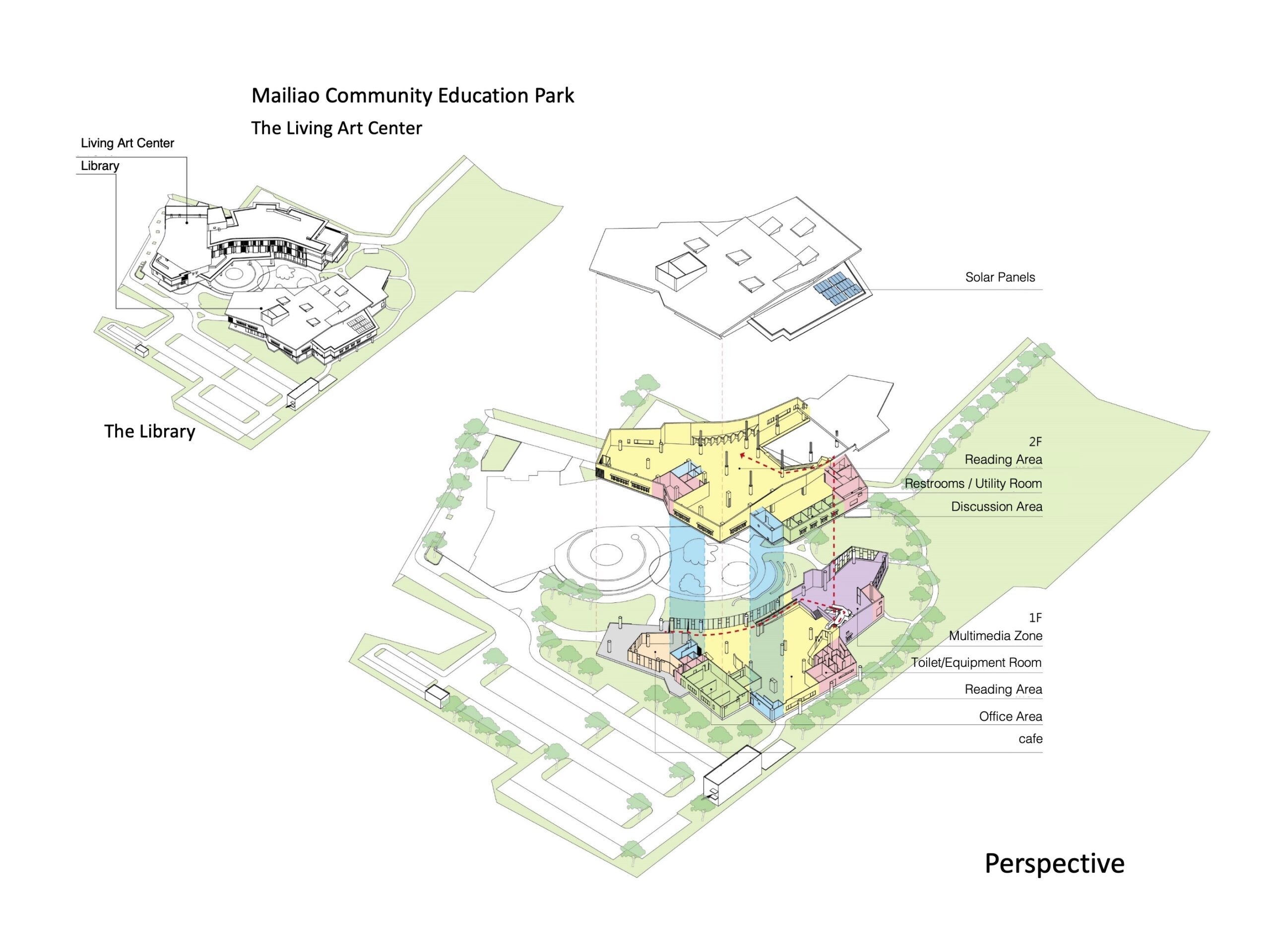
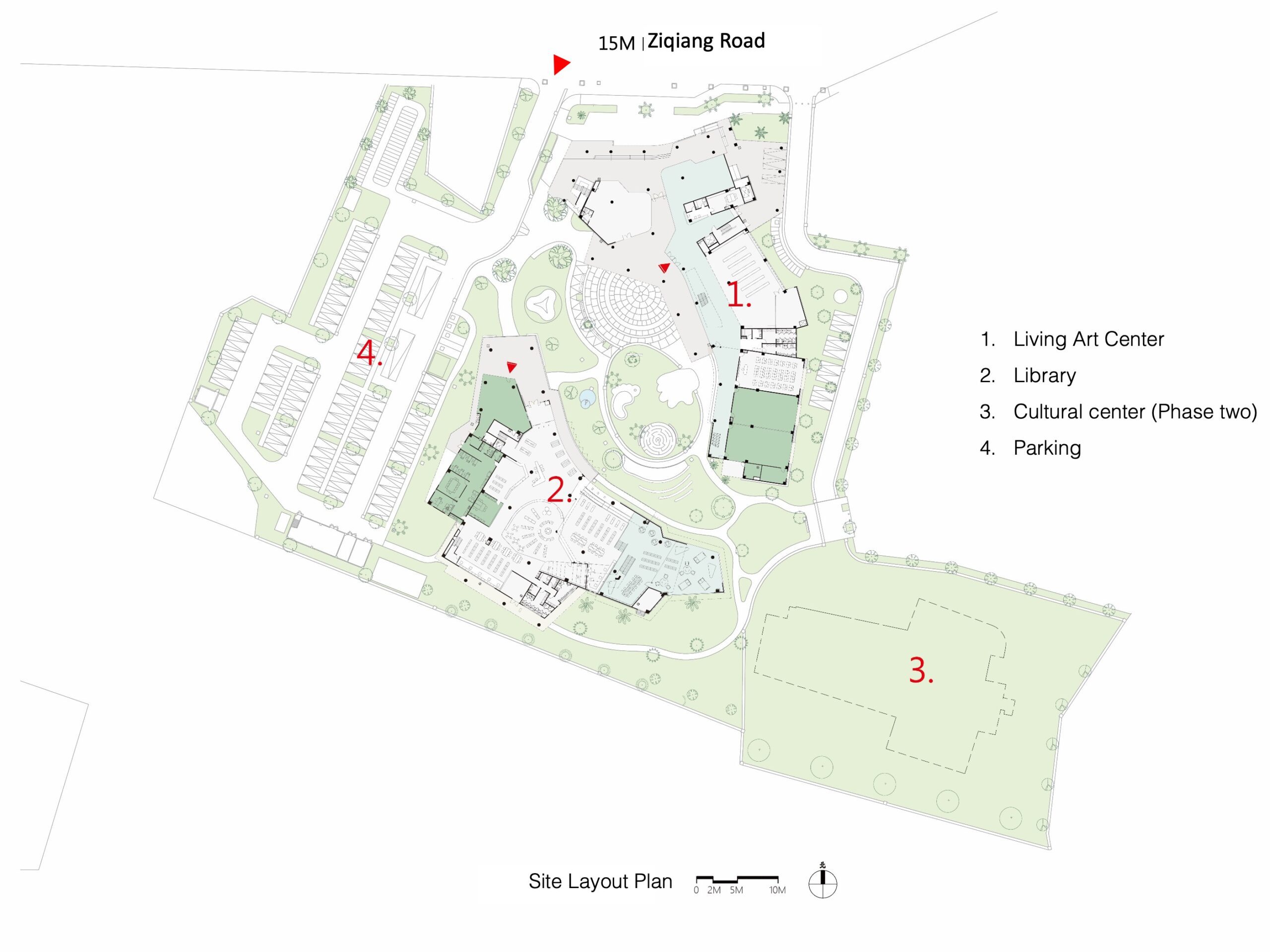
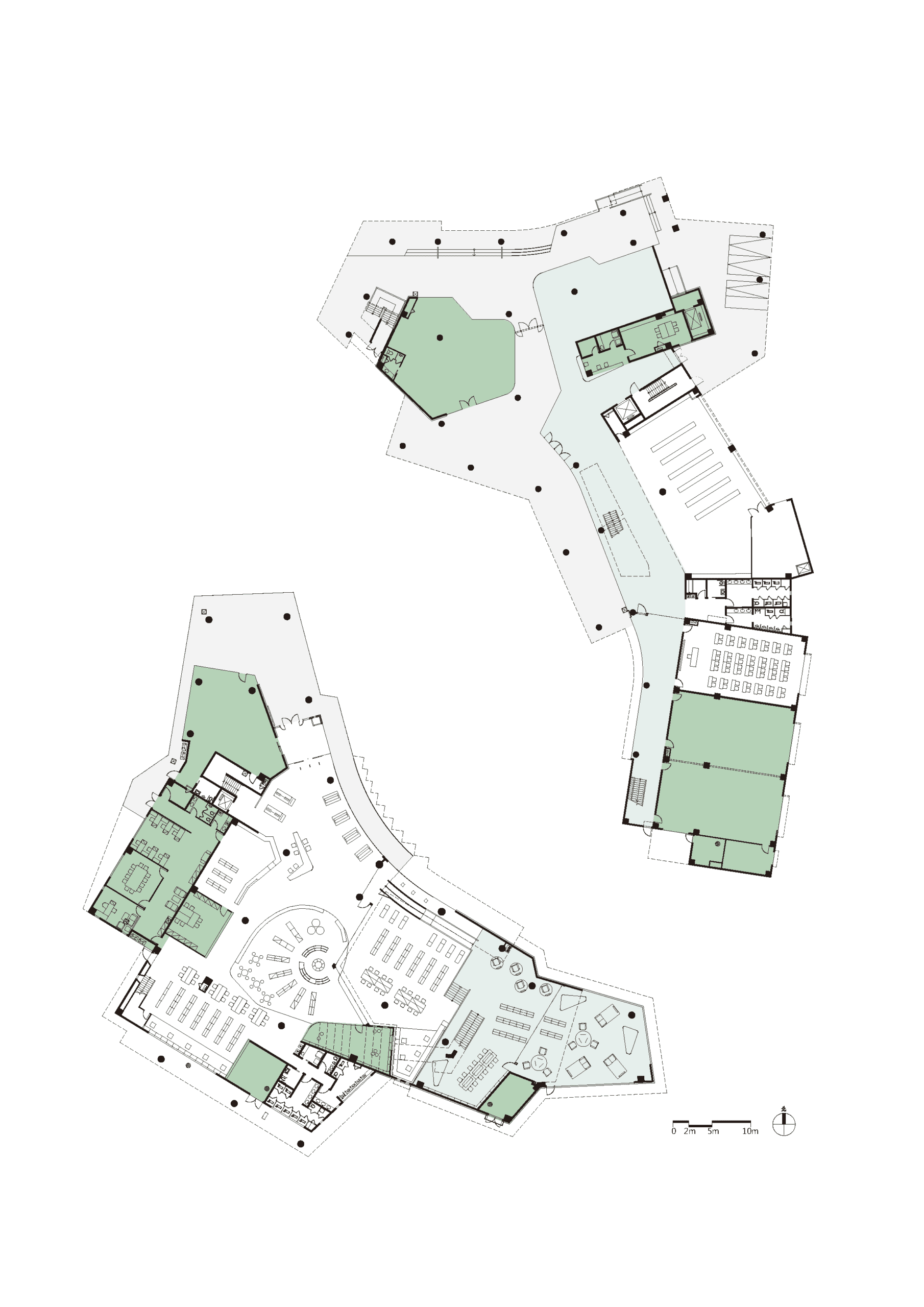
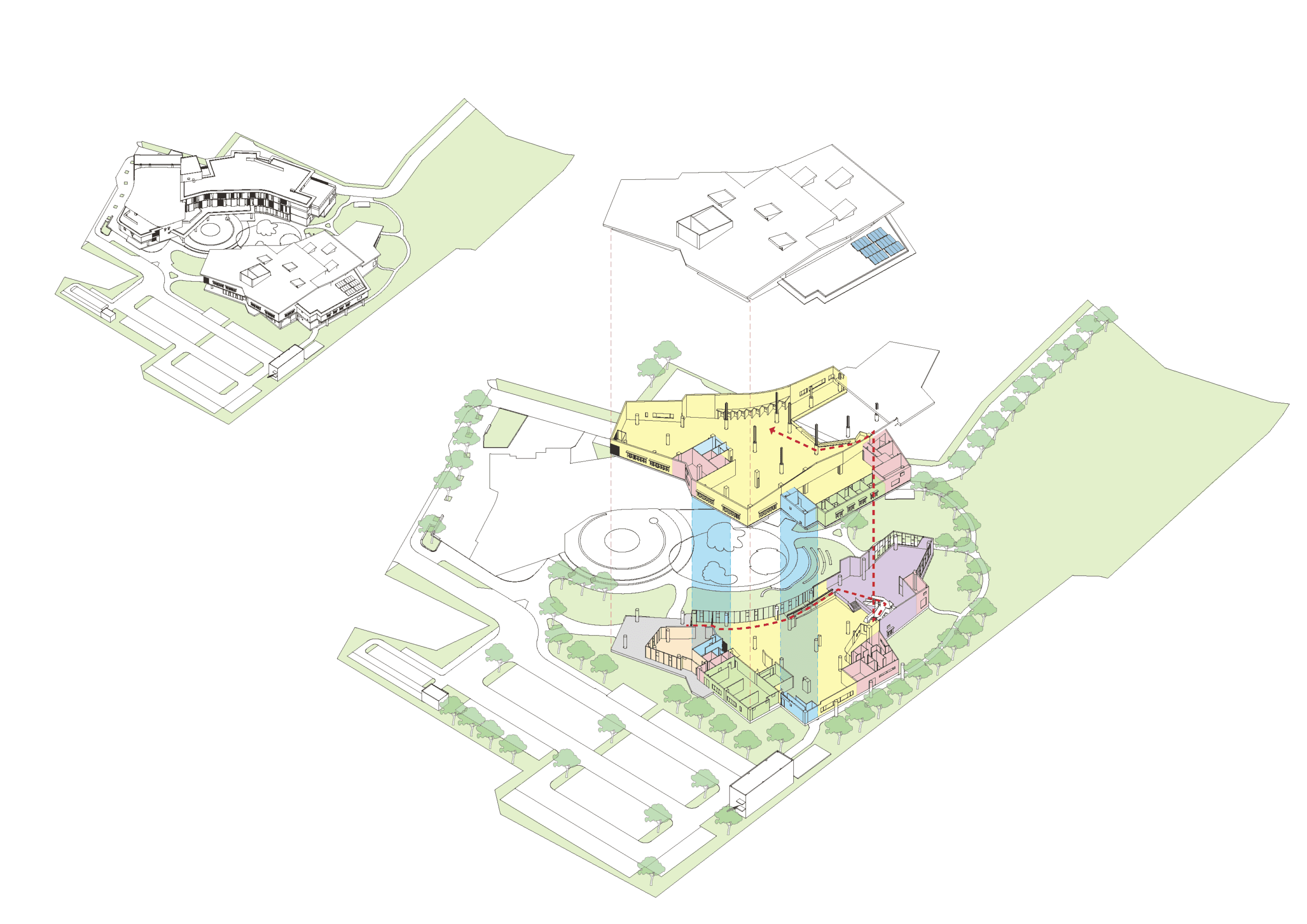
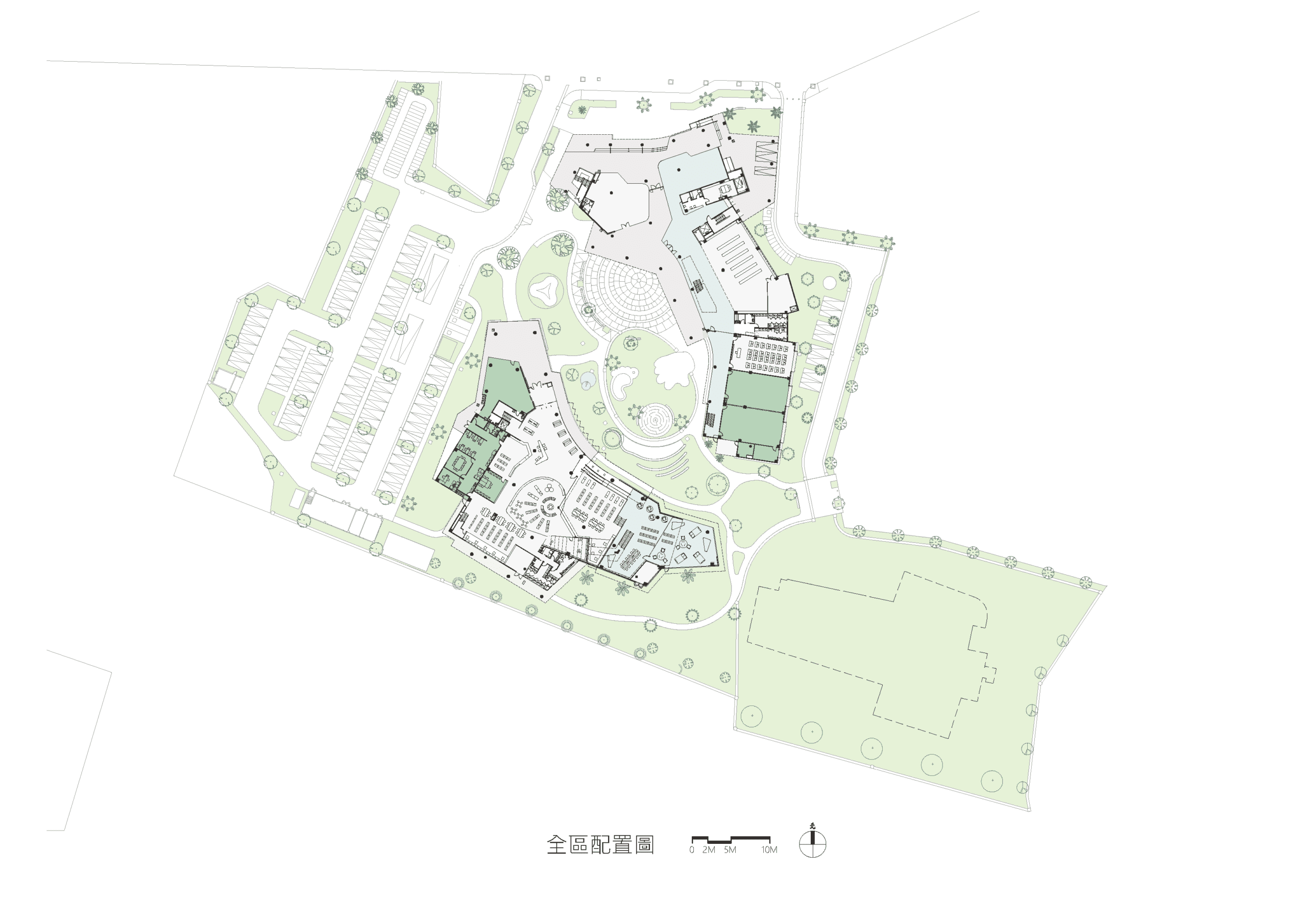
The base is located on the southwest side of the urban area of Mailiao Township, Yunlin County, adjacent to farmland. This area is not far from the sea, and there is a very strong northeast monsoon in winter. Mailiao Community Education Park was donated by Formosa Plastics Corporation for common use by villages and towns in the seaside area. Formosa Plastics Corporation invested in the Sixth Light Industry Park, the world’s largest petrochemical park, nearby. The two buildings in the first phase are the living art center and Library. It is configured to block the northeast monsoon in winter, and an egg-shaped open space is formed in the middle, which is called the aesthetic incubation square.

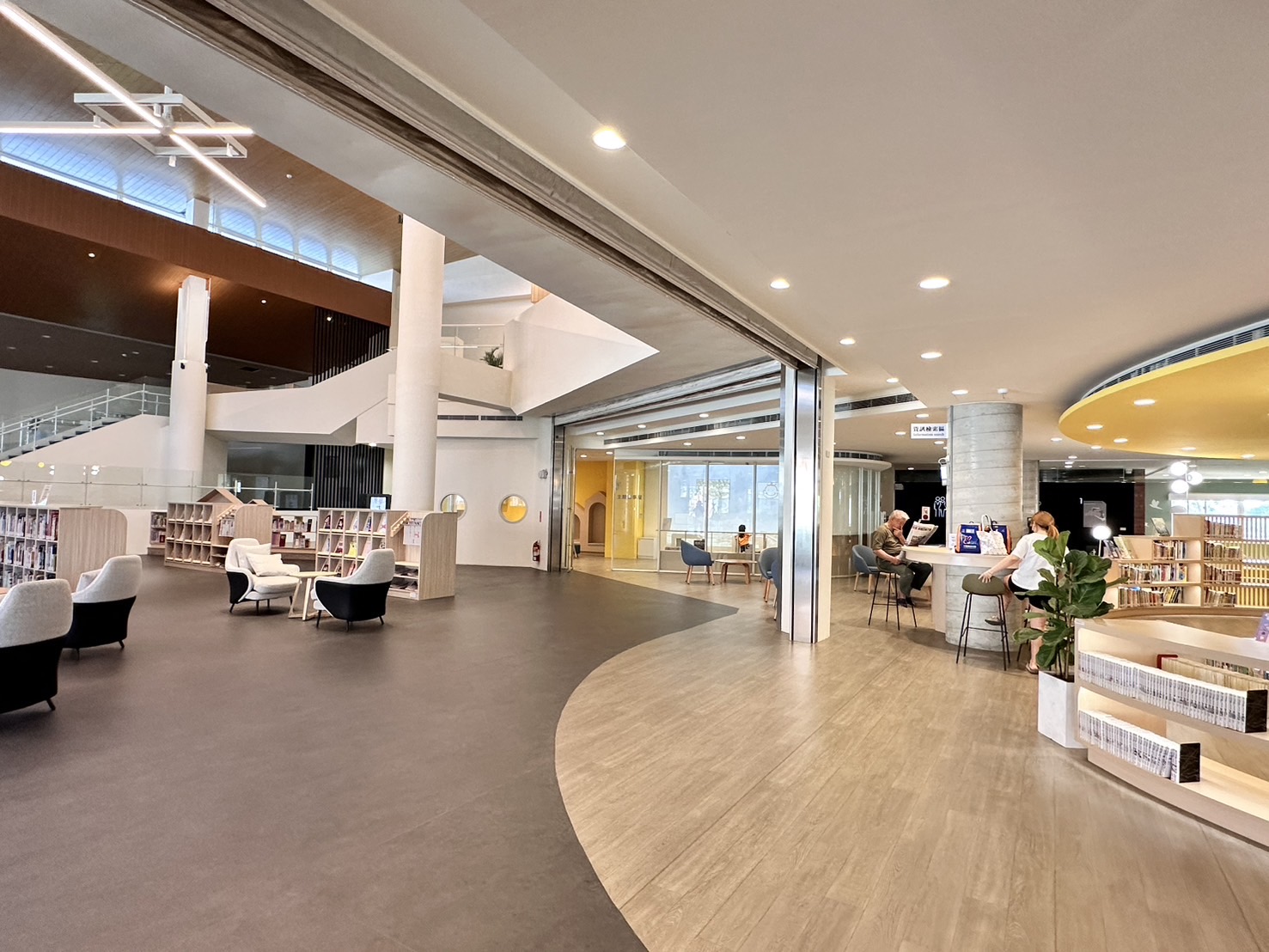
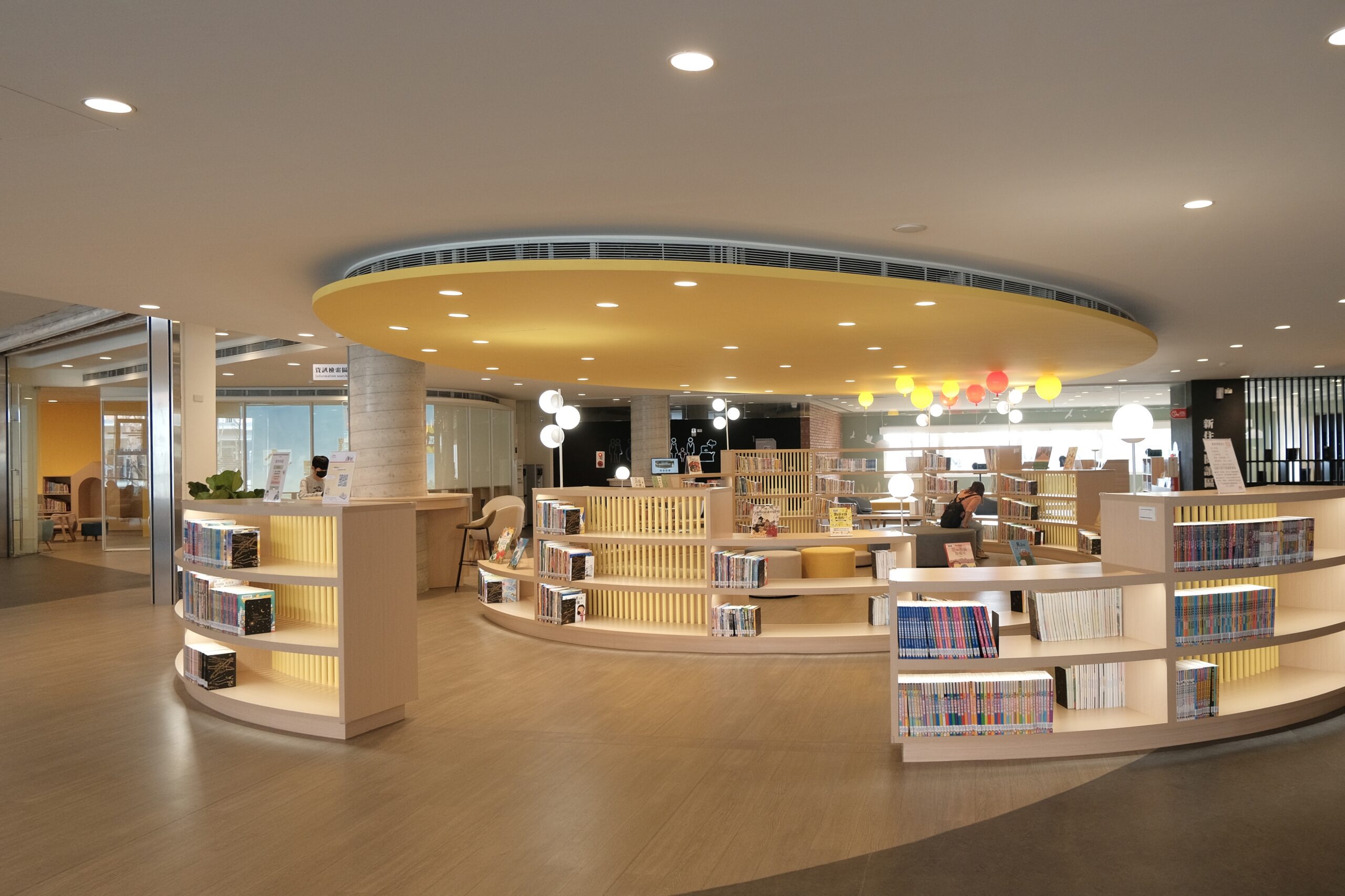
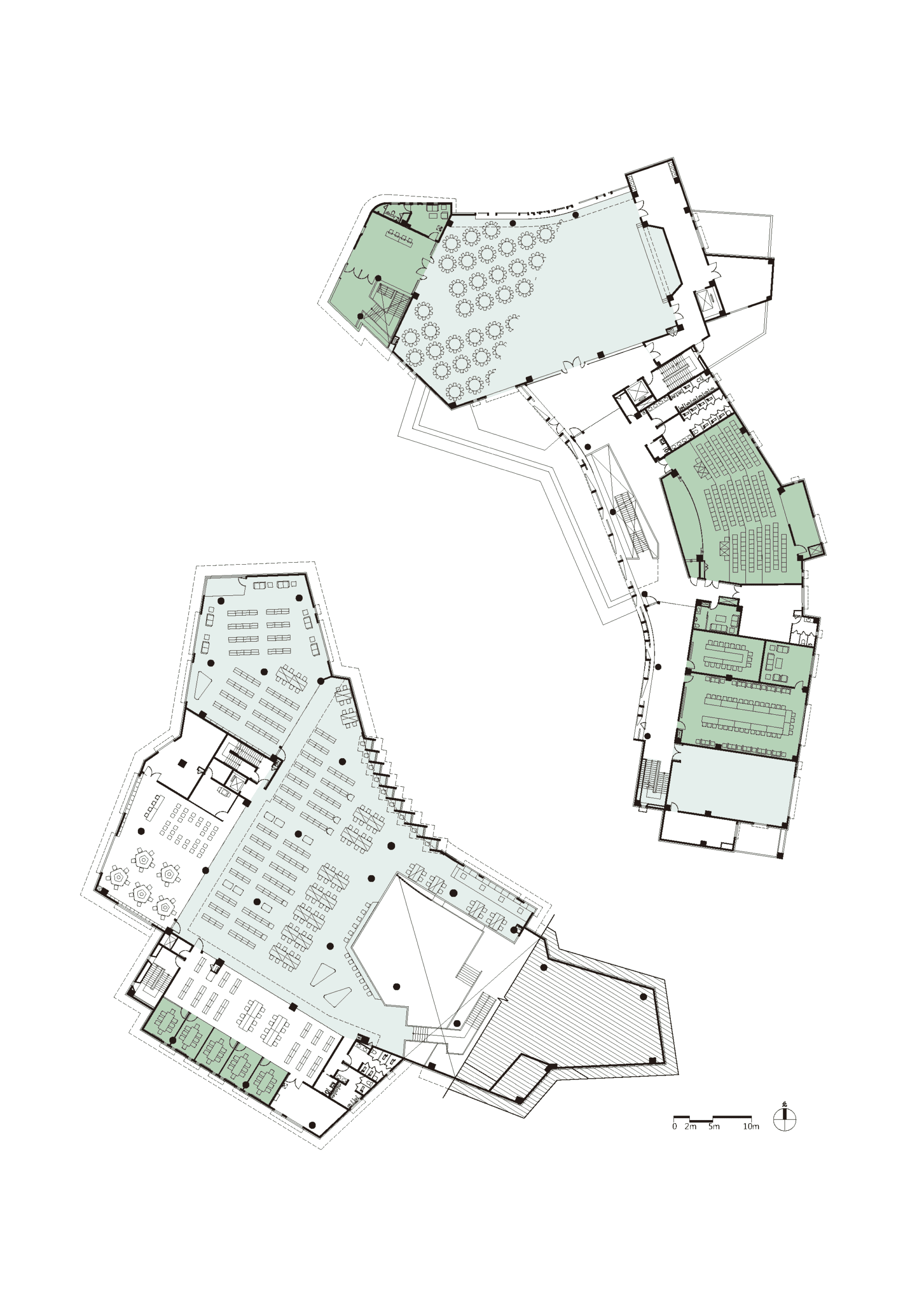
In addition to providing various exhibitions, the living art center mainly provides lifelong learning in community colleges. The library is provided for residents to read. The population in coastal areas is aging, so the library focuses on the elderly and children. Set up shops and cafes at the entrances of the two buildings. The second phase of the plan will also include the Cultural Center Auditorium.

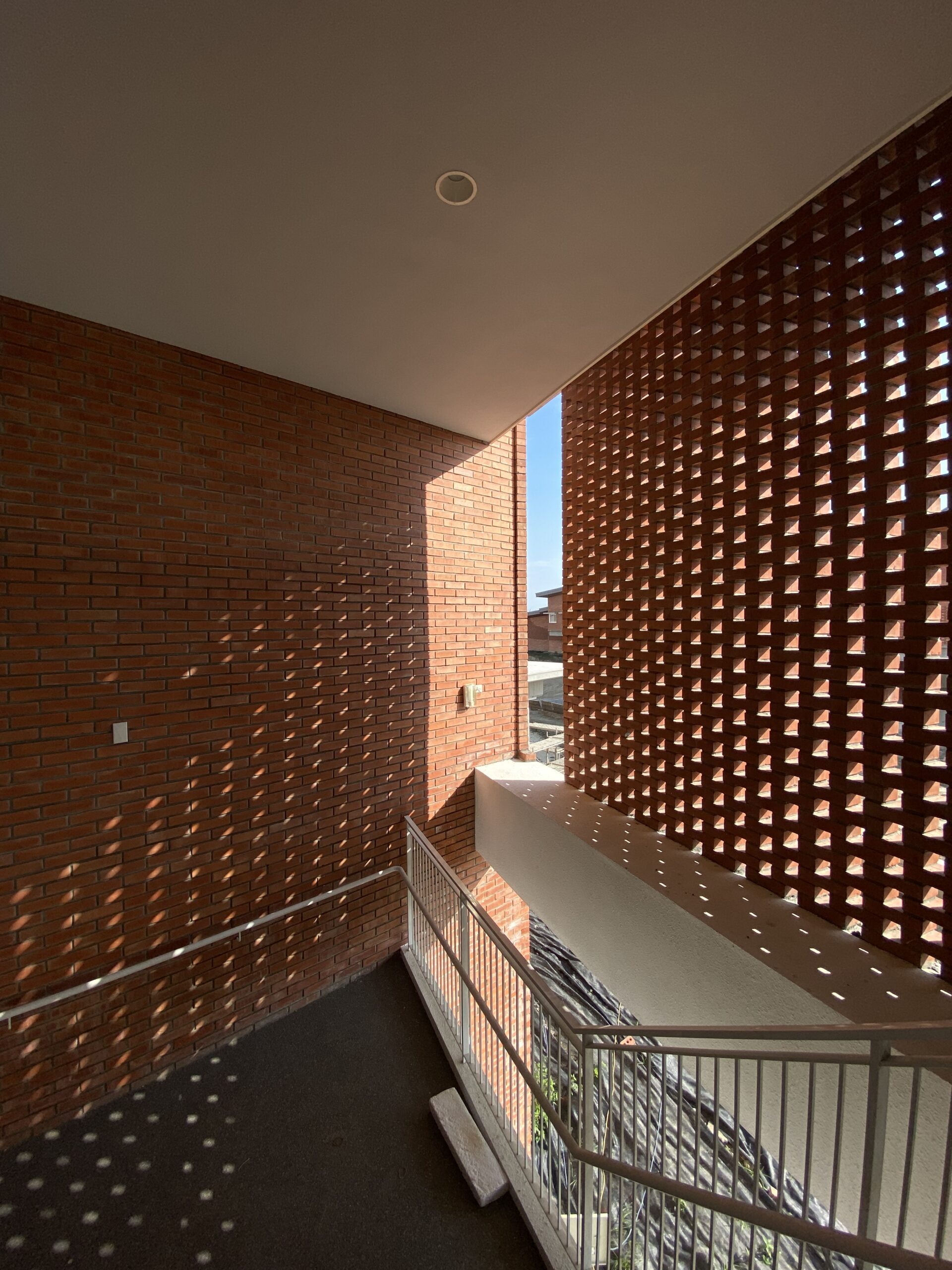
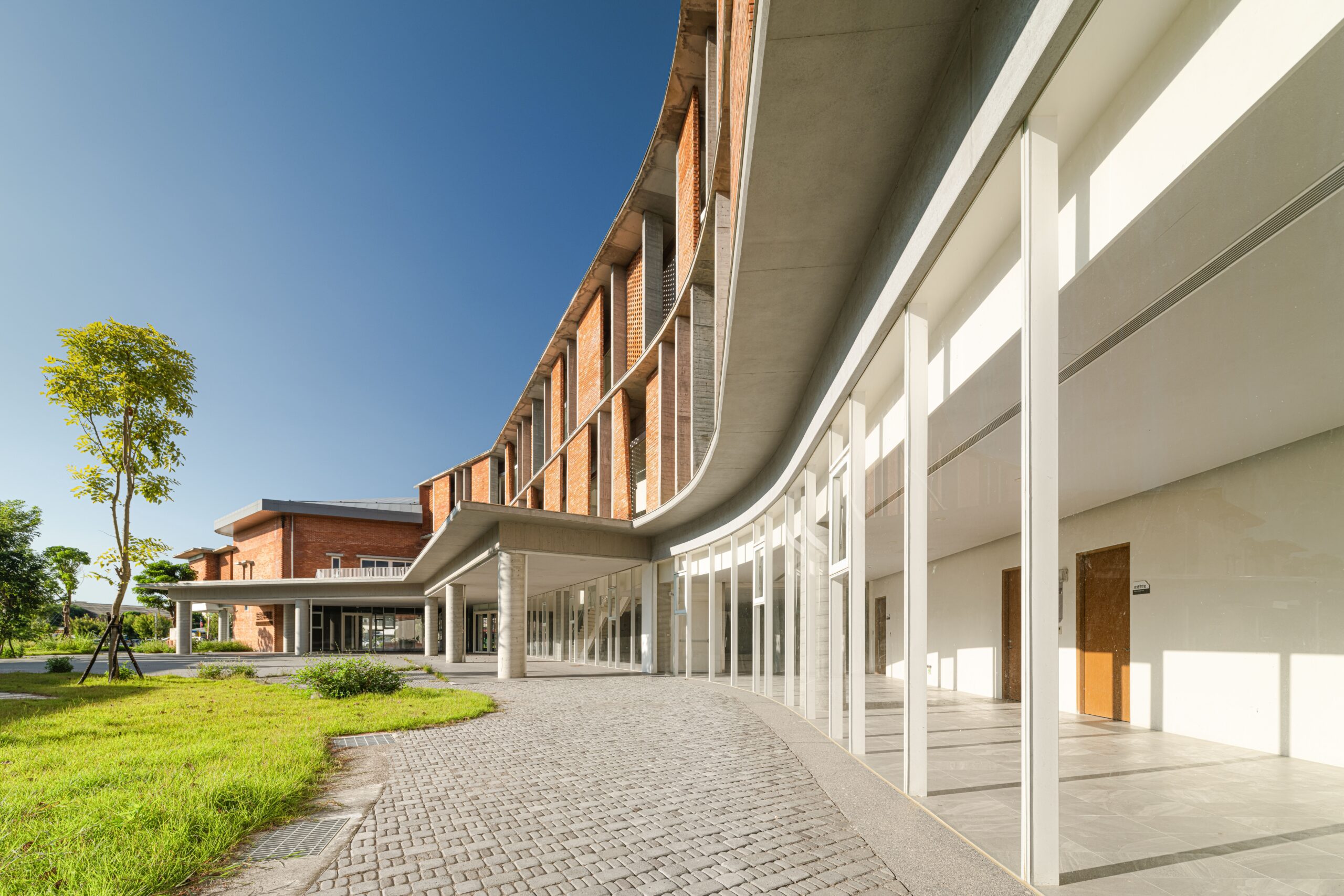
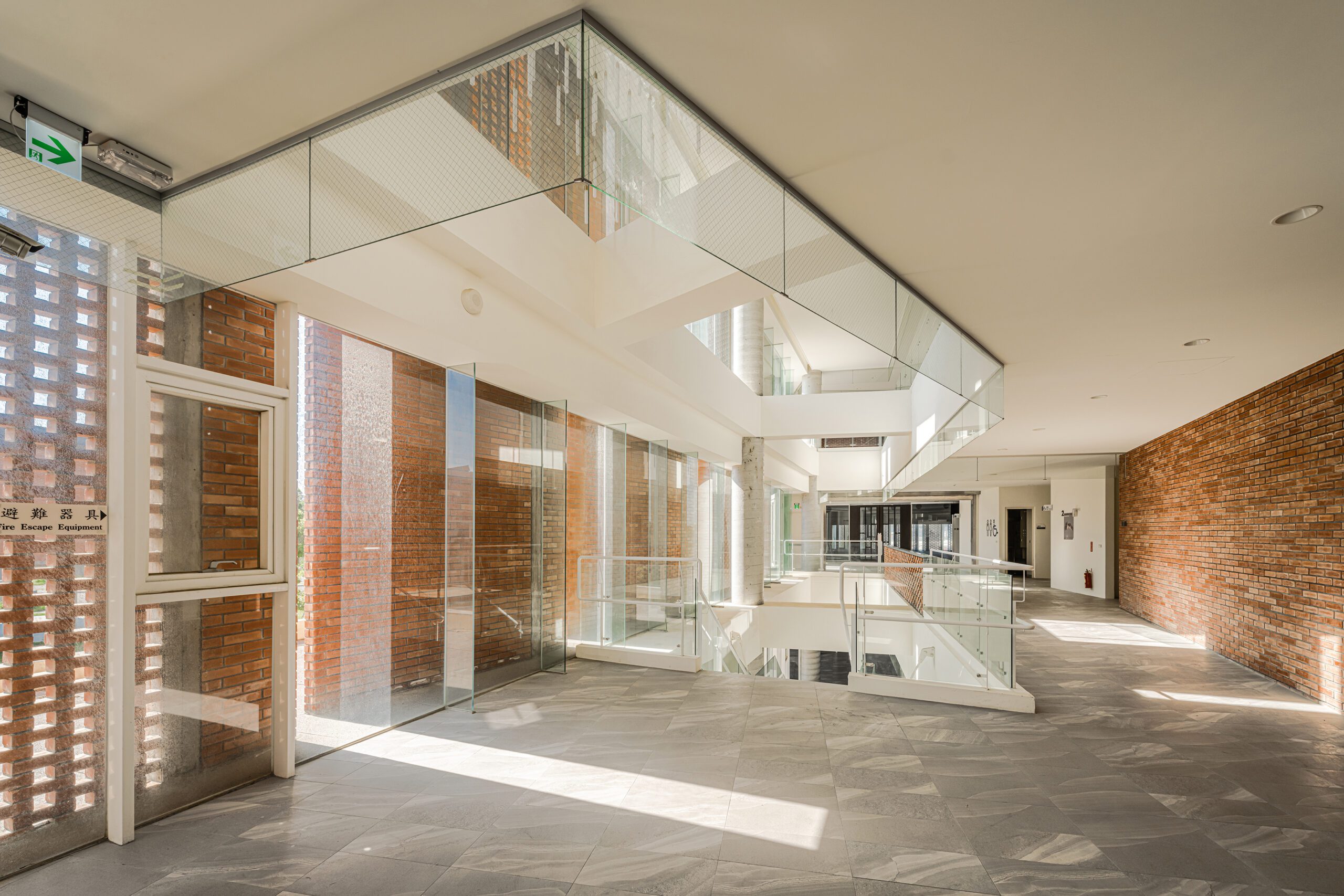
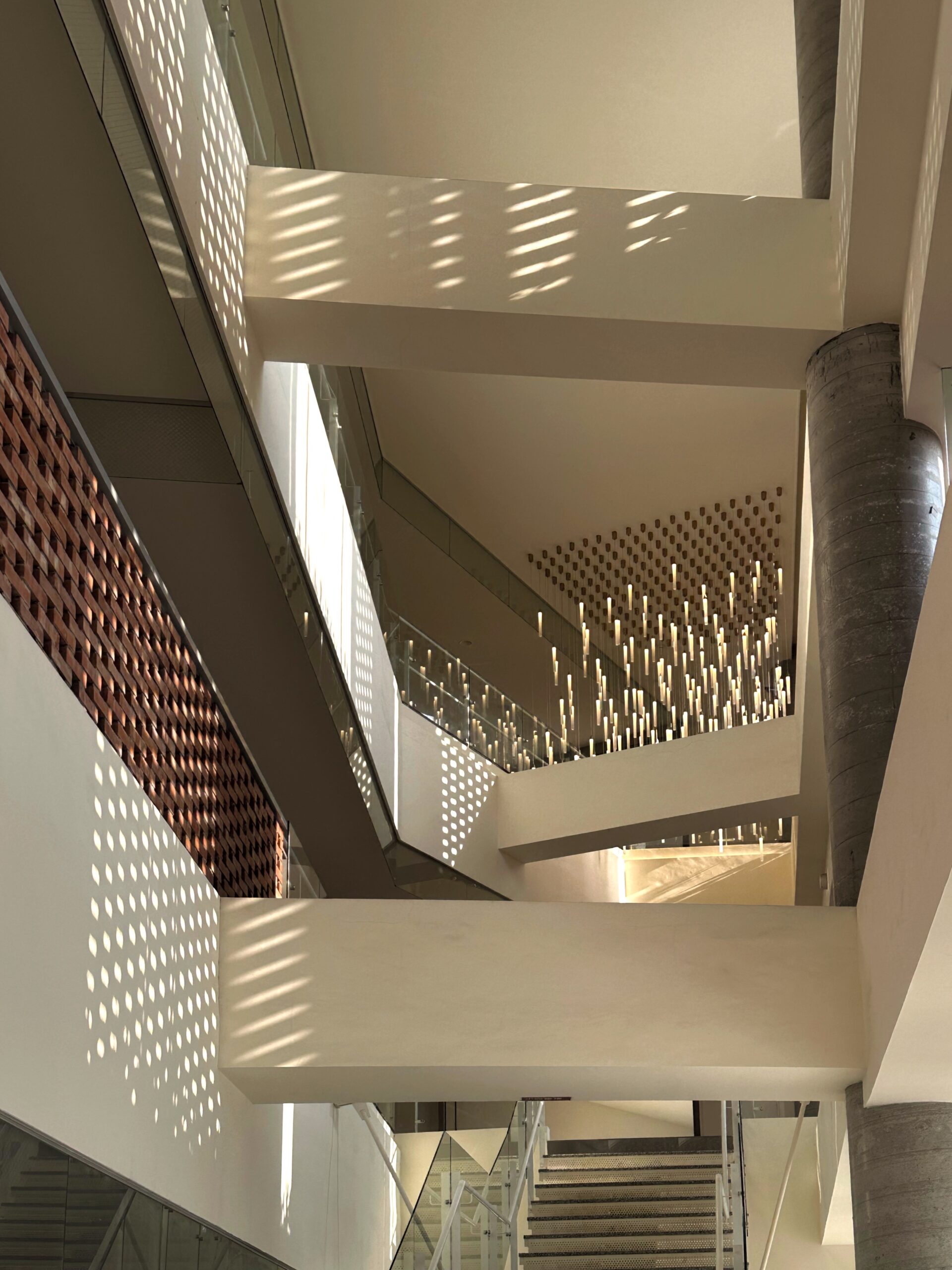
The living art center expresses “time”, and its main function is classrooms. It connects all classroom spaces through the empty hall, and the empty courtyard becomes a display area of bricks, light and shadow. In summer, the westward sunlight is very scorching, and in the evening, it will even be directed horizontally. The light and shadow texture will be generated after being injected, and it will enter the room after filtering to solve the heat load. Light enters the room through direct and diffuse light, where you can fully feel the change of time.

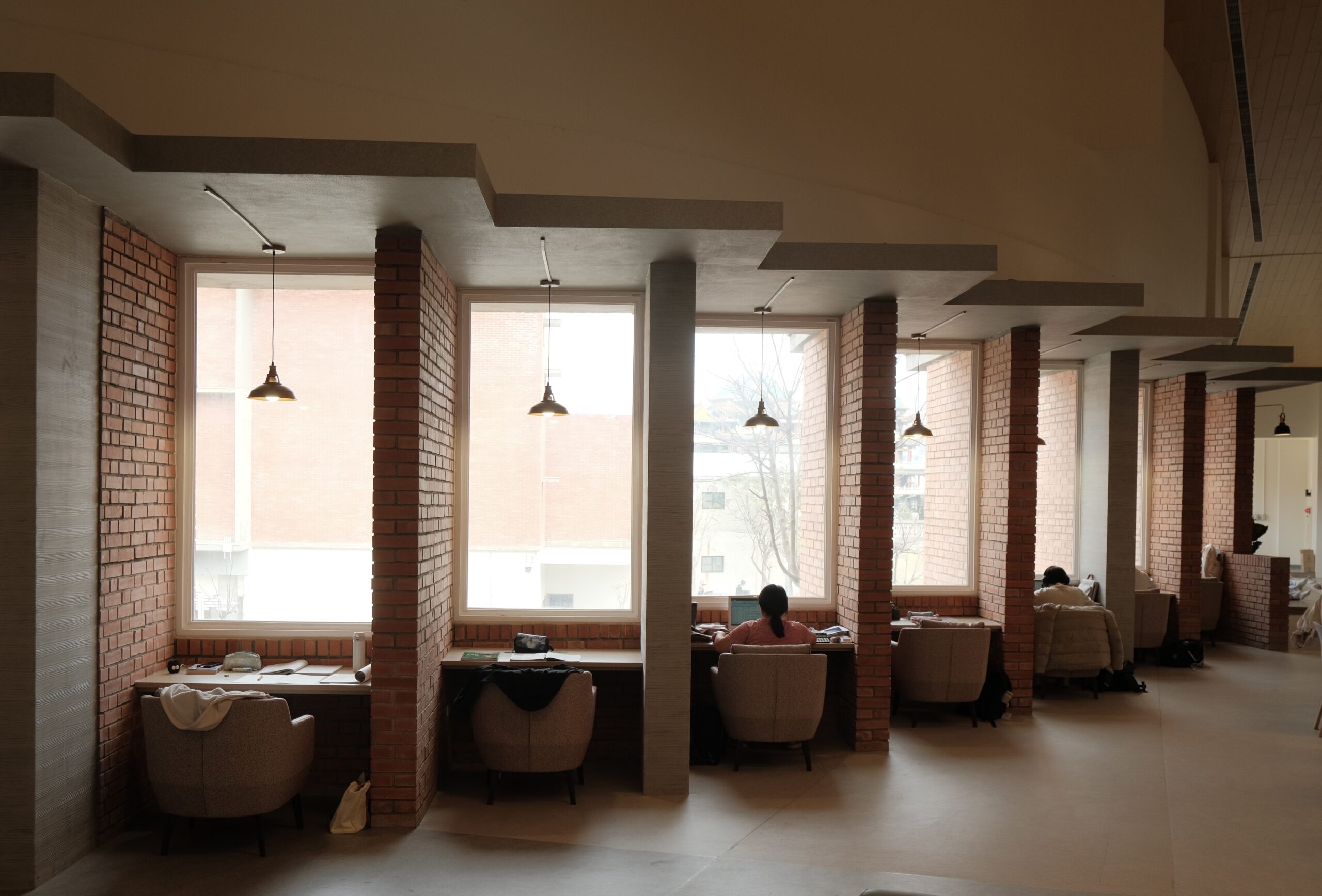
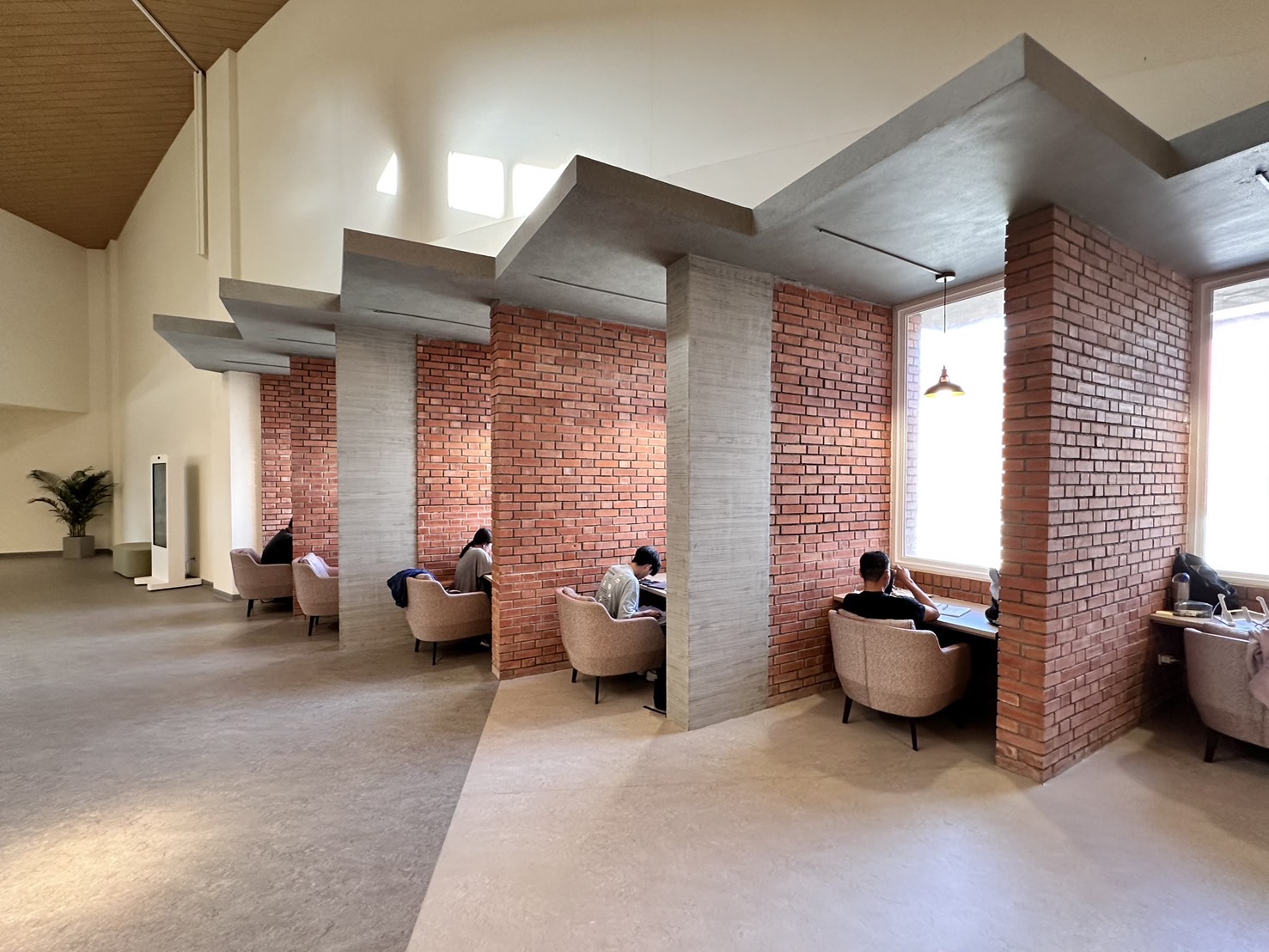
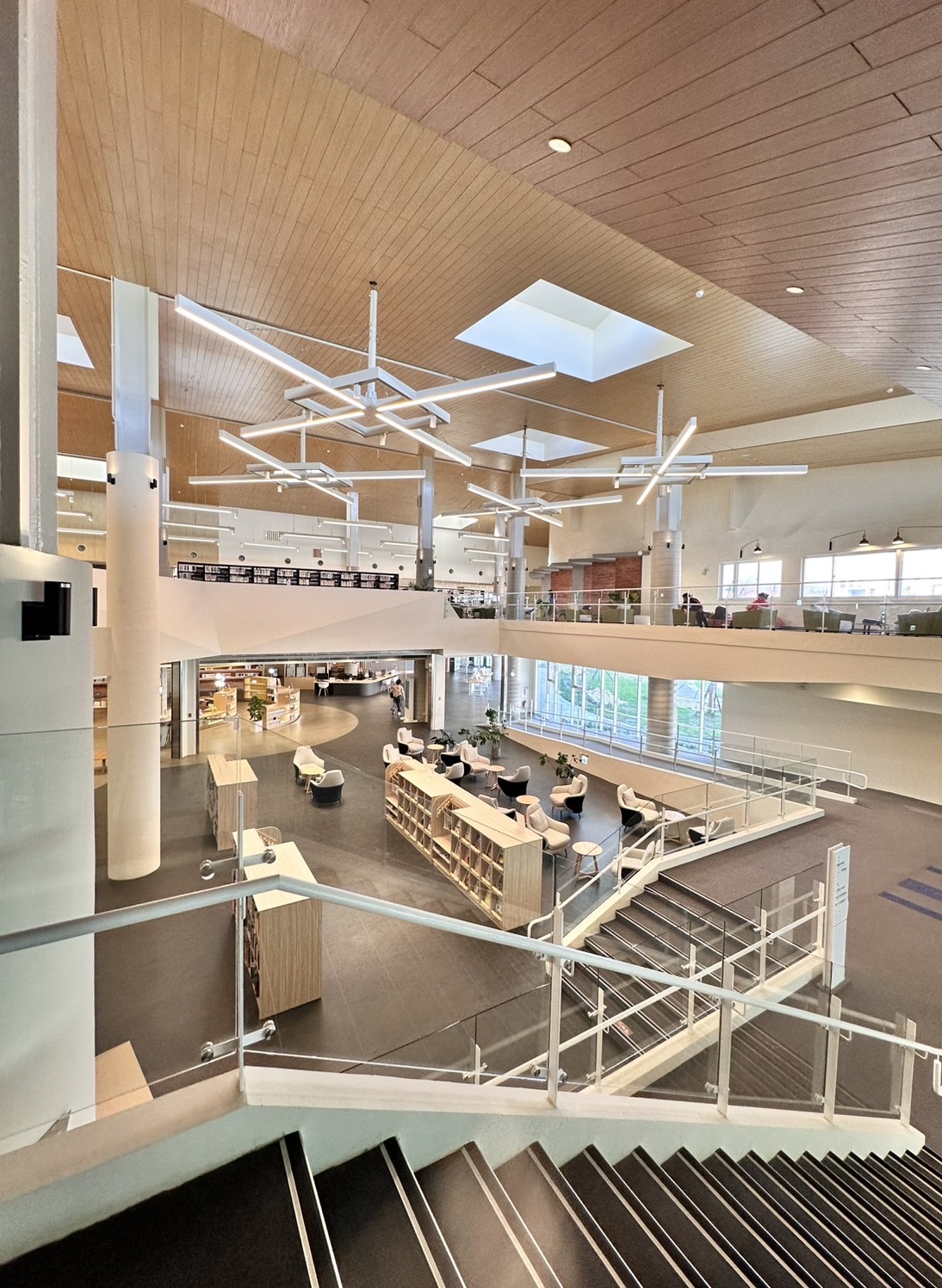
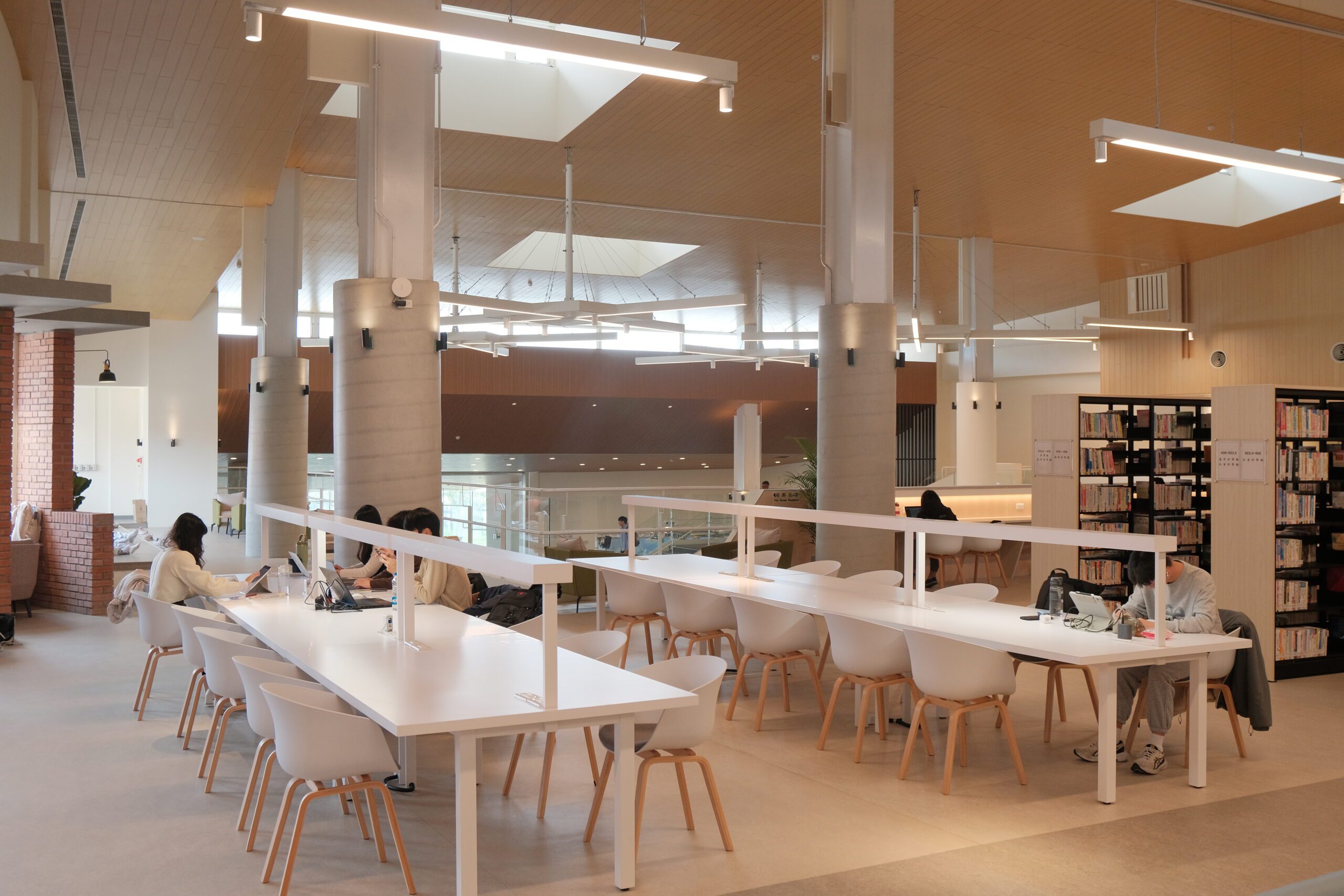
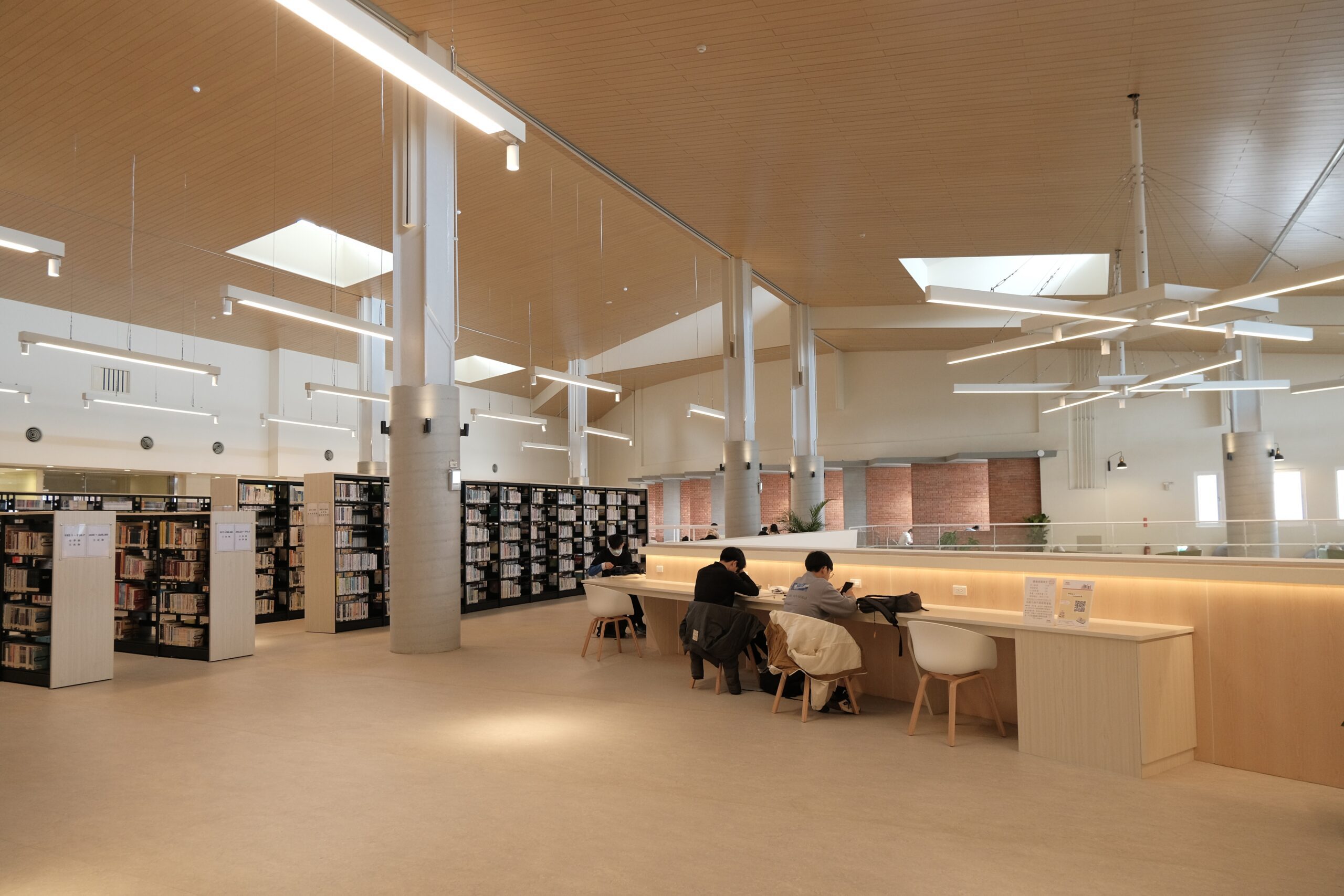
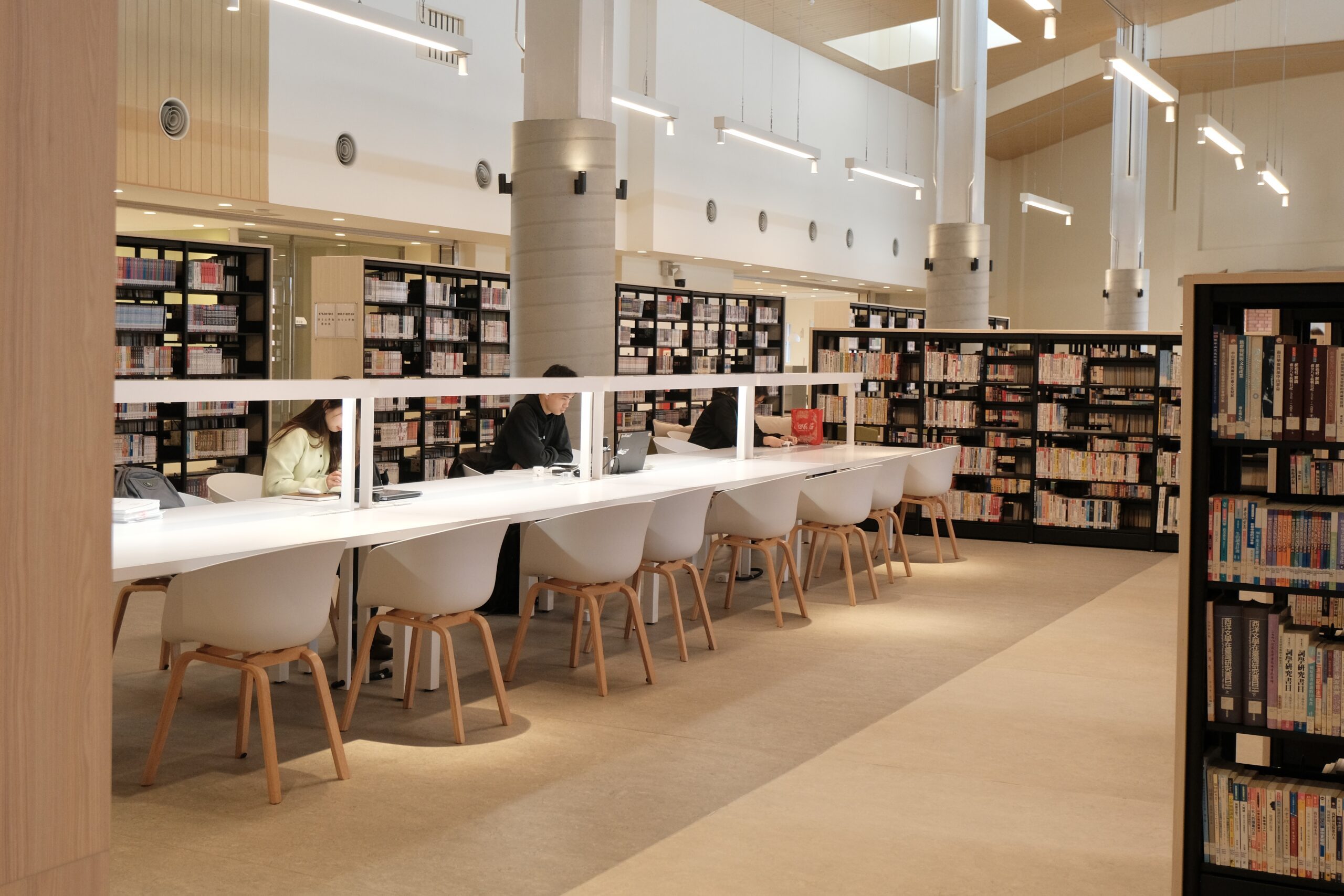
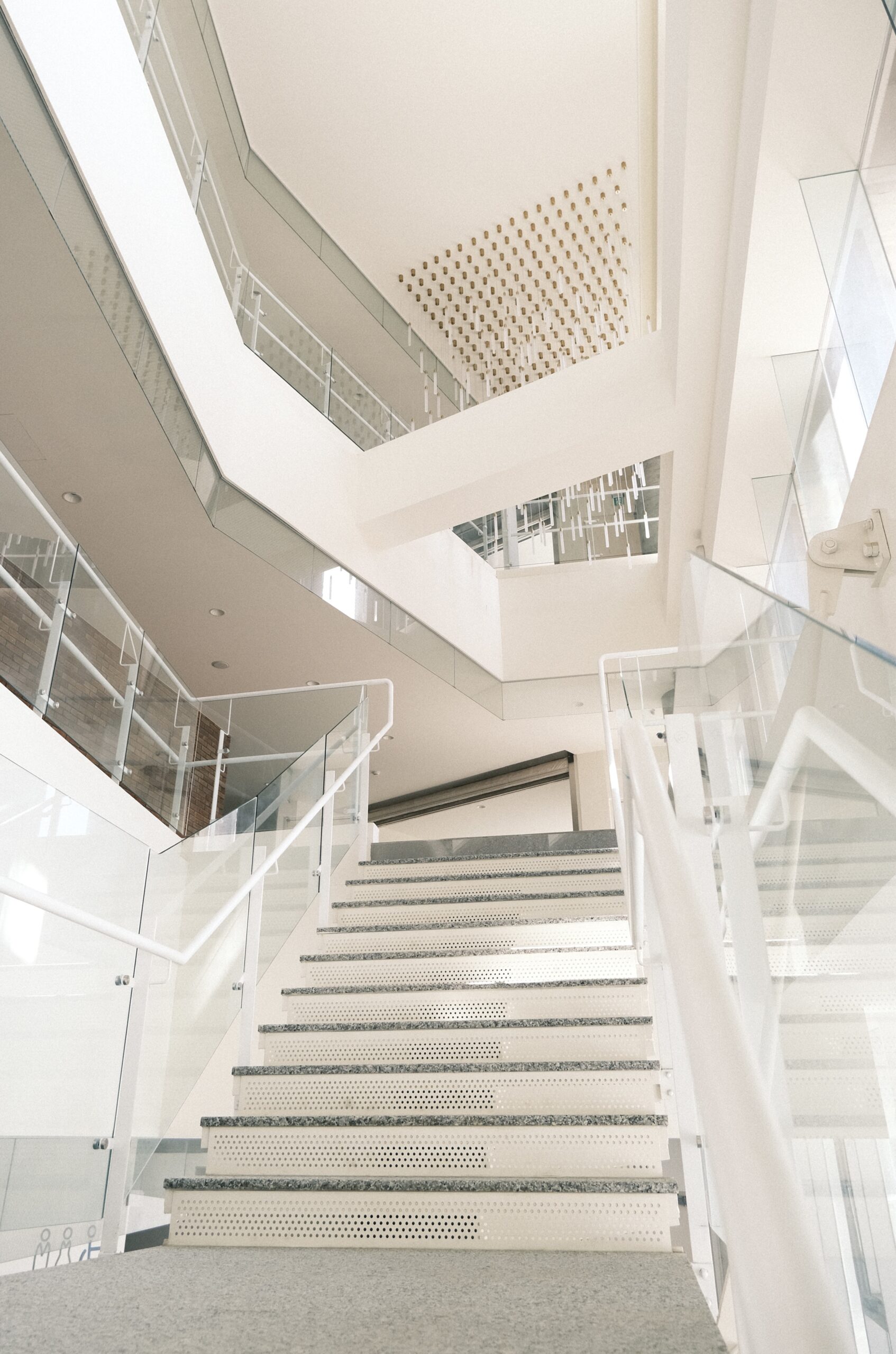
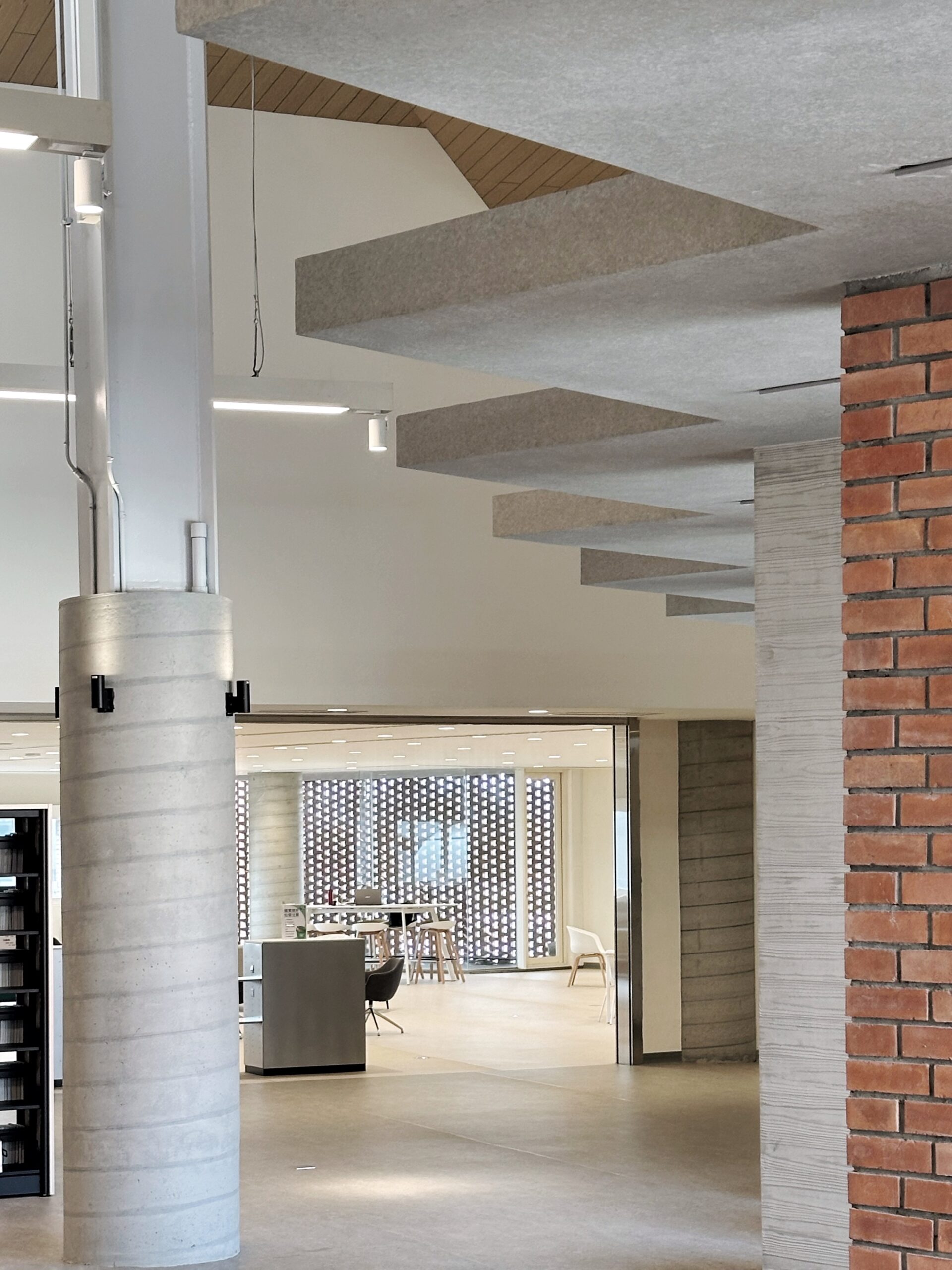
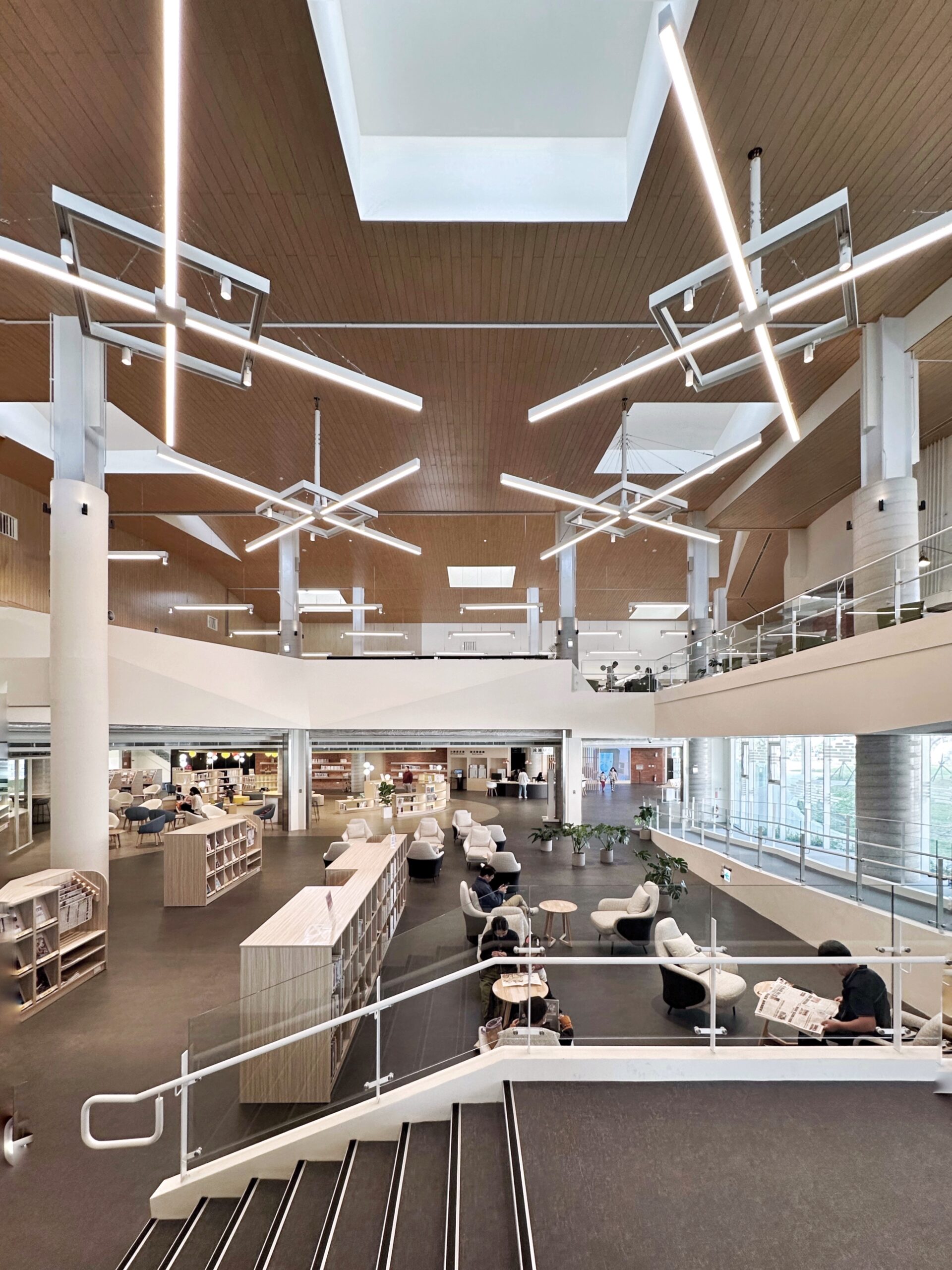
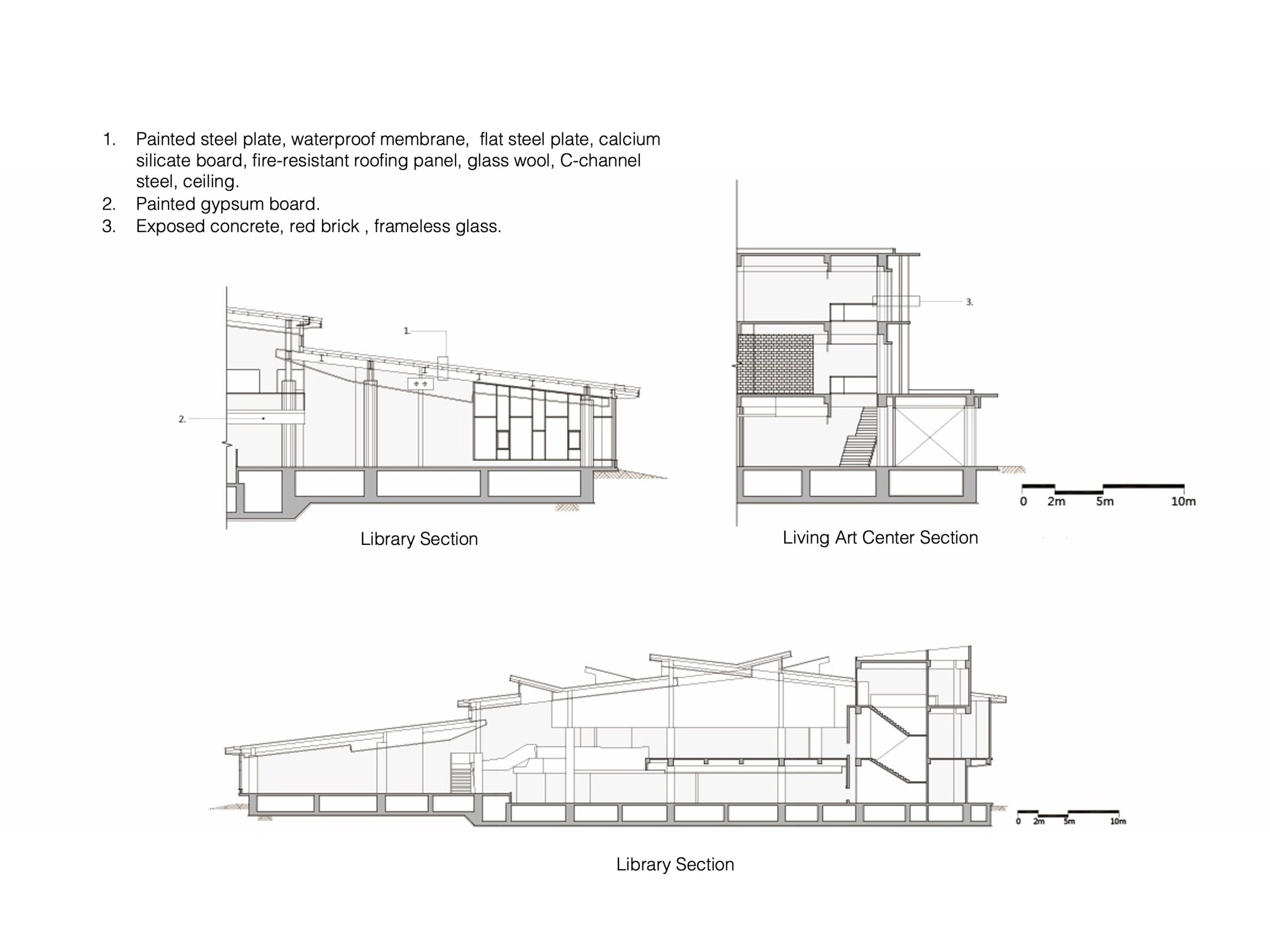
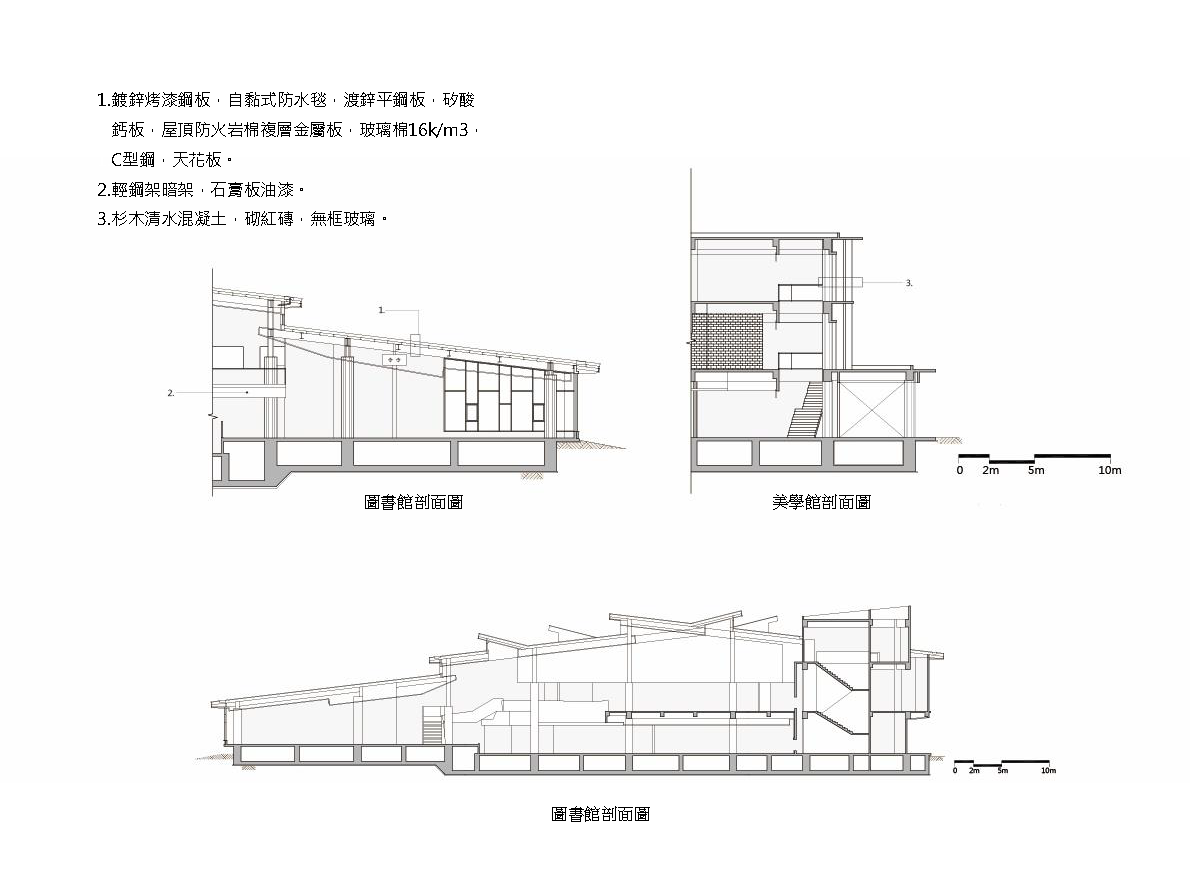
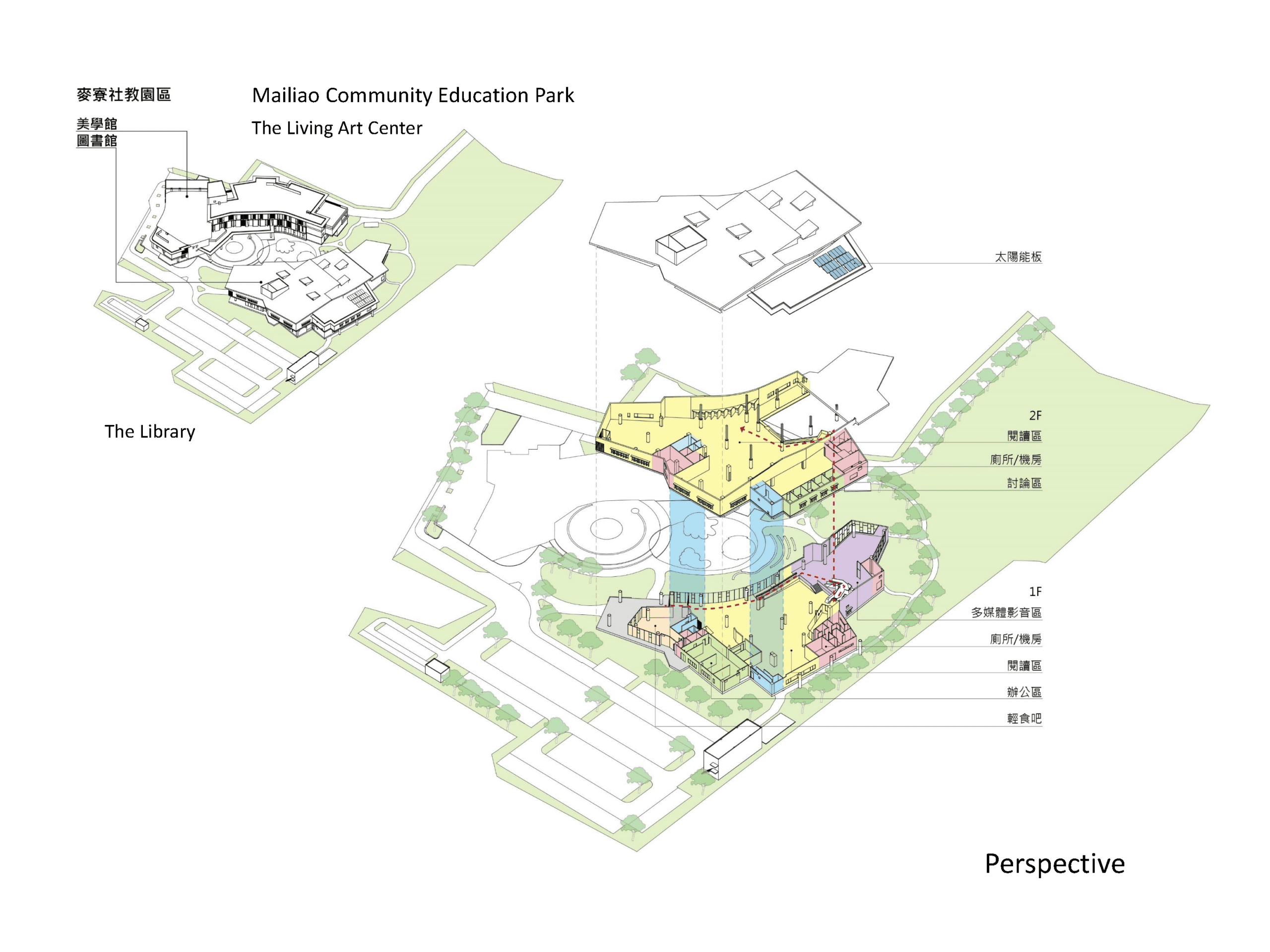
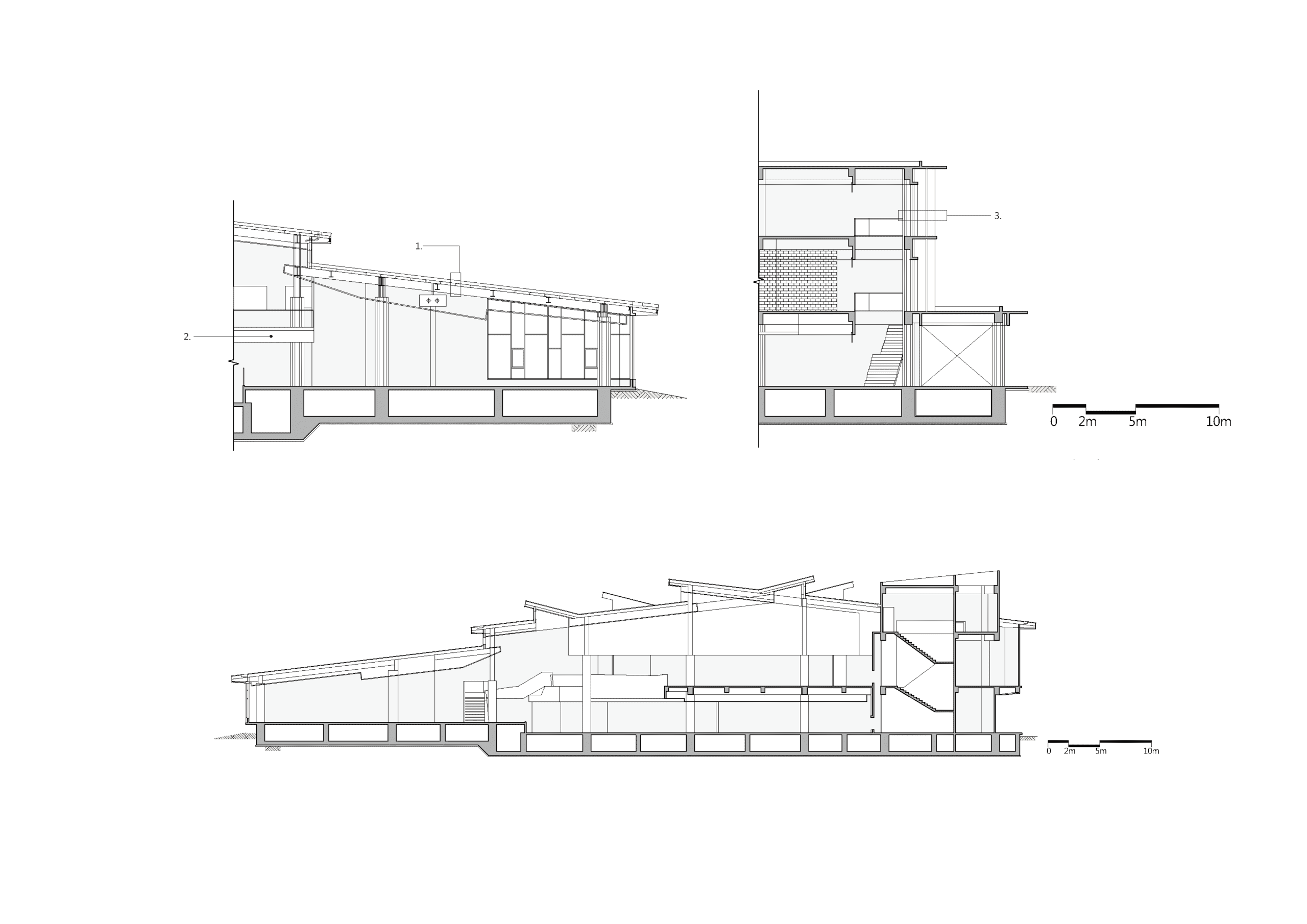
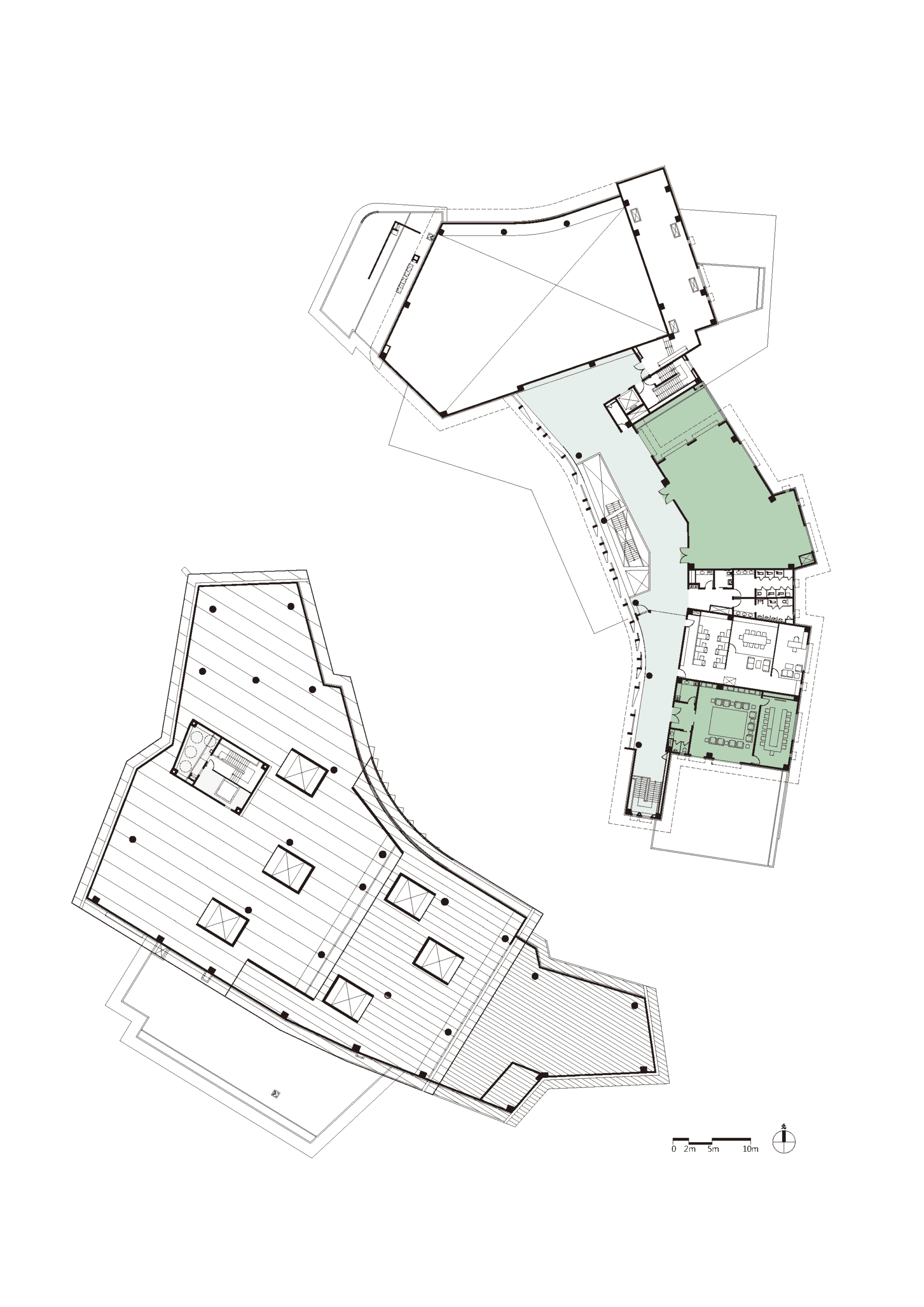
The library expresses “space”. The entrance is deliberately lowered down to the empty core area (elderly and children’s reading). Through zooming, turning, height difference and stairs, the space is separated, and the upper and lower spaces are connected through “walking”. The organic layout creates more Point perspective. The digital reading area is located on the mezzanine, acting as a turning point in front of the upper second floor. During the walk, find a suitable place for yourself to read. Reading can choose to see the surrounding scenery by the window, or look at the inner core area.

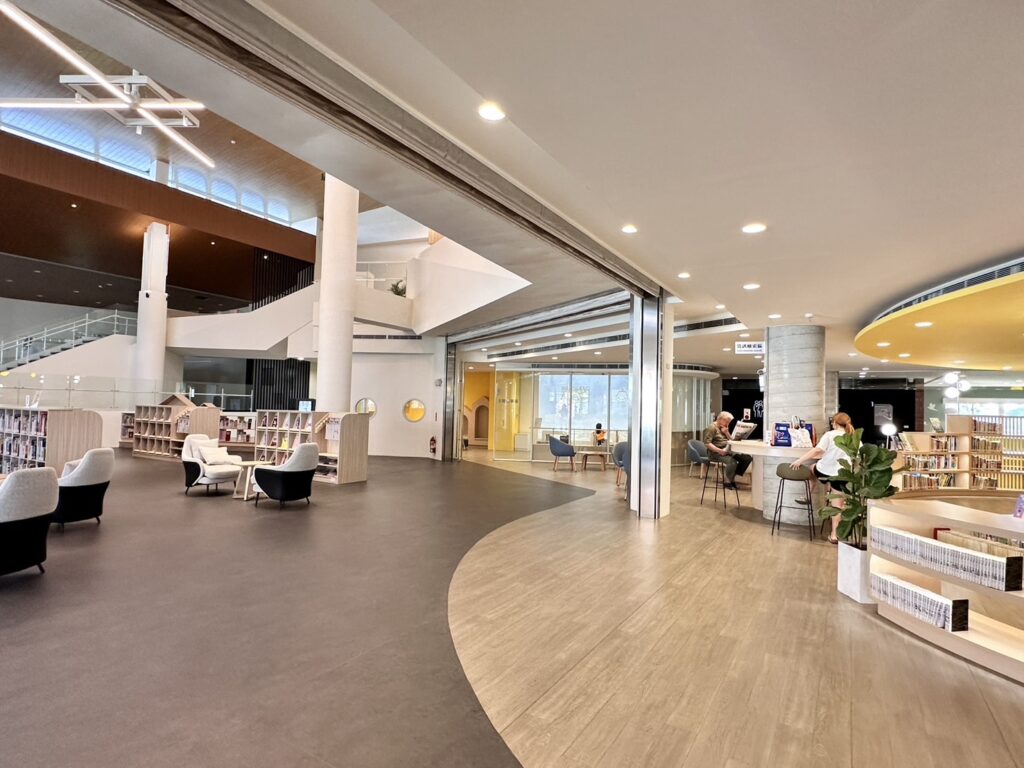
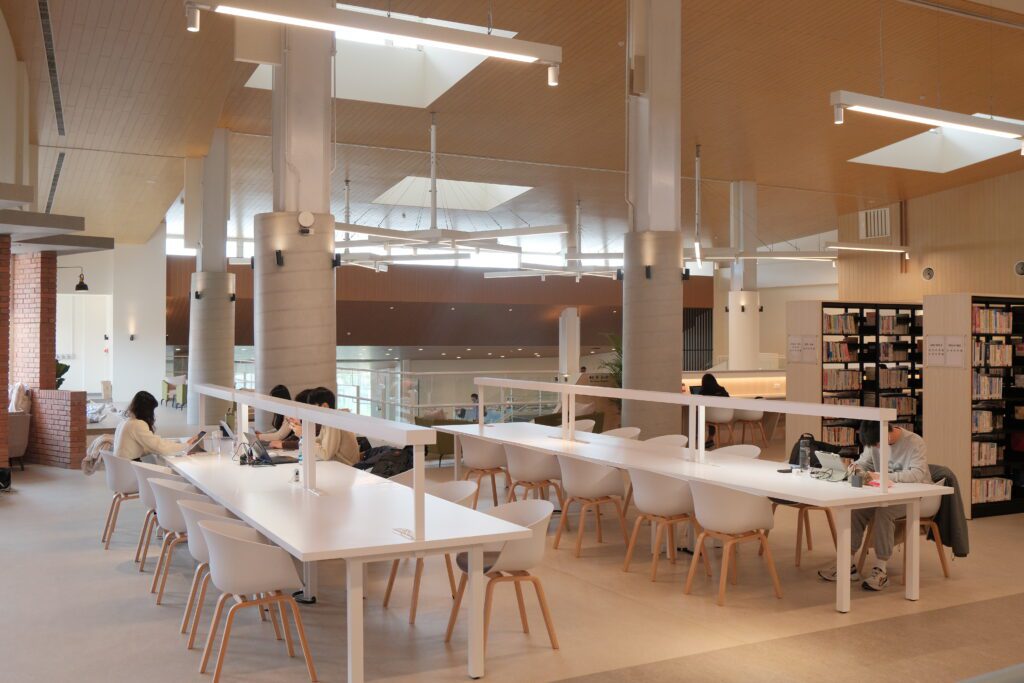
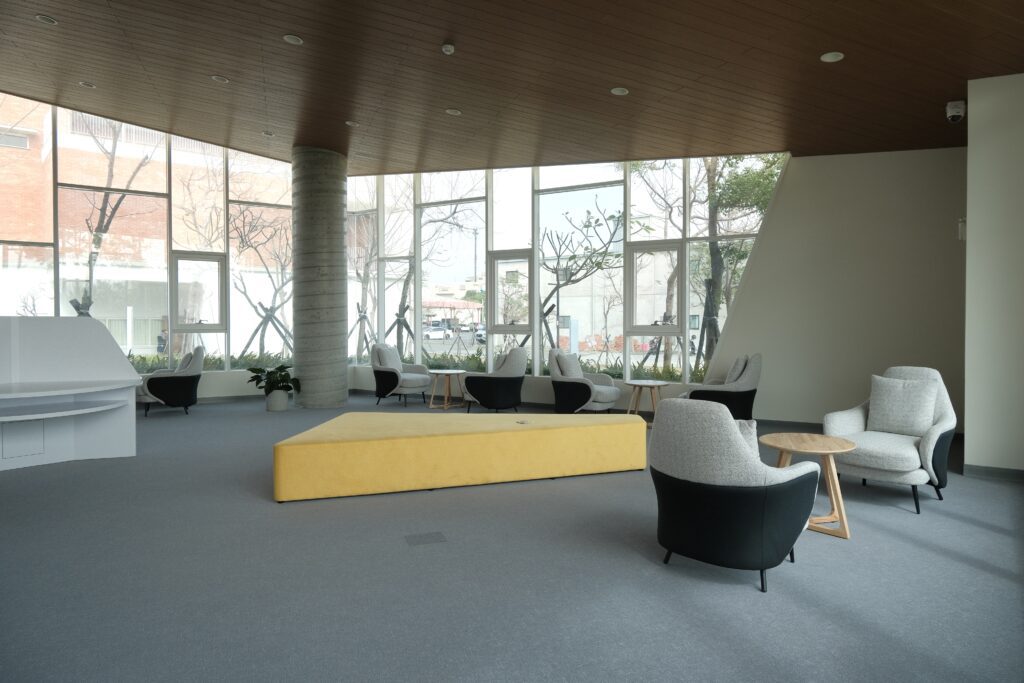
The independent reading area formed by each is integrated under the big roof. The sloping roof and the mezzanine floor are retracted and expanded to form a rich and diverse reading space. Set up a number of skylights, wood grain ceiling decoration with tongue-and-groove ceiling, equipped with lamps, and part of the natural light under the large roof. The purpose is to provide a comfortable reading space.

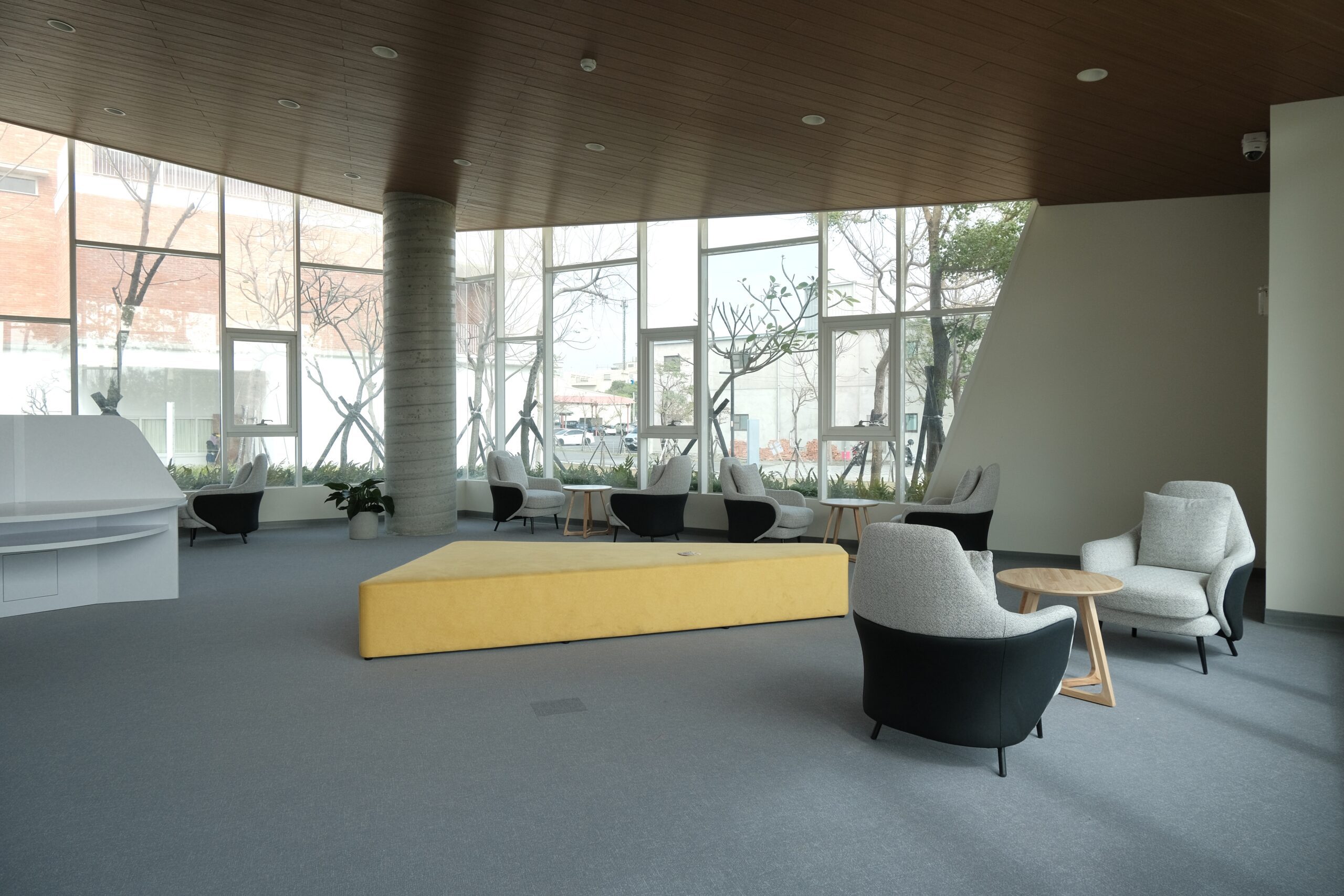
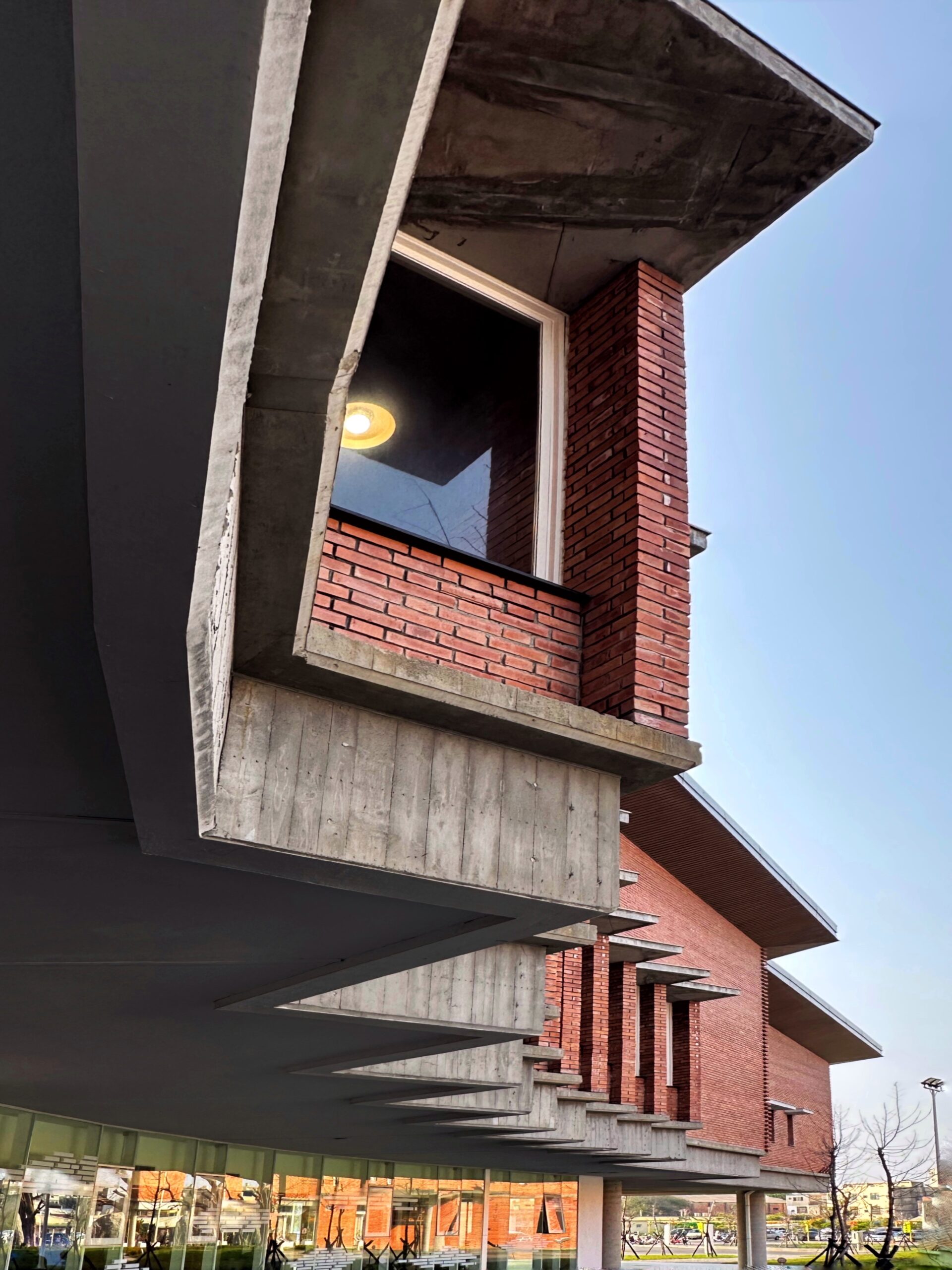
The upper half of the two buildings are laid with heavier red bricks, while the first floor has a deeper shadow, and floor-to-ceiling glass is retreated. The ground floor is deliberately compressed to emphasize the horizontality, and the indoor to the outdoor is emphasized, while the outdoor landscape is introduced into the indoor.

Special treatment on the window frame details, the upper and lower hidden frames enhance its penetration and extensibility. With the double-wall insulation and deep shading design, the building itself has a good energy-saving effect, which is warm in winter and cool in summer.
Project Gallery:
Cite: “Mailiao Community Education Park, Taiwan / Zoom Design Atelier 25 February 2026. GLSN. Accessed . https://theglsn.com/mailiao-community-education-park-taiwan-glsn/