
Author: Pragati Chaswal, Founder, SowGood
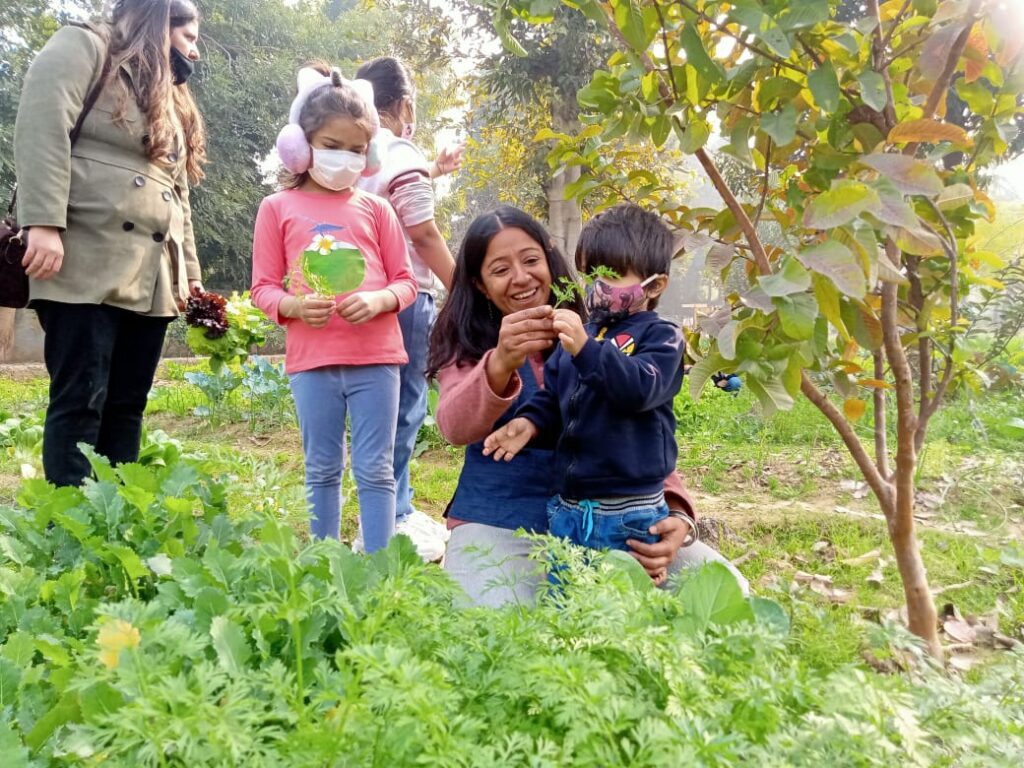
Children today spend more time indoors than ever before. Between screens, schedules, and shrinking green spaces, their bond with the natural world is quietly fading. Yet give a child an open patch of soil, a few seeds, and the freedom to explore – and you’ll see something shift.
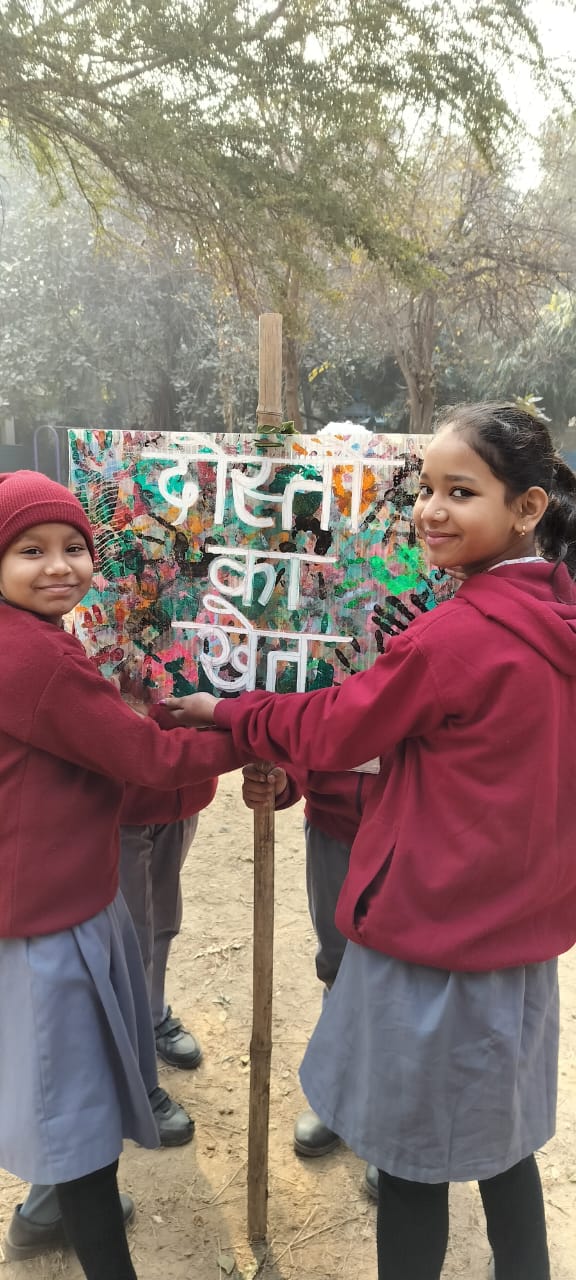
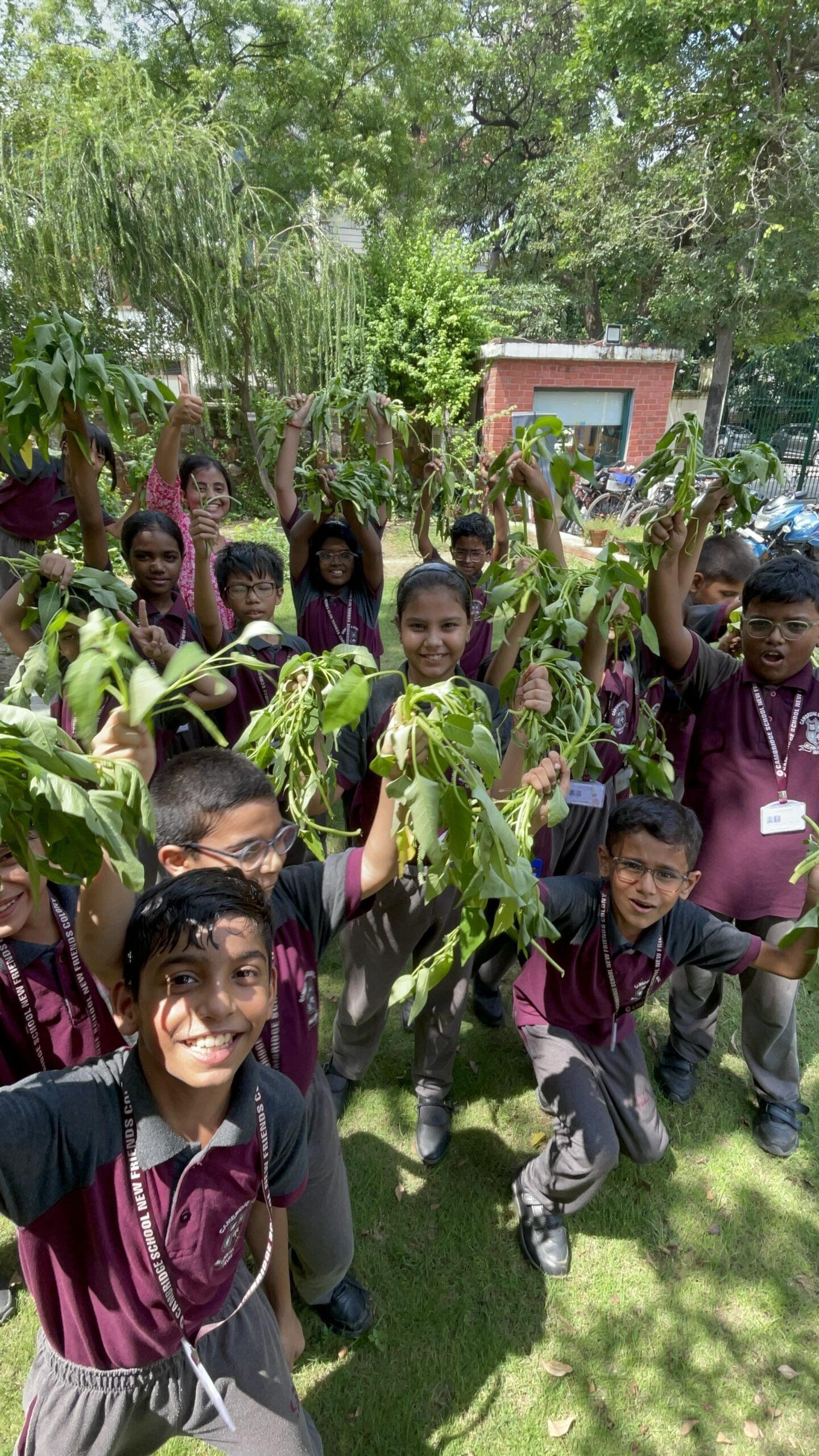
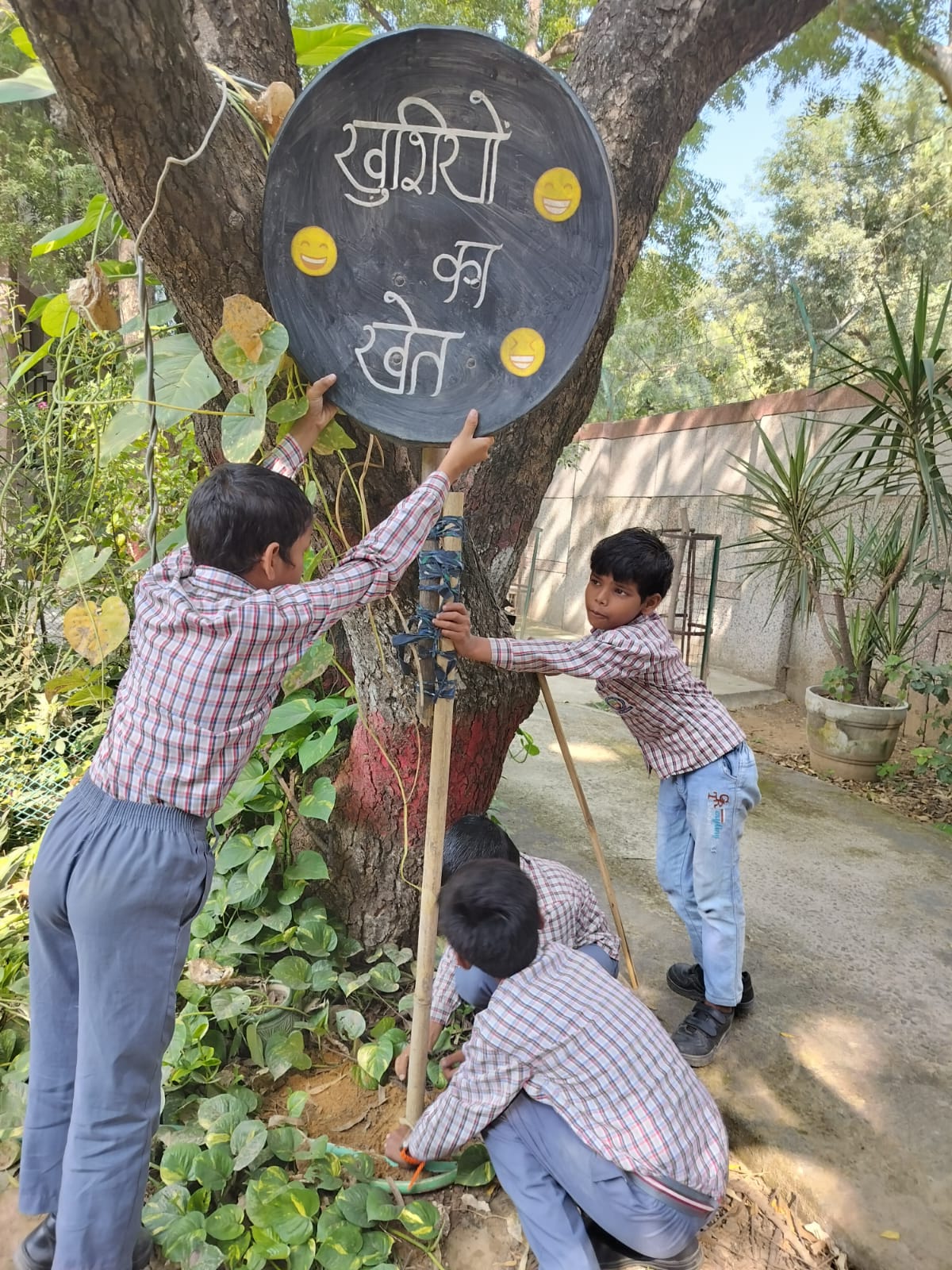
At SowGood, we’ve seen this shift happen across more than 20,000 sq. m. of school farms we’ve built since 2017. Over 74,000 children have grown food with us, diverted 60+ tons of waste from landfills, and harvested over 5,400 kilos of organic vegetables. But numbers only tell part of the story. The real change lies in the way children think, act, and feel when nature becomes part of their everyday learning.
Academic Integration Through Farms
A school farm isn’t just about food. It’s an open classroom where maths, science, art, and even social studies come alive. At one of our schools, children calculated the perimeter of farm beds while designing their plots. They learned about soil pH in chemistry, observed insects in biology, and sketched leaf patterns in art. Suddenly, textbook concepts had roots in real life, literally.
Behavioural Change: Off-Screen and In-Soil
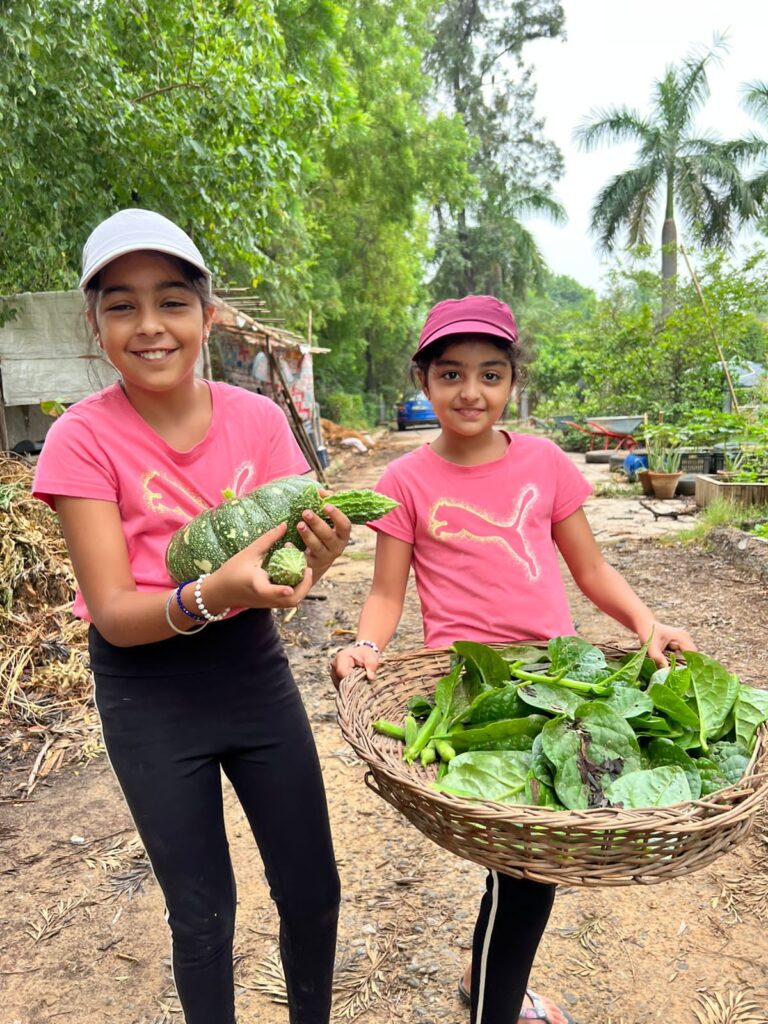
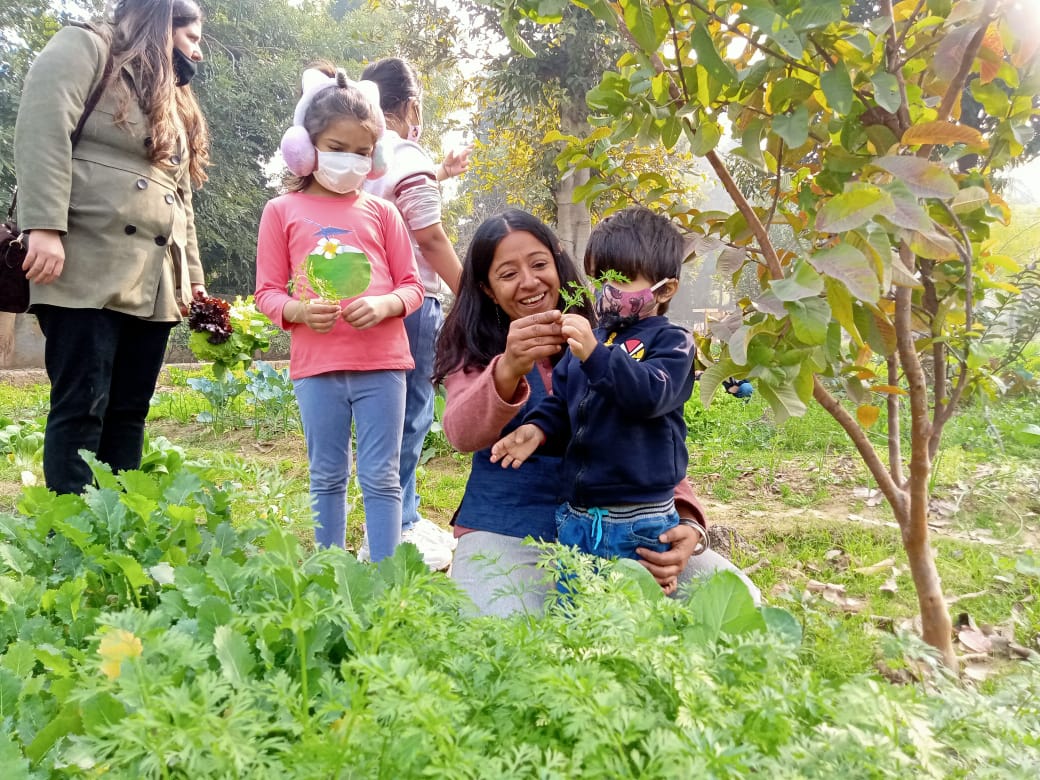
We’ve watched children leave behind phones and video games because the farm excites them more. They run to water their plants, debate over composting methods, and proudly share vegetables they’ve grown at home. These small shifts, from consumers to caretakers, shape behaviours that last far beyond school.
The Vedanya Story
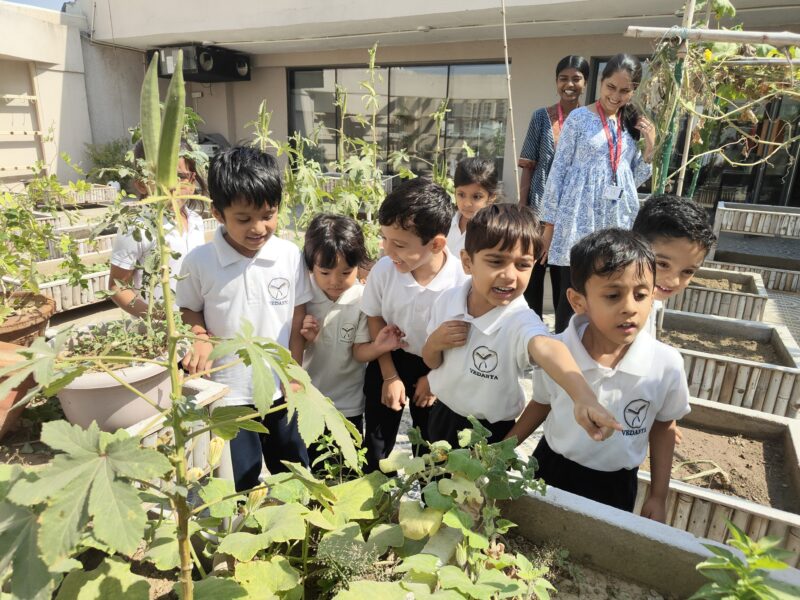
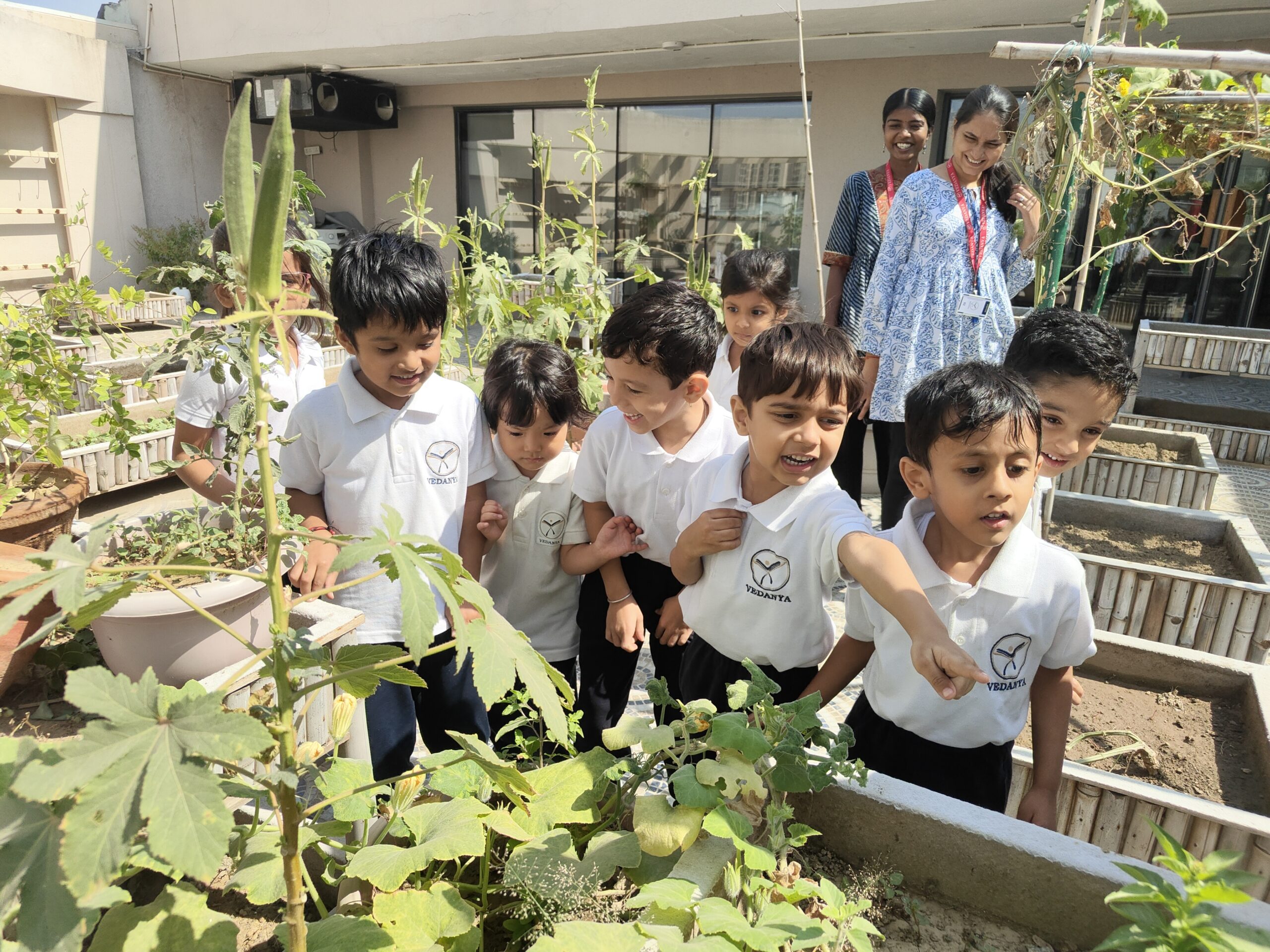
One of the most powerful examples comes from Vedanya School. With limited ground space, the school converted its terrace into a thriving garden. Together, we designed child-friendly bamboo planters, making farming accessible even for their youngest students.
Children as young as 2 years old now sow seeds, make compost, and segregate waste. They’ve grown everything from cucumber and okra to spinach, radish, and even potato. They built an insect hotel, observed pollinators up close, and discovered that every insect, even the tiniest ant, has a role in keeping the farm alive.
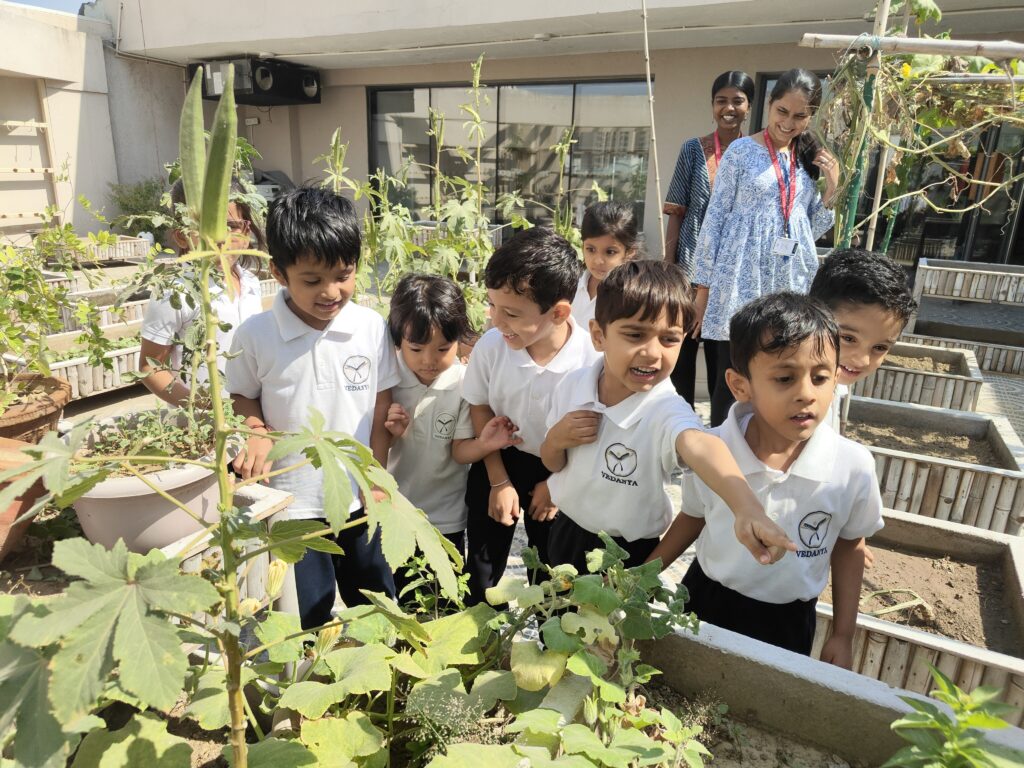
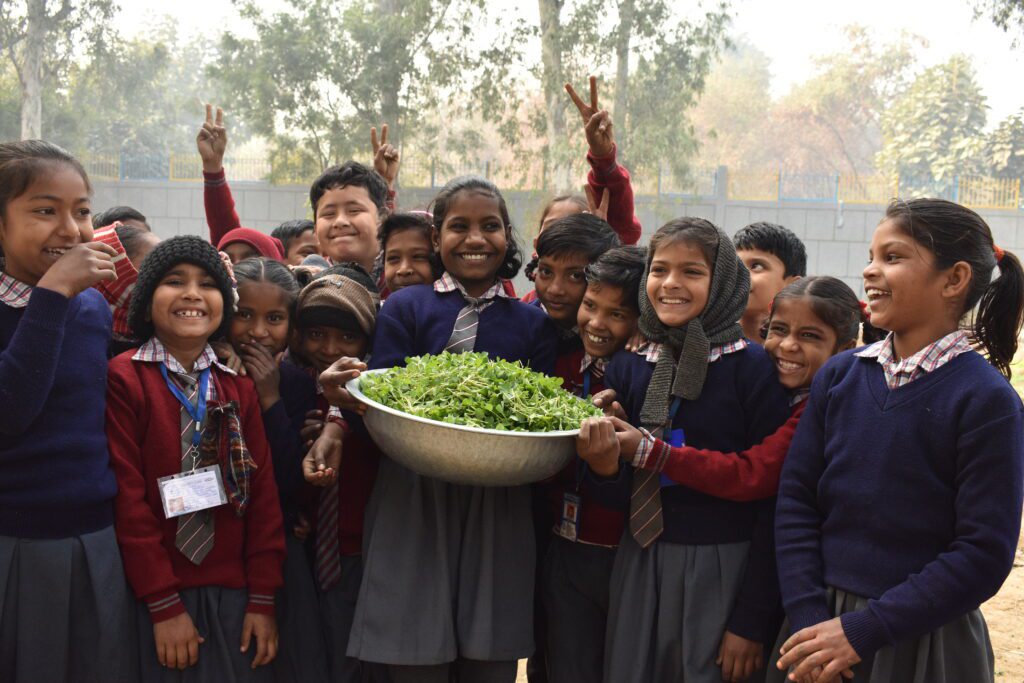
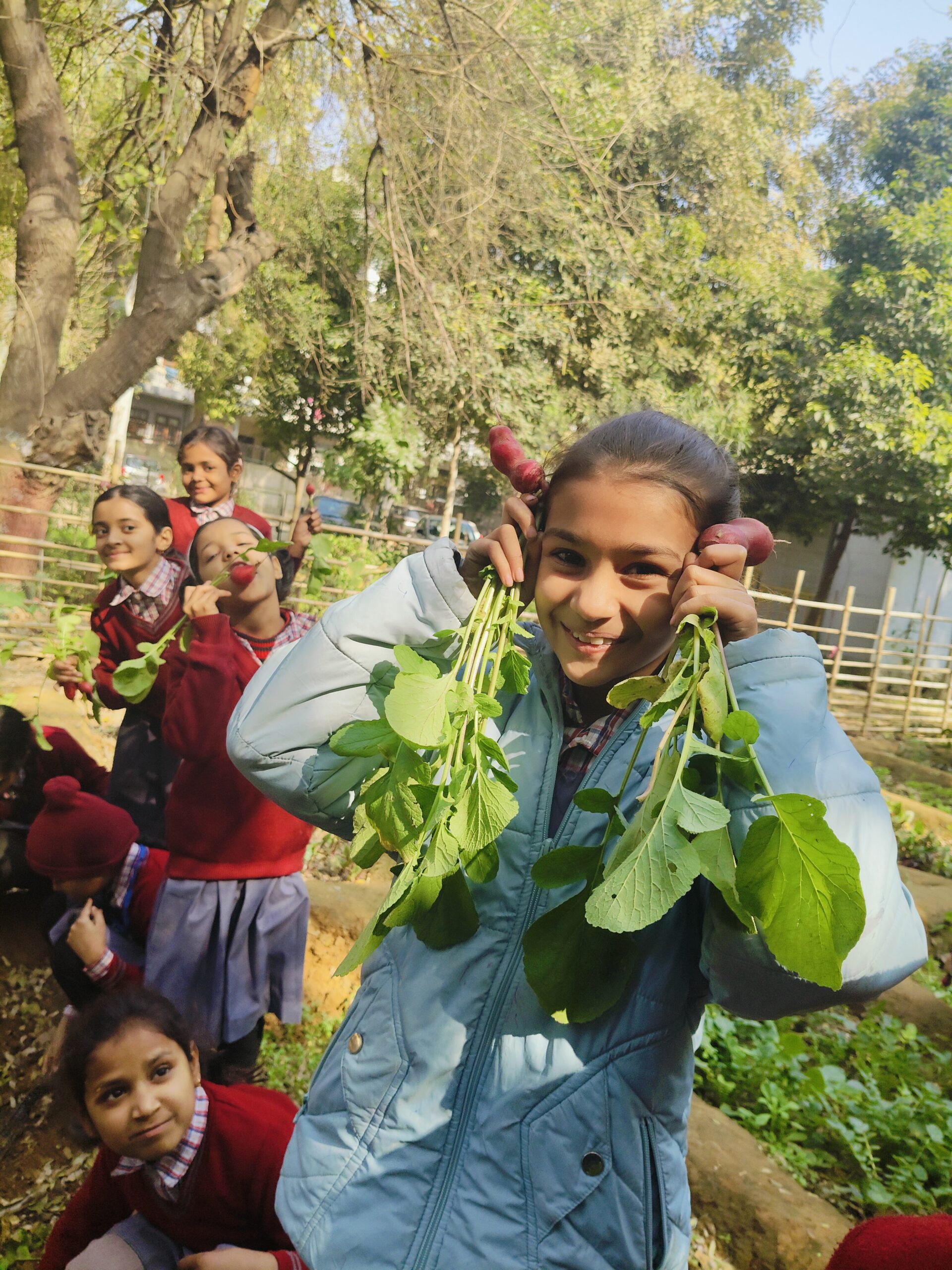
For many, it was their very first time touching soil. The joy of pulling out a fresh radish or saving seeds for the next season is something that stays with them. Today, they’re even upcycling fabric waste into festive decorations — reimagining sustainability as part of daily life.
Our 3-Step Sustained Impact Philosophy
All our programs are rooted in a three-step approach that ensures children don’t just learn for a day, but build habits for life:
Vichaar (Thought): In the first year, children discover the joy of farming and nature. They sow, harvest, share, and begin to respect every being in the ecosystem.
Aachar (Action): In the second year, they reflect on their behaviours — celebrations without waste, saying no to foil, learning to mend and reuse, and practicing waste segregation and recycling.
Prachar (Advocacy): By the third year, caring for the environment becomes second nature. Children start leading projects, influencing peers, families, and communities to adopt greener practices.
Why It Matters
Studies show that our connection with nature has declined by more than 60% in the last few decades. This disconnect is directly linked to rising anxiety, lack of empathy, and unsustainable choices. But when schools create spaces where children can belong to nature, everything changes.
Children who marvel at a butterfly or gently place a fallen snail back in the soil are learning empathy in its purest form. They are growing up to be resilient, curious, and environmentally conscious – traits the world urgently needs.
If we want a generation that is not just knowledgeable, but also kind, creative, and responsible – we must give children back their soil, their seeds, and their space to belong to nature. Because when children learn to care for the earth, they also learn to care for each other.
Project Gallery:

The views expressed in this article are those of the author and do not necessarily reflect those of GLSN.