
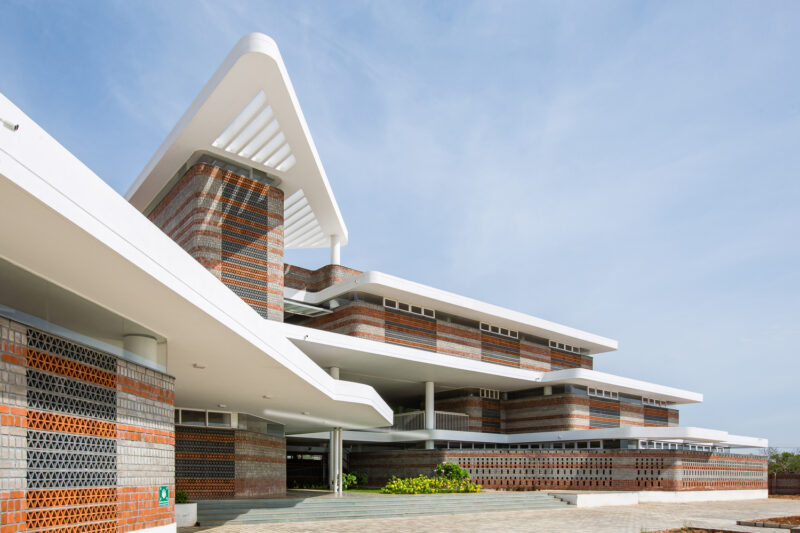
Shared by the architects upon our invitation.
Rane Vidyalaya CBSE school is an educational campus for K12 and a CSR initiative by Rane Foundation India Pvt. Ltd, a leading industrial conglomerate. Theerampalayam, the rural region where the school is located, has no proper educational institutions that offer quality learning. The closest city, Tiruchirapalli which is a Tier-II city in the state of Tamil Nadu, India, is 20 kms away. Neighborhood districts are a mix of small rural villages whose occupation is agriculture and unskilled labor. The project was envisioned as a whole but executed in two phases. Phase 1 was completed in 2018. Considering the good response received from the local community, the Phase- 2 development of Rane Vidyalaya commenced in 2020 and got completed in 2021. Phase -1 caters to primarily the kindergarten and Phase- 2 caters to the middle and higher classes. The intent was to create an infrastructure that would have a positive social impact on the local community and also showcase the core values of Rane.
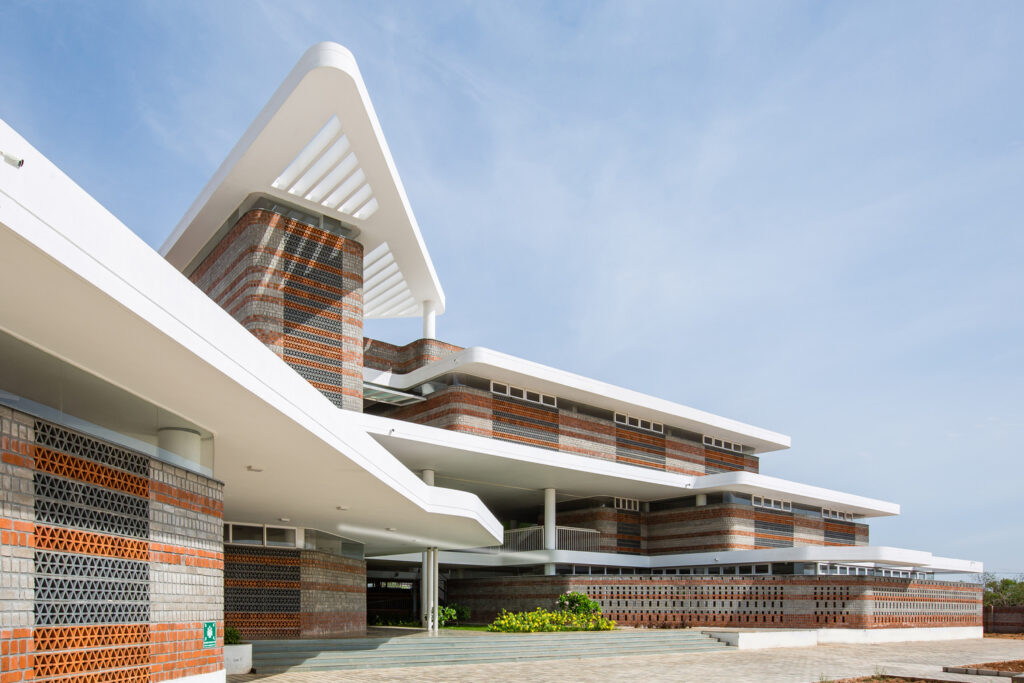
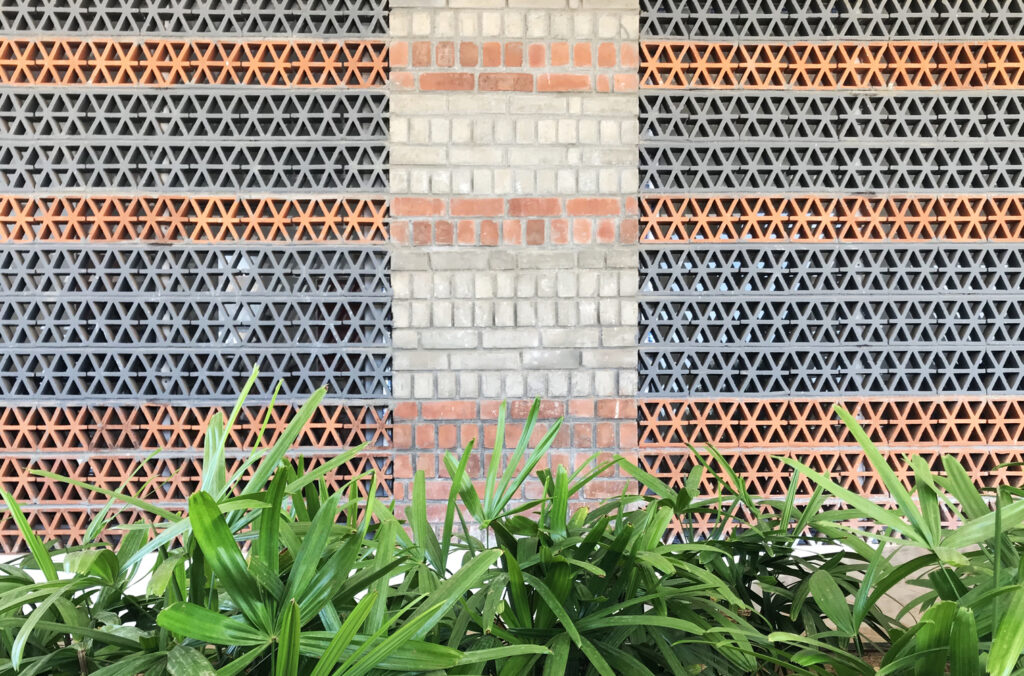
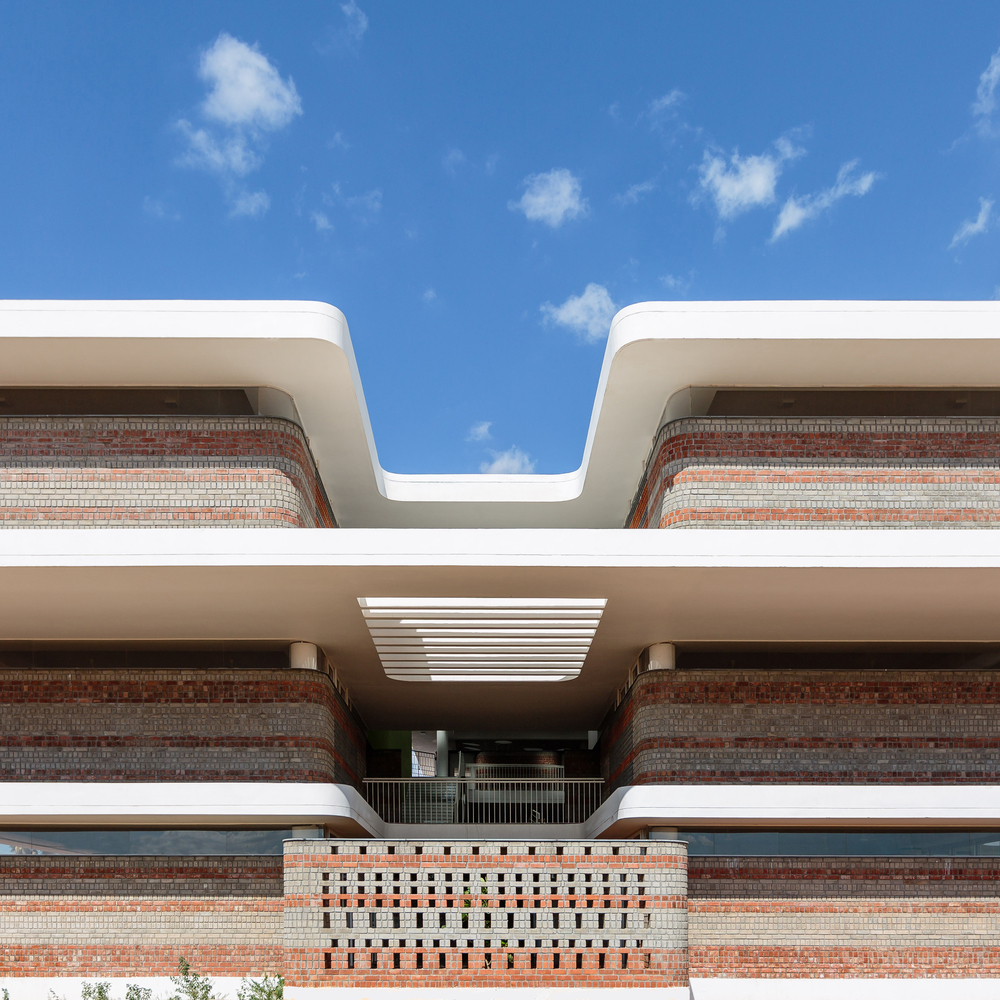
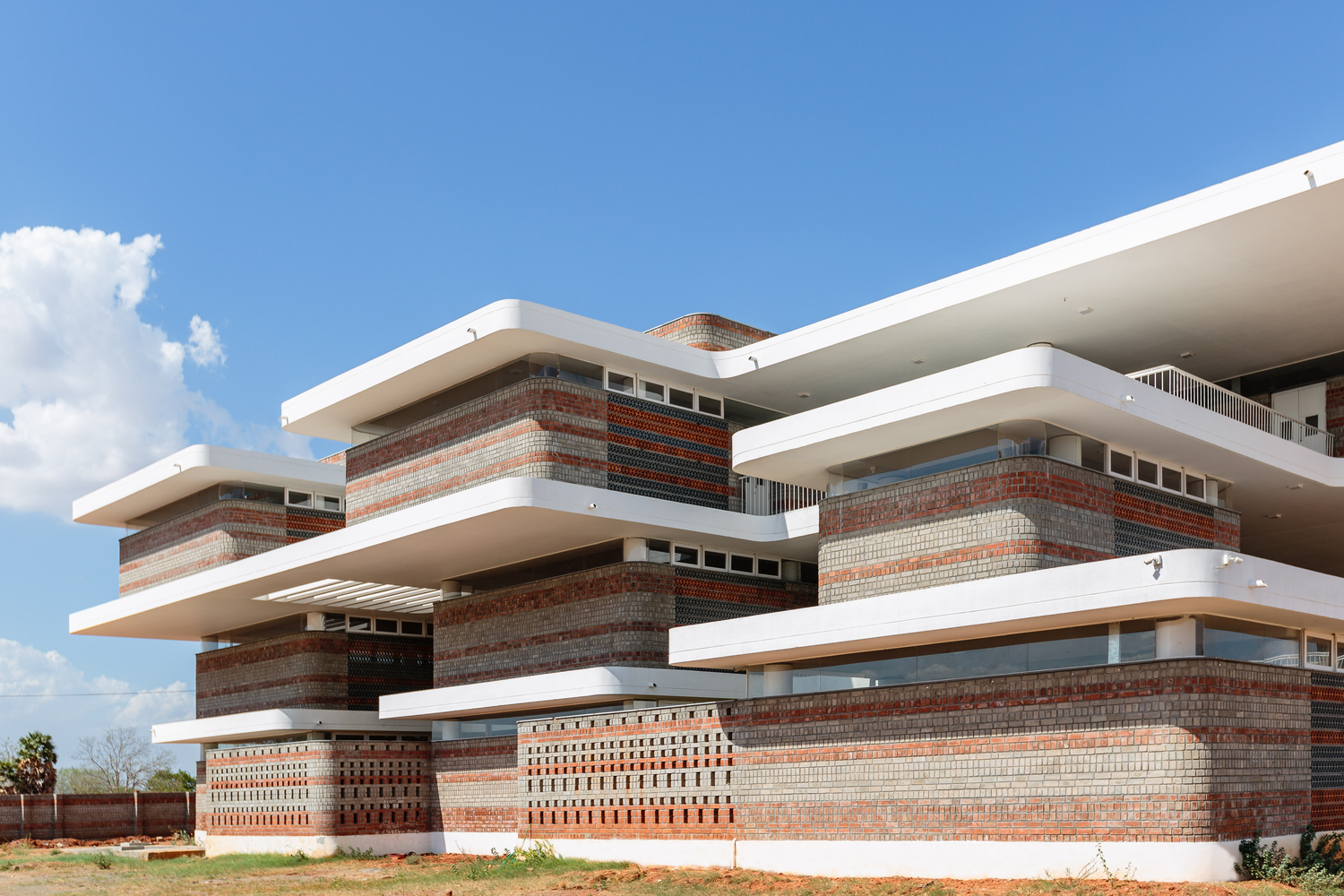
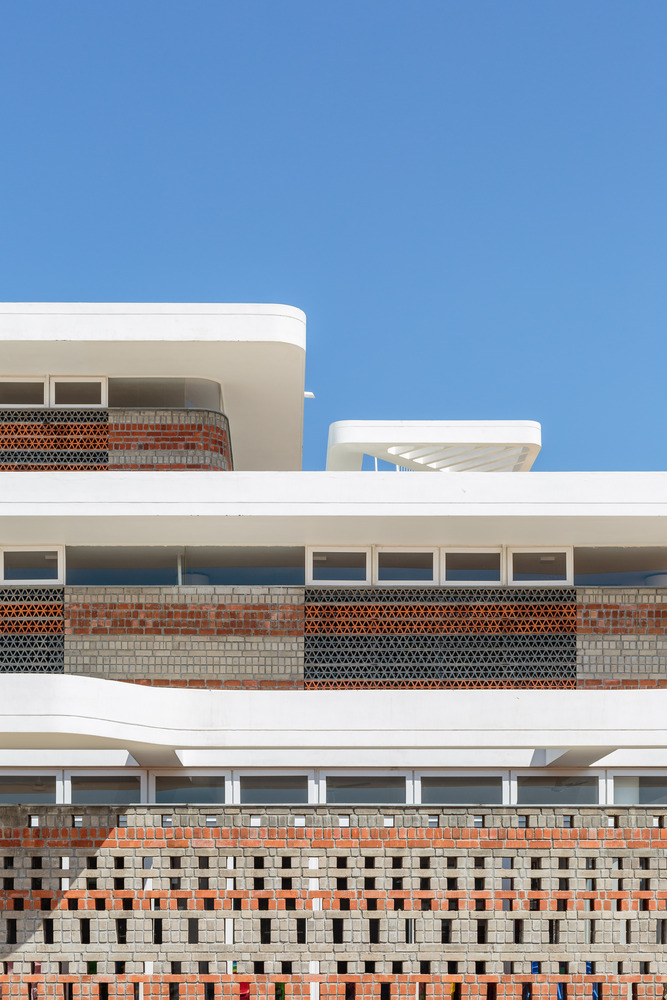
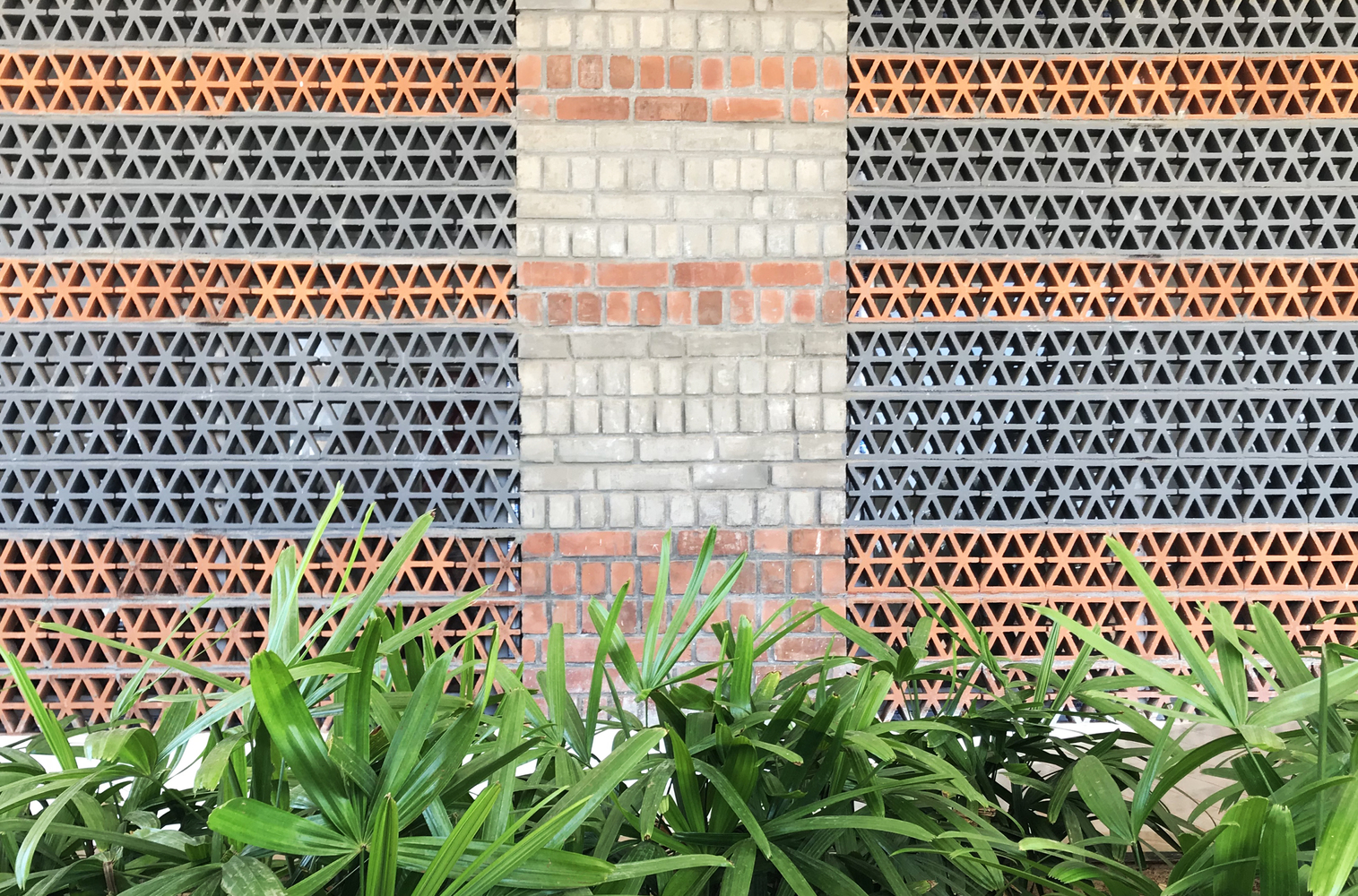
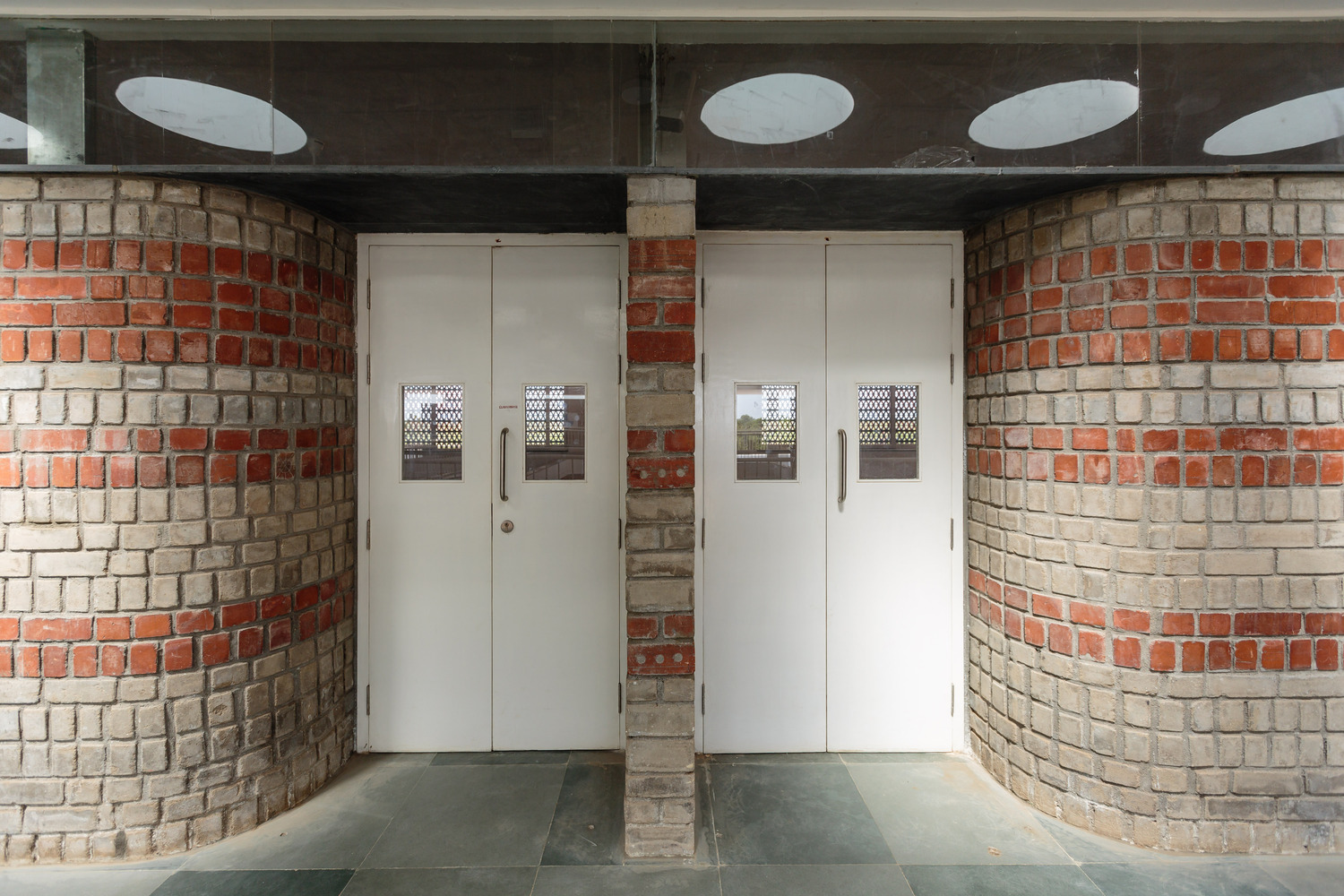
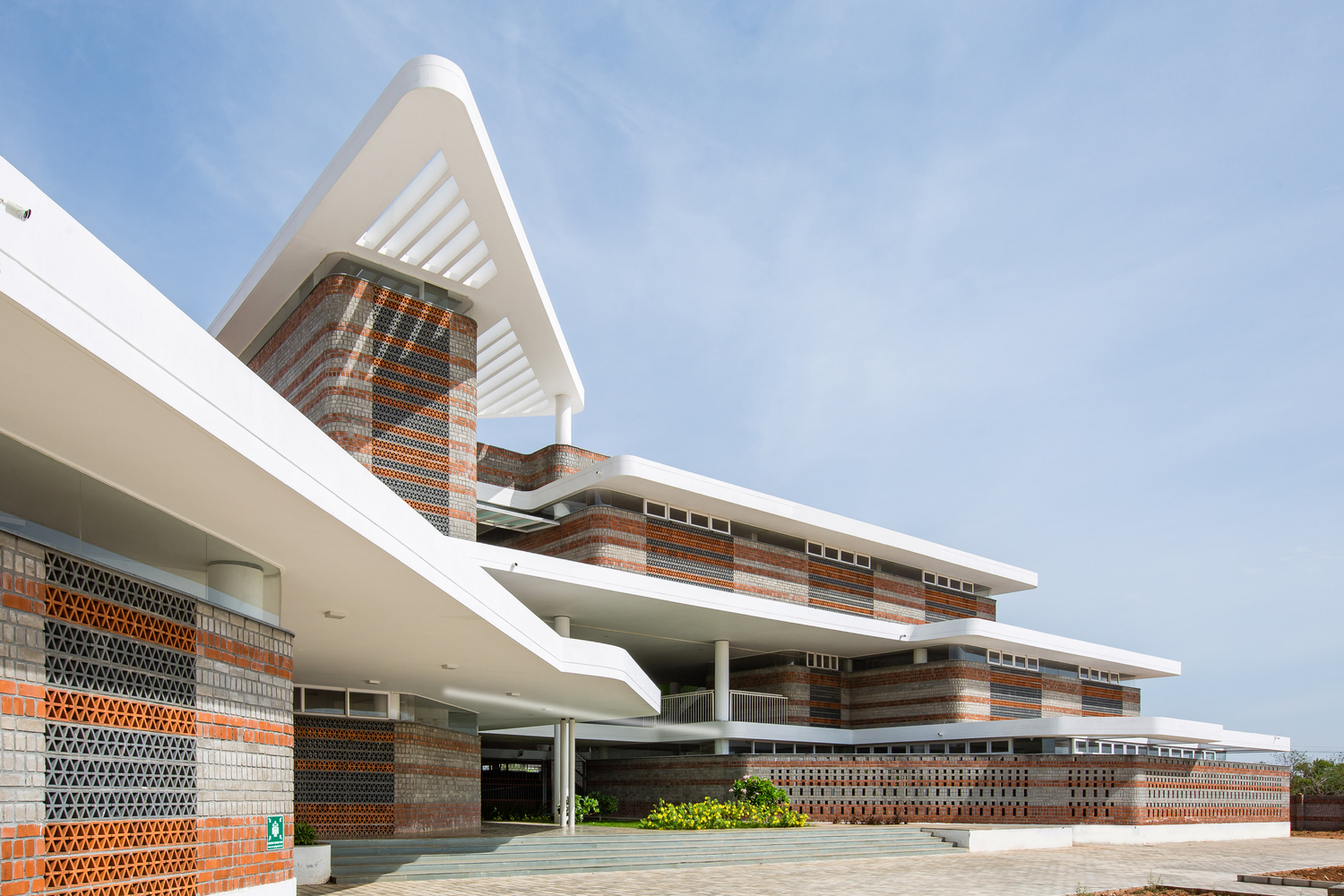
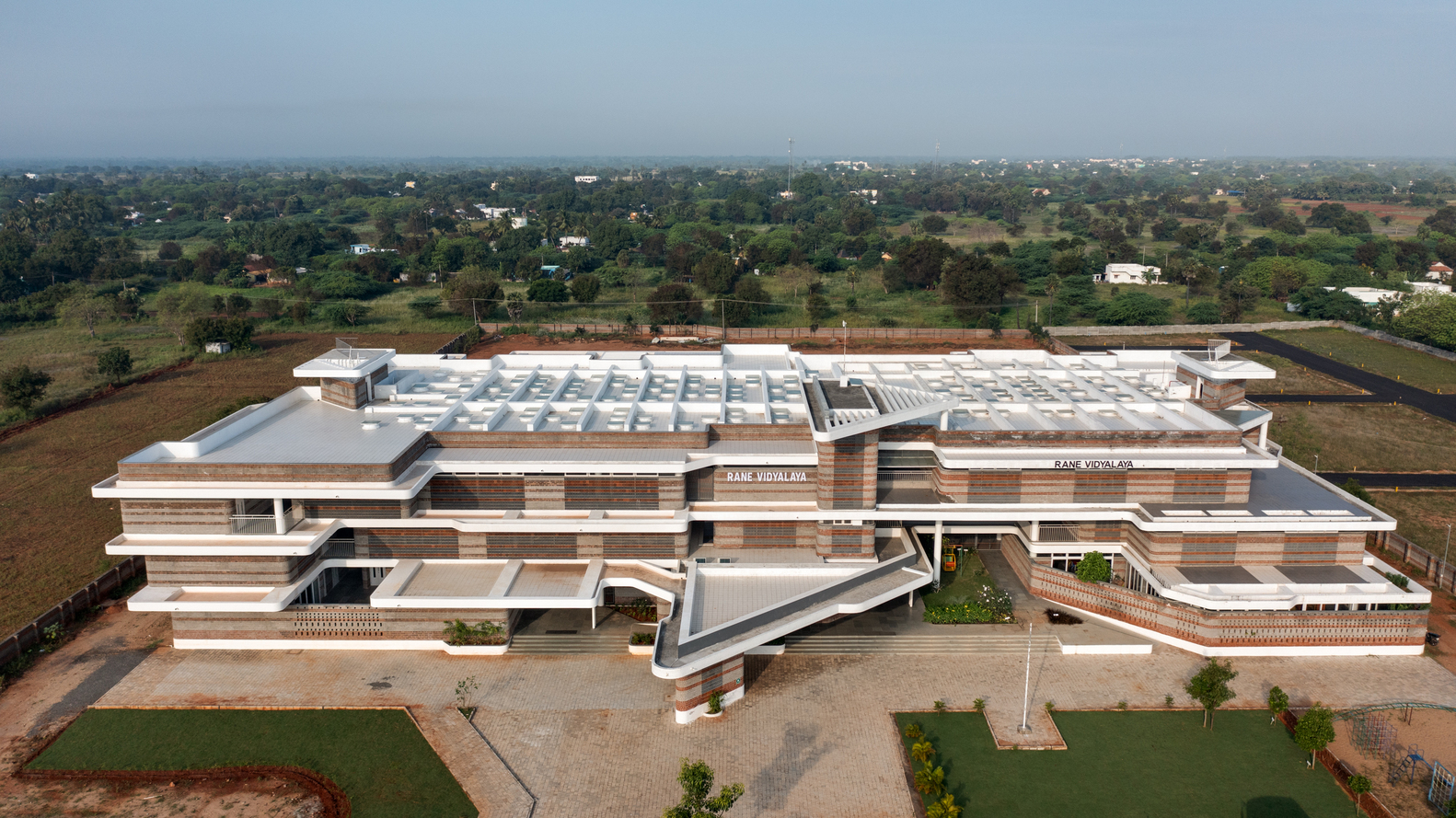
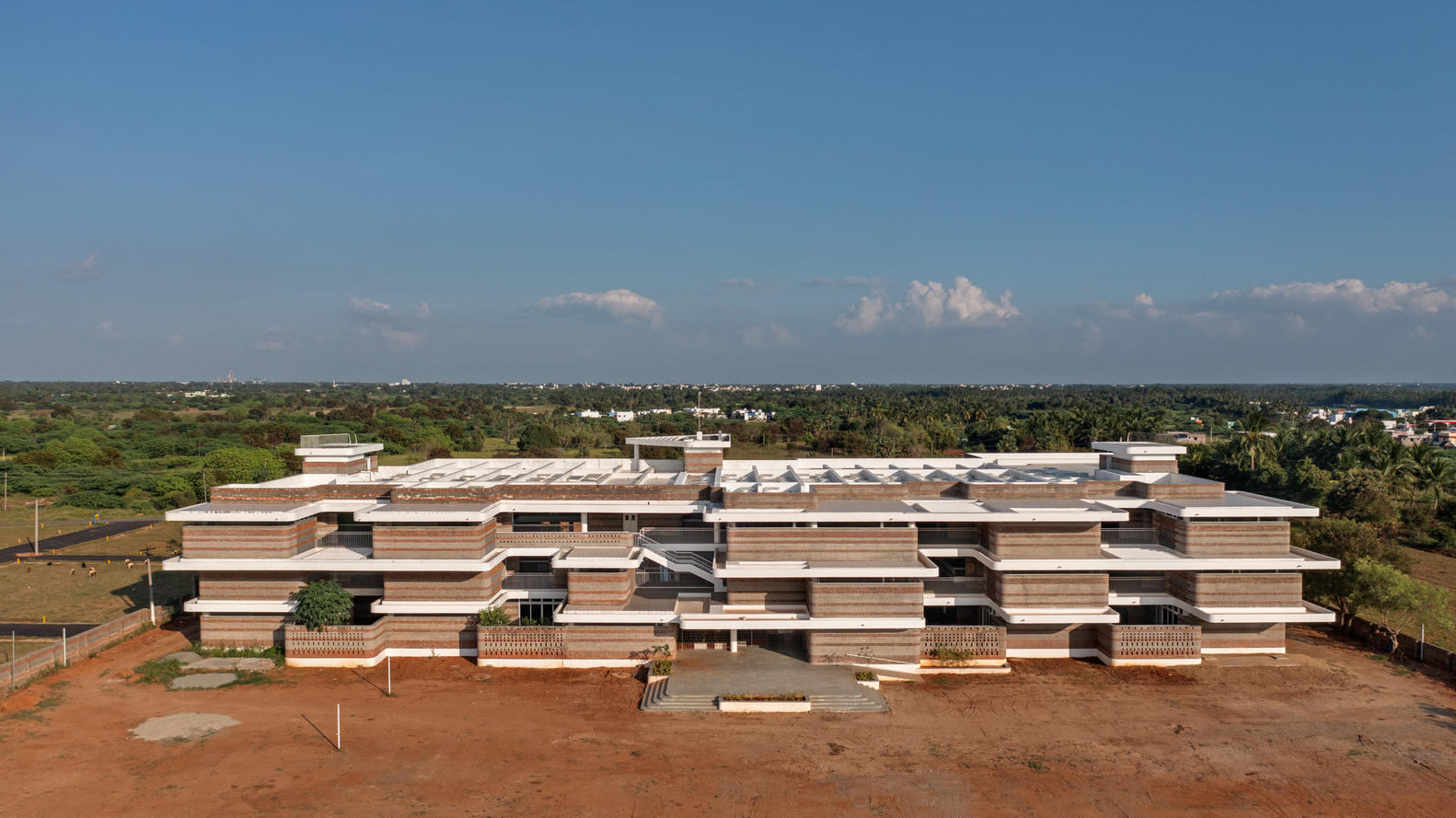
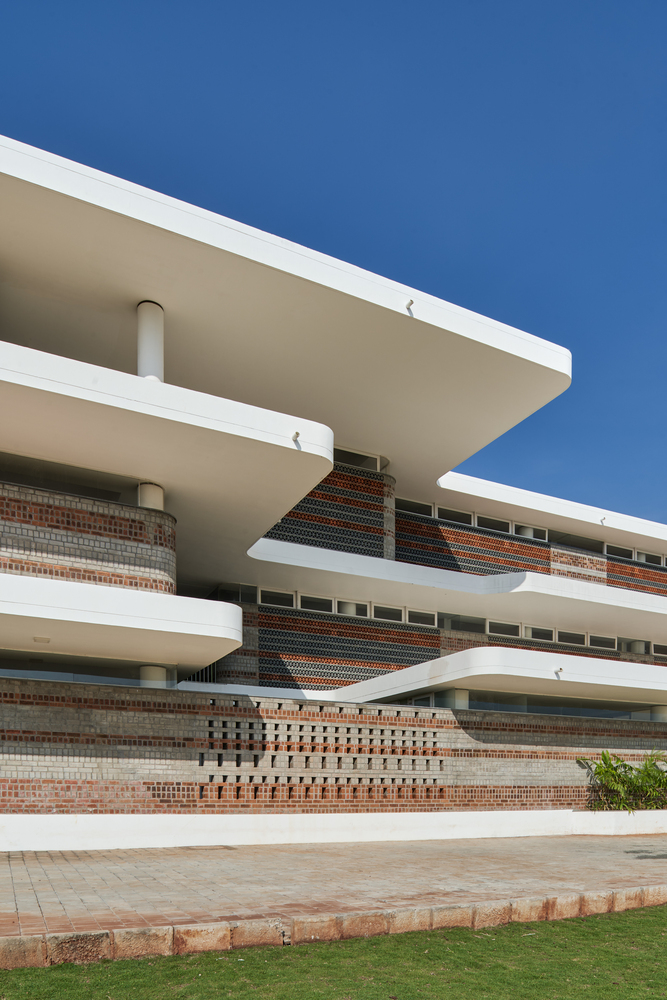
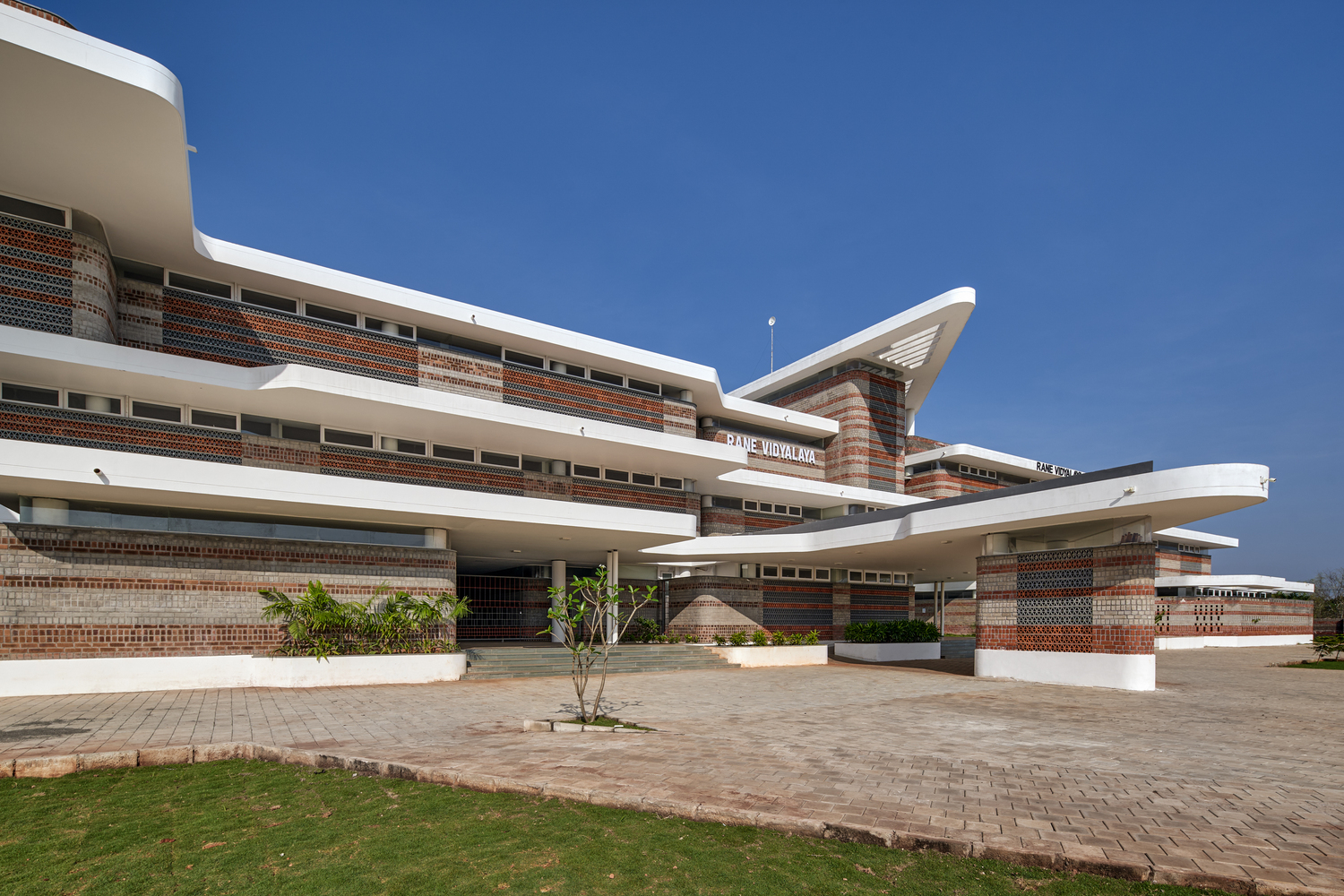
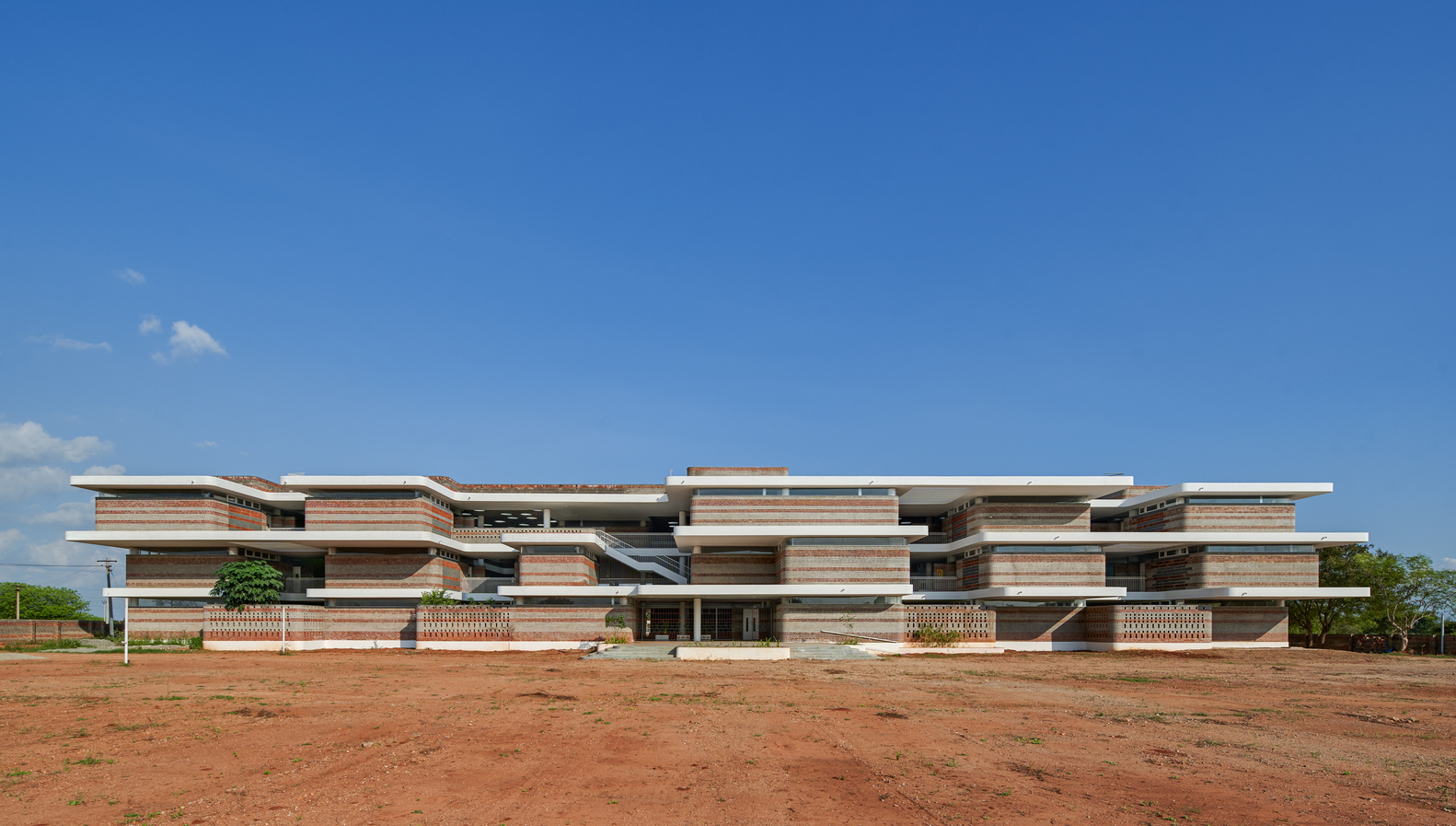
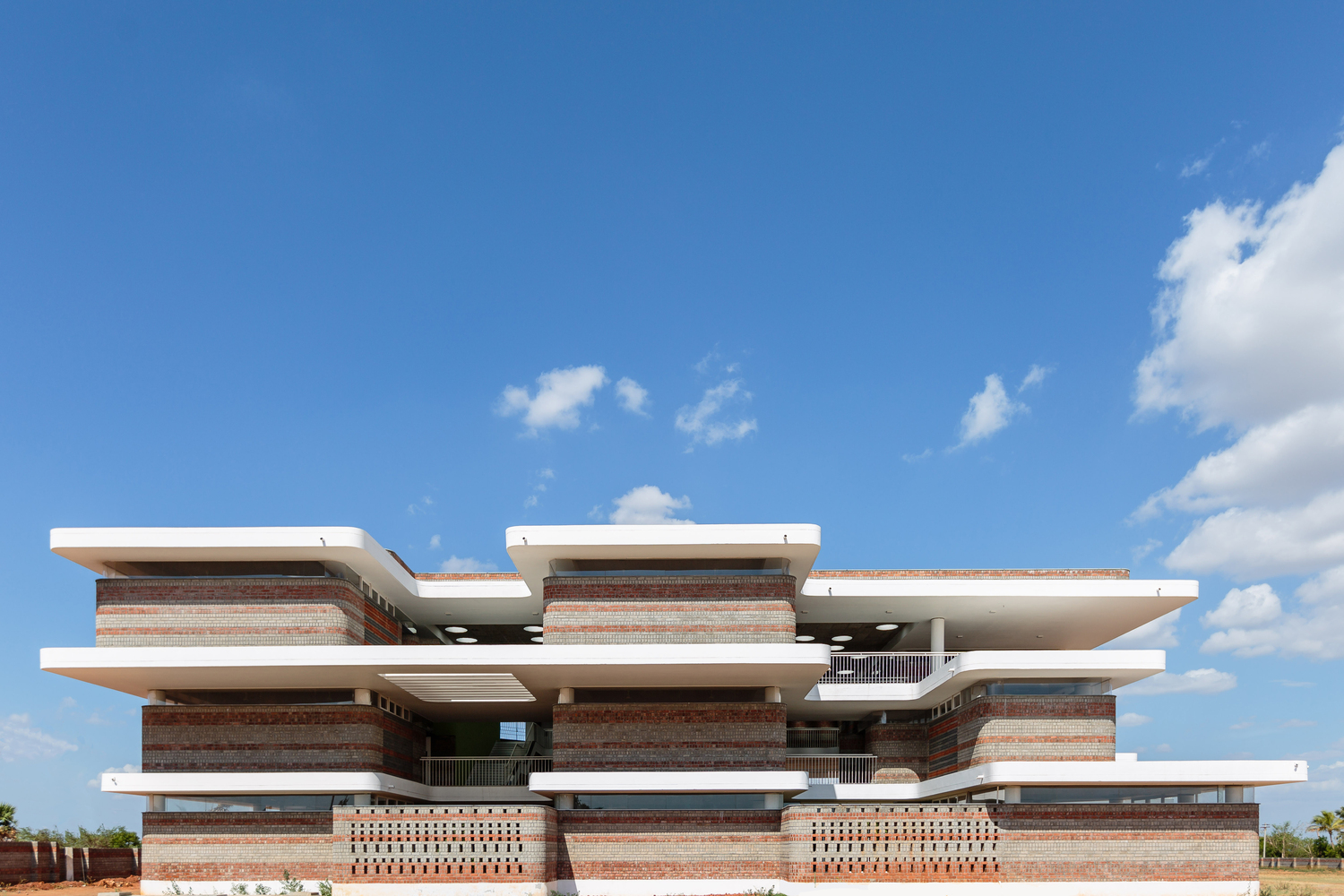
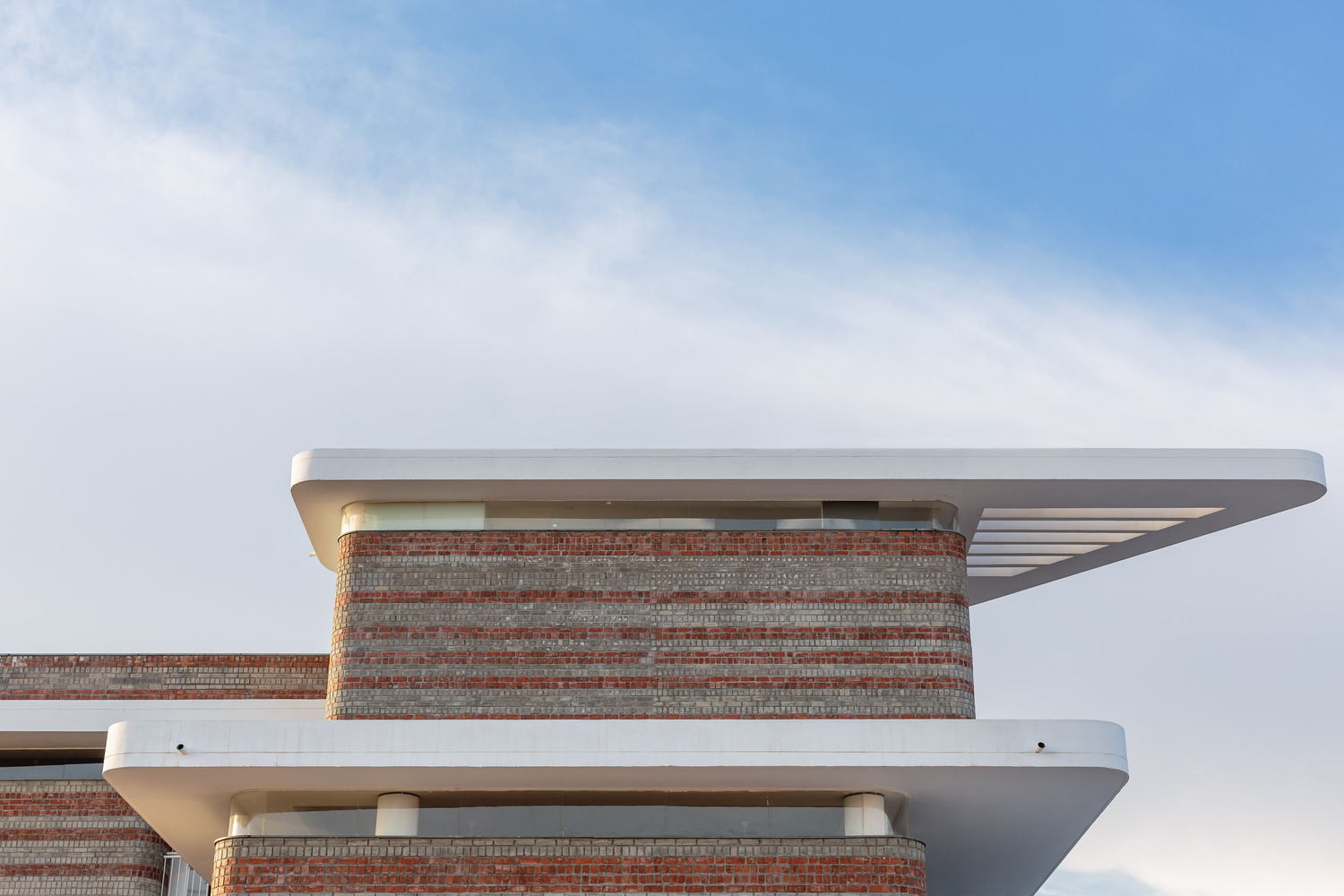
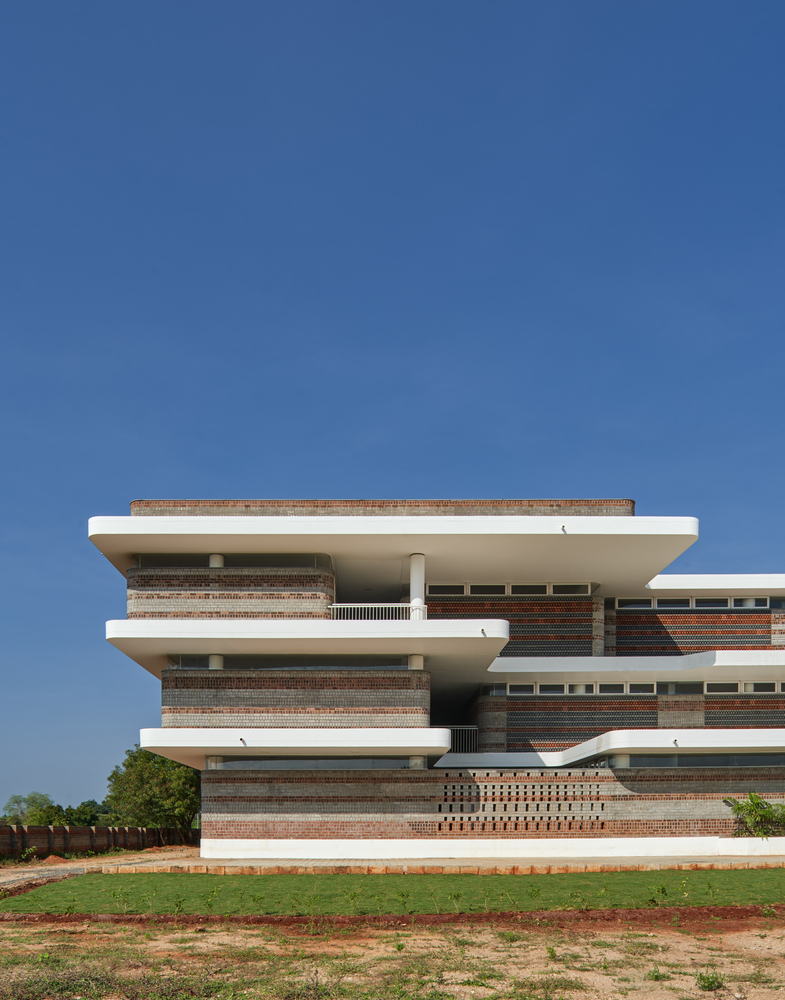
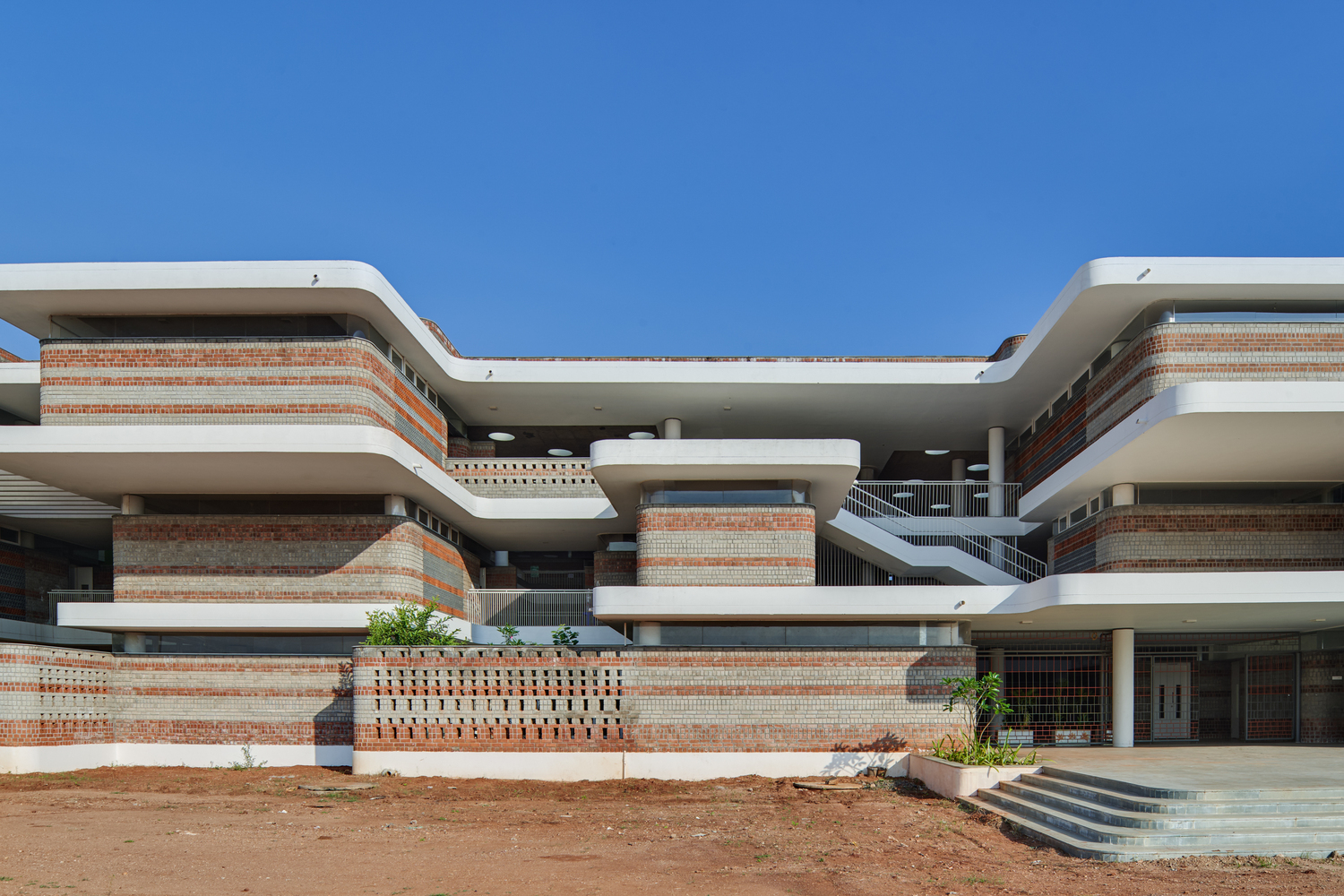
Construction techniques from regional context, structured pedagogy of the Indian educational system and construction cost of $20 / Sq.Ft formed the underlying basis for the design development. Inspiration came in from the 6th century built Thiruvellarai temple’s walls and the layered cross sections of 50-year-old houses in the region. Construction methodology that was followed consistently in these walls was layering starting from huge random rubble and stone at bottom, to finer solid brick work, mud and slate on top. Alternating wall layers of red wire cut bricks from local kiln and grey fly ash bricks recycled from industrial cement waste were used.
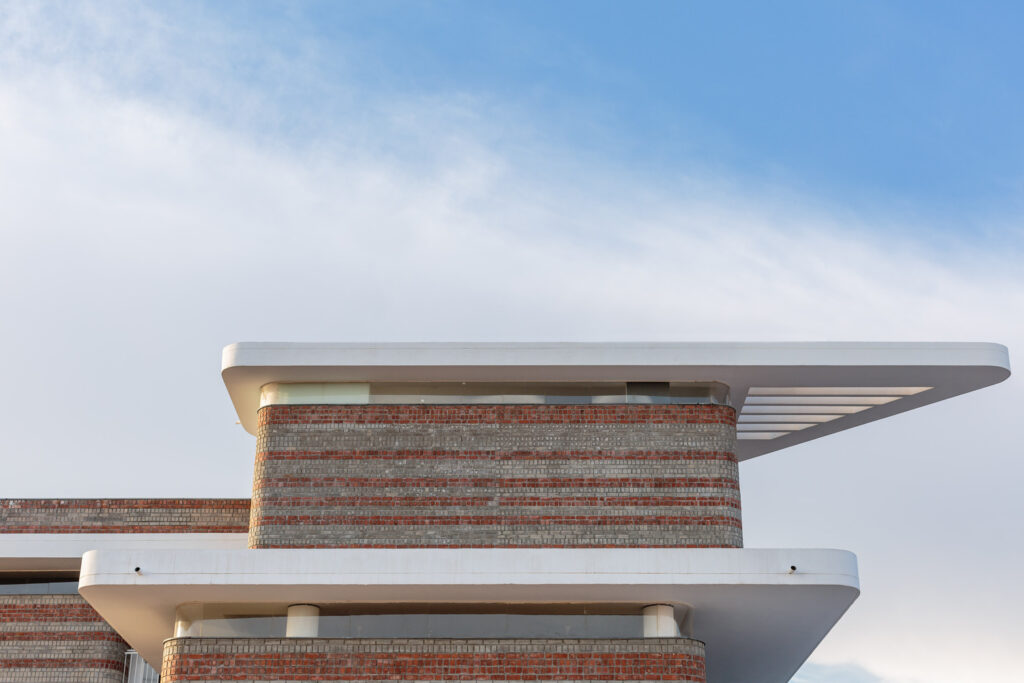
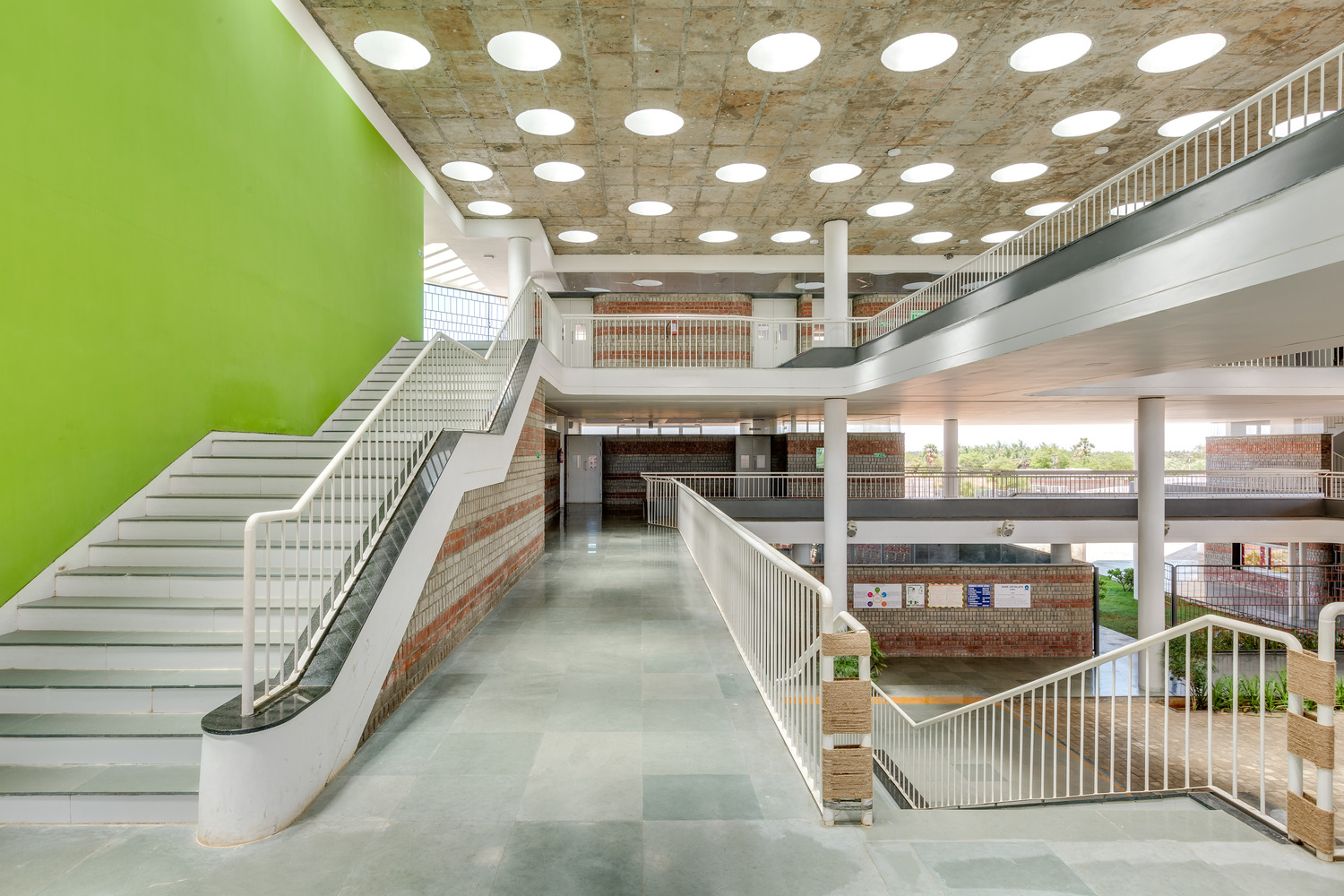
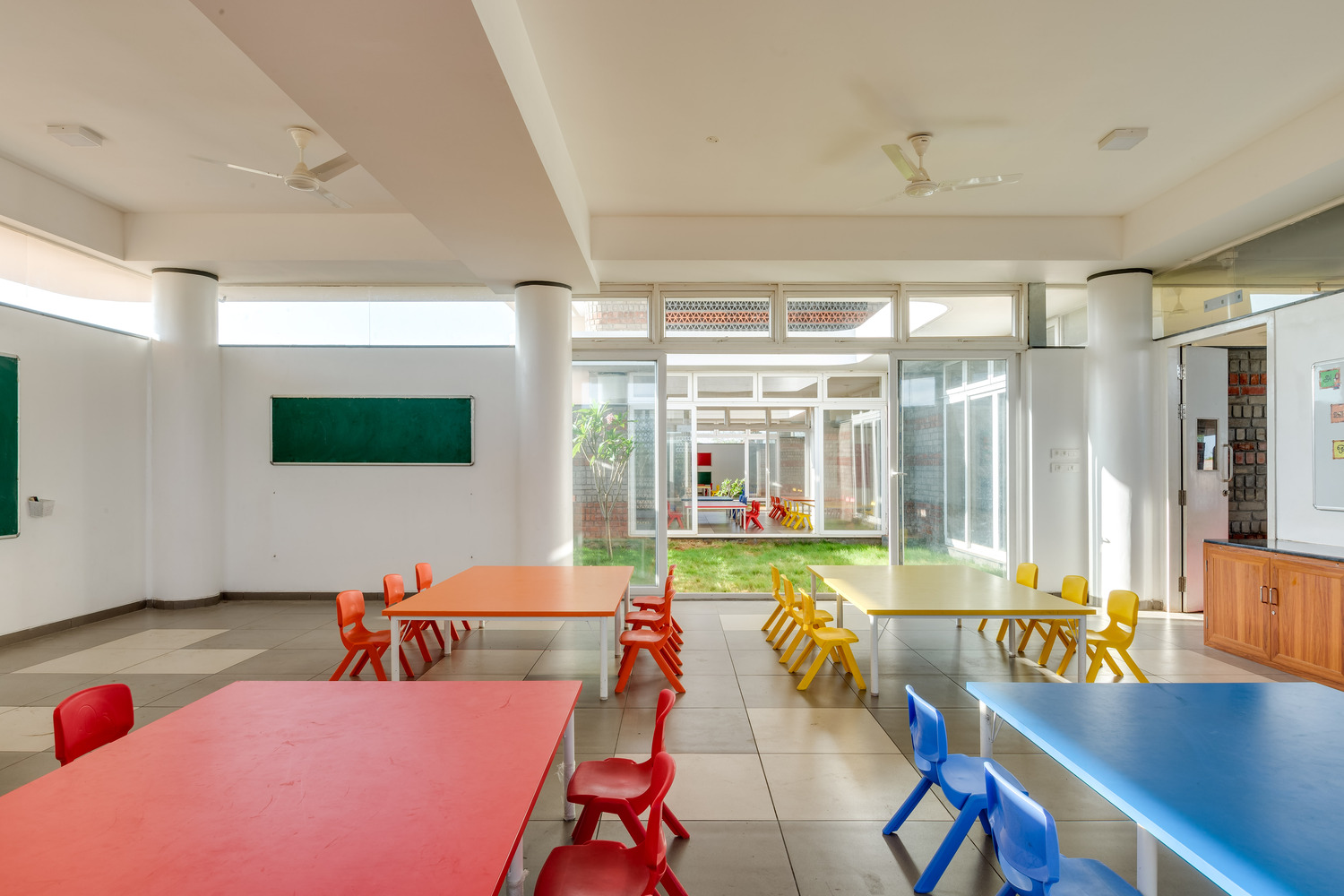
The kindergarten classrooms are designed to have individual garden’s that encourage seamless outdoor and indoor integration of space. With every increase in grade, classes become more functional to induce structured learning. The overall design approach was to avoid sharp edges in walls, columns, slab edges and in every detail possible to ensure safety.
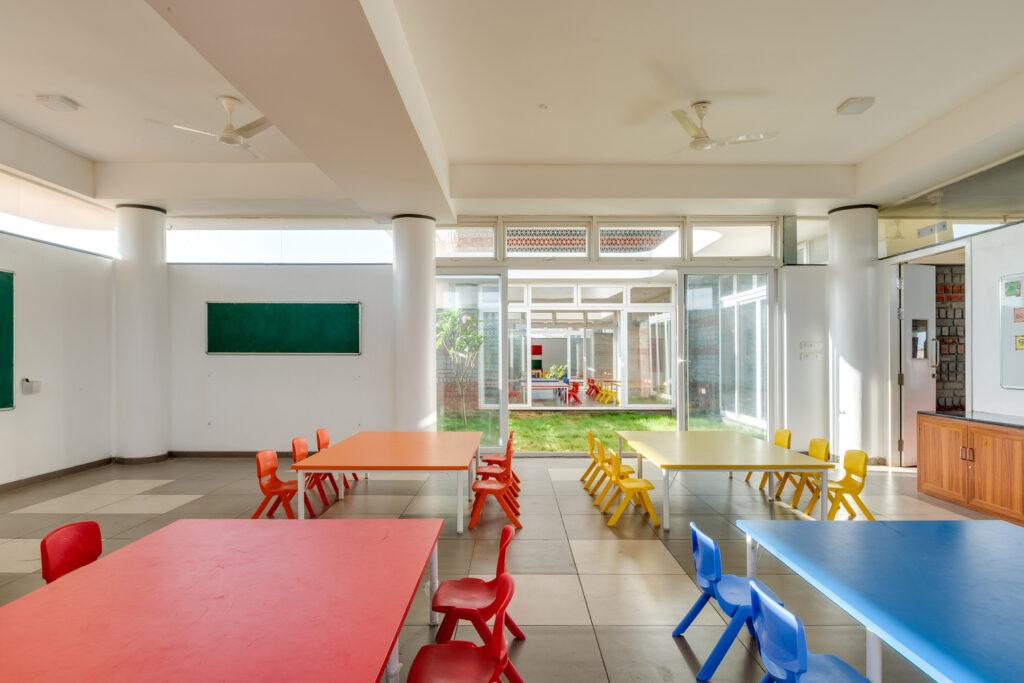
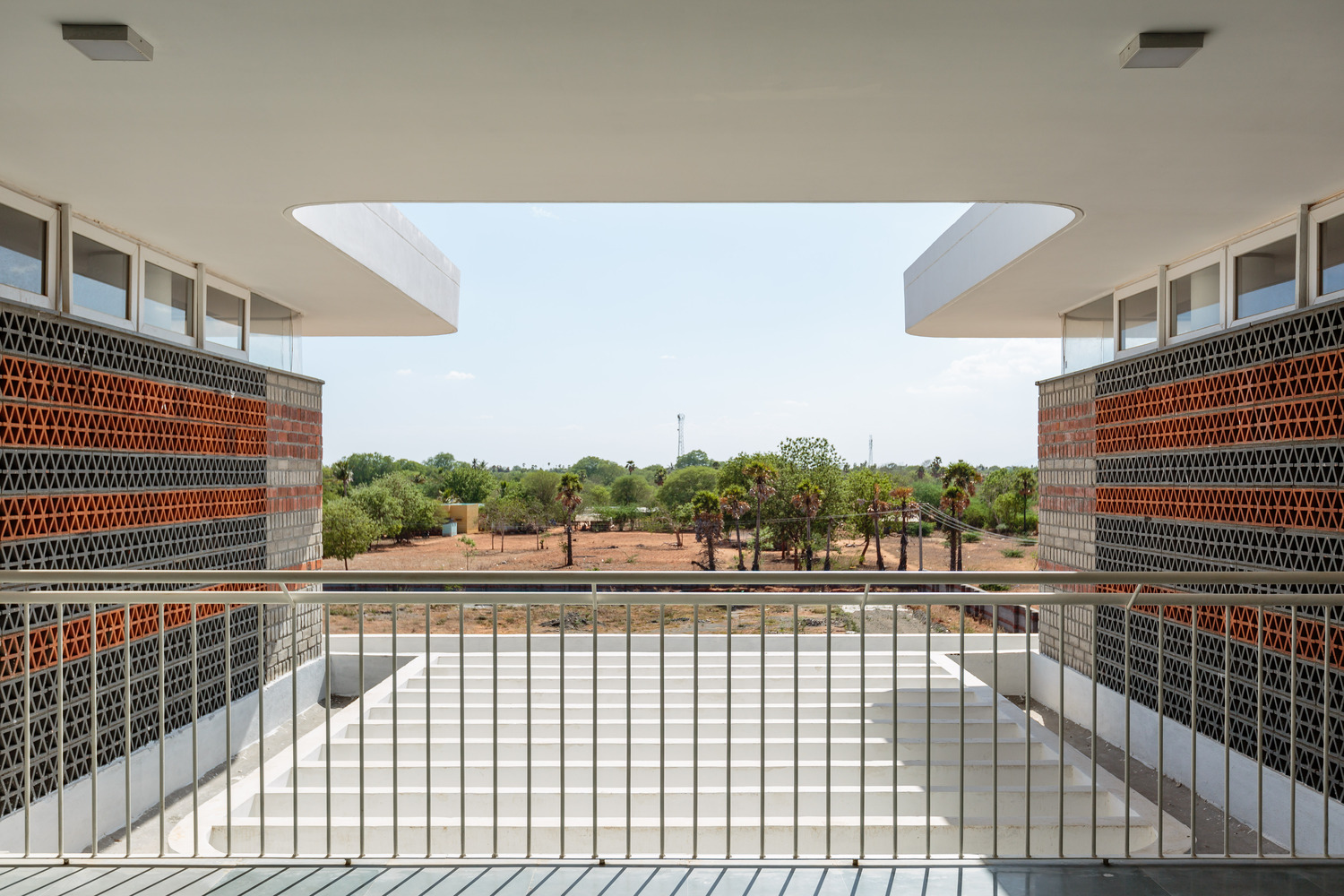
Located in the tropical belt of interior Tamil Nadu, the intent was to have the space ventilated naturally with sufficient lighting. All walls are stopped at lintel height and have openable windows above, to allow hot air to dissipate and increase cross ventilation. Terracotta jalli has been used as secondary shading devices. Major openings along the predominant SE & NW wind direction and minor wind tunnels in east-west direction between classrooms are created to have a comfortable micro-climate.
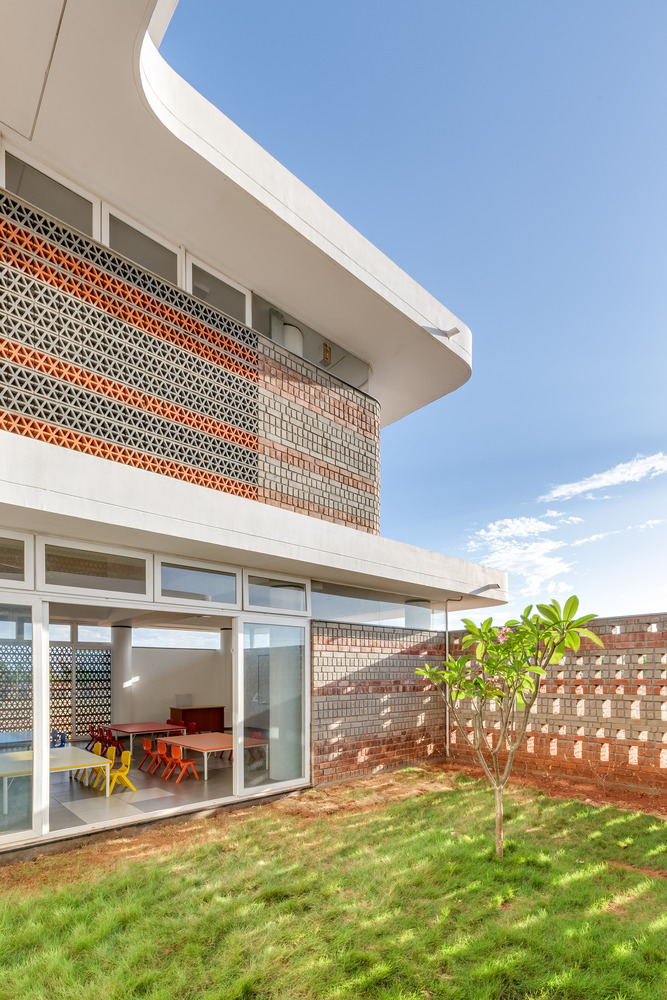
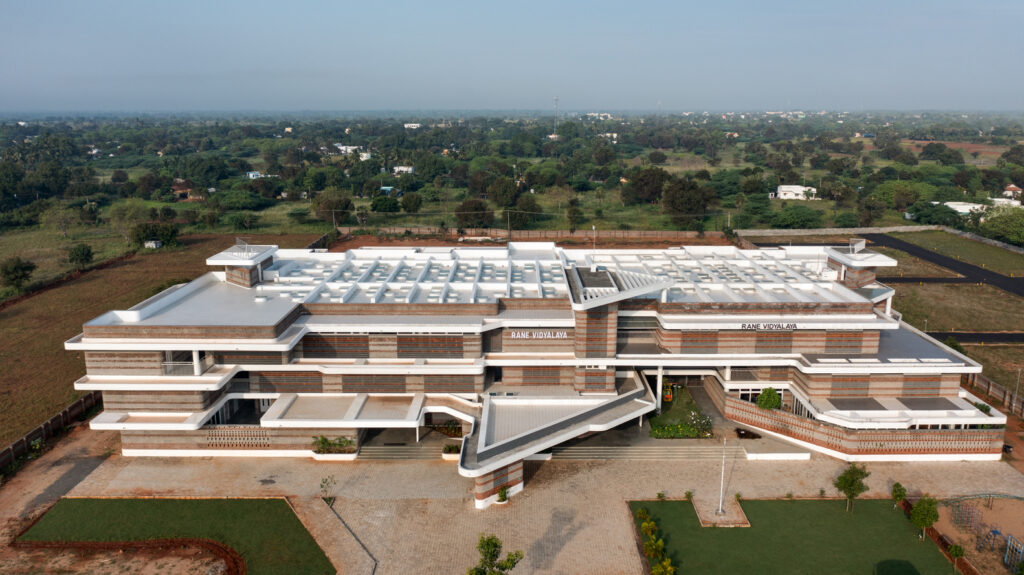
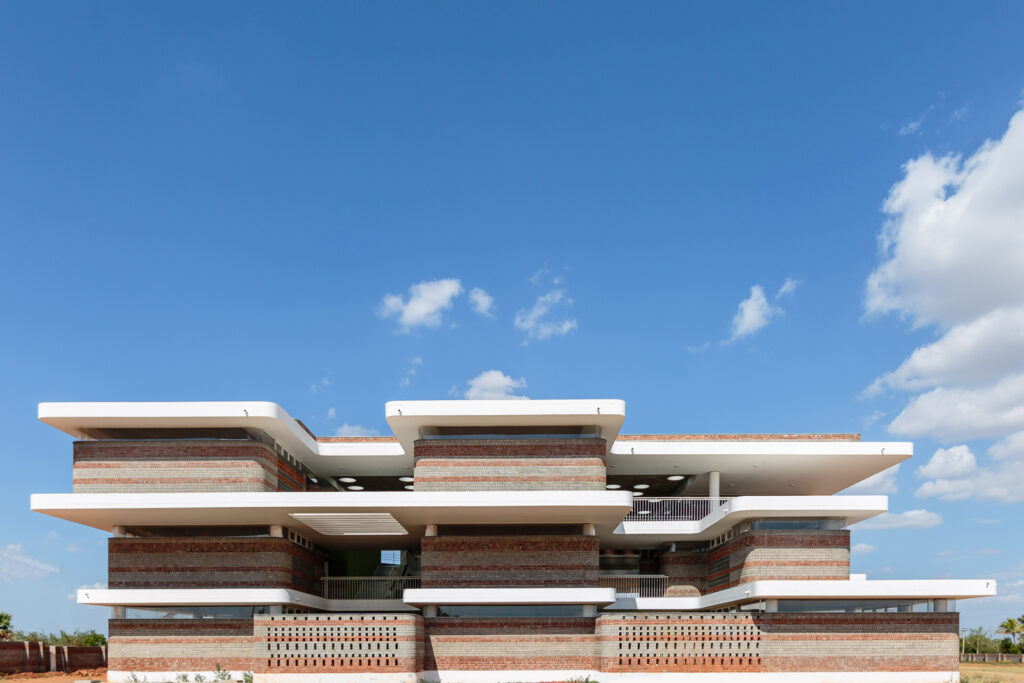
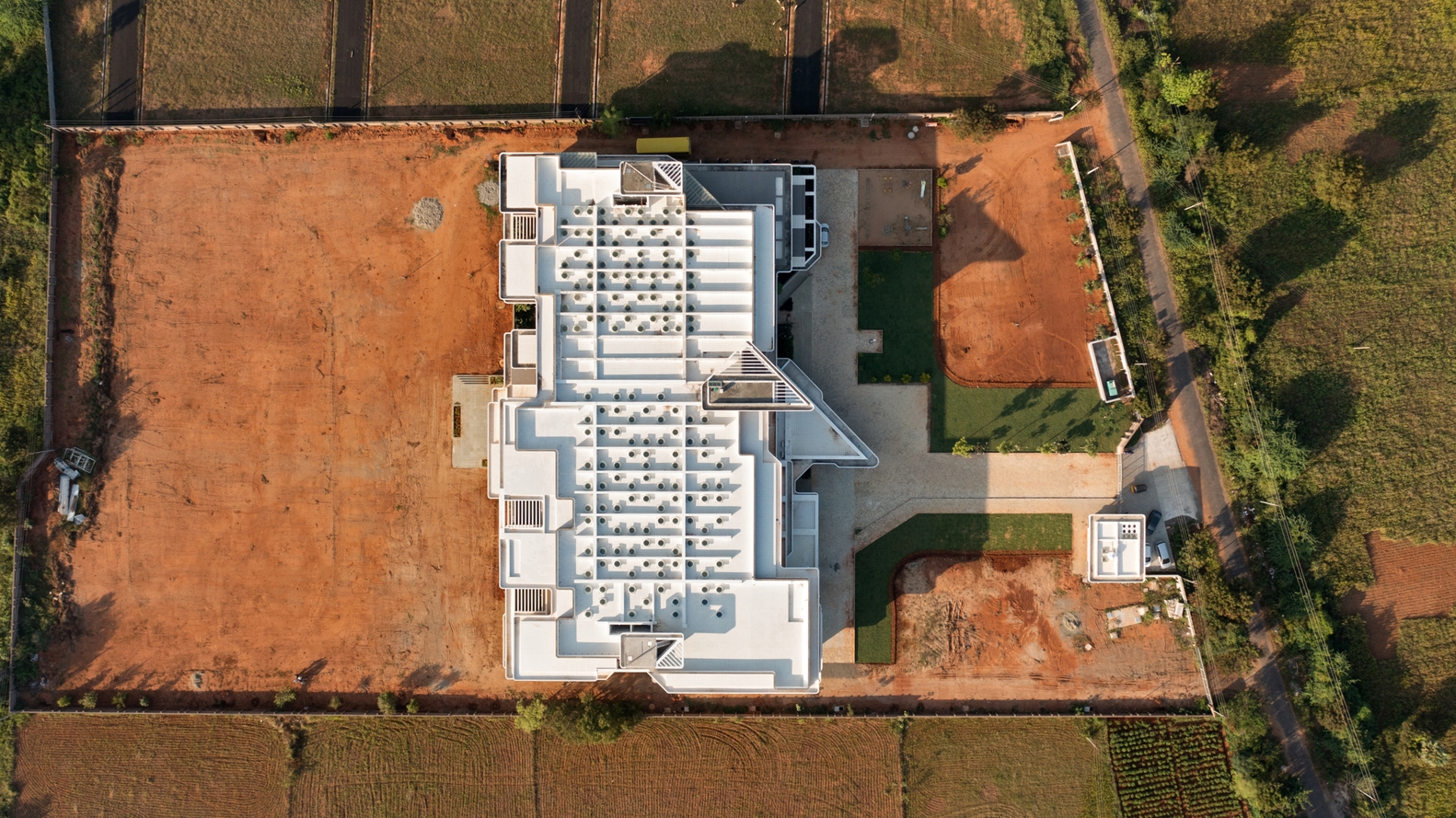
The requirements of the higher classes comprising STEM laboratories, computer labs, classrooms, supporting amenities and toilets; apart from additional kindergarten classrooms have been accommodated in Phase 2. At Shanmugam Associates, horizontal expansion for all institutions is usually recommended as it eases operation and construction challenges. COVID-19 came in as a blessing in disguise because the school was closed for daily operations, therefore enabling a smooth construction process. In 2021, the complete construction of Phase -2 comprising 45,000 sqft of built space was completed and efficiently integrated into one whole school campus of about 90,000 sqft.
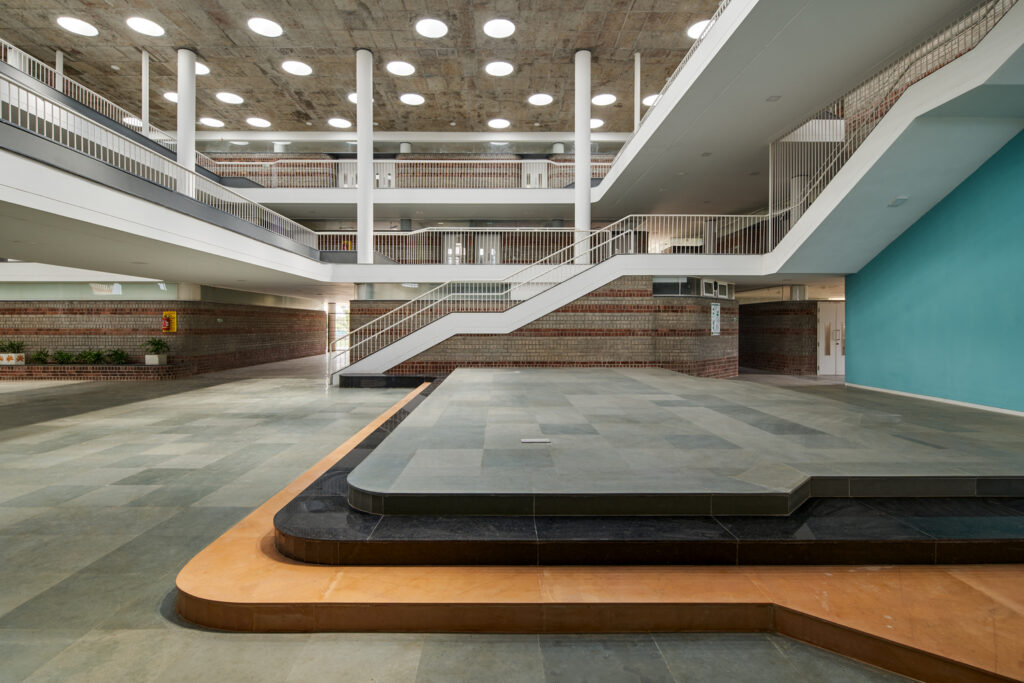
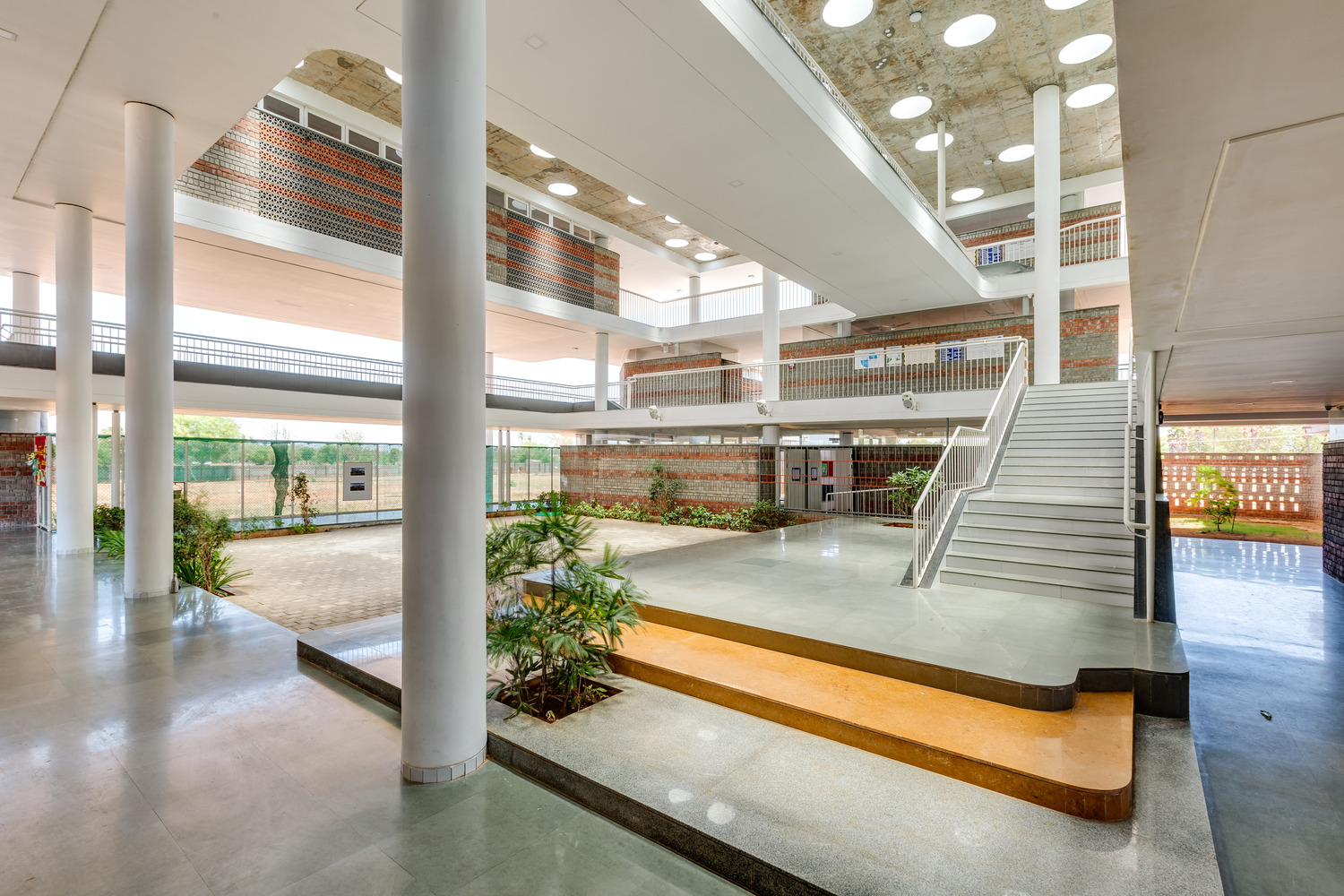
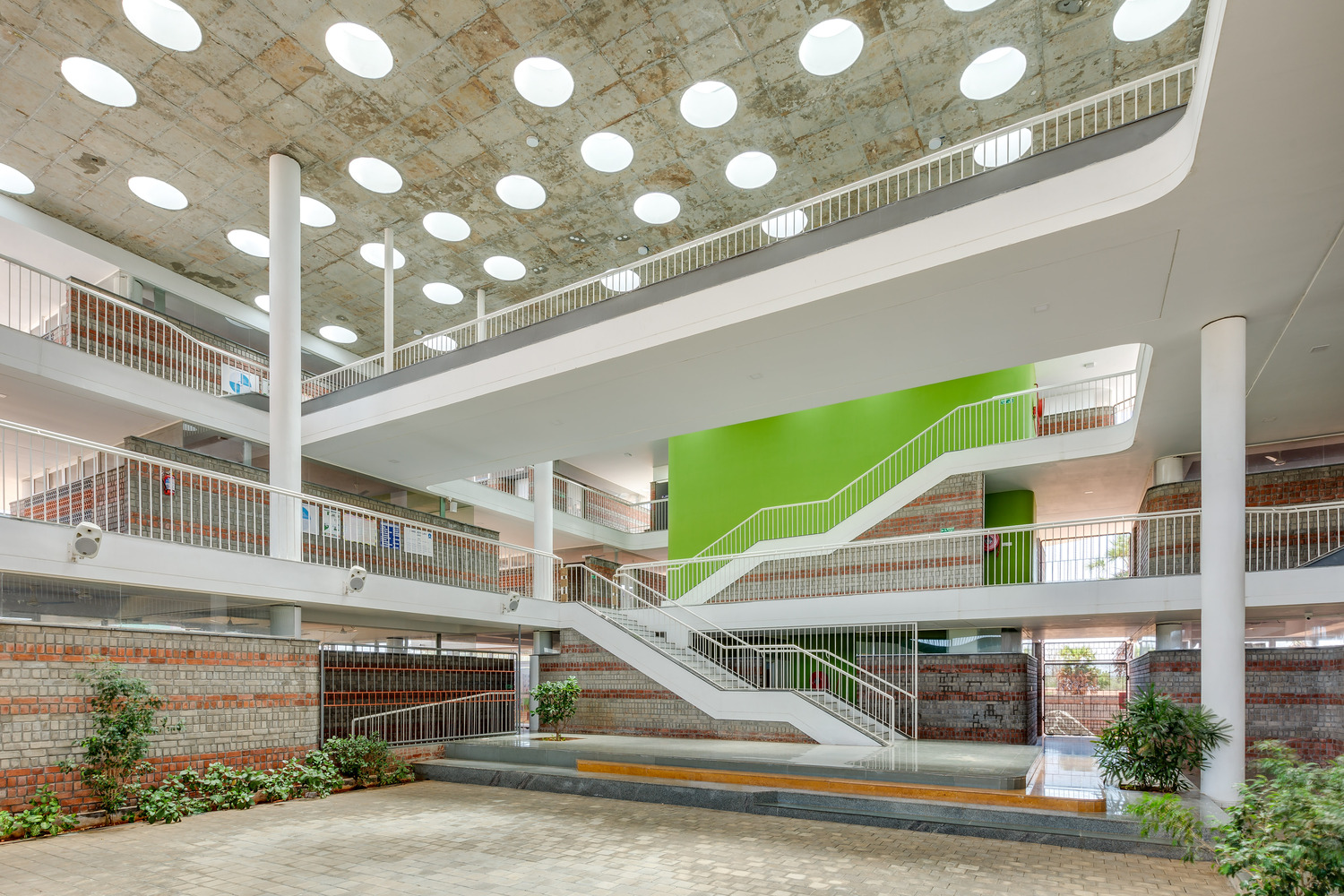
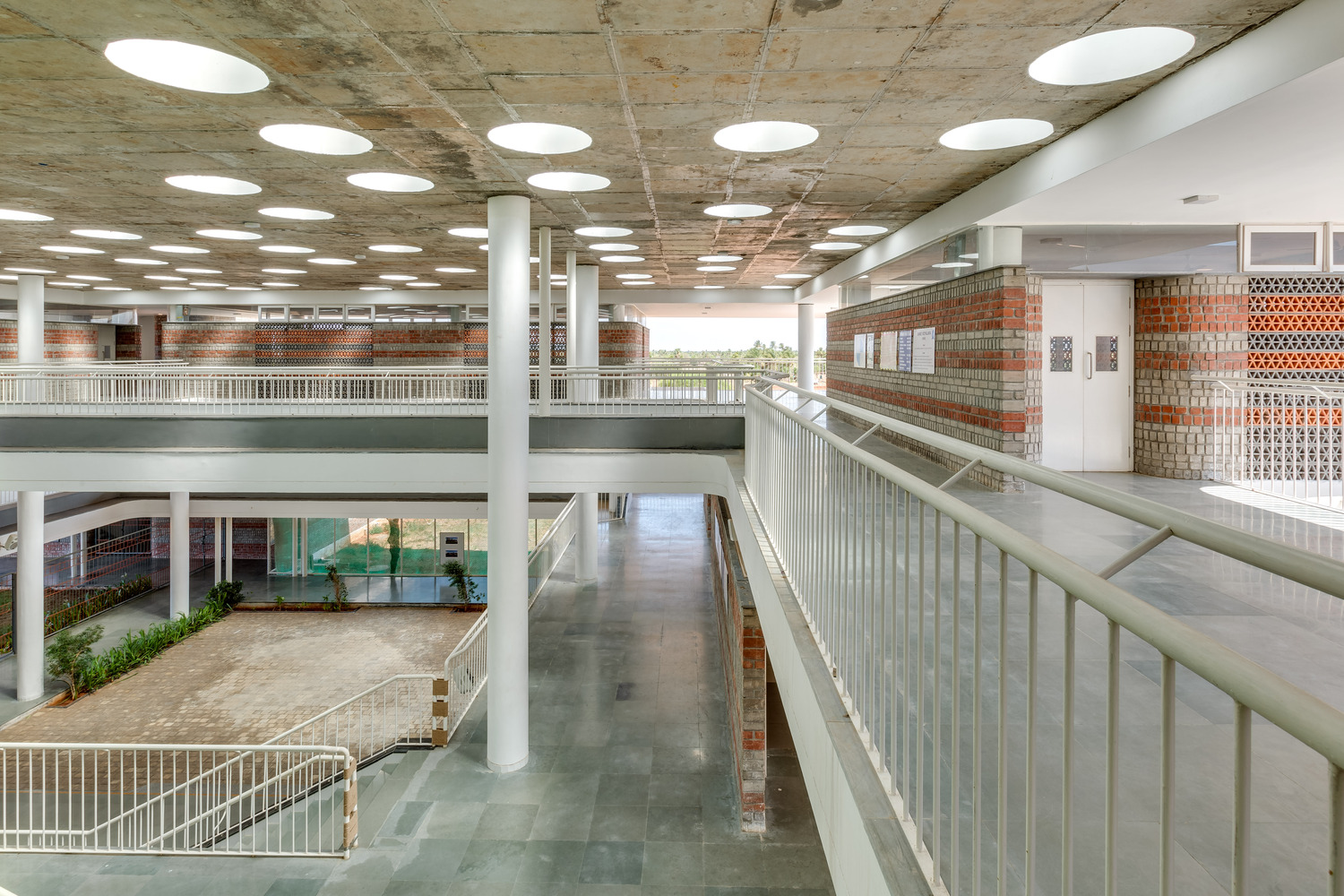
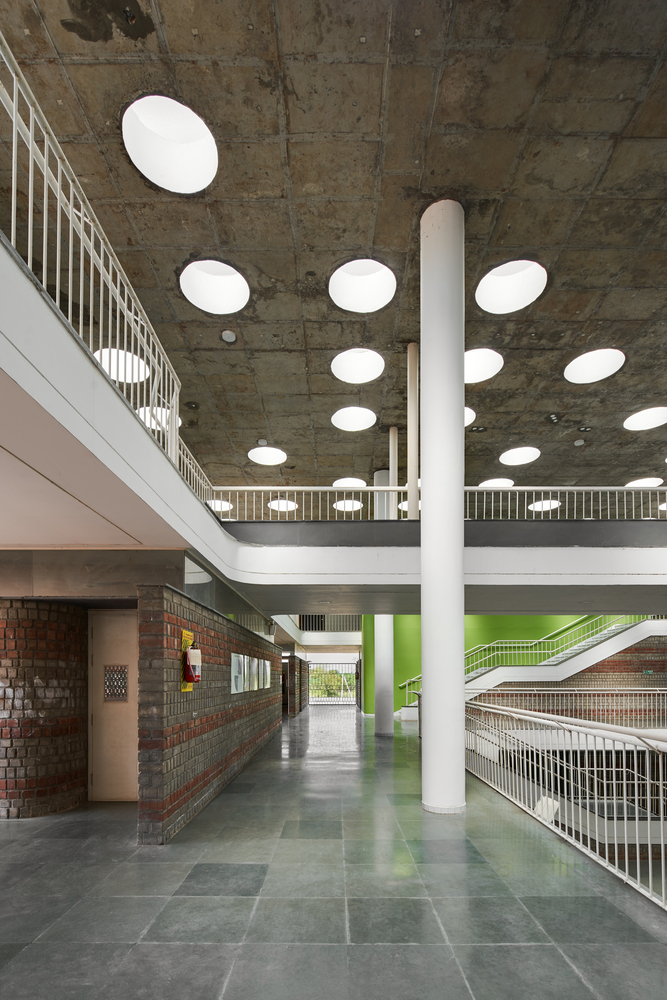
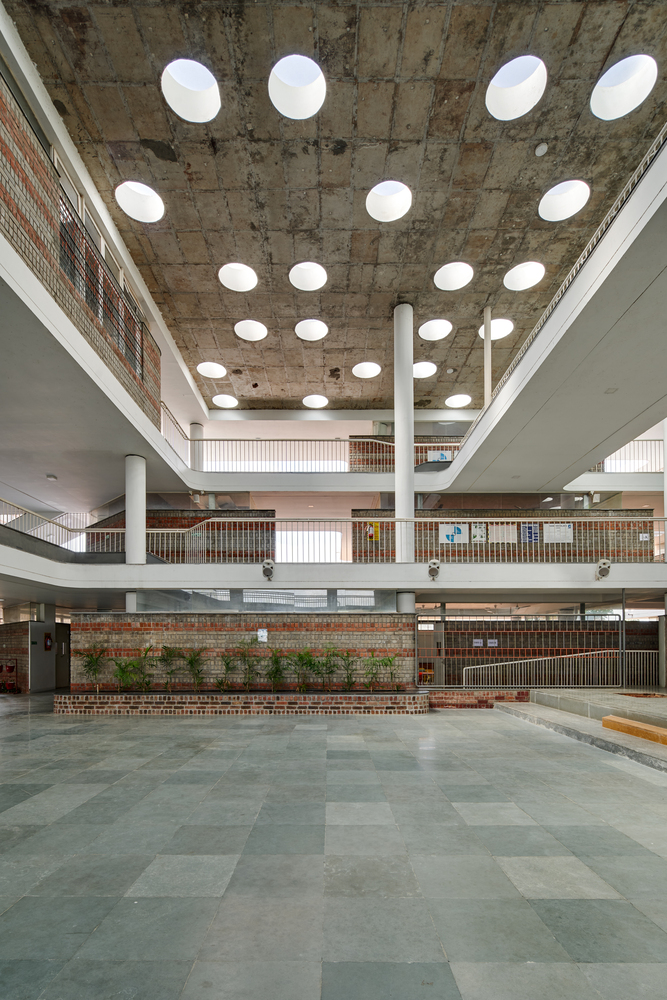
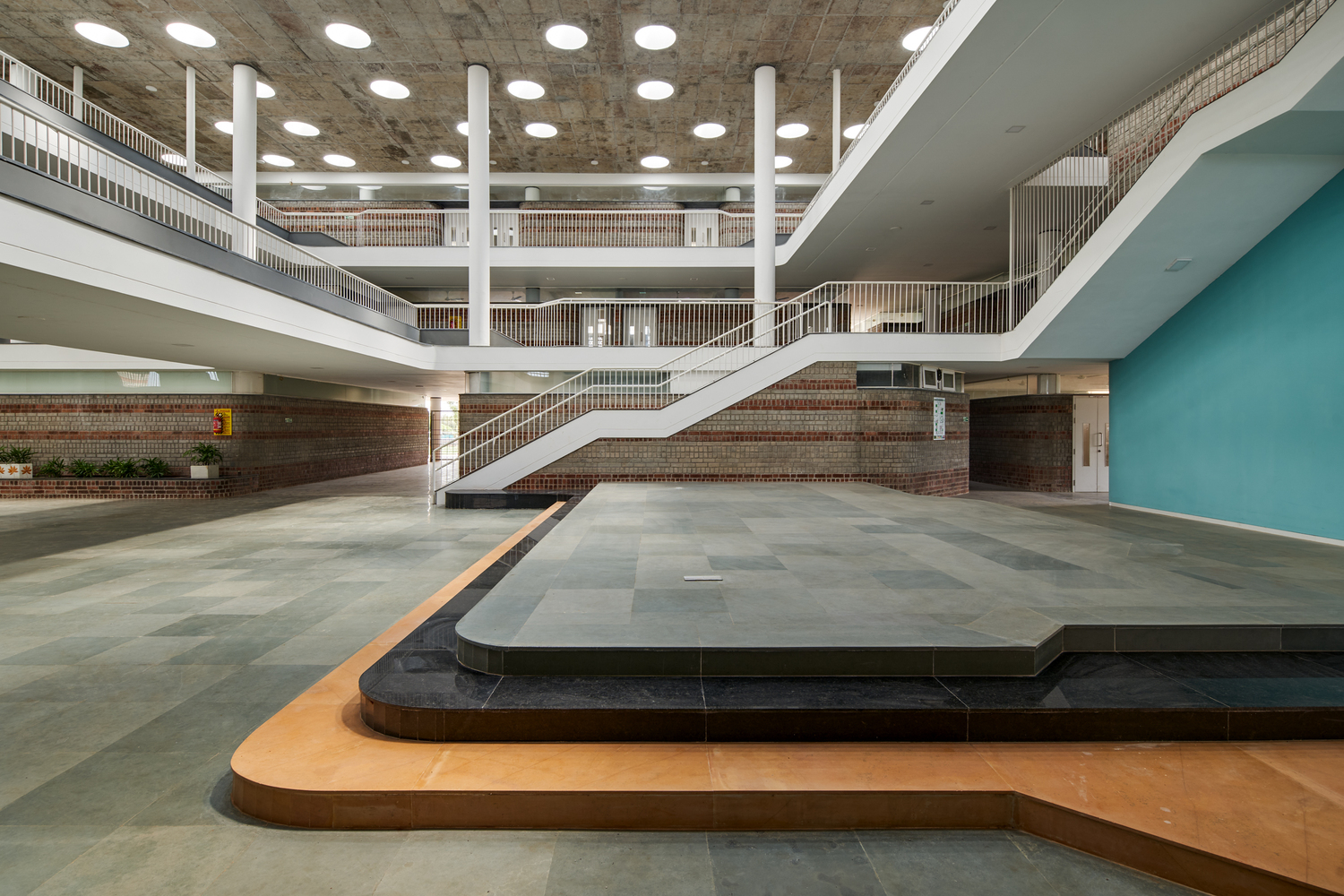
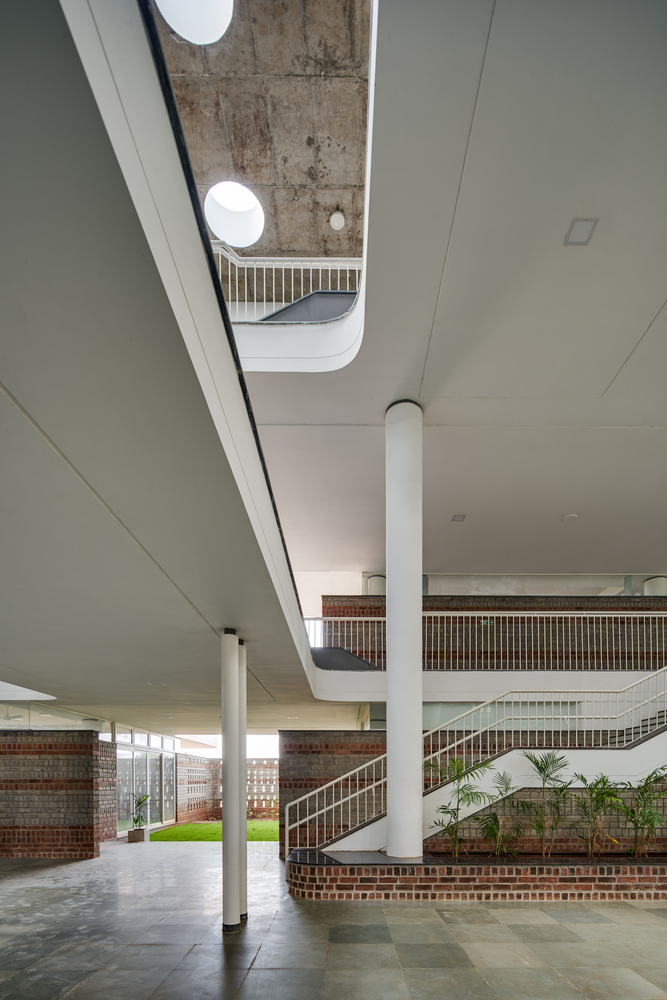
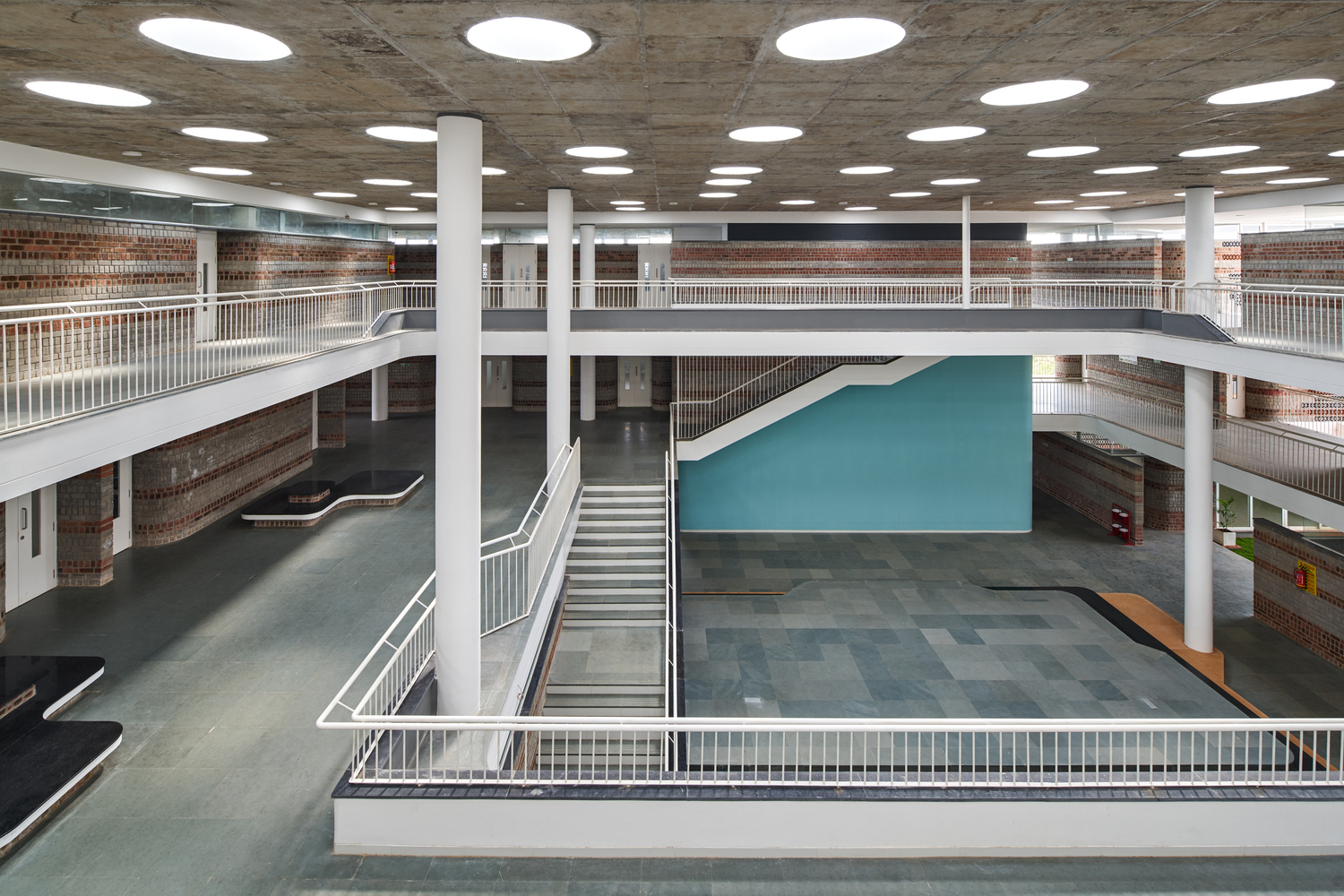
The central courtyard of about 11,000 sqft was envisioned for the entire campus and it takes shape now as one integrated gathering space. The covered courtyard which is the heart of the plan runs almost through the entire length of the building enabling best use by all the classes. Staff rooms are located at the central spine of the courtyard on the second floor to have good visibility of the campus.
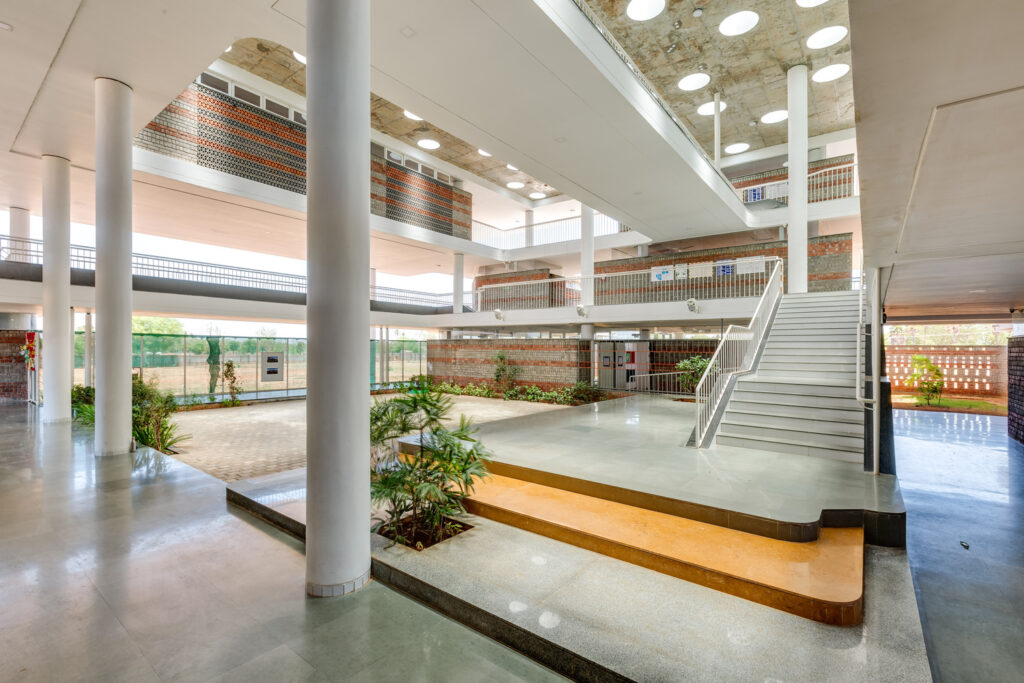
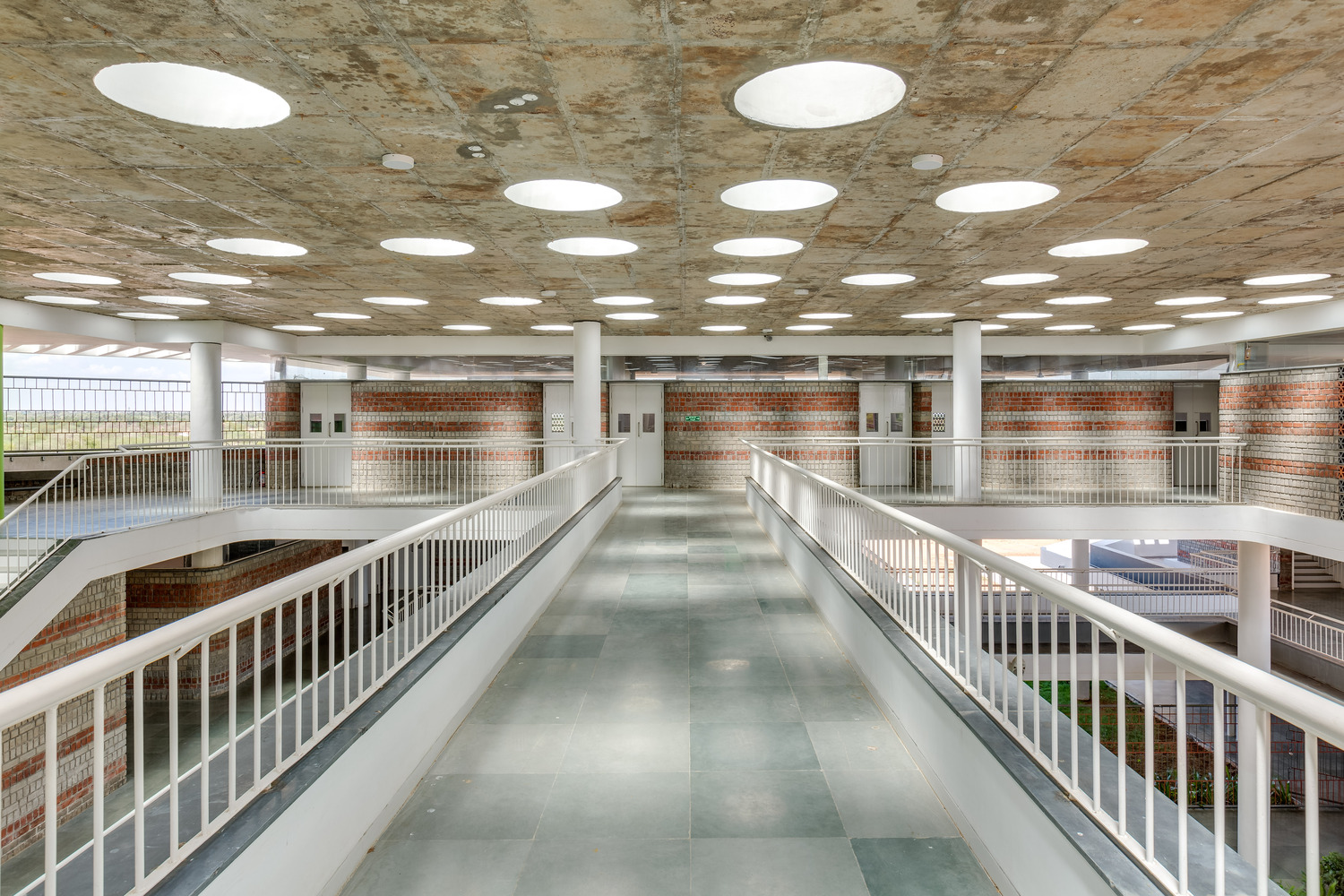
The design language of Phase -2 follows the same as that of Phase 1, in order to give a holistic building. Lots of openings were created to bring in wind and reduce heat; every classroom has at least two-sided ventilation; ceiling punctures were done in the central courtyard to bring in natural light and all corridors are connected. Building overhangs were extended where there was scope, in order to further reduce the heat generated on vertical surfaces. Since the same local team was deployed the construction was much easier to execute.
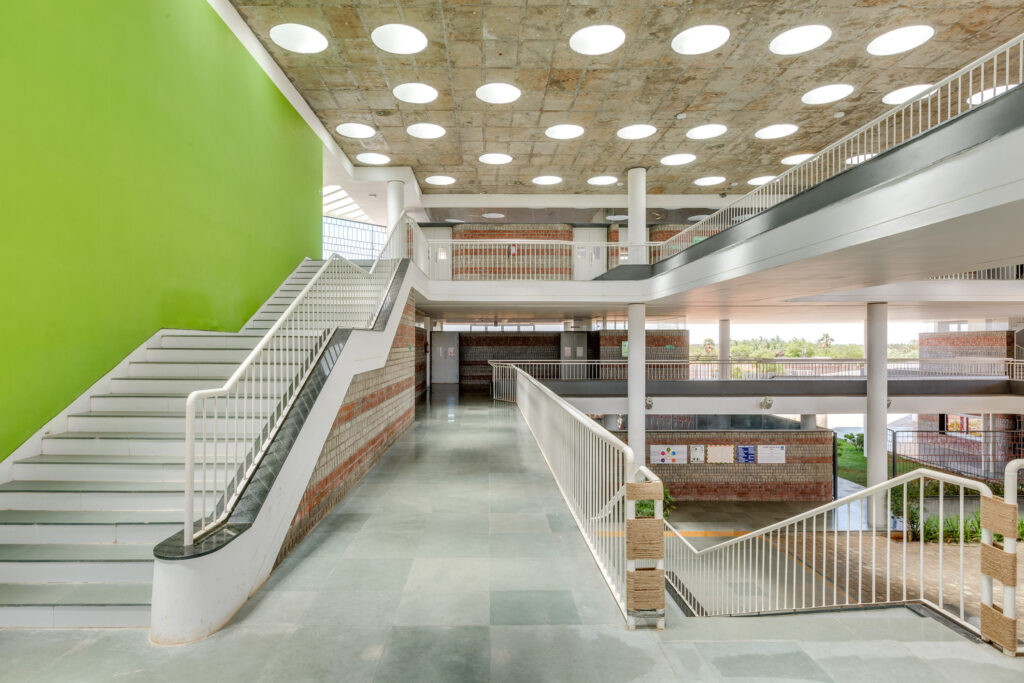
All these architectural features, incorporating use of red solid bricks, baked earth tiles, terracotta jalli and grey fly ash bricks, help address the micro climate, create interesting light & shade experiences through roof perforations, provide safe green courtyards and sufficient ventilation. At the same time they also speak the design language of the local region, source material from the surrounding area, create a fun educational environment and give a wholesome cost effective solution.
Project Gallery:
Cite: “Rane Vidyalaya, Tiruchirappalli, Tamil Nadu / Shanmugam Associates 30 June 2026. GLSN. Accessed .https://theglsn.com/rane-vidyalaya-tiruchirappalli-tamil-nadu-shanmugam-associates/