
Author: Dr. Rupali Sharma, Assistant Professor, M.G.T.T. College, Kota, Rajasthan
What is the first thing that you see when you enter a classroom? The light, the screen at the front, the chairs? Such details might appear insignificant, but these influence the thought process, emotion and interaction of knowledge by the students. Learning is never just about content, it is space, psychology and experience learning.
Higher education in India is spreading at an enormous rate. The adoption of new technologies is created at universities, whereas there is a perceived disparity between what teaching theories suggest and the way classrooms should operate. This is not simply an academic void but it directly influences the motivation, engagement, and connection felt by the students directly.
The recent studies where the concept of connected spaces is explored informs us of how we can step over this gap. By blending the physical and digital, connected spaces create environments where students don’t just attend classes, they experience learning.
The Gap Between Theory and Practice
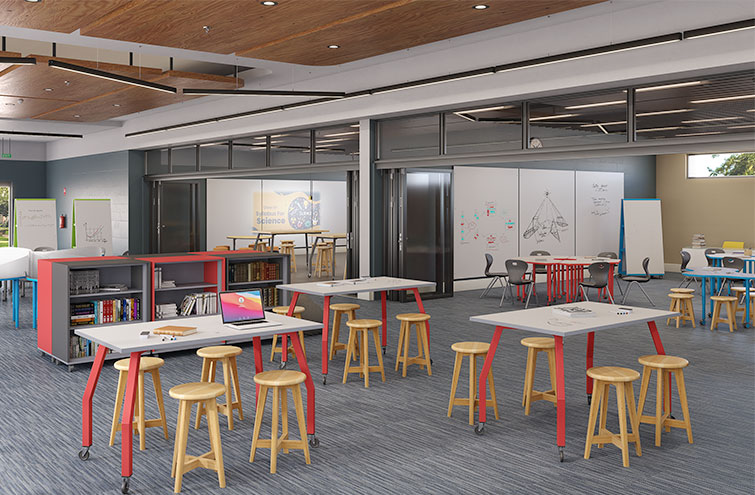
The collaboration, accessibility, and interaction have long been prioritized by pedagogical theories. However, enter most classrooms and you will still see rows of fixed seating, one-way lectures and technology being incorporated in bits and not being incorporated as a whole.
This mismatch has psychological consequences. Students know digital tools and resources exist, but when they can’t use them meaningfully, they feel disconnected. Burnout creeps in, and the sense of belonging that fuels motivation weakens.
What Are Connected Spaces?
The simple, but powerful method entailed by the approach of connected space: combining considerate physical planning with technological connectivity.
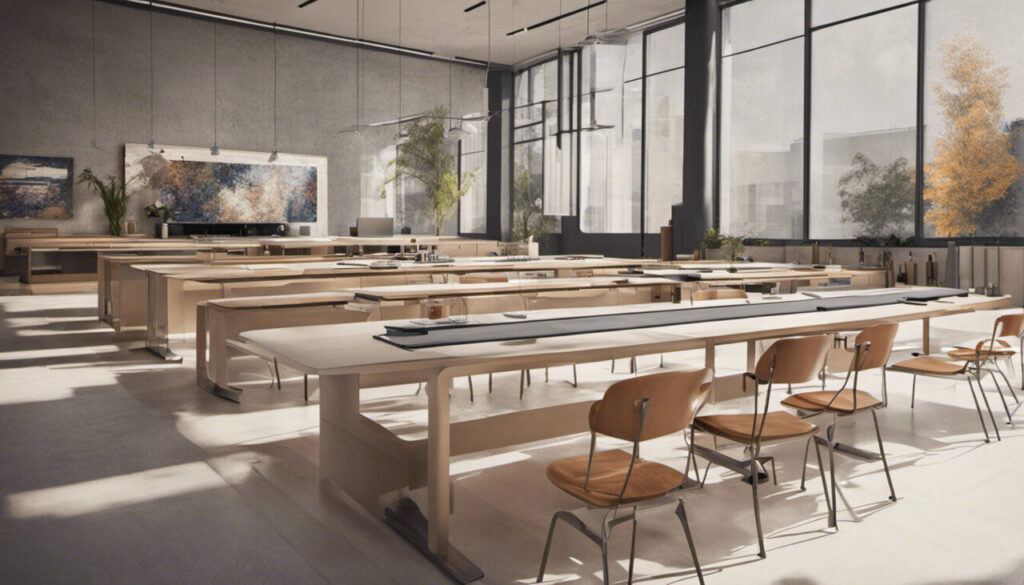
Consider a scenario in which classroom equipment can be moved to facilitate discussions, every student has instant access to material and research at a long-lasting rate through the digital design. Rather than dividing the physical and online learning settings, these settings enable them to merge.
The result? Spaces that are more than merely modern-looking yet practically healthy to the feeling. It empowers, motivates students and gives them the sense of belonging to a living breathing academic ecosystem.
Key Findings from the Study
A study with 58 students highlighted how connected spaces can change the way learning happens:
Collaboration improved. Students shared ideas more freely, both in class and online.
Knowledge was easier to access. With fewer barriers, stress decreased and confidence rose.
Engagement increased. Flexible design and interactive tools encouraged active learning.
Outcomes were stronger. Students got a deeper knowledge and were more satisfied with the process.
These aren’t just statistics. They demonstrate that a proper design choice can affect psychology, motivation, and belonging to an equal extent as the curriculum itself.
Why This Matters in India
India’s higher education system is one of the largest in the world, with millions of students entering universities every year. The challenge isn’t only delivering content; it’s creating meaningful learning experiences at scale.
Connected spaces provide an opportunity in a country where education has been regarded as a personal desire and a national imperative. They convert learning, which is a stressful and isolated event, into a group effort.
And most importantly, they shape the students for the real world. The modern work environments require flexibility, innovation, and computer literacy. The physical-digital classrooms reflect this fact and help students to enter the professional environment easily.
The Human Side of Design
So, what truly motivates students? Often, it’s the feeling of choice and agency, the freedom to learn in ways that suit them. Flexible spaces give them that freedom.
What frustrates students? Rigid layouts, poor access to resources, and environments that make them passive listeners.
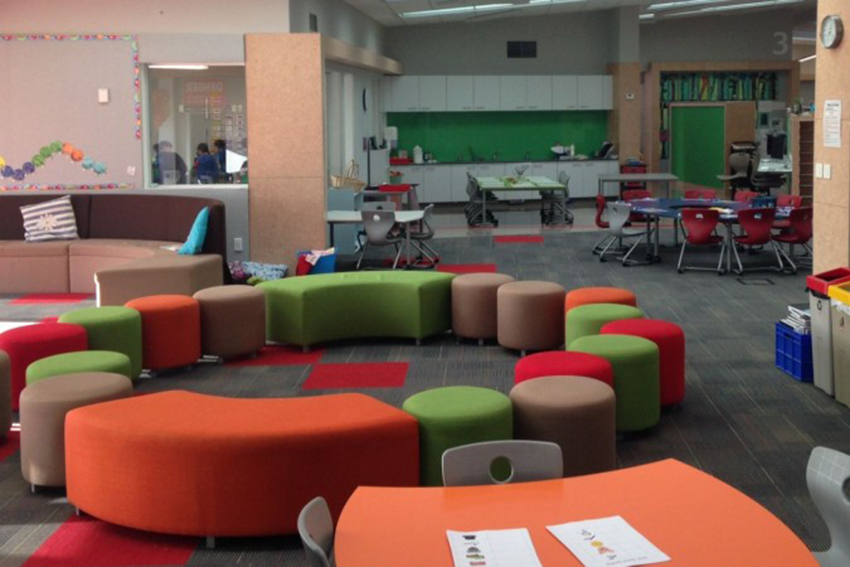
Good design can ease these frustrations. The natural lighting eliminates fatigue, collaborative layouts foster community, and the incorporation of digital facilities makes sure that no student is left behind.
A Step Toward the Future
If we want to reimagine education, we need to think beyond Wi-Fi and smartboards. We need empathy in design. We need to ask: What frustrates students? What sparks their curiosity? How can space amplify motivation instead of draining it?
Some ideas that point toward the future:
Modular furniture that shifts easily between lectures and group work.
Learning pods for small-group collaboration.
Hybrid boards where physical notes sync to digital platforms instantly.
Classrooms are infused with natural elements, plants, sunlight, and textures to
reduce stress.
These are not just architectural upgrades. They are psychological interventions that improve motivation, reduce isolation, and create experiences that students will carry far beyond university.
Conclusion
It is not reimagining higher learning spaces by the addition of flashy gadgets. It is about reconciling the physical and digital, and that involves designing with the thought of what a student is going through.
The approach related to space demonstrates to us that the appropriate design may promote collaboration, enhance engagement, and encourage confidence. To India, this information is not mere theory but a plan of how to build classrooms where students not only learn, but also thrive.
After all, education is not about what we teach, but where and how we bring the students to learn.

The views expressed in this article are those of the author and do not necessarily reflect those of GLSN.
This article is excellent which enhance a new version of learning space in digital era .
Many thanks for your kind words and thoughtful feedback.
Really interesting. It’s fascinating to realize how much campus design can shape how engaging and memorable learning is for students, something that often isn’t given enough attention in many colleges.
Many thanks for your kind words and thoughtful feedback. I truly appreciate your interest in the article.
Very informative and well-written article. Great work ma’am!
I sincerely appreciate your encouraging comment. It’s wonderful to know the article was helpful.
Beyond Walls, Towards Belonging highlights a compelling view on how inclusive learning spaces can transform education.
Insightful ideas in Dr. Rupali Sharma’s piece on creating learning spaces that promote belonging and collaboration.