
Shared by the architects upon our invitation.
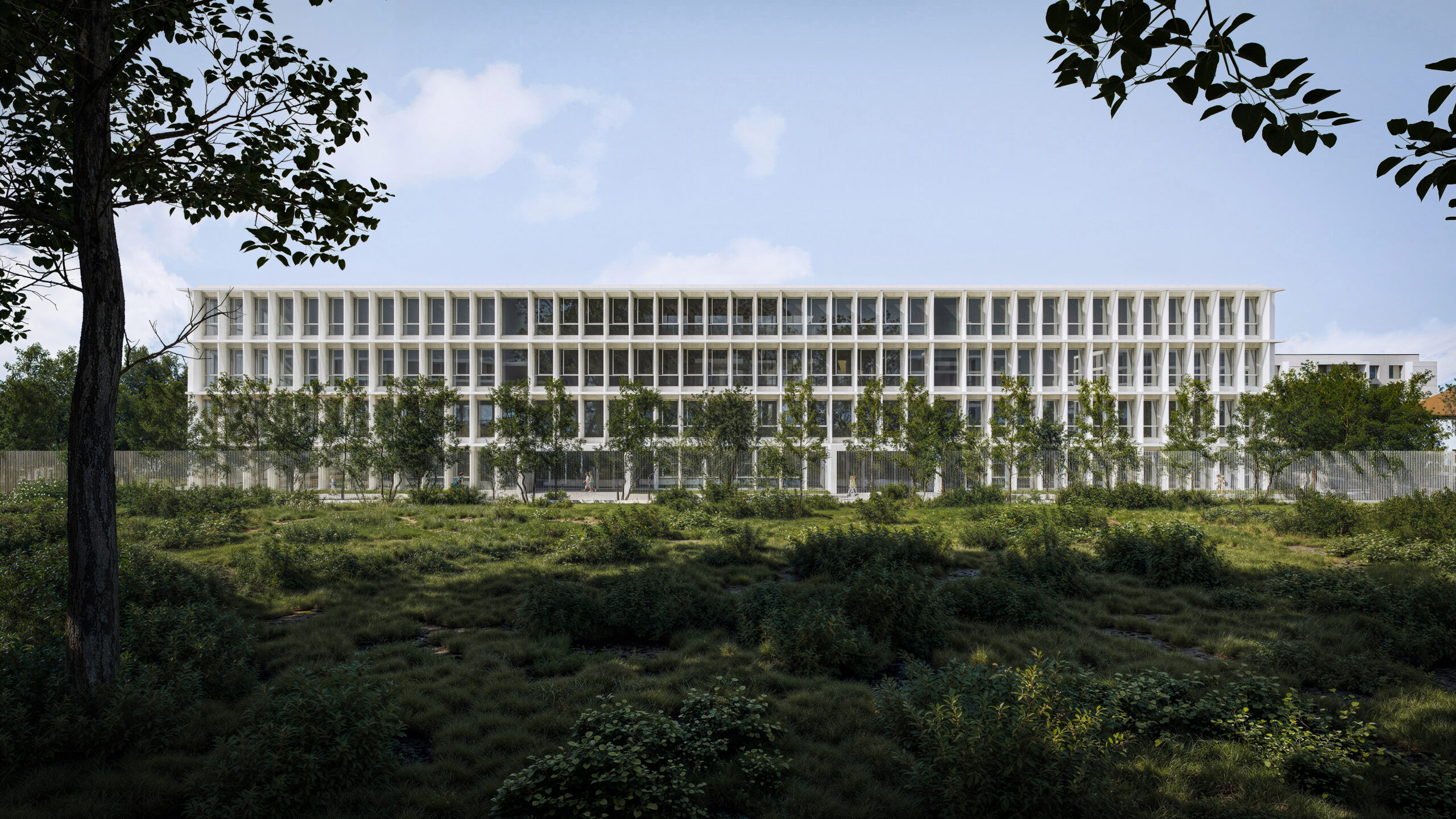
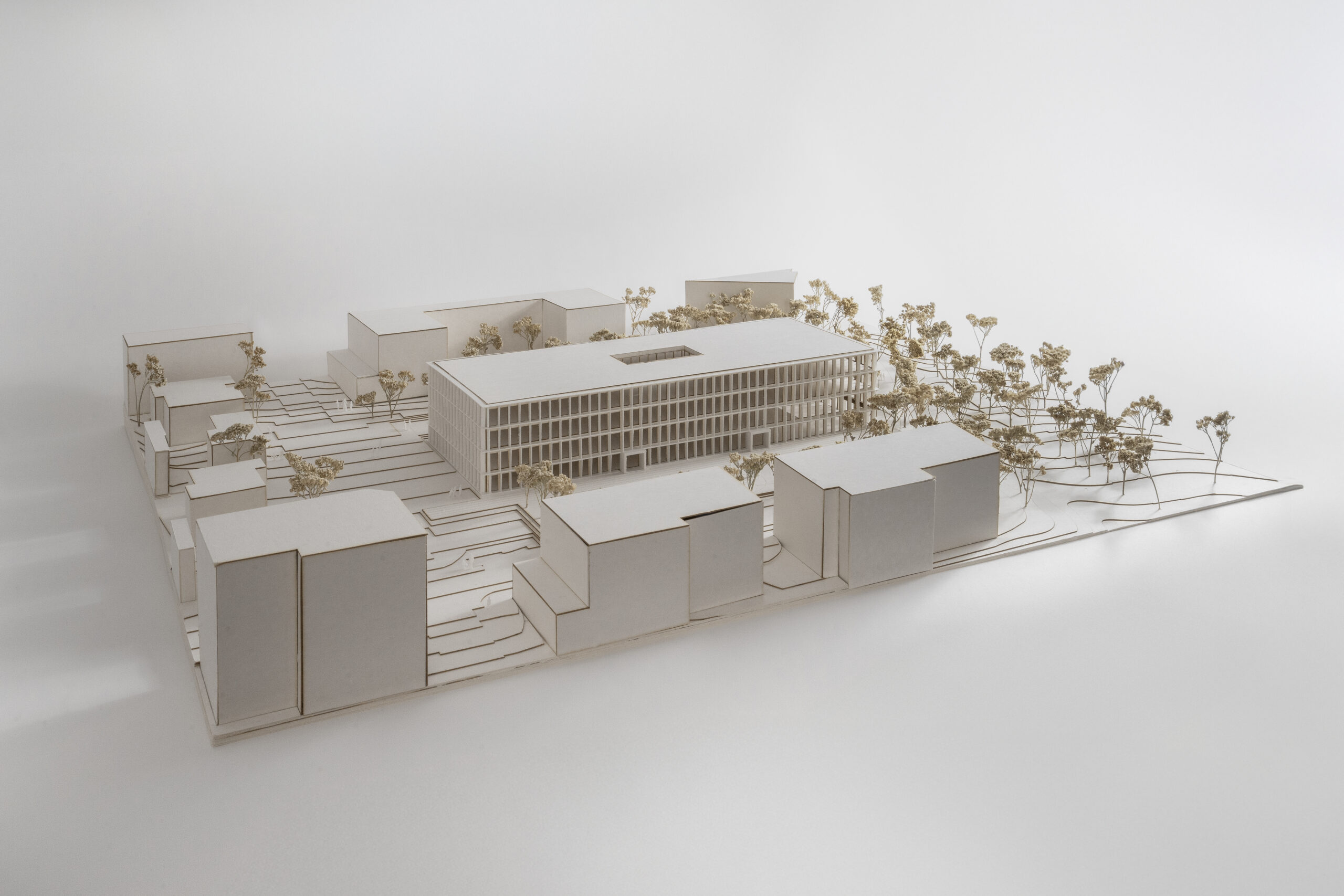
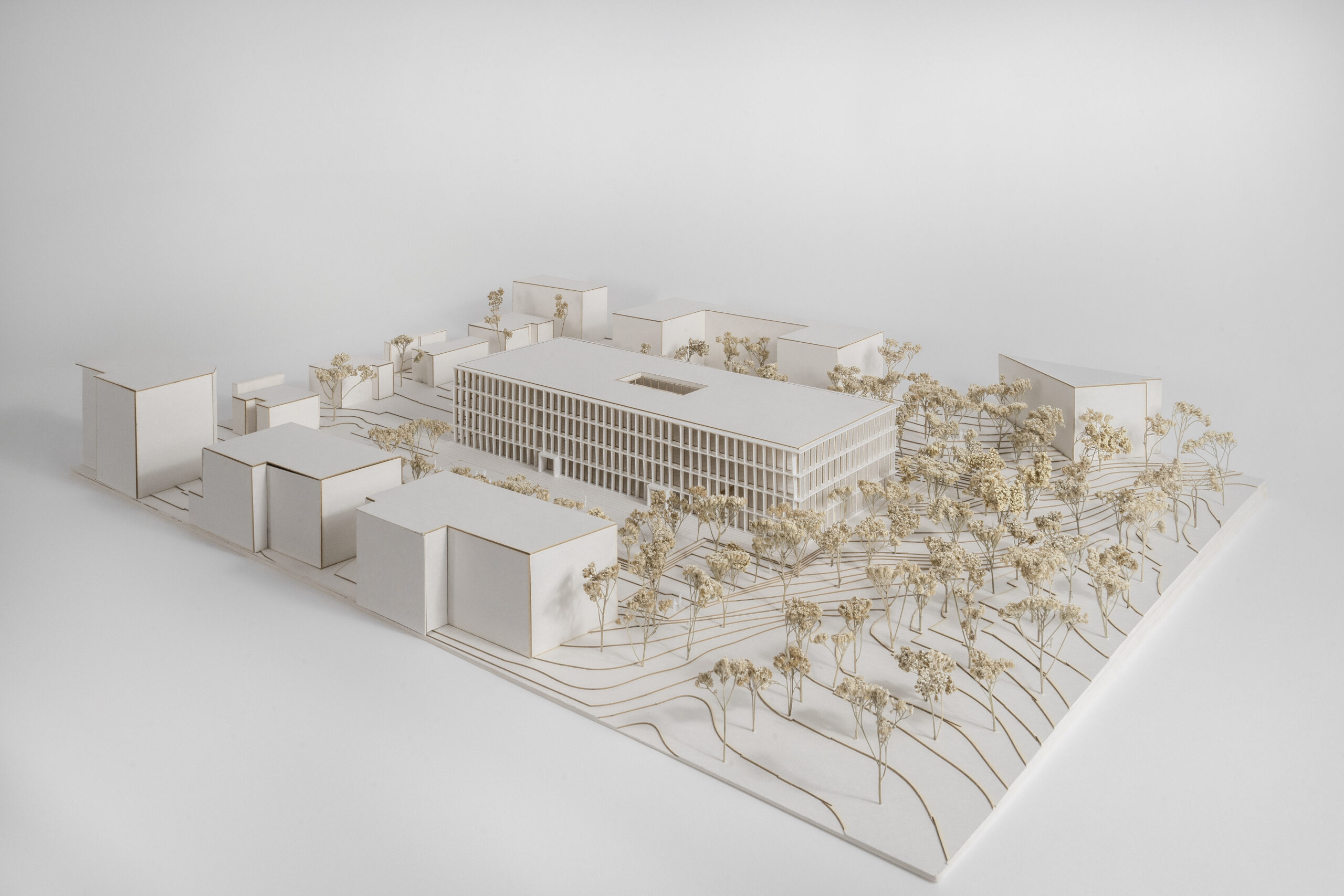
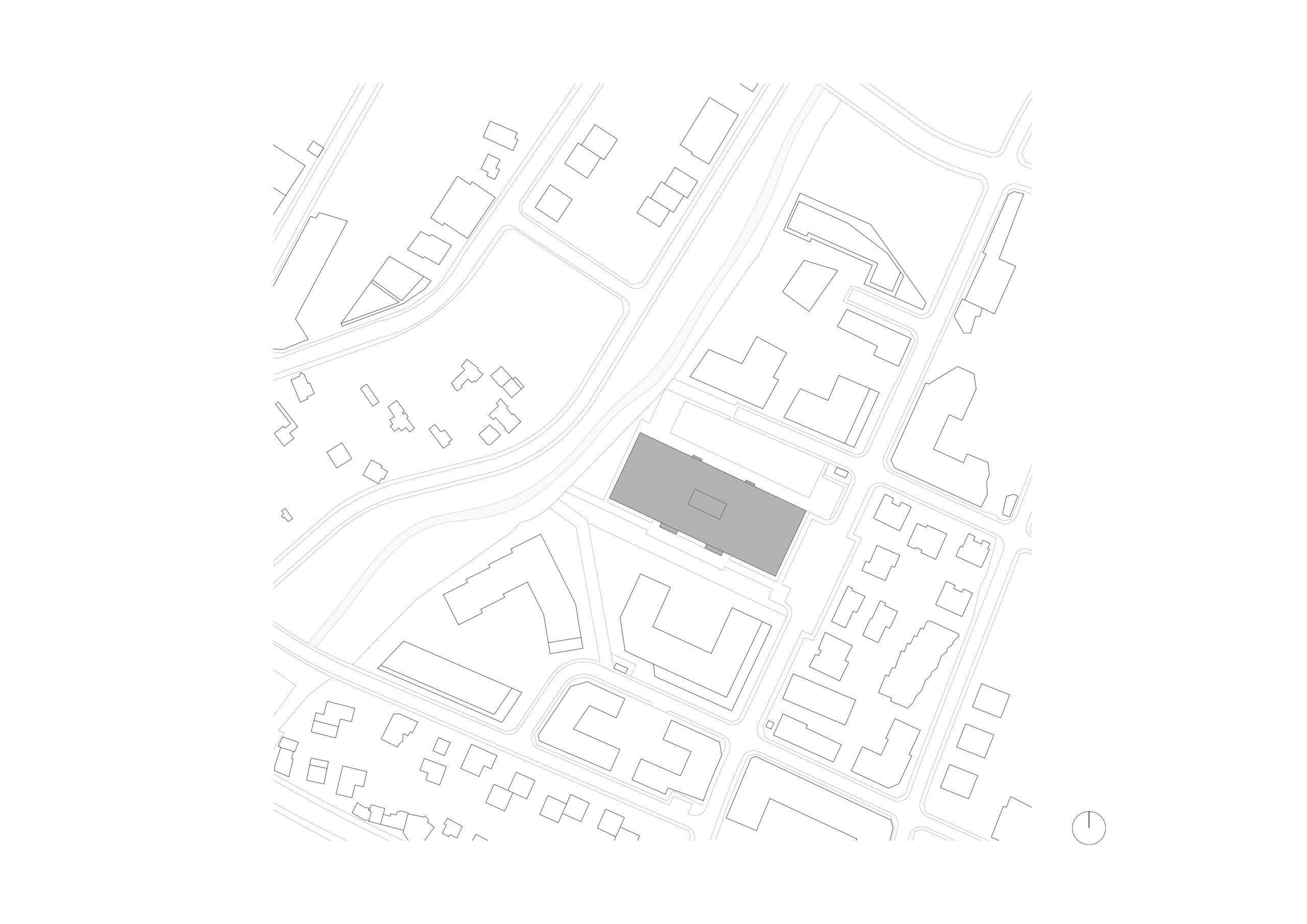
The project for a new primary school in the Manastirski Livadi district of Sofia introduces a contemporary and innovative approach to the educational environment, creating a space that encourages learning, socialization, and an active connection with both nature and the urban context.
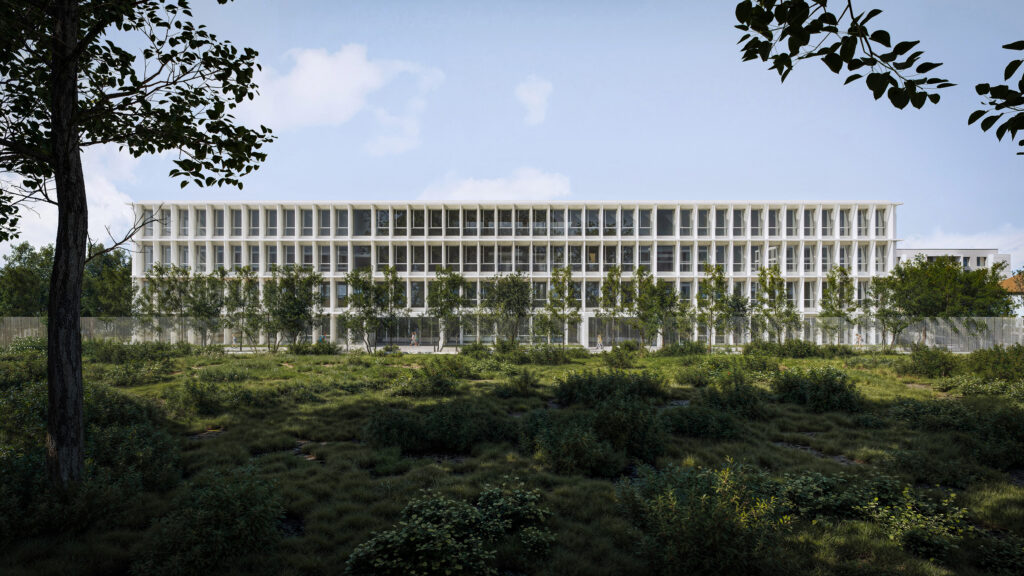
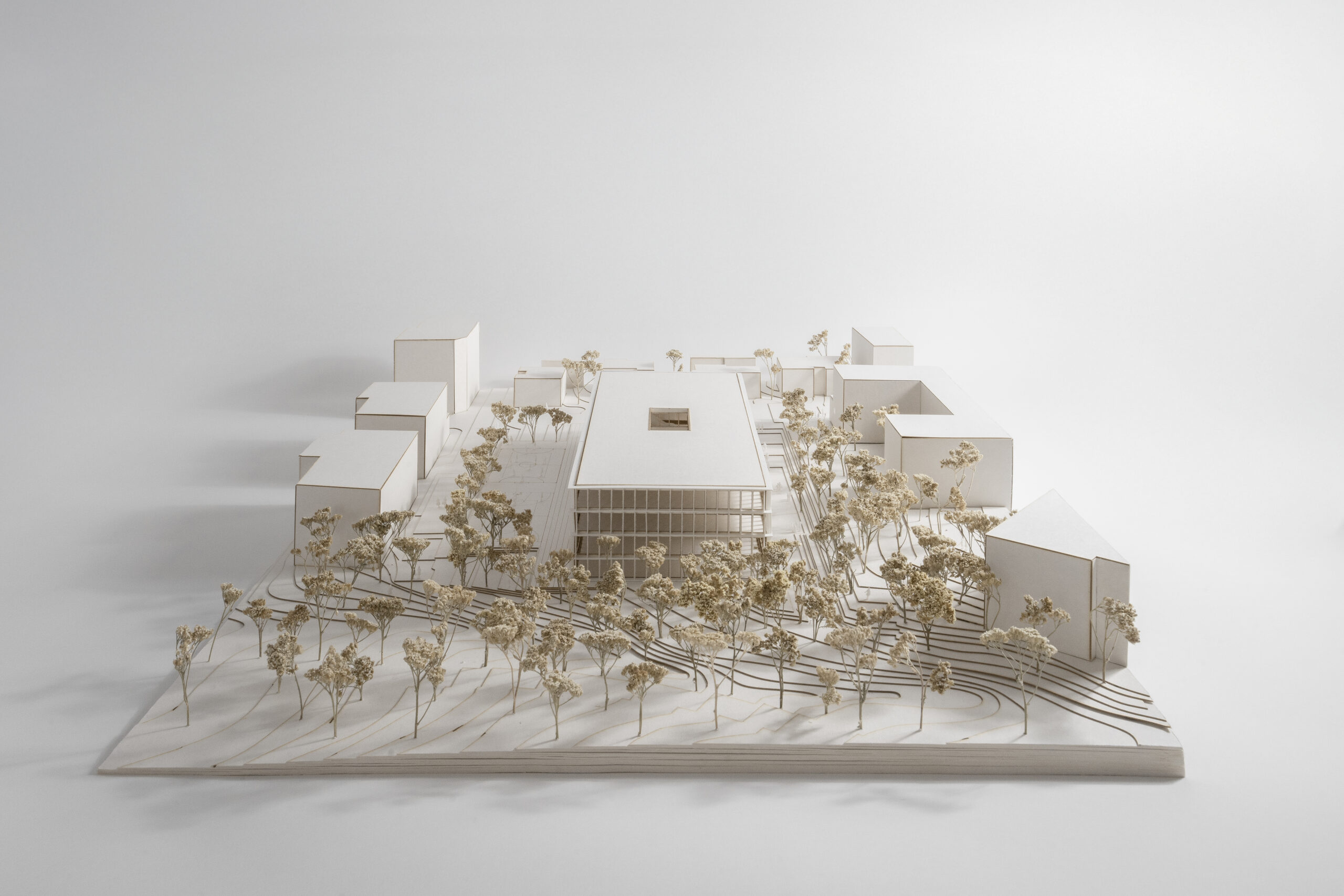
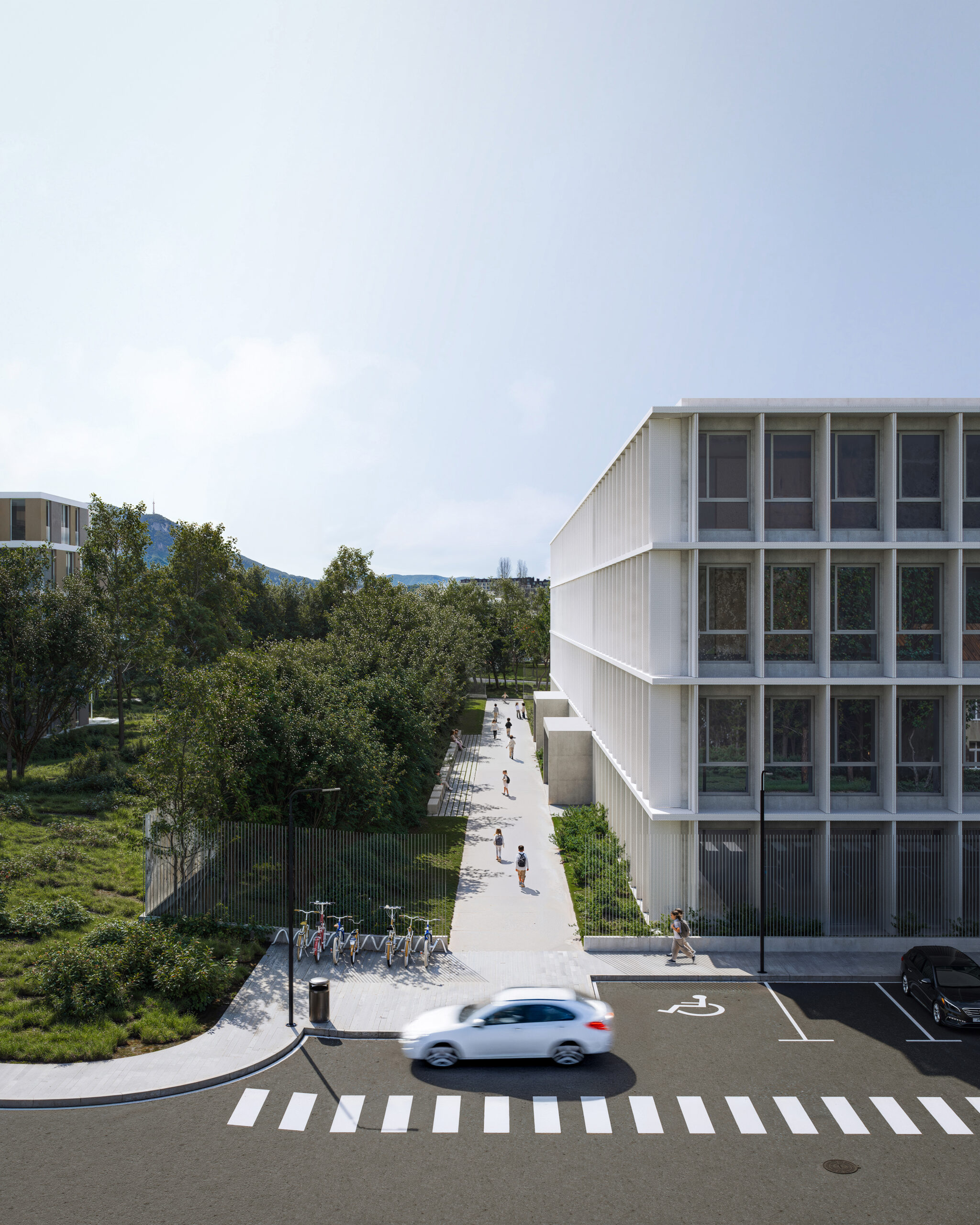
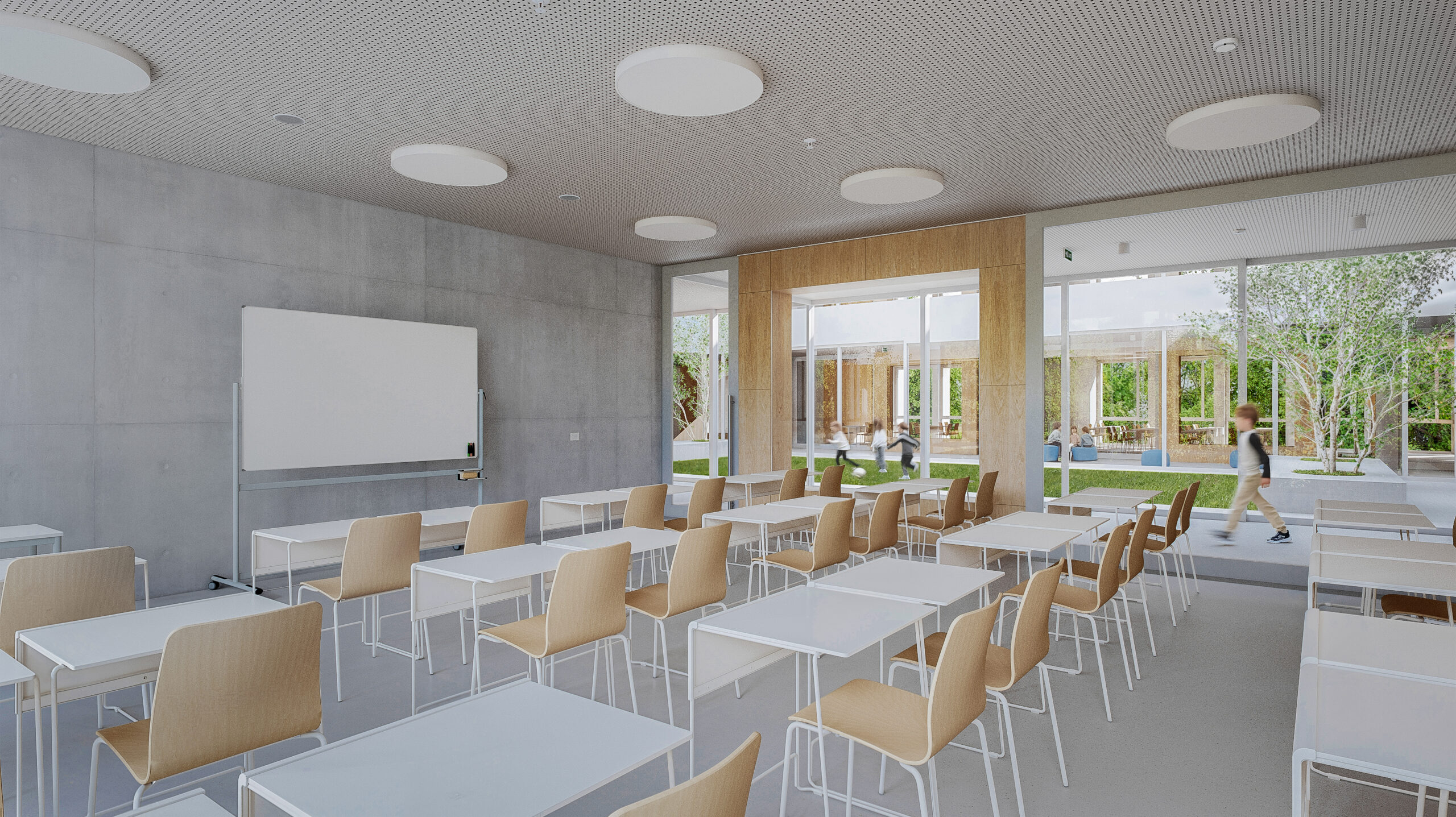
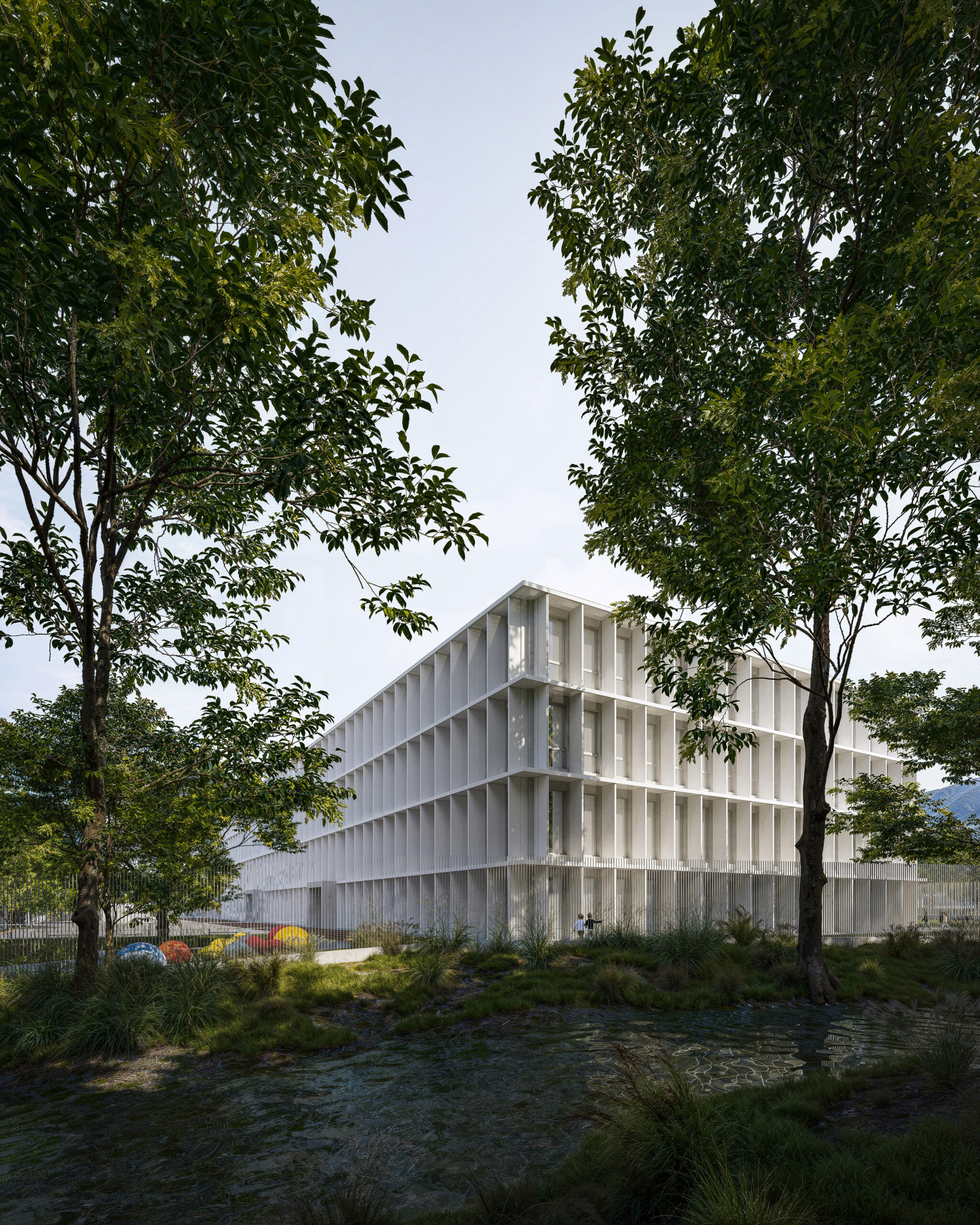
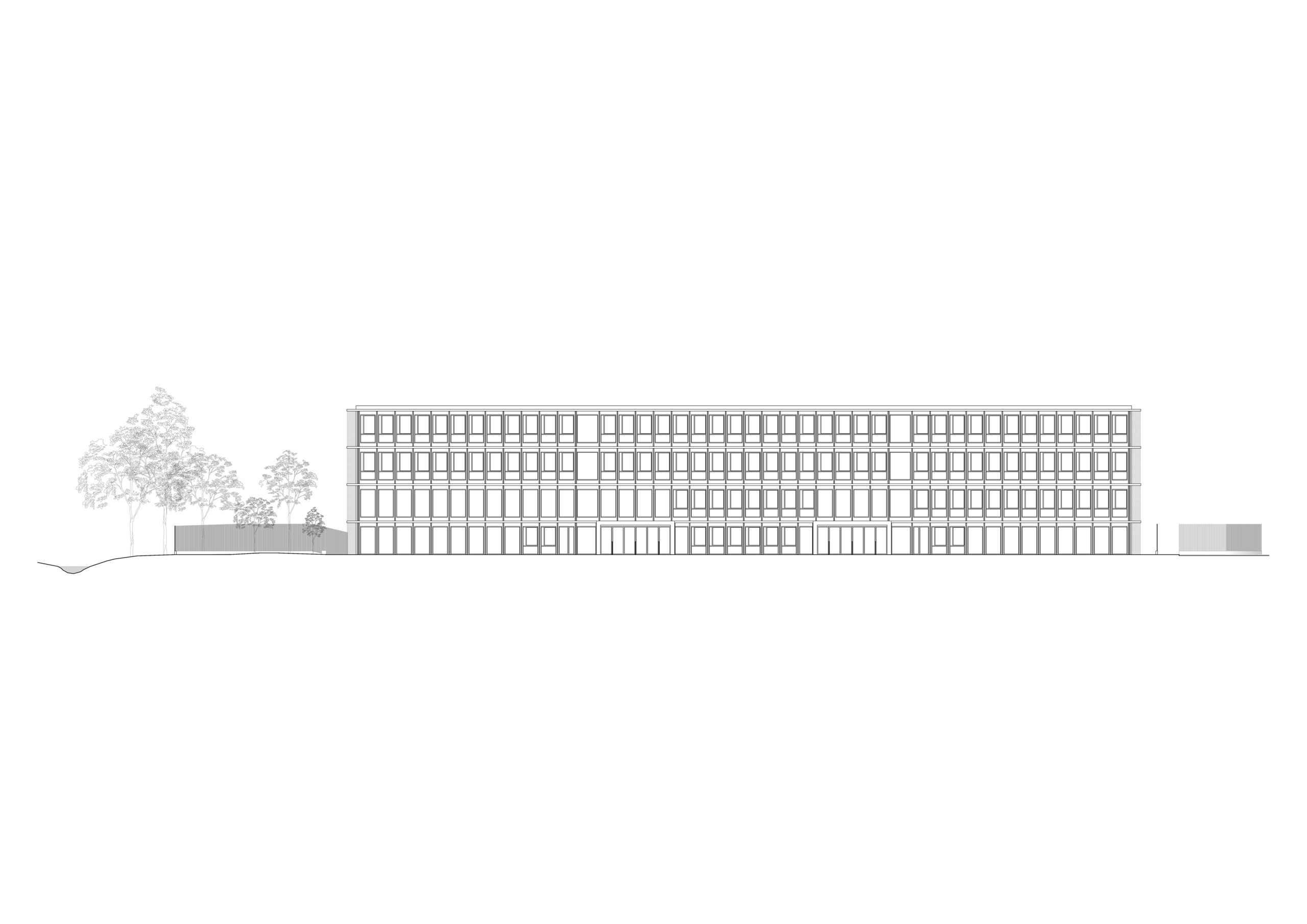
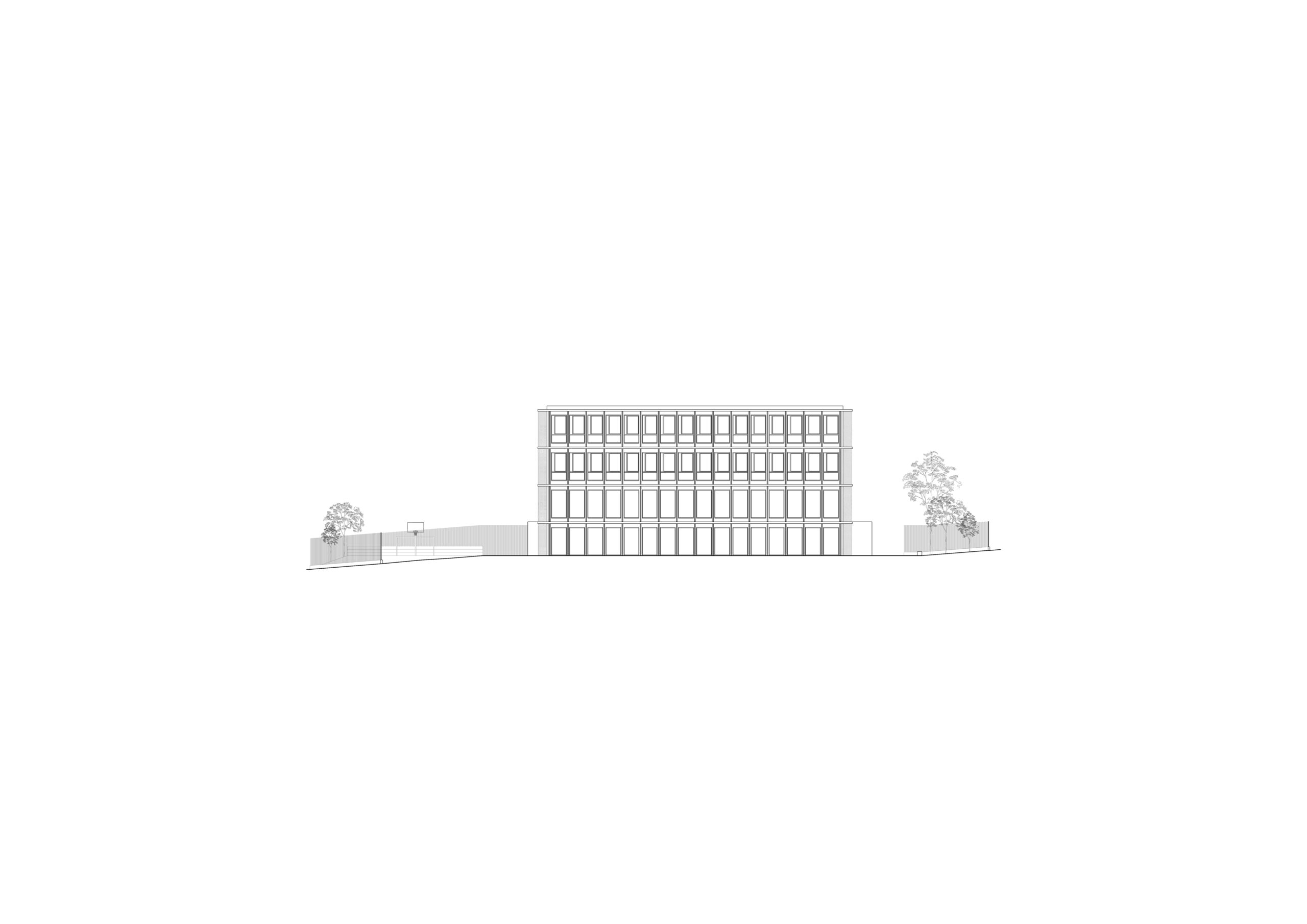
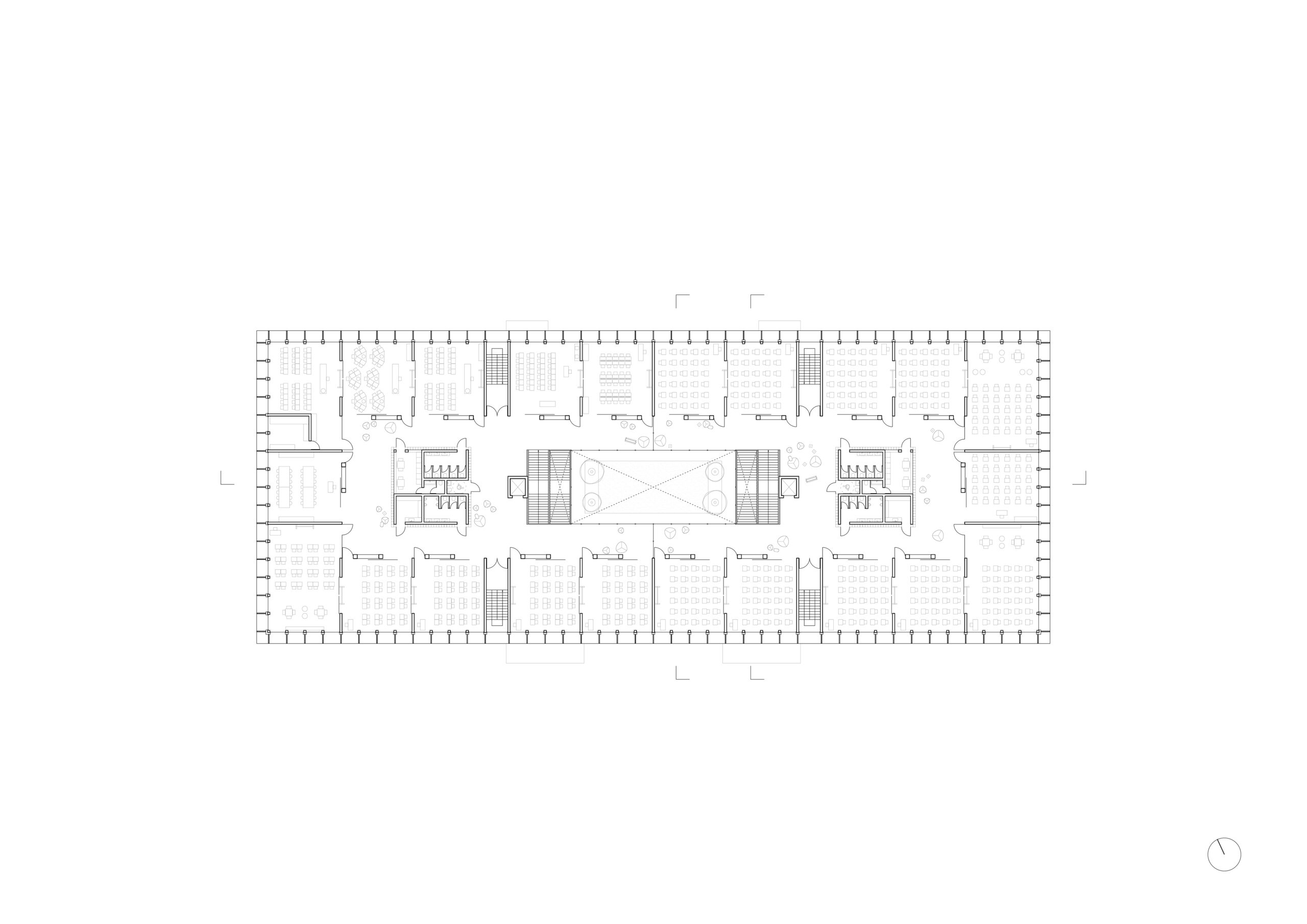
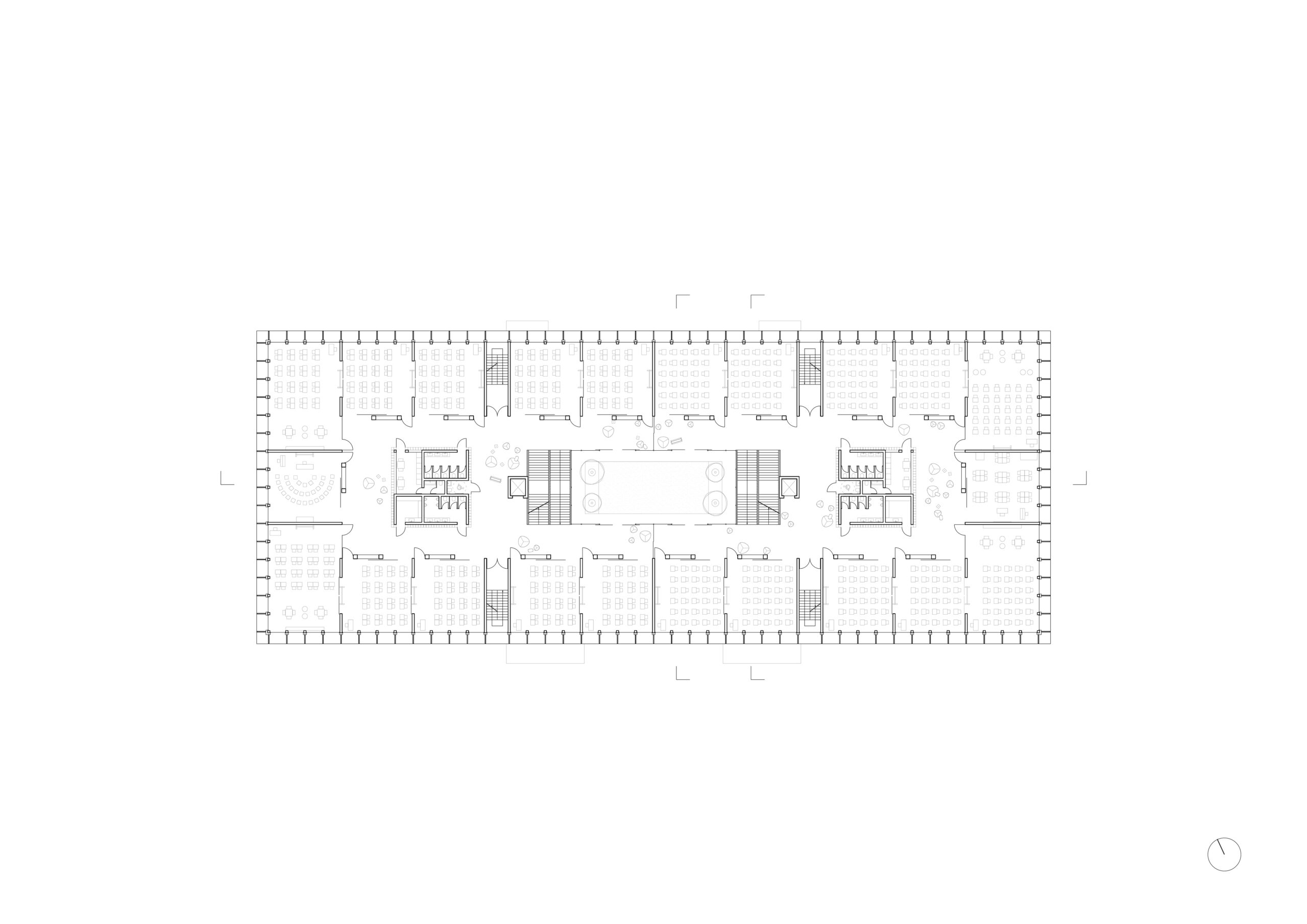
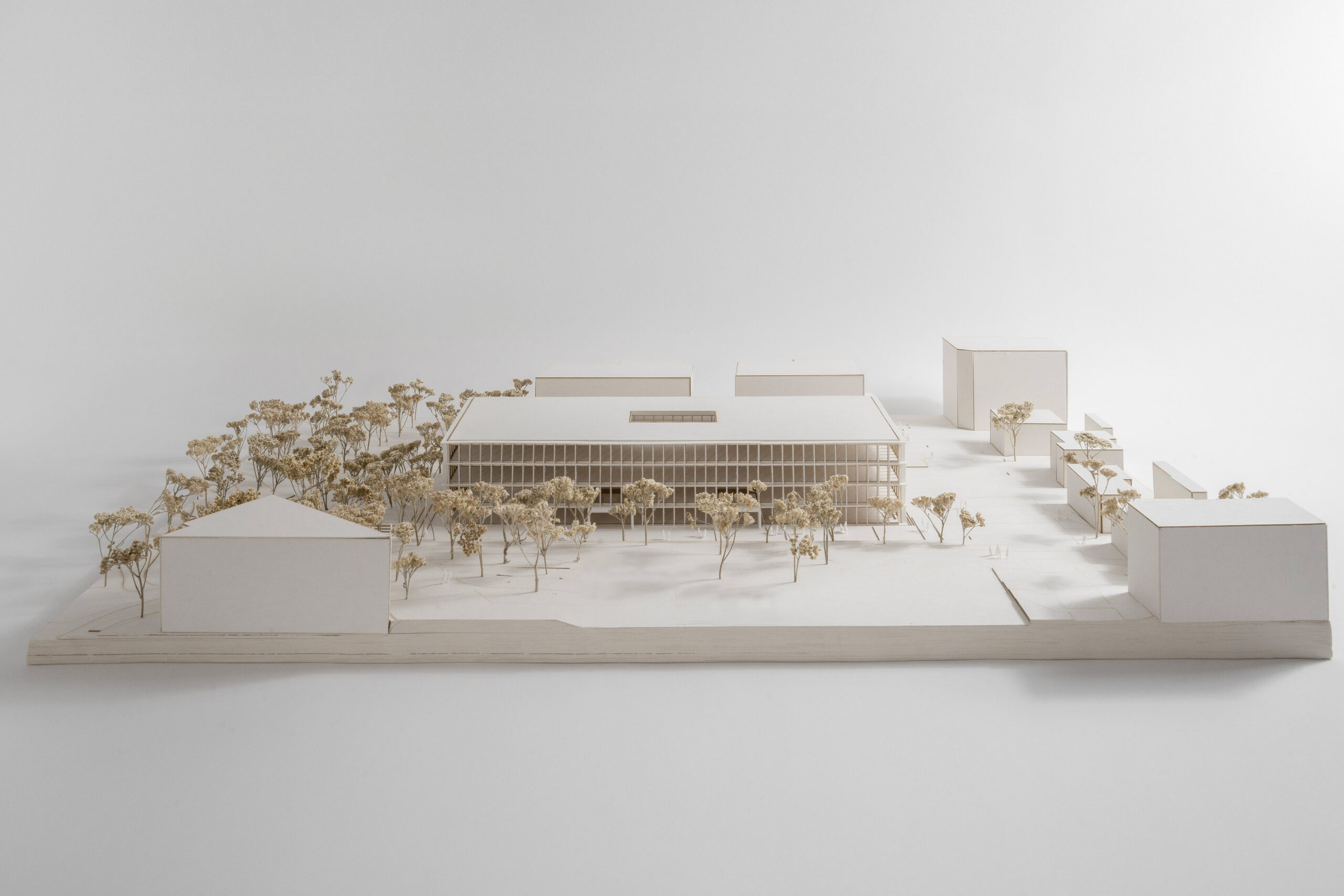
The four-storey building is a simple, rectangular volume harmoniously integrated into the neighborhood’s residential fabric. The overall concept is structured based on the key architectural and educational element – the classroom. Each classroom is designed as a perfect square – a shape with no orientation, which allows for flexible and easily adaptable furniture configurations and supports different teaching methods. The square module multiplies to form a network of classrooms that defines the rhythm and structure of the entire building. This modular system serves as the foundation for all other functional zones and floor layouts.
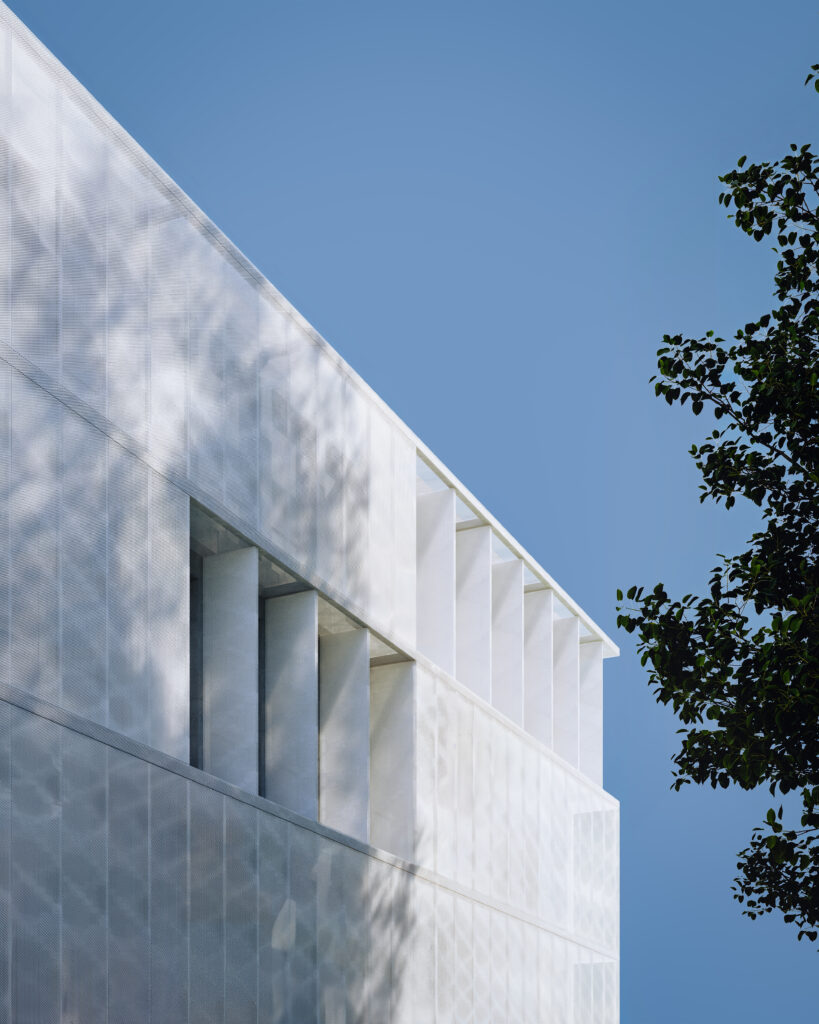
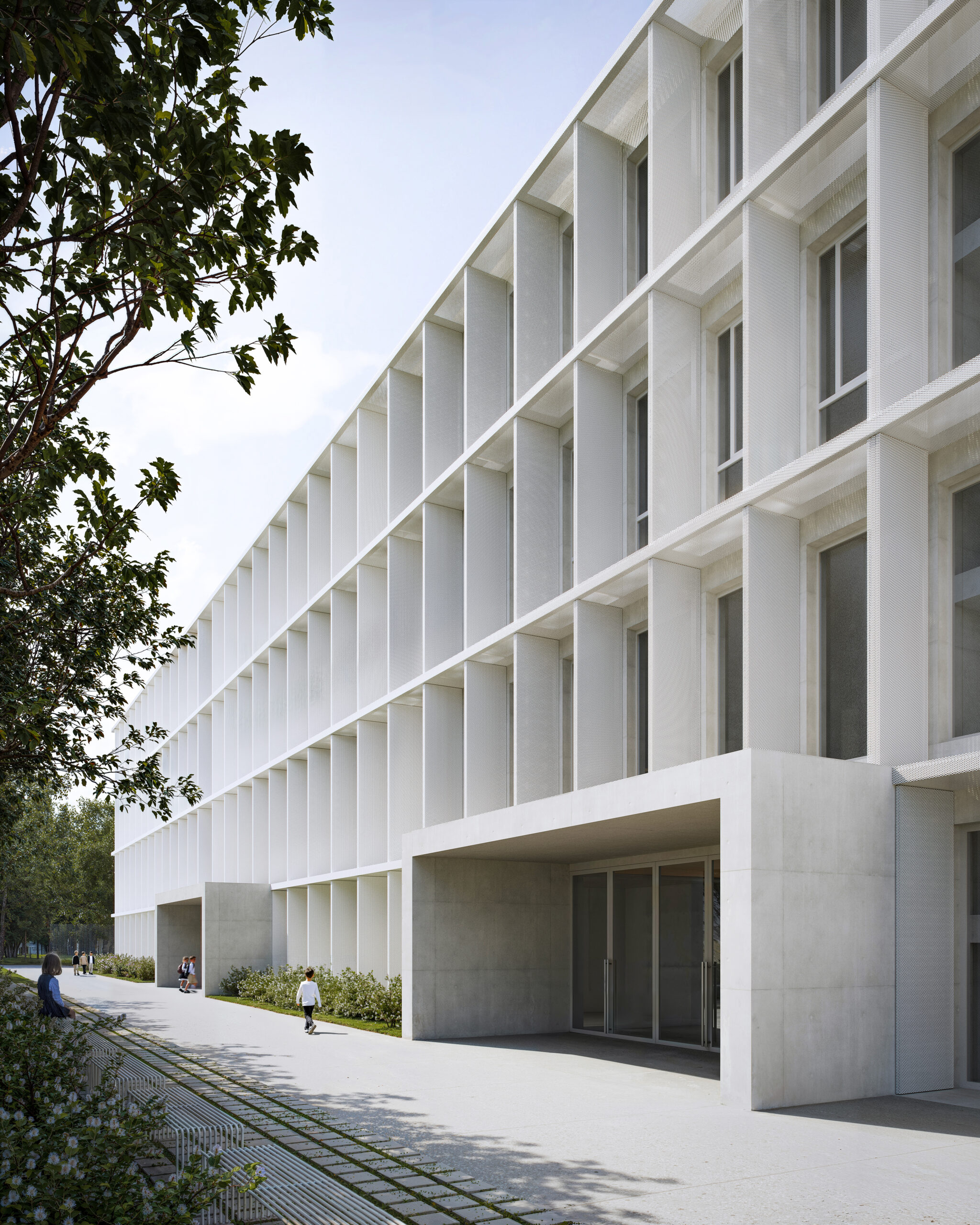
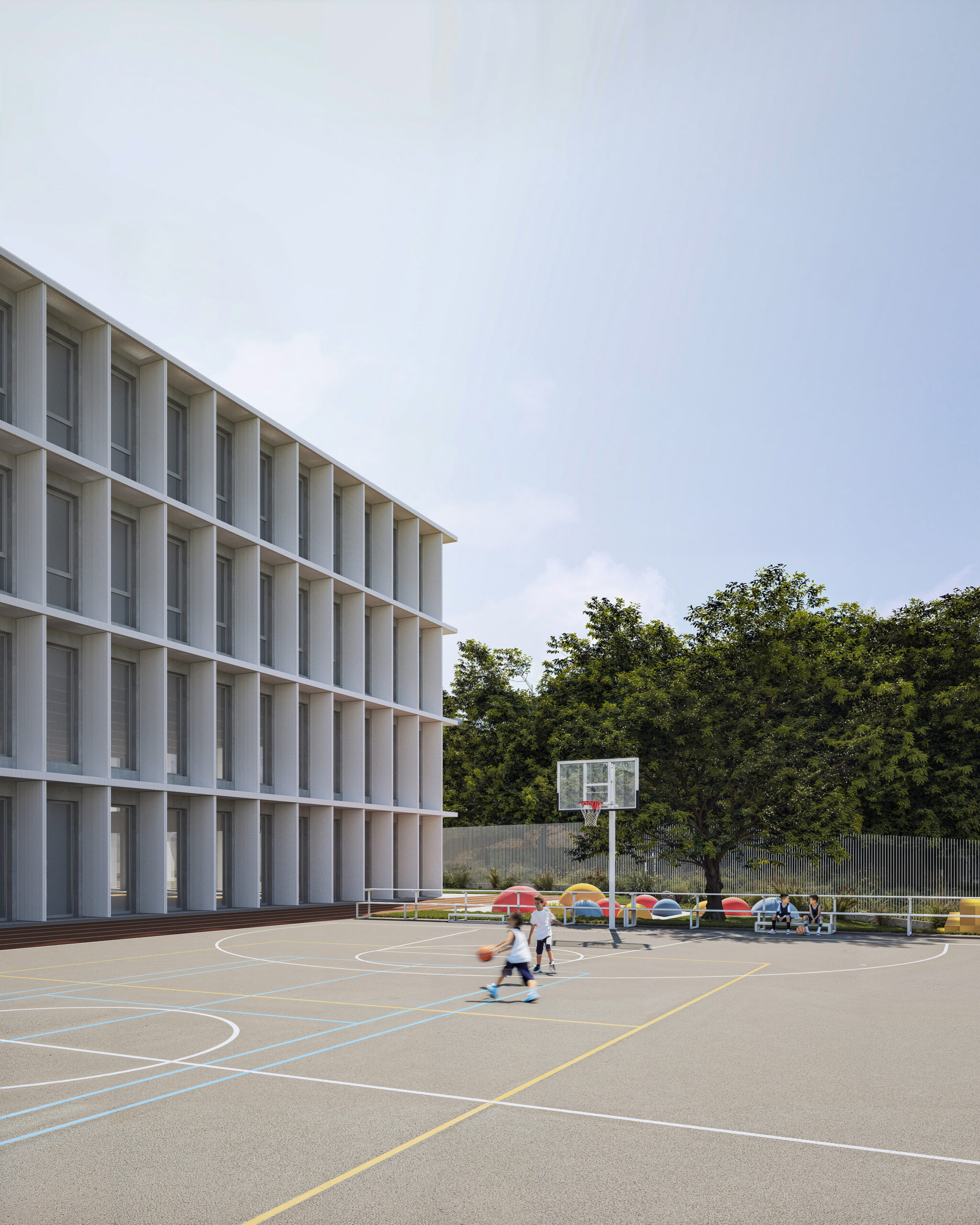
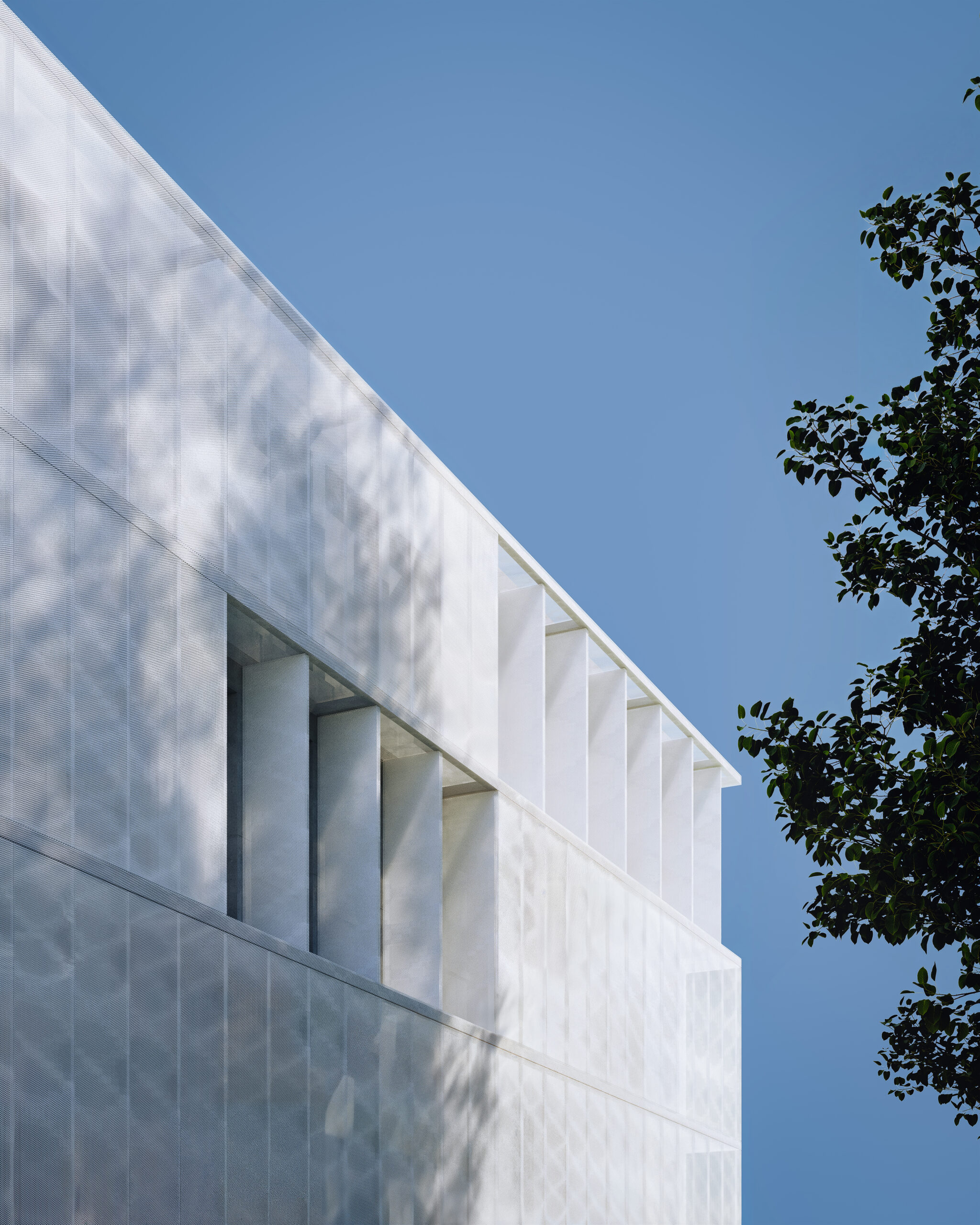
The school’s minimalist and contemporary design is enhanced by a delicate façade system that filters natural light. Hinged metal mesh panels allow complete control over the quantity and quality of natural light, animating the façade and reflecting the life within. The system serves two primary functions – light control and passive ventilation. Each window features two motorized panels that, when closed, transform direct light into soft, diffused illumination, neutralizing the greenhouse effect and maintaining a comfortable microclimate throughout the year.
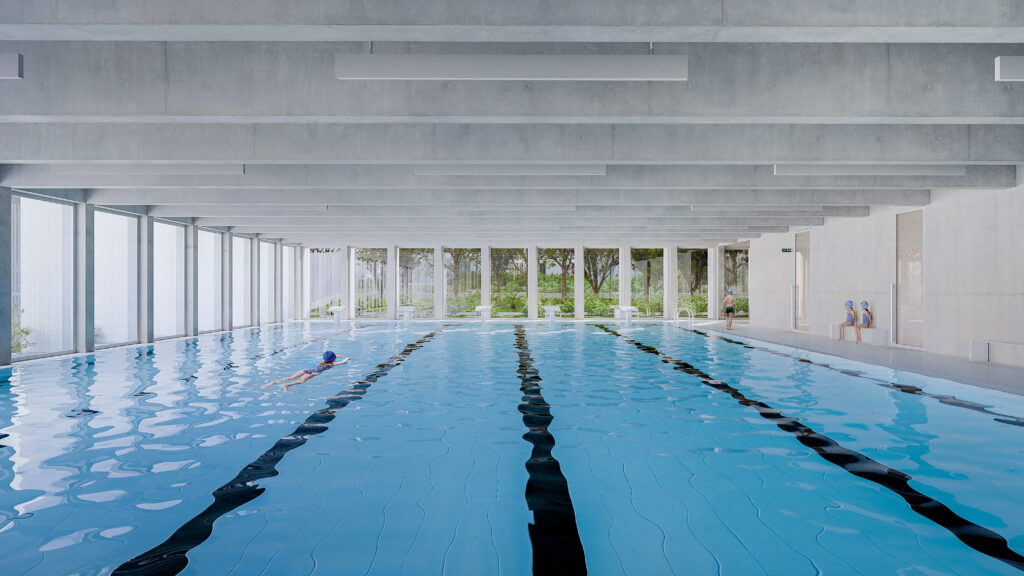
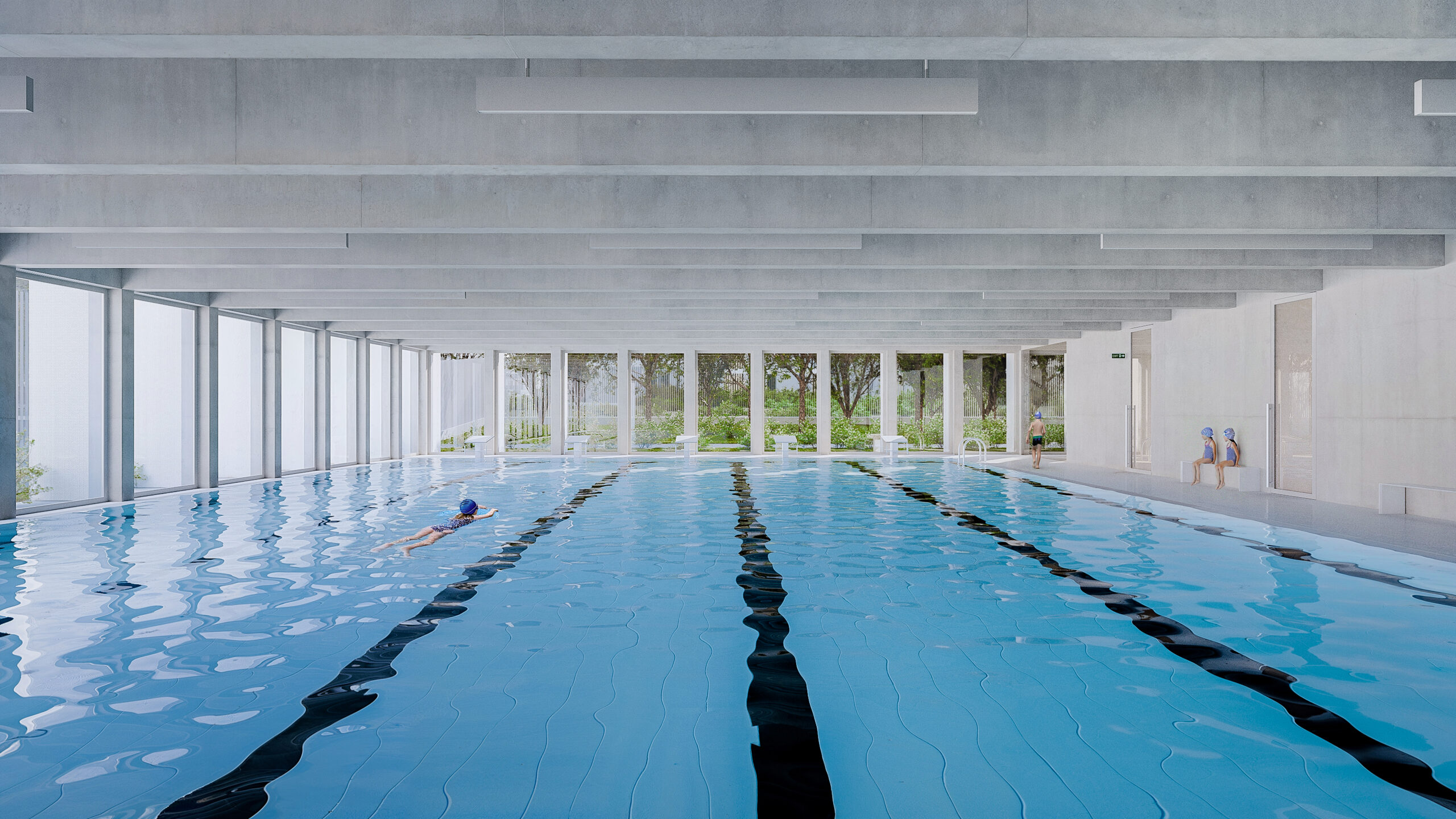
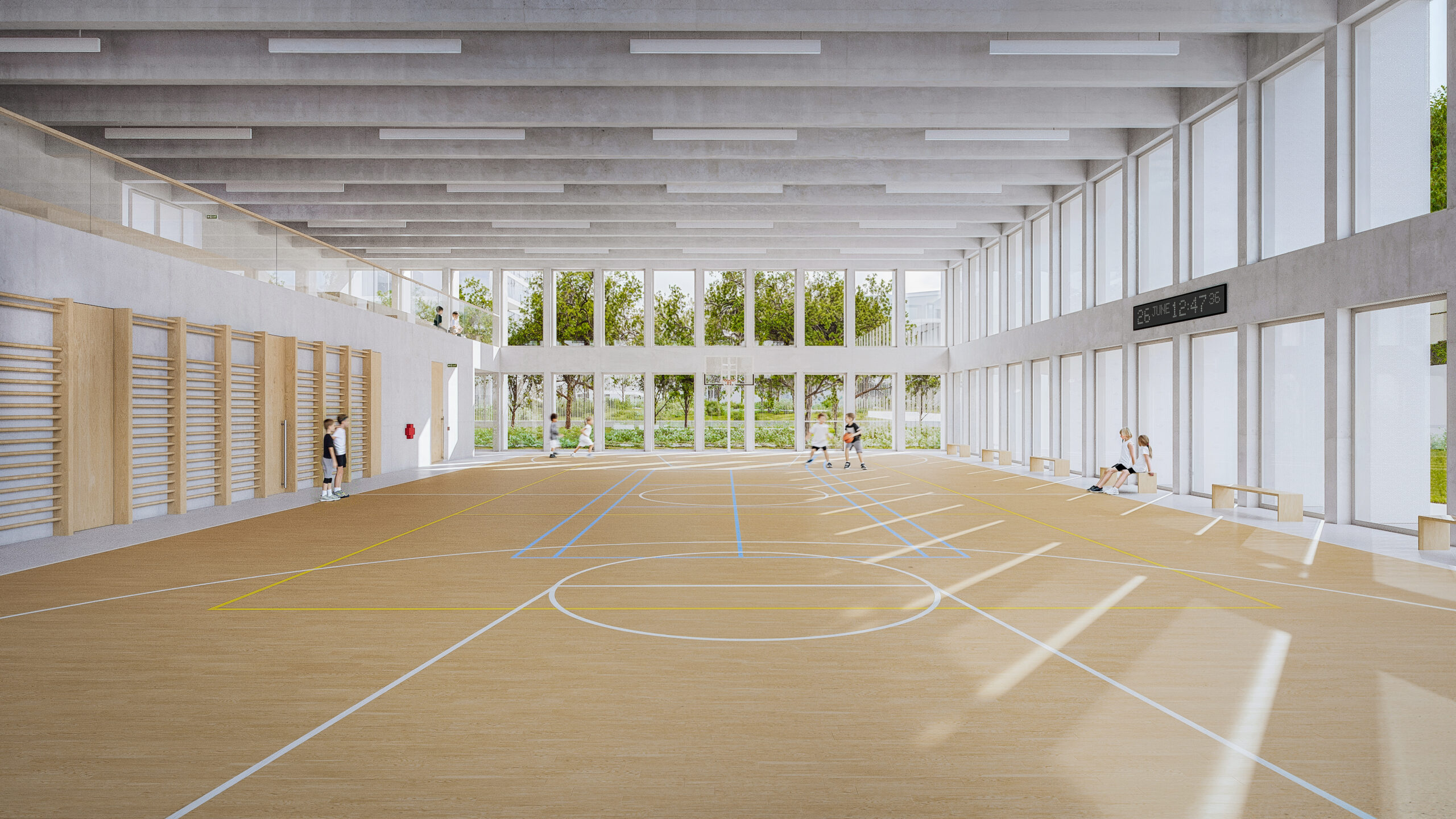
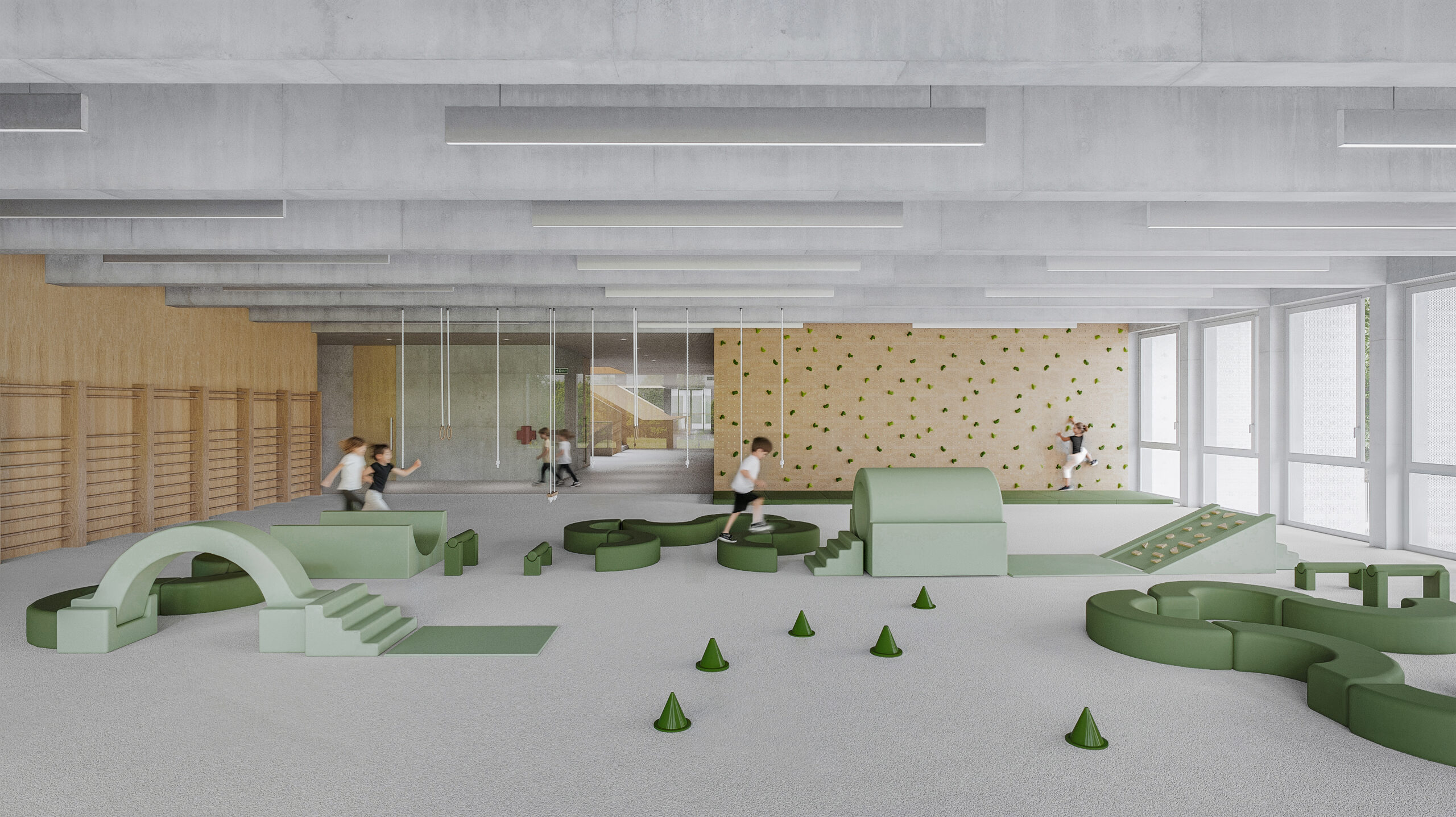
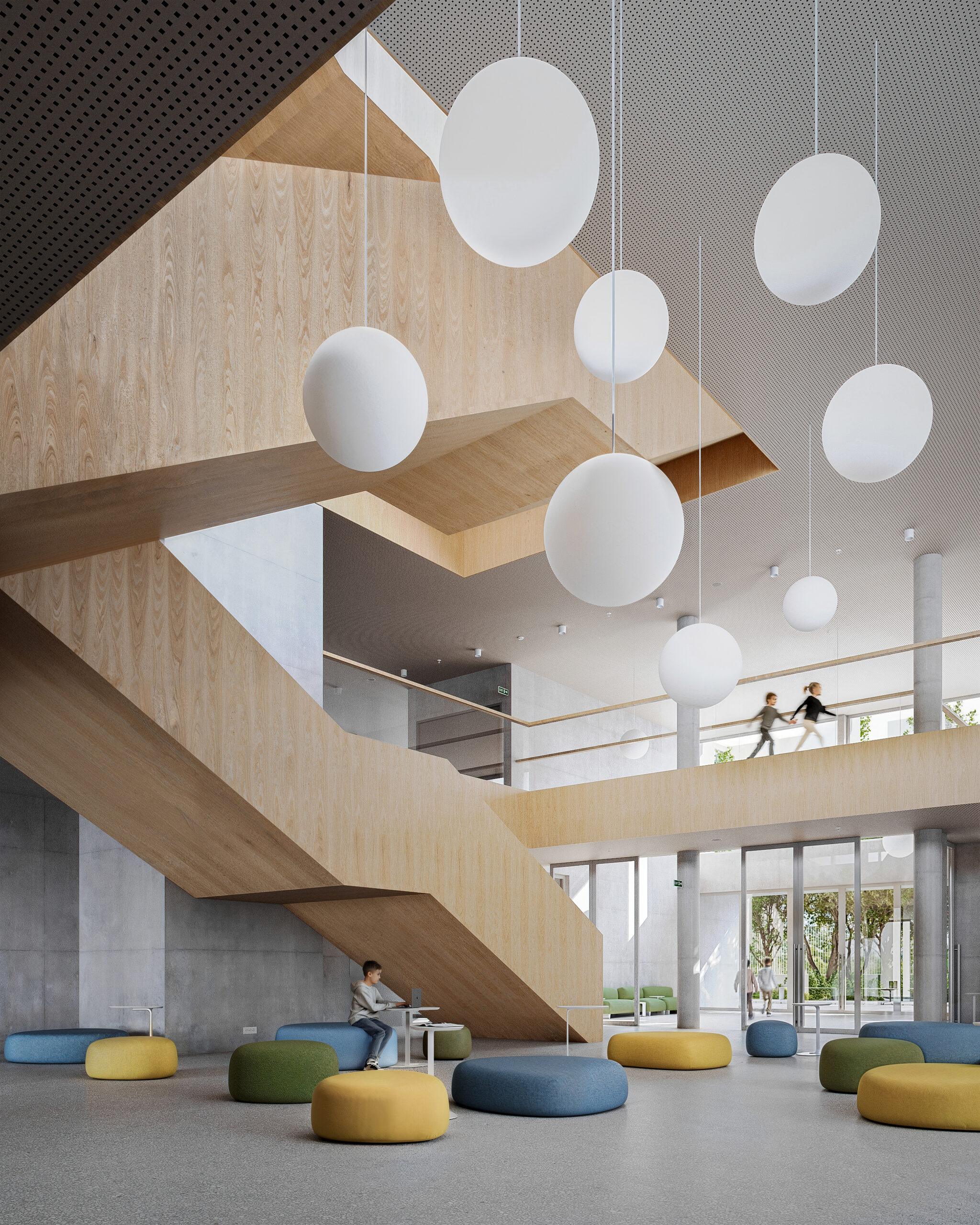
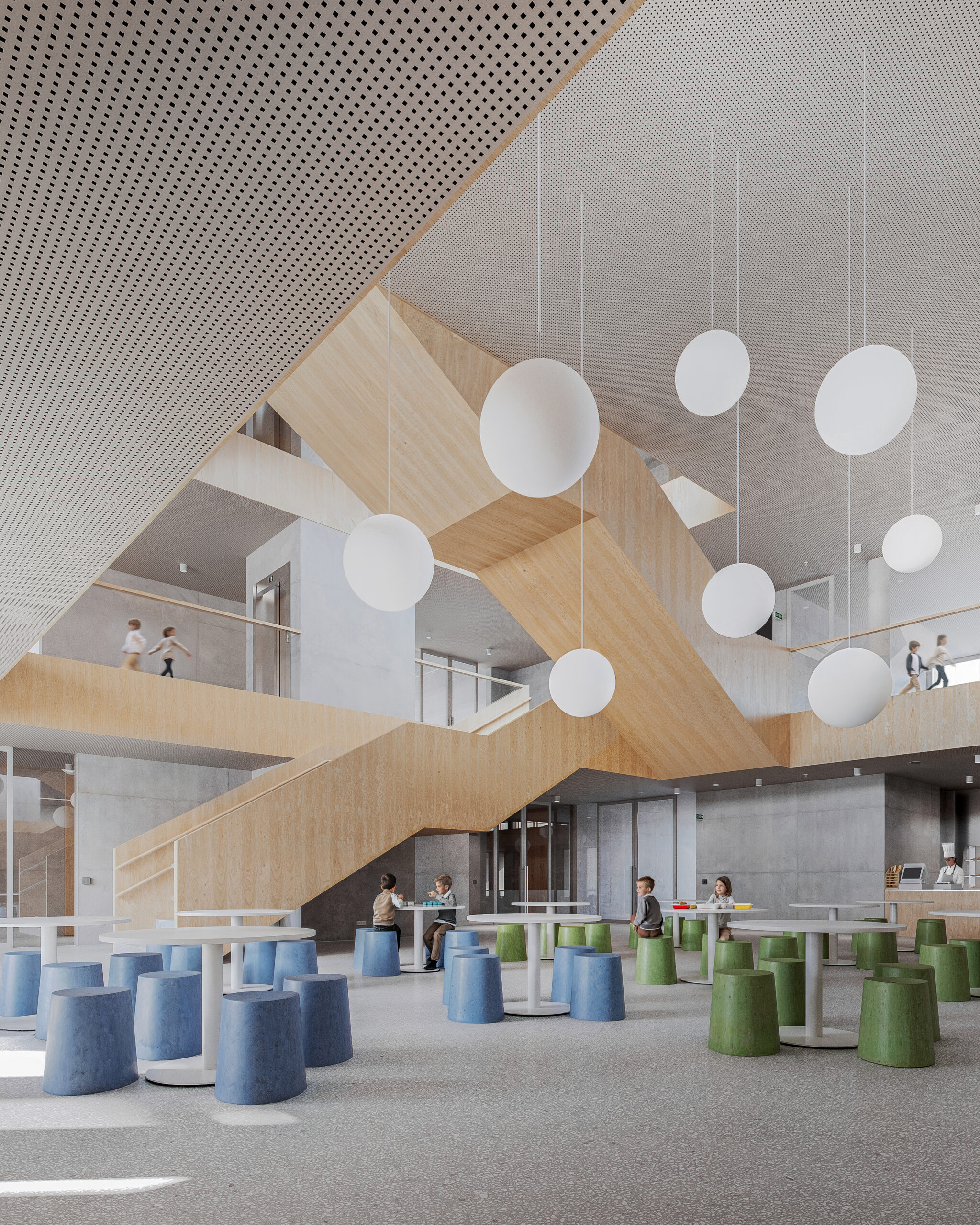
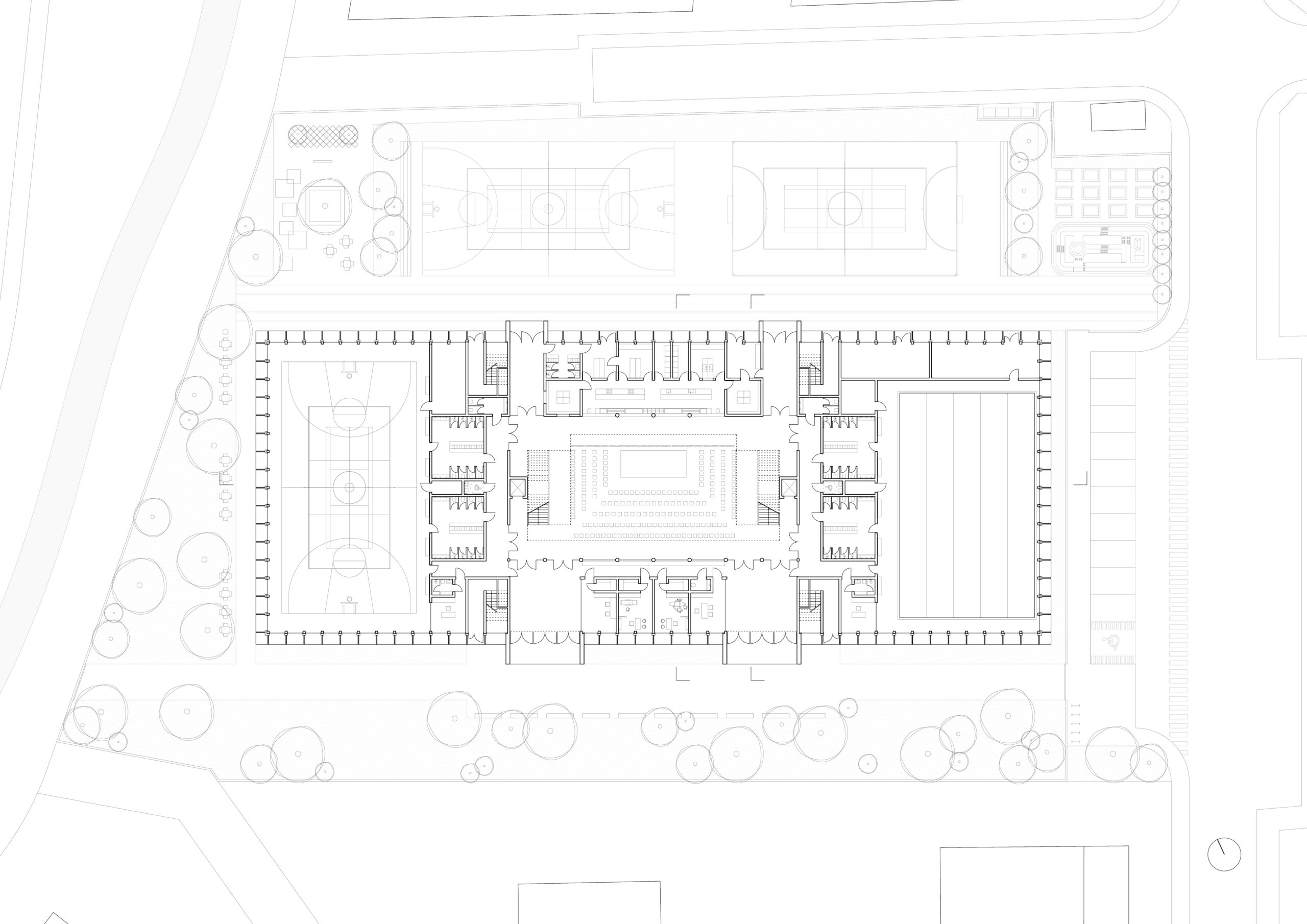
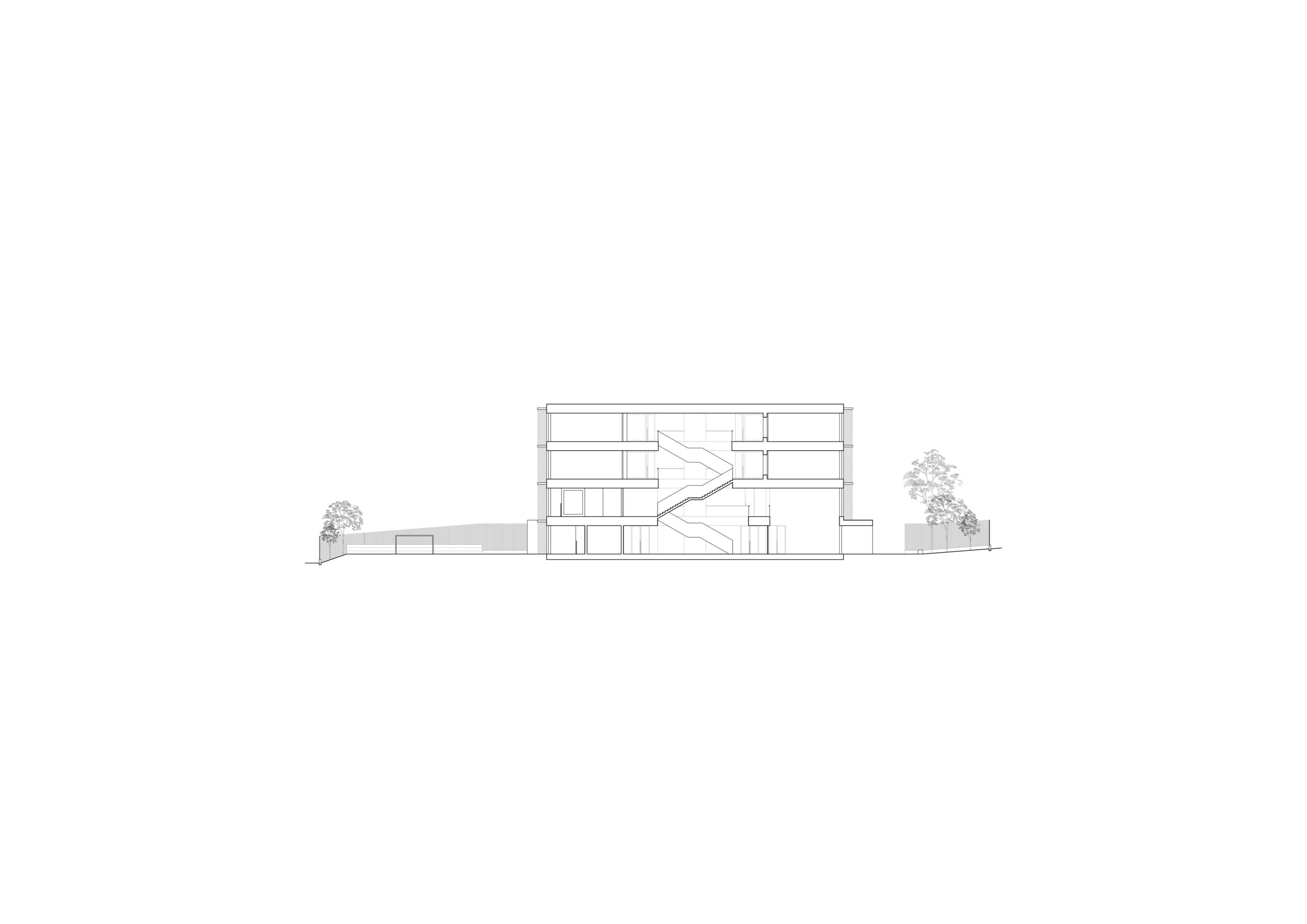
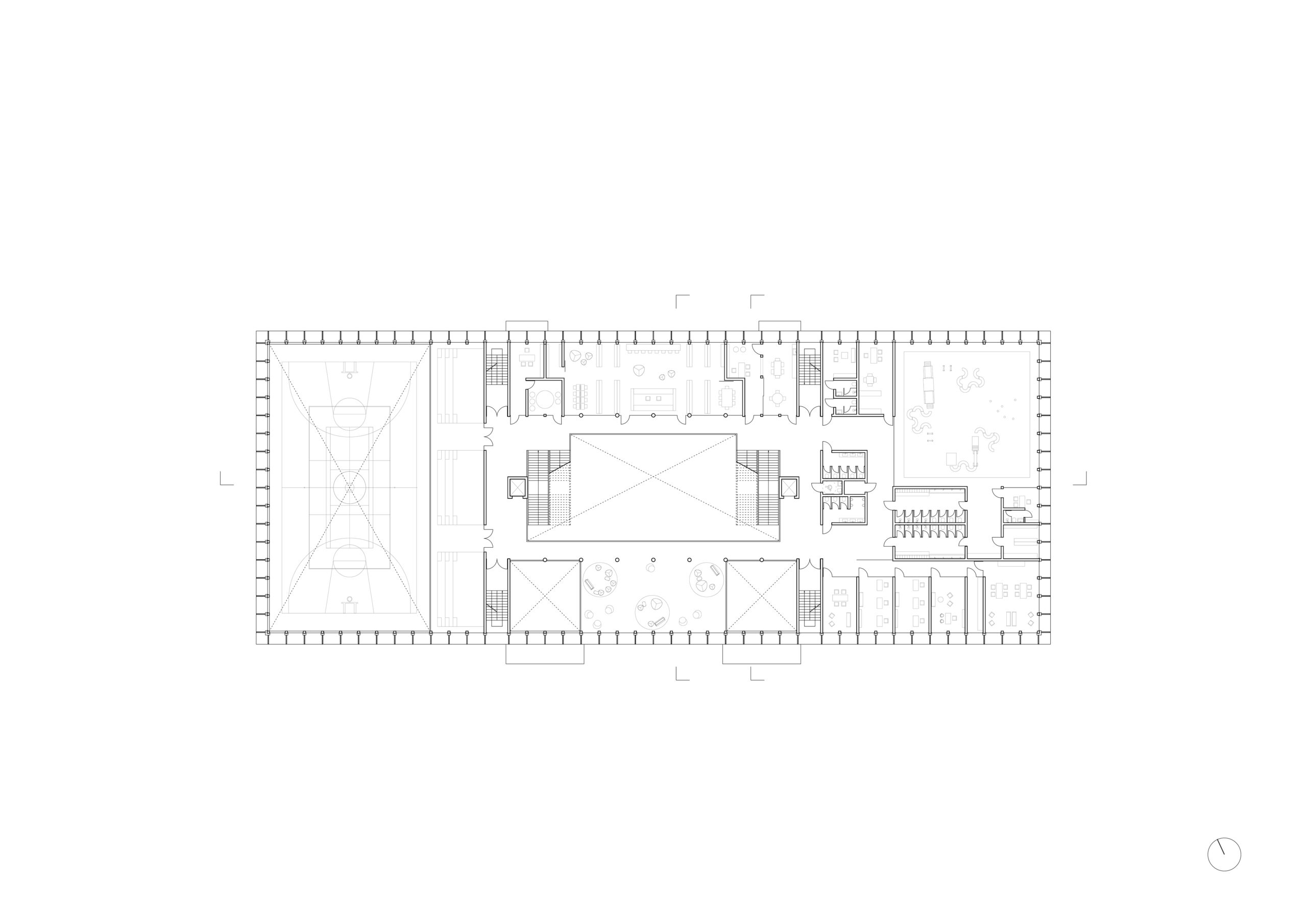
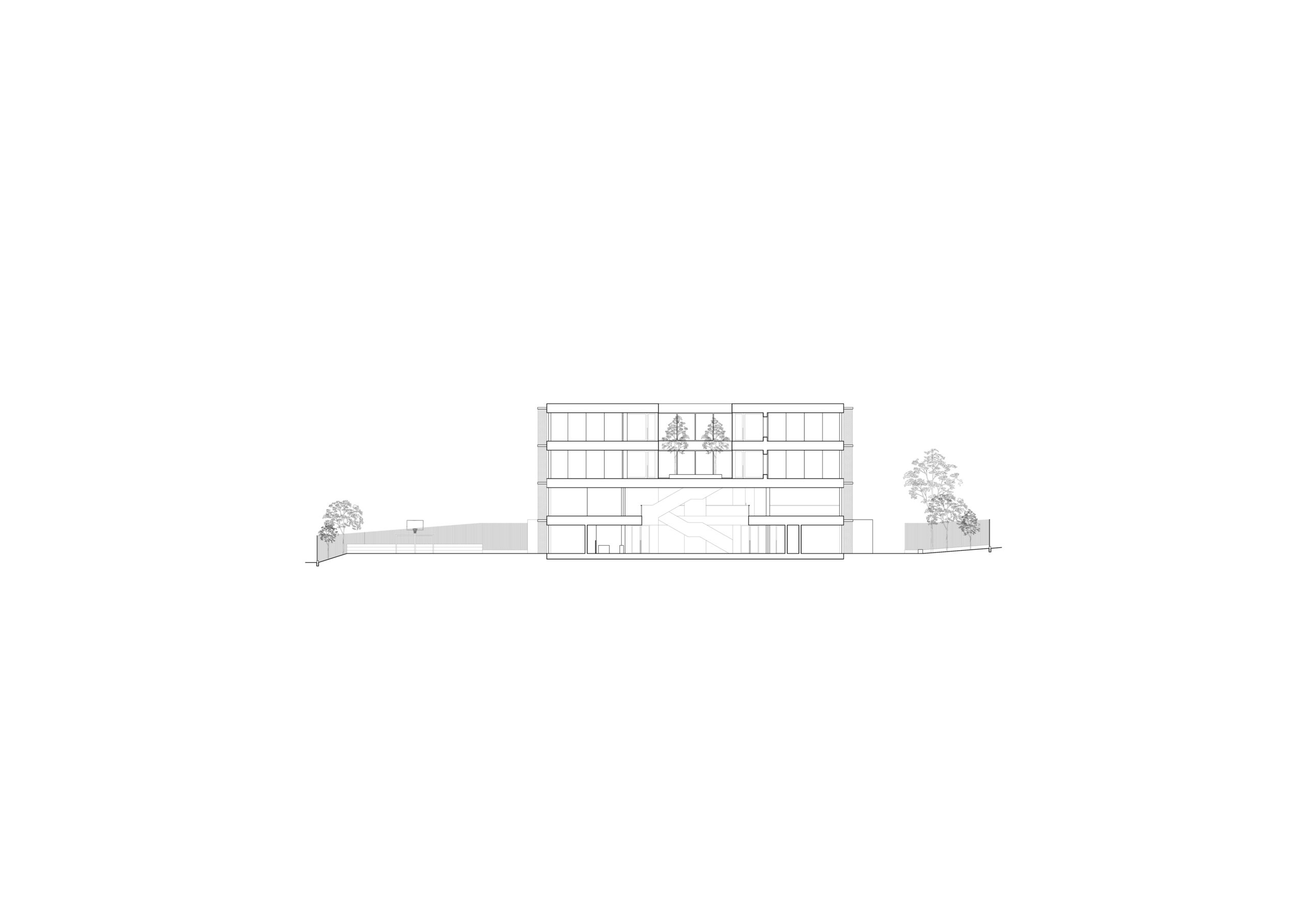
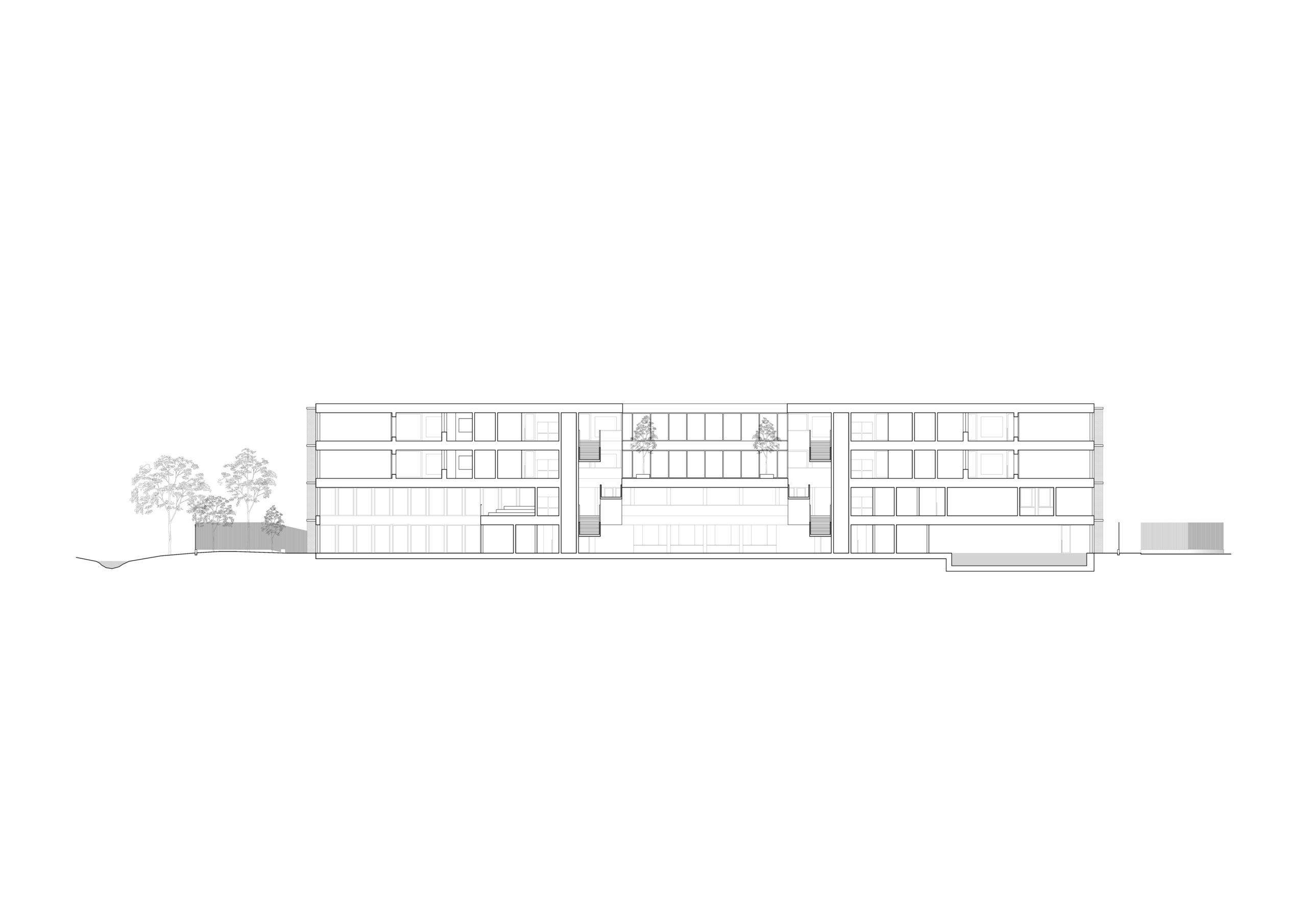
The ground floor unites the key spaces serving both the school and the local community, including a central forum, a large gymnasium, a swimming pool, a kitchen, a snack bar, and medical offices. Two entrance areas lead directly to the forum – the central core of the building, designed as a place where students, teachers, and parents can gather. It functions as a dining area, assembly hall, and event space. Its geometry allows it to host the entire school community, while a terrace on the first floor provides additional seating for spectators.
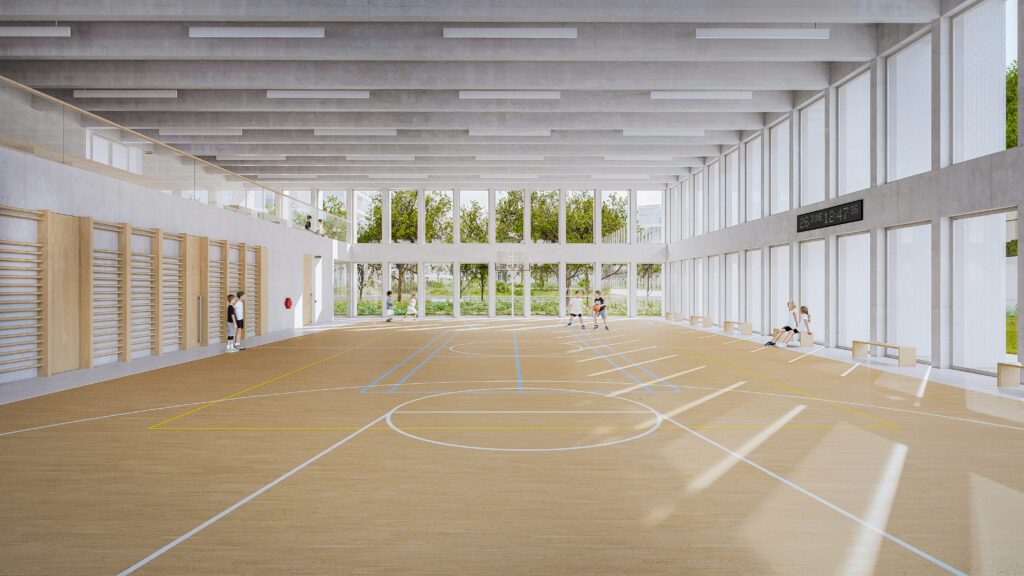
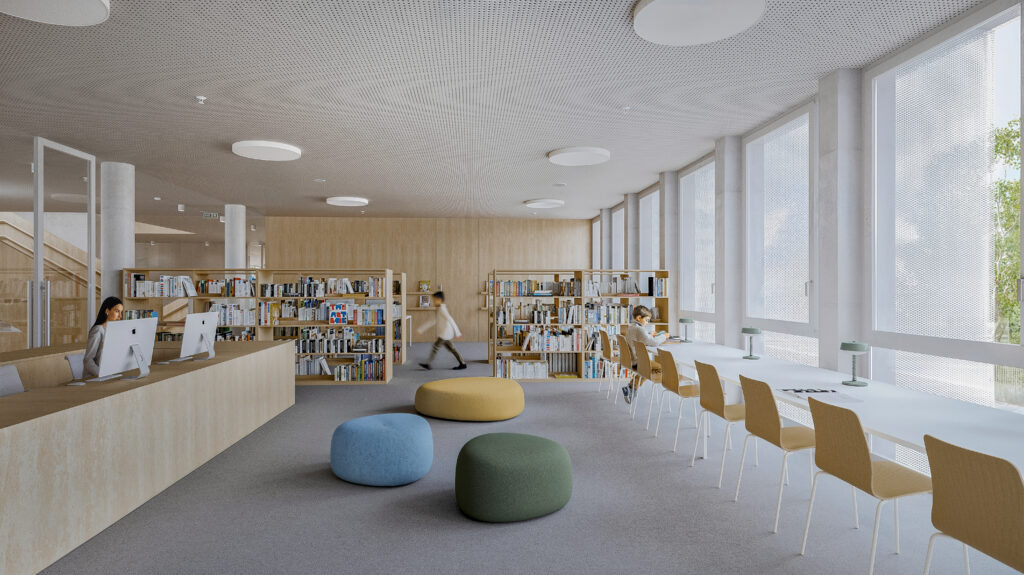
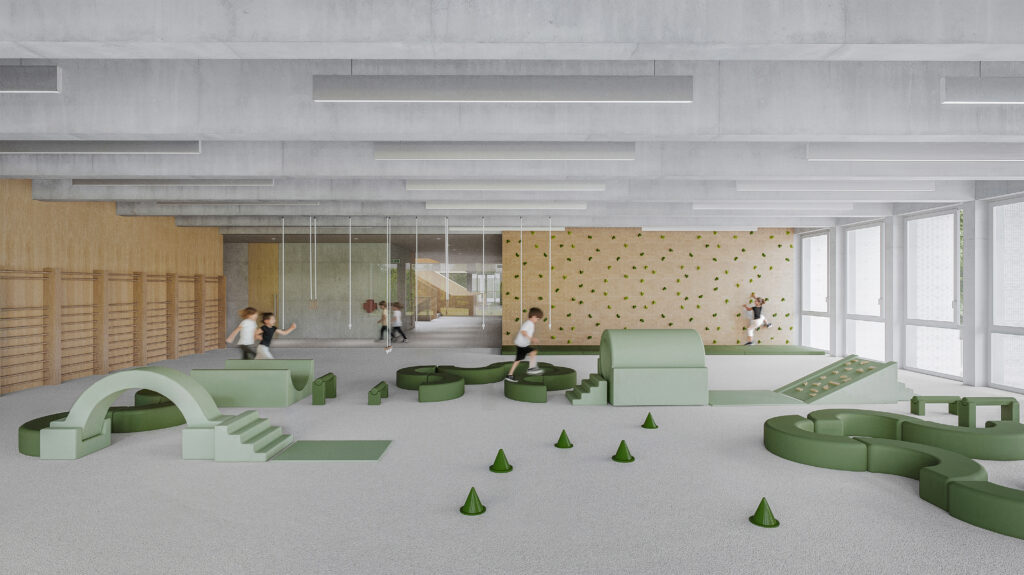
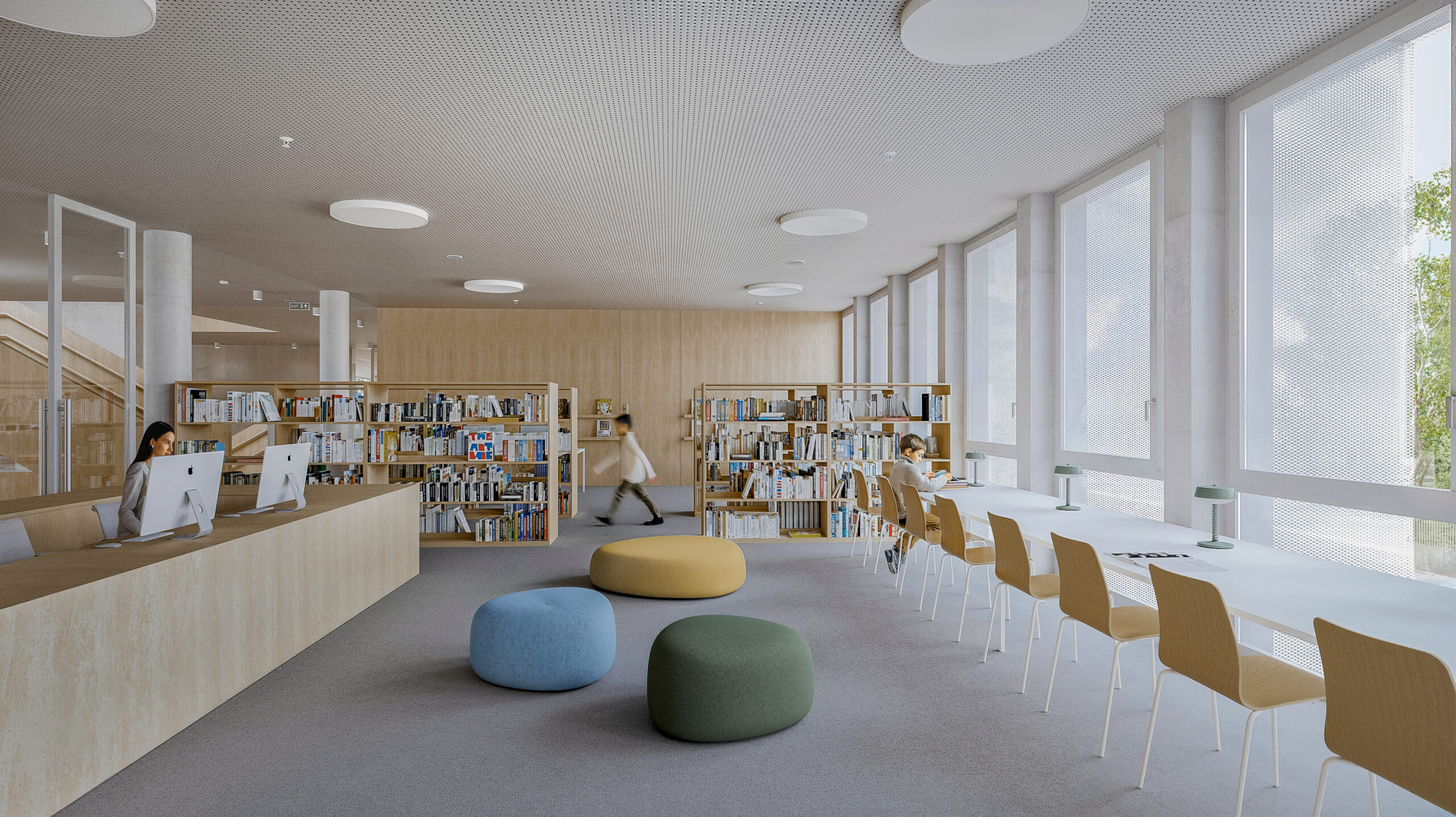
The first floor contains the administrative offices, a library, counselling rooms, a small gym and a multifunctional space that is visually connected to the forum. This level also contains the stands for the main gymnasium.
The second and third floors follow a symmetrical plan that ensures clarity and functionality. The two main vertical circulation cores divide students into different age groups: one for students in grades 1 to 4 and one for grades 5 to 7. Four emergency staircases guarantee the safety of students.
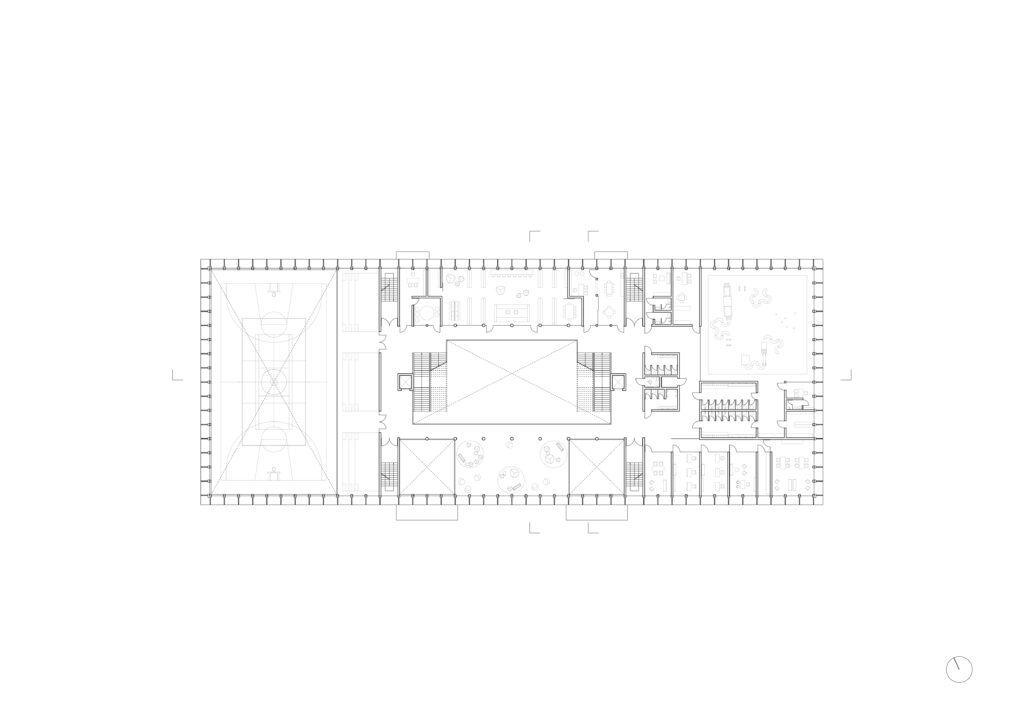
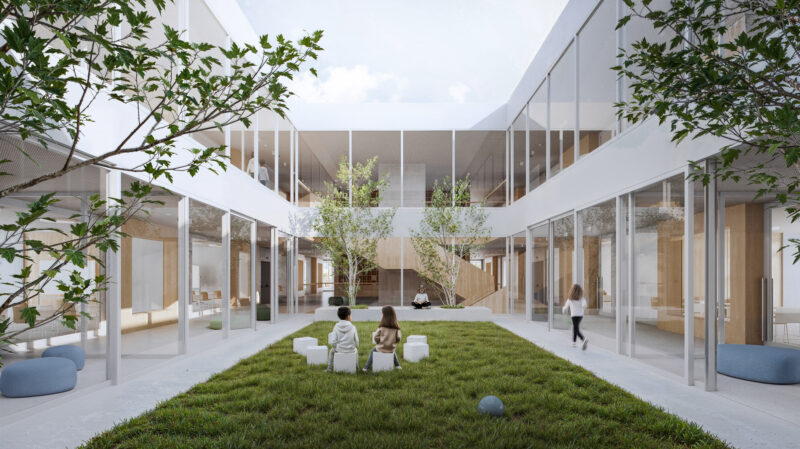
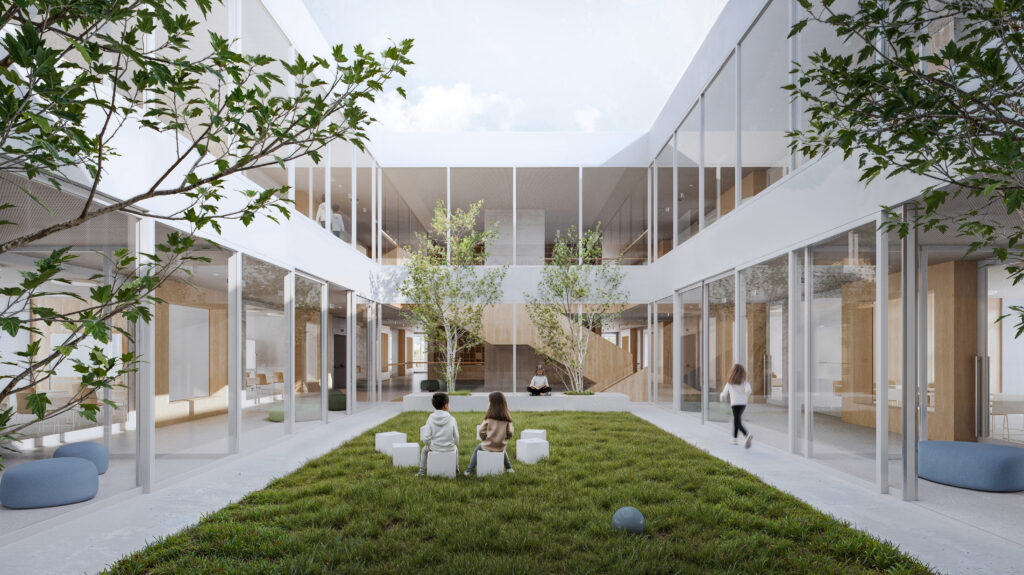
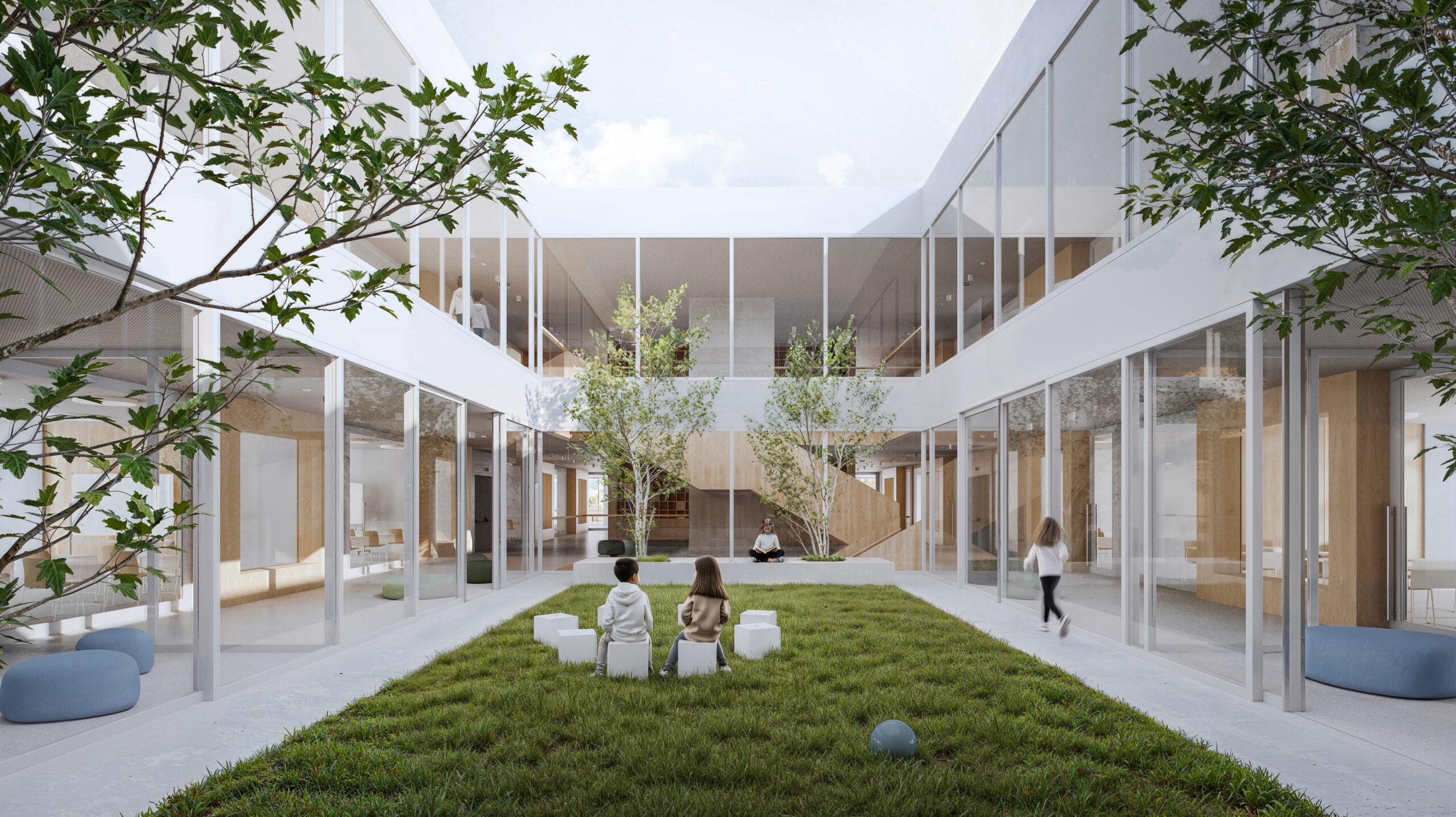
At the core of the second floor lies an inner courtyard – a small green oasis that brings natural light into the classrooms and the multifunctional spaces, while providing direct outdoor access for students. The rectangular patio features a grassy area with small trees integrated into seating benches, creating a calm, harmonious, and inspiring environment for learning and relaxation.
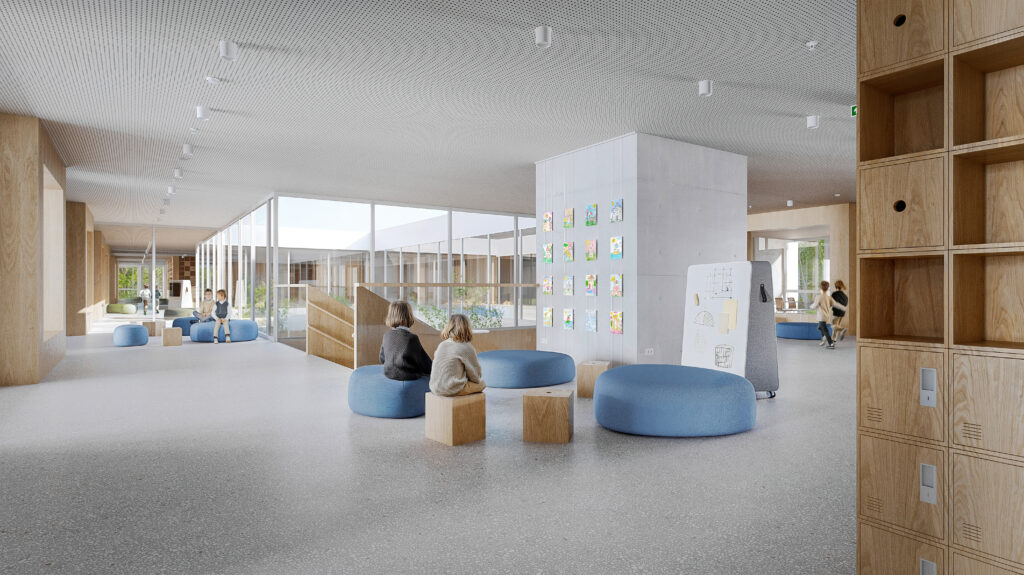
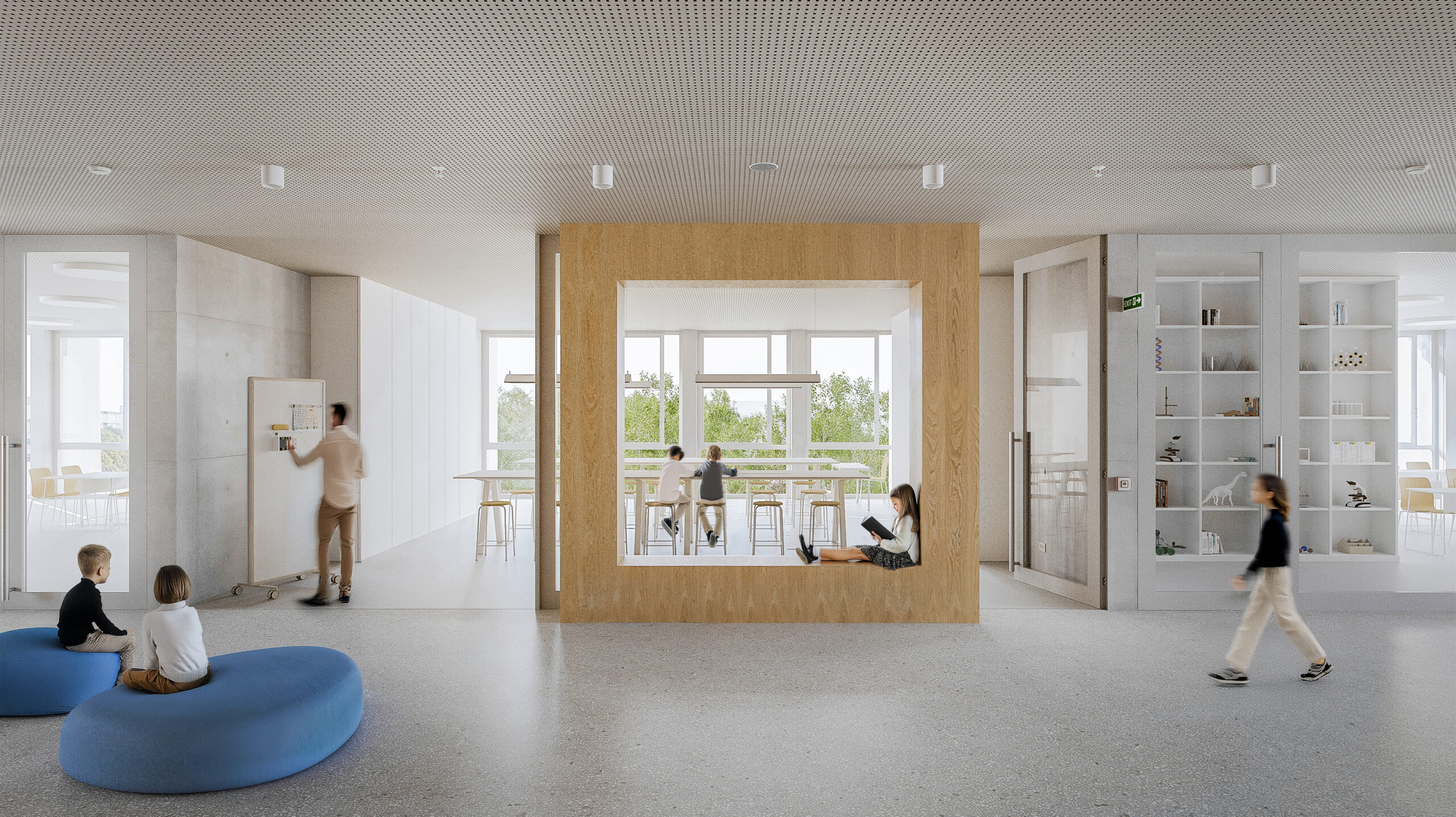
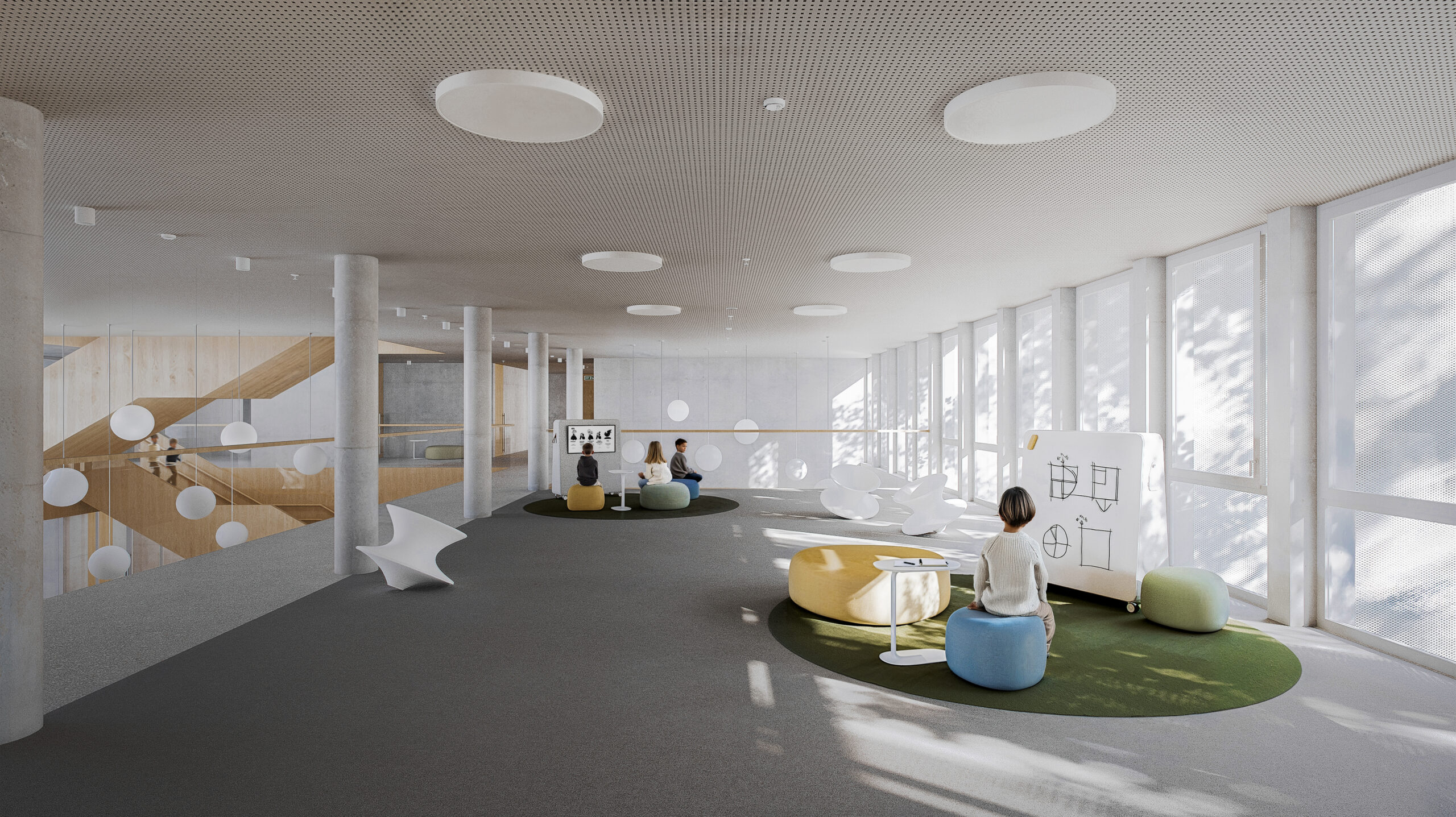
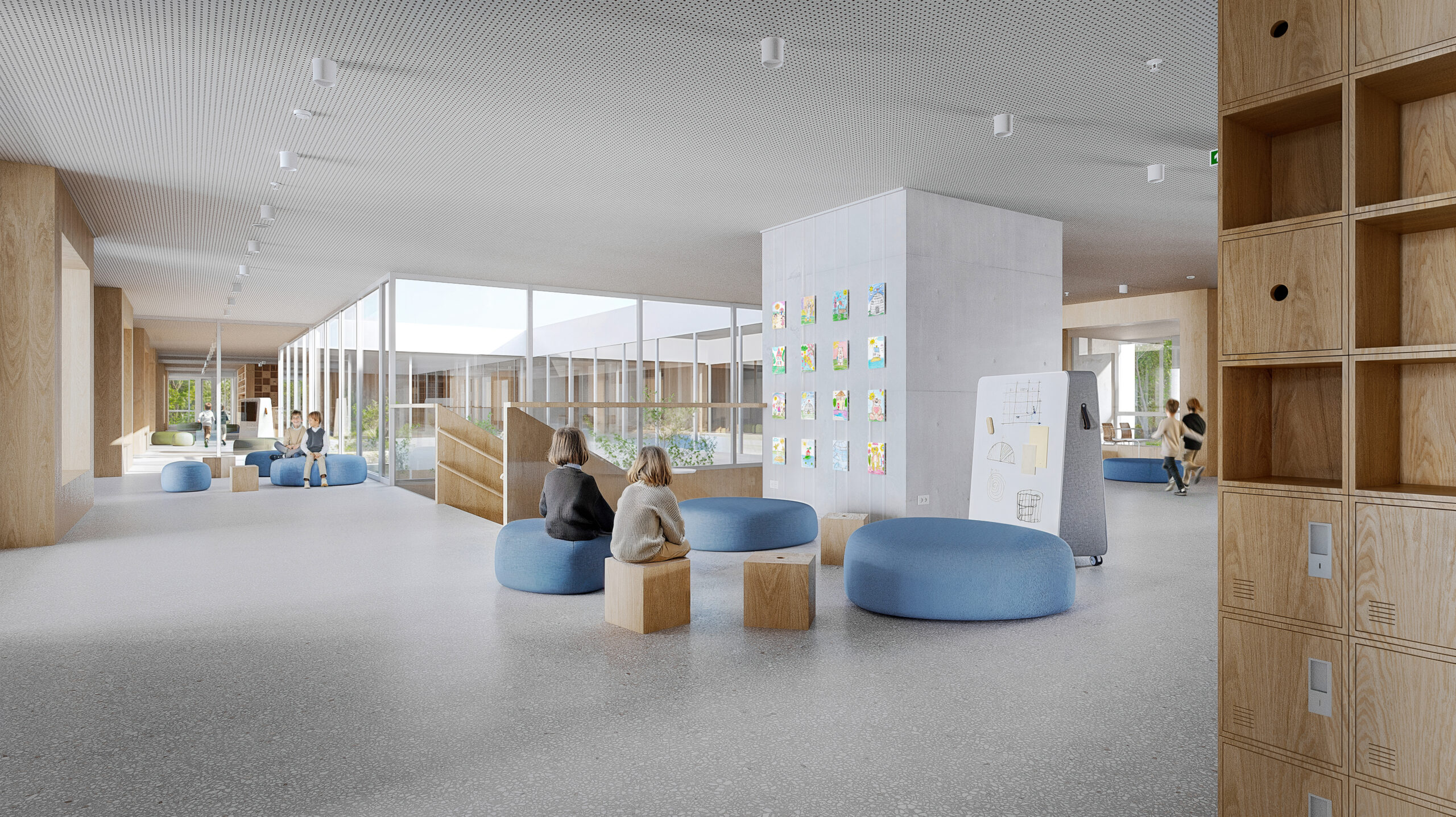
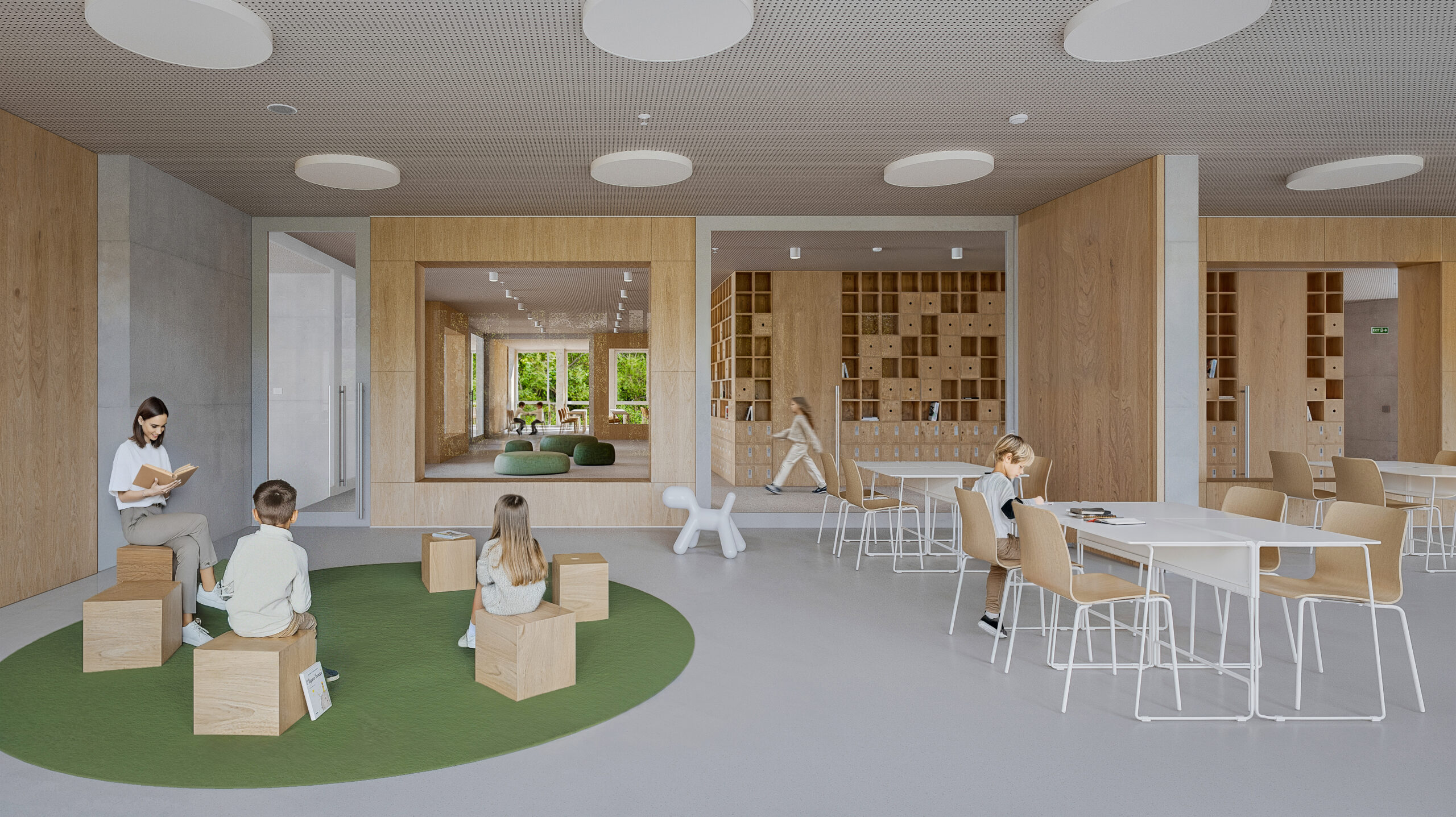
The common spaces on the second and third floors are designed as an open, fluid network of multifunctional zones of varying scales and character. The classrooms can either operate independently or be connected to adjacent classrooms and multifunctional areas through movable partitions, allowing for the creation of larger spaces for collaborative lessons, presentations, or extracurricular activities.
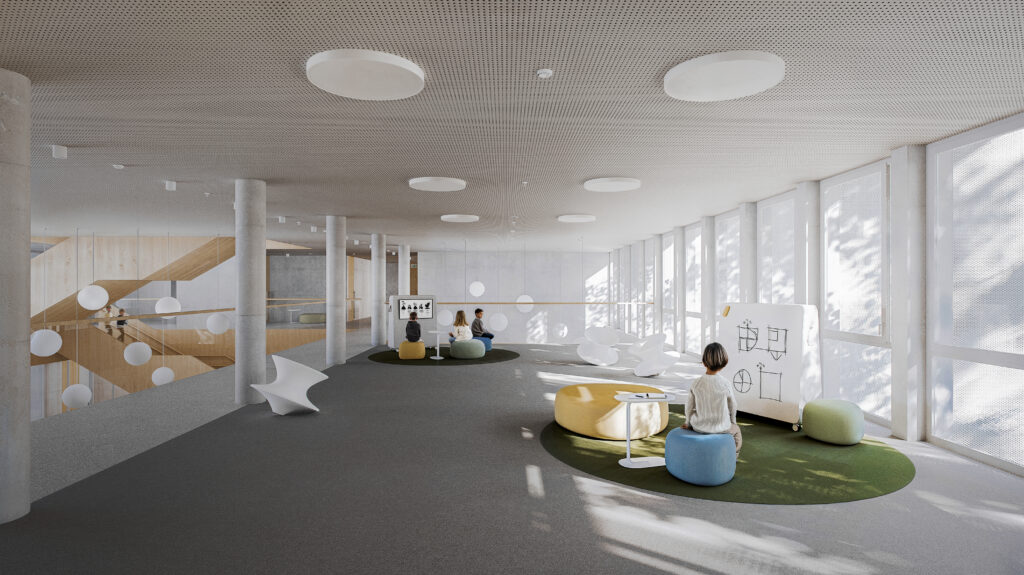
Both upper floors include STEAM centers designed to meet the needs of different age groups. These centers house specialized classrooms for biology, chemistry, physics, art, music, technology, entrepreneurship, and computer science.
The school’s interior prioritizes the use of natural and sustainable materials that not only meet contemporary educational standards but also create a healthy and inspiring learning environment. The main materials used in the building are concrete, wood, glass, and metal.
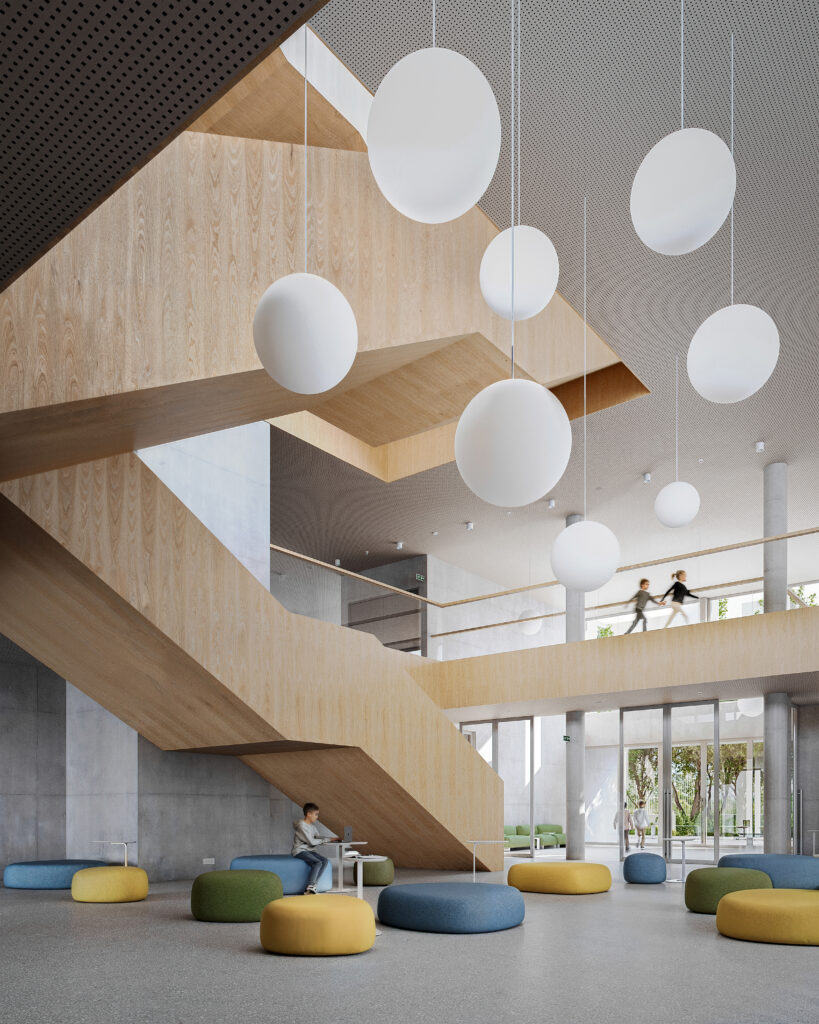
This calm, neutral background is essential for creating an environment free of visual distractions, thereby fostering concentration, emotional balance, and a sense of safety in children. Subtle colour accents are integrated throughout the interior, not as decorative choices, but as functional tools that aid visual orientation, mark different zones, and help children intuitively navigate and perceive the space.
Project Gallery:
Cite: “Primary School in Manas0rski Livadi / Simple Architecture 12 June 2026. GLSN. Accessed .https://theglsn.com/primary-school-in-manas0rski-livadi-simple-architecture/