
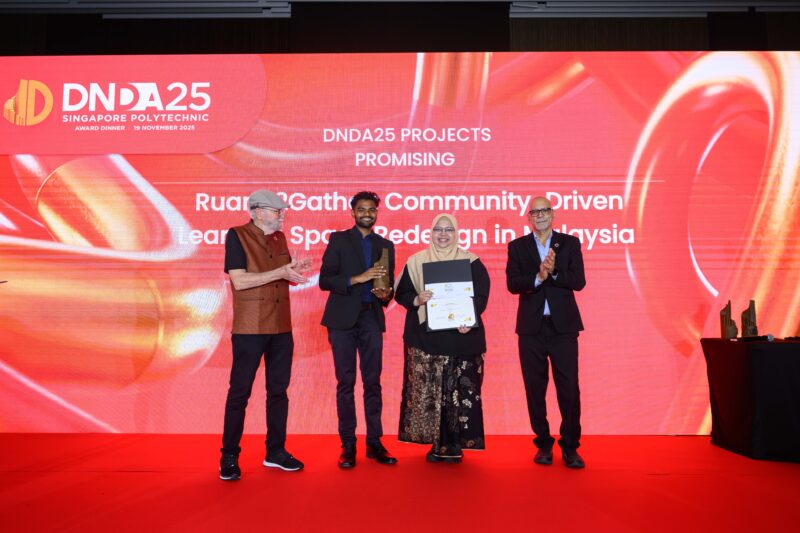
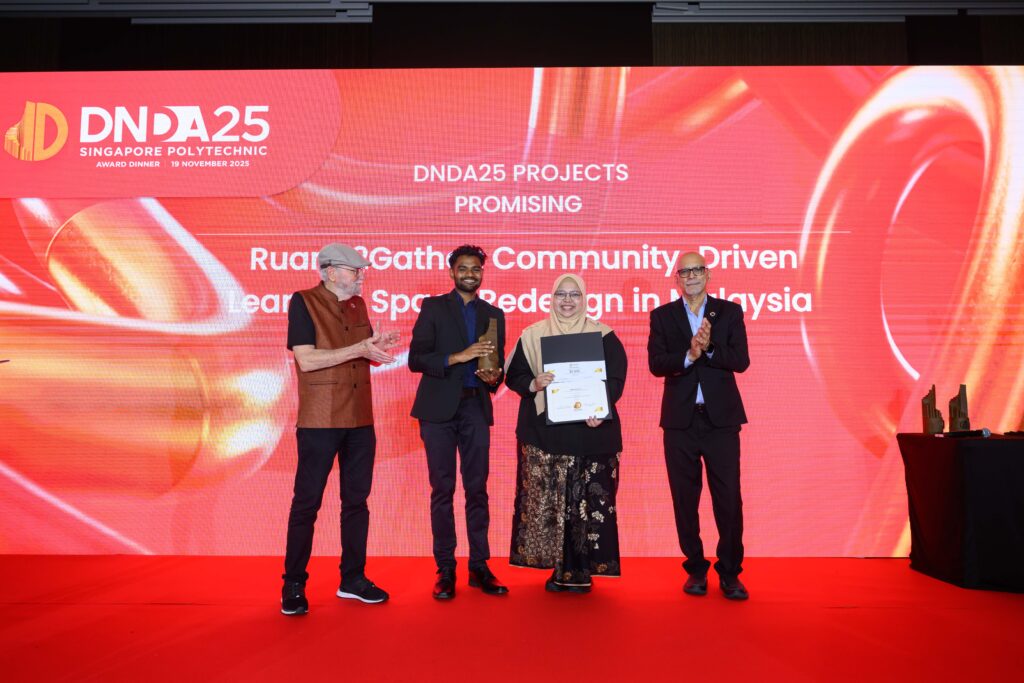
Their pioneering initiative, “Ruang2Gather”, captivated the international jury with its vision of transforming Malaysian schools and community learning spaces through inclusive, participatory co-design approaches. The award, recognised globally for honouring projects that advance humanity-centred design, reflects the innovative and impactful nature of Nur Syazadiyanah’s (aka Syaza Suraini) work. “Ruang2Gather” was born out of Nur Syazadiyanah’s doctoral research, which focuses on the intentional redesign in Malaysian public schools. By actively engaging key stakeholders including students, teachers, parents, and community members, her research demonstrates how participatory co-design can create more vibrant, adaptable, and meaningful spaces that nurture collaboration, creativity, and a sense of ownership.
Praised by the Award Jury
The Don Norman Design Award jury praised “Ruang2Gather” for its commitment to community empowerment and its forward-looking vision to redefine educational environments. According to the panel, the initiative embodies the very spirit of humanity-centred design by addressing real societal needs and empowering communities to take part in shaping their learning environments.

More on the Don Norman Design Award 2025 – Ruang2Gather Awarded as a “Promising Humanity-Centered Design (HCD+) Project” (Description received from MYLES):
Ruang2Gather applies the HCD+ principles to transform underutilised school spaces into inclusive and innovative learning spaces, especially in underserved communities where resources may be scarce, but rich in community potentials. Each project is guided by the core pillars of HCD+:
Humanity-centered
Our design process begins with immersive engagement i.e listening to students, teachers, and parents to understand their needs, aspirations, and daily realities; not only to have a well-designed learning space, but one that reflected who they were, how they are learning and who they want to become. By prioritising the lived experiences of the people, we ensure that the spaces are truly reflective of the community’s goals and context.
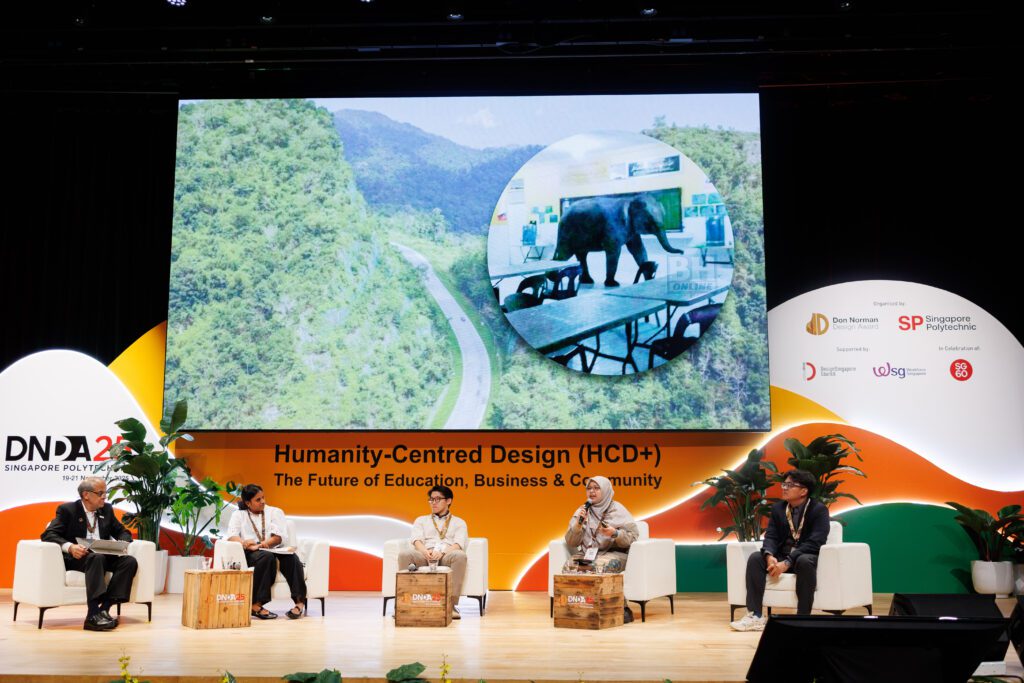
Focus on the root, not just the roof
Rather than imposing “cookie-cutter” blueprints, we begin with conversations and co-discovery to uncover the root issues. What began as a modest idea became a catalyst for rethinking how learning can feel joyful, inclusive, and rooted in the community’s existing spaces.
Everything is a system
We acknowledge schools as part of a larger socio-cultural and environmental ecosystem. Our co-design approach brings together students, teachers, parents, designers, and external collaborators, ensuring the final outcome is not just a new room but a catalyst for better teaching, community engagement, and long-term resilience.
Q&A with Nur Syazadiyanah (aka Syaza Suraini)
Why – witnessing the inequity between more privileged schools and public schools.
I believe that a well-designed learning environment should be a right for everyone and not just a luxury for the privileged.
My living, breathing motivation is my younger brother with Down Syndrome, Syafiq who refused going to school when we moved from the city centre of Kuala Lumpur to a suburb in the Northern peninsular. (There was a significant lack of access to infrastructure in comparison.)
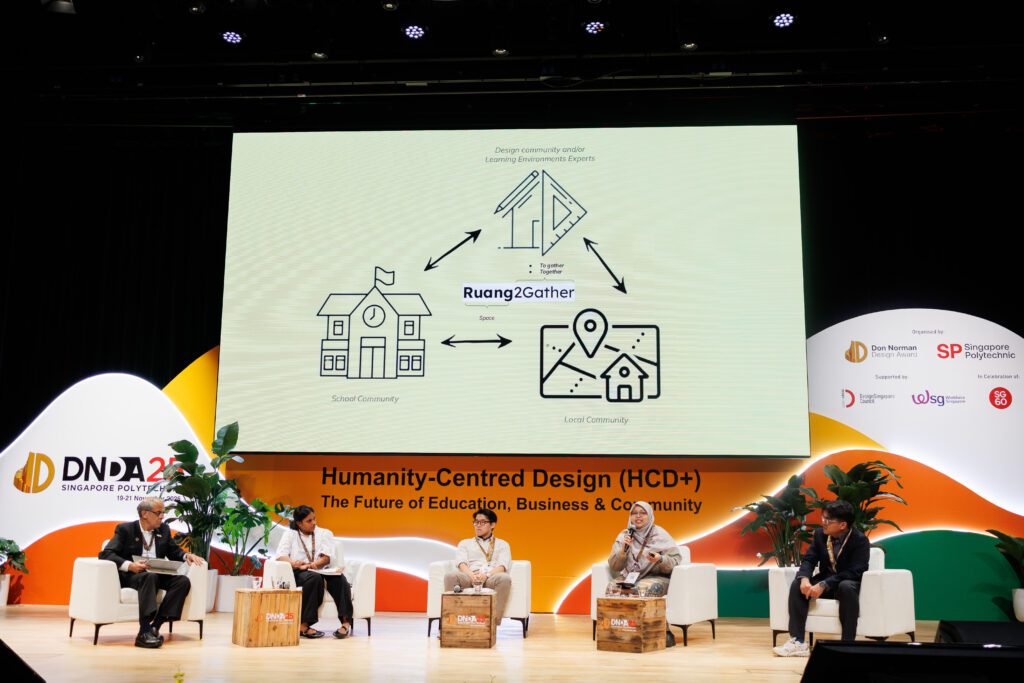
What – “Ruang” means room/space in Malay, “2gather” is a wordplay for “together” and “to gather”.
I founded Malaysian Learning Spaces (MYLES), a volunteer-led initiative where I work closely with ‘Shawn Stanly Anthony Dass’ and ‘Amirah Laila Mohd Razip’ in mobilising Ruang2Gather by MYLES. Ruang2Gather is a community-driven effort to revamp public school spaces, inspired by my doctoral research.

One key example is our pilot project in SK RPS Banun, a remote indigenous (Orang Asli) school in Malaysia. Through our four-phase Ruang2Gather framework, we mentored a teacher to lead a group of students in reimagining three underutilise classrooms into a multifunctional Learning Hub for the school and community. Despite limited funding and technical support, the project grew organically through student-led pitches, community co-design workshops, and hands-on construction.
Ultimately, our goal is not just to beautify a space but to improve learning experiences, community connection, and accessibility. When students return to a space they co-designed, their sense of belonging deepens. Teachers report better participation and morale. Banun’s learning hub is now a space for multimedia classes, music sessions, and family engagement.
As she continues her doctoral journey, her success serves as an inspiration to emerging scholars, designers, and change-makers across the world.
About the DNDA (Don Norman Design Awards):
The Don Norman Design Award is named after Don Norman, one of the most influential figures in design thinking and the pioneer of user-centred design. Each year, the award recognizes exemplary projects and leaders who demonstrate how design can advance human dignity, well-being, and empowerment.


Cite: “Malaysian Learning Spaces wins the Don Norman Design Award 2025” 22 December 2025. GLSN. Accessed . https://theglsn.com/malaysian-learning-spaces-wins-the-don-norman-design-award-2025/